Sequestration of Small Ions and Weak Acids and Bases by a Polyelectrolyte Complex Studied by Simulation and Experiment
Roman Staňo, Jéré J. van Lente, Saskia Lindhoud, Peter Košovan

TL;DR
This paper studies how small ions and weak acids/bases are separated by a polyelectrolyte complex using simulations and experiments.
Contribution
A new coarse-grained model for the Grand-reaction method is introduced to study phase separation in polyelectrolyte complexes.
Findings
Monovalent ions partition equally between phases, while divalent ions accumulate in the PEC phase.
Weak diprotic acid ionization is enhanced in the PEC phase, increasing with pH.
Model parameters can be fine-tuned to achieve near-quantitative agreement with experiments.
Abstract
Mixing of oppositely charged polyelectrolytes can result in phase separation into a polymer-poor supernatant and a polymer-rich polyelectrolyte complex (PEC). We present a new coarse-grained model for the Grand-reaction method that enables us to determine the composition of the coexisting phases in a broad range of pH and salt concentrations. We validate the model by comparing it to recent simulations and experimental studies, as well as our own experiments on poly(acrylic acid)/poly(allylamine hydrochloride) complexes. The simulations using our model predict that monovalent ions partition approximately equally between both phases, whereas divalent ones accumulate in the PEC phase. On a semiquantitative level, these results agree with our own experiments, as well as with other experiments and simulations in the literature. In the sequel, we use the model to study the partitioning of a…
Genes, proteins, chemicals, diseases, species, mutations and cell lines named across the full text — each resolved to its canonical identifier and authoritative record.
Click any figure to enlarge with its caption.
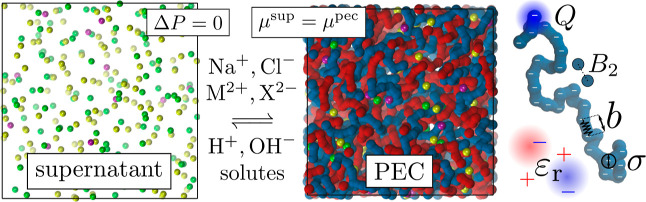 Figure 1
 Figure 2
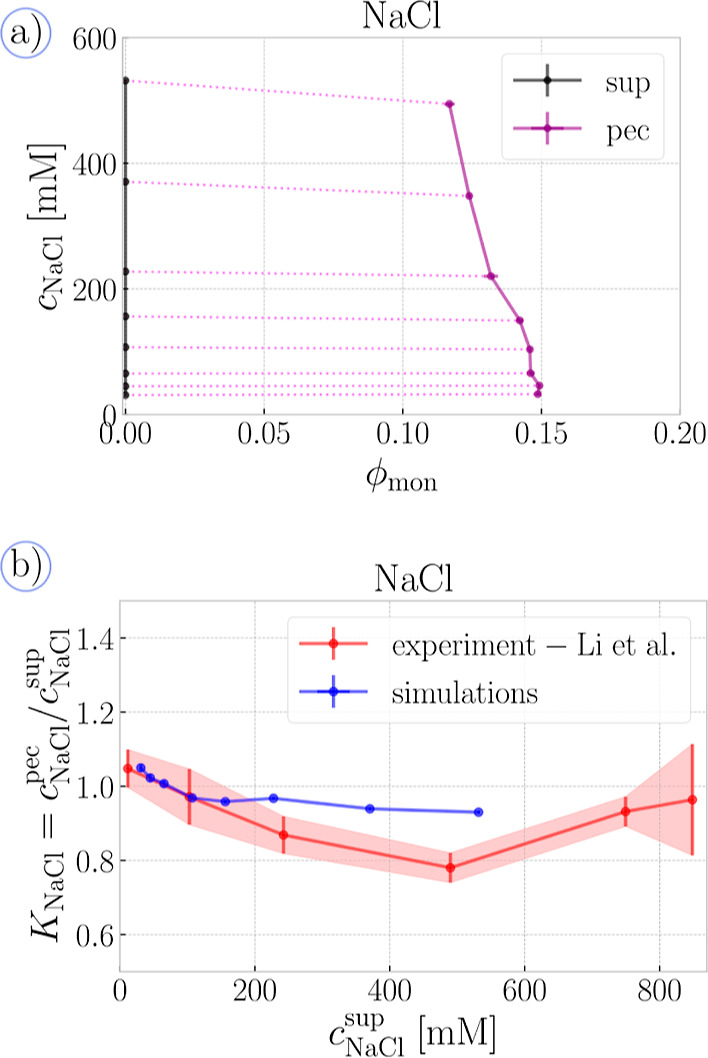 Figure 3
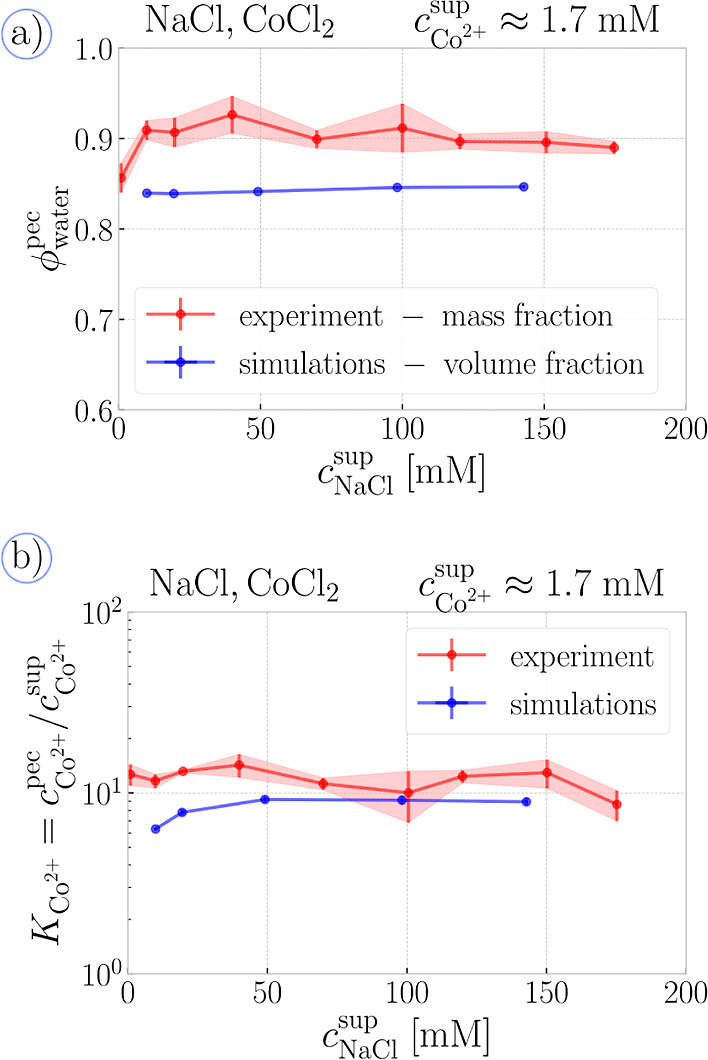 Figure 4
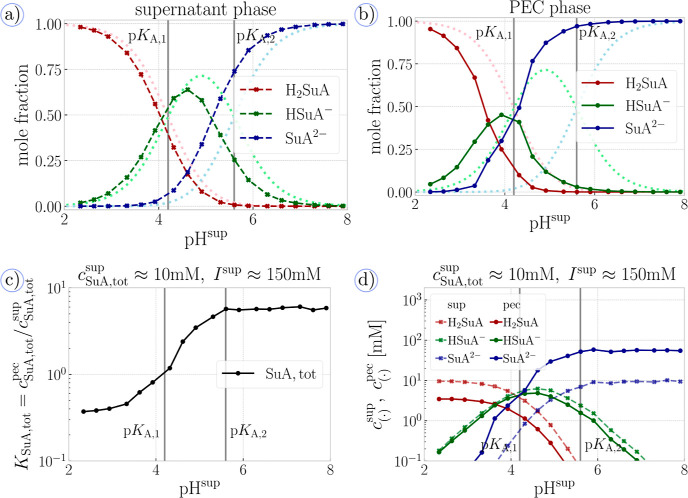 Figure 5
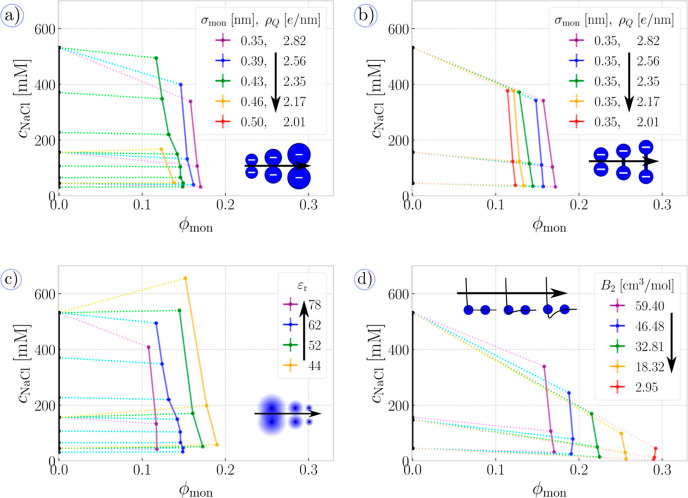 Figure 6
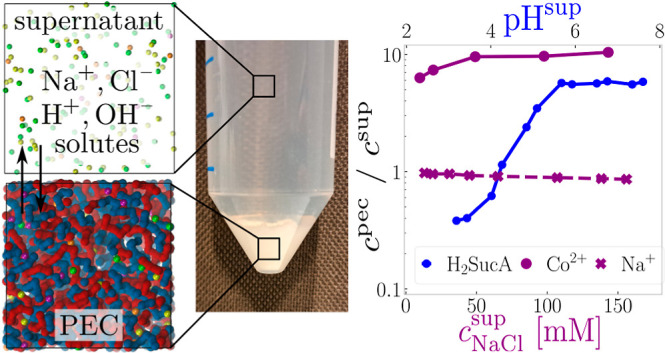 Figure 7
 Figure 8
 Figure 9
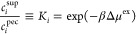 Figure 10
 Figure 11
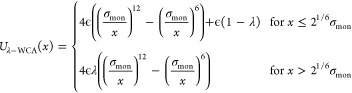 Figure 12
 Figure 13
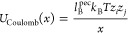 Figure 14
 Figure 15
 Figure 16
 Figure 17
 Figure 18
 Figure 19
 Figure 20
 Figure 21
 Figure 22
 Figure 23
 Figure 24
 Figure 25
 Figure 26
 Figure 27
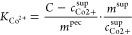 Figure 28
Peer Reviews
No public reviews on file for this paper yet. If you reviewed it on a platform where reviews are public (OpenReview, ICLR, NeurIPS, ICML), you can paste yours below so the community can read it here.
Videos
No videos yet. Explain this paper in a talk, walkthrough, or lecture? Add one.
Taxonomy
TopicsContext-Aware Activity Recognition Systems · IPv6, Mobility, Handover, Networks, Security · Mobile Agent-Based Network Management