Identification of lethal species in amanita section Phalloideae based on nucleotide signature and specific TaqMan-MGB probe and primer
Renhe Duan, Jiahui Huang, Donghan Zhang, Enjing Tian

TL;DR
This paper presents a new method to identify deadly mushrooms in the Amanita section Phalloideae using DNA signatures and a specific probe for accurate detection.
Contribution
The study introduces a novel nucleotide signature and TaqMan-MGB probe for specific detection of lethal Amanita species.
Findings
A 17-base pair nucleotide signature and an SNP site distinguish lethal from non-lethal Amanita species.
The method detected lethal species with high specificity and a 10 pg./μL detection limit.
It remained effective in samples after simulated gastric digestion and boiling.
Abstract
Amanita section Phalloideae consists of lethal toxic mushroom species, causing many fatal poisoning incidents worldwide. Molecular techniques of nucleotide signatures and single nucleotide polymorphism (SNP) detection could be used to develop a specific method for identifying lethal section (sect.) Phalloideae species. A comparison of 38 sequenced and 228 validated sequences from sect. Phalloideae species showed a 17-base pair nucleotide signature and an SNP site between the lethal and non-lethal species. A specific minor groove binder probe was designed based on them. The results indicated that this method exhibited excellent specificity for the lethal subgroup, good detection in samples subjected to simulated gastric digestion (60 min boiling and 120 min digestion), and a 10 pg./μL detection limit. This method enables accurate detection of target species in samples under complex…
Genes, proteins, chemicals, diseases, species, mutations and cell lines named across the full text — each resolved to its canonical identifier and authoritative record.
Click any figure to enlarge with its caption.
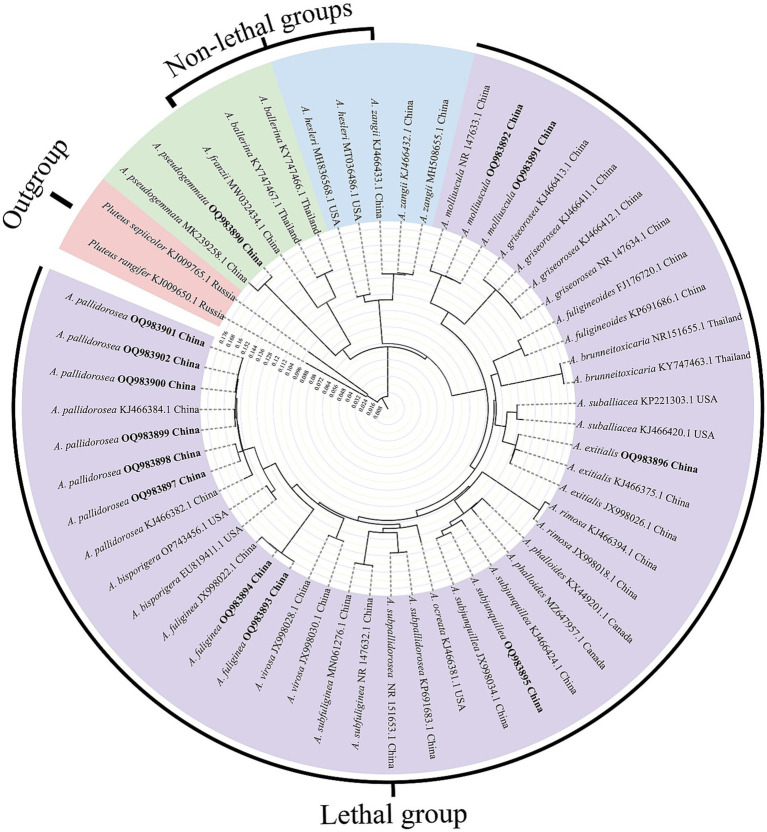 Figure 1
 Figure 2
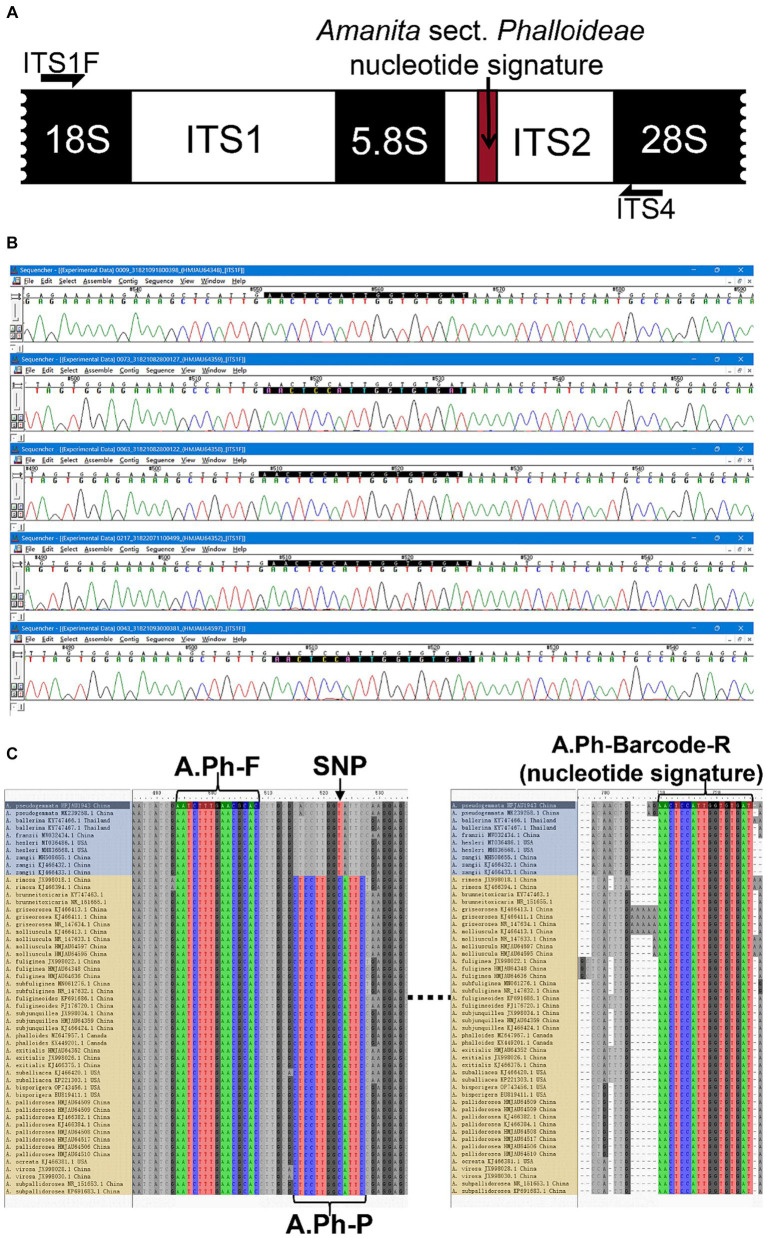 Figure 3
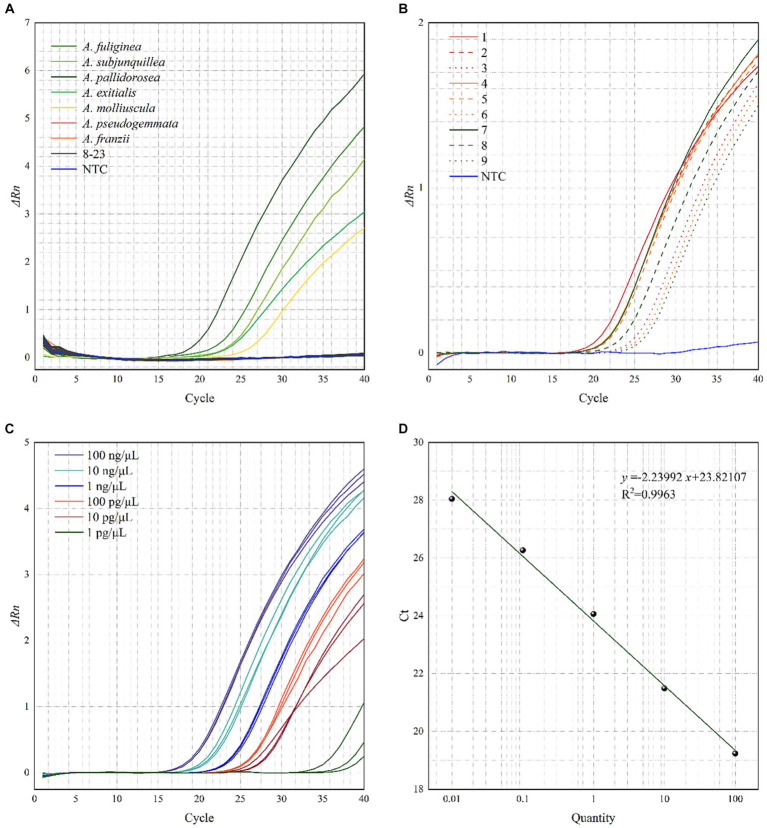 Figure 4
Peer Reviews
No public reviews on file for this paper yet. If you reviewed it on a platform where reviews are public (OpenReview, ICLR, NeurIPS, ICML), you can paste yours below so the community can read it here.
Videos
No videos yet. Explain this paper in a talk, walkthrough, or lecture? Add one.
Taxonomy
TopicsSilymarin and Mushroom Poisoning · Fungal Biology and Applications · Phytochemistry and Bioactivity Studies