Mapping the Landscape of Brachial Plexus Birth Injury Research: A Comprehensive Bibliometric Study
Alexandra F Hoffman, Nathan Khabyeh-Hasbani, Steven M Koehler

TL;DR
This study maps BPBI research trends from 1986 to 2022, highlighting growth, key contributors, and areas needing more attention.
Contribution
A comprehensive bibliometric analysis of BPBI literature to guide future research and collaboration.
Findings
BPBI research has grown at an average annual rate of 7.94% since 1986.
The United States leads international collaborations in BPBI research.
Keywords like 'society' and 'health' highlight the multidimensional focus of BPBI studies.
Abstract
Brachial plexus birth injury (BPBI) is a relatively common condition that poses a significant challenge to children who endure functional impairments later on. This comprehensive bibliometric analysis sought to quantitatively evaluate the existing literature on BPBI, shedding light on authorship, collaboration, publication trends, and keyword analysis to both inform the medical community and foster future research growth. A thorough search of the Web of Science database yielded 712 relevant documents published between 1986 and 2022. The analysis utilized Biblioshiny (K-Synth Srl, Naples, Italy) for bibliometric data, alongside VOSviewer (Centre for Science and Technology Studies, Leiden University, The Netherlands) and TextRazor (TextRazor Ltd., London, UK) for keyword categorization. The literature had an average annual growth rate of 7.94%, with an average document age of 12 years.…
Genes, proteins, chemicals, diseases, species, mutations and cell lines named across the full text — each resolved to its canonical identifier and authoritative record.
Click any figure to enlarge with its caption.
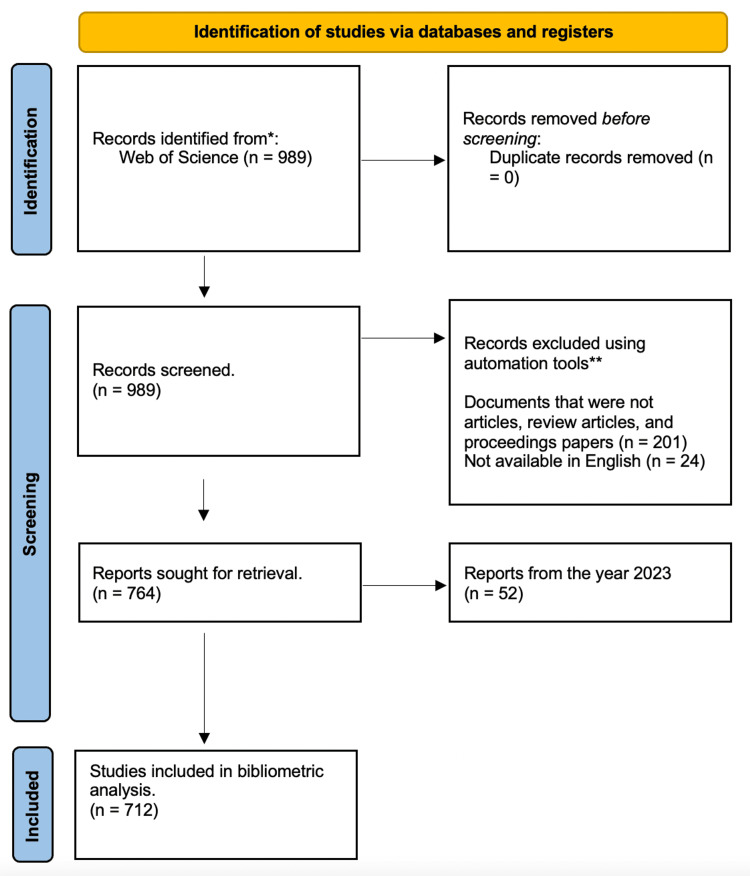 Figure 1
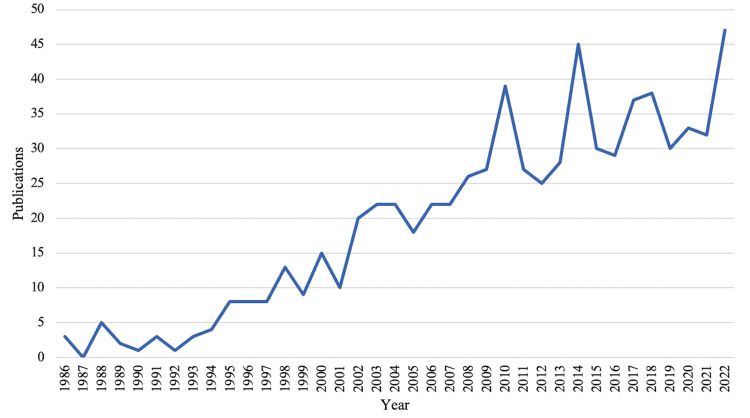 Figure 2
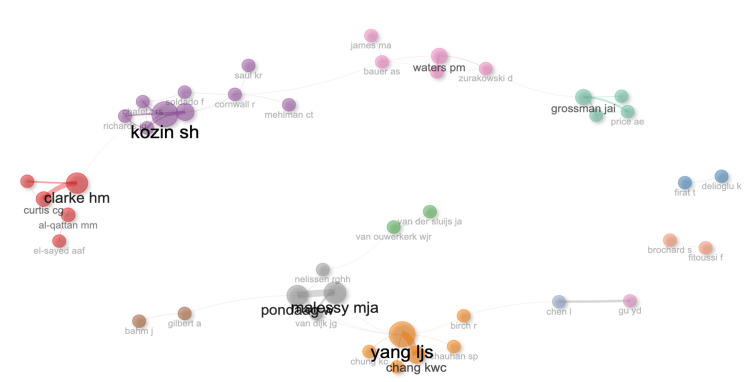 Figure 3
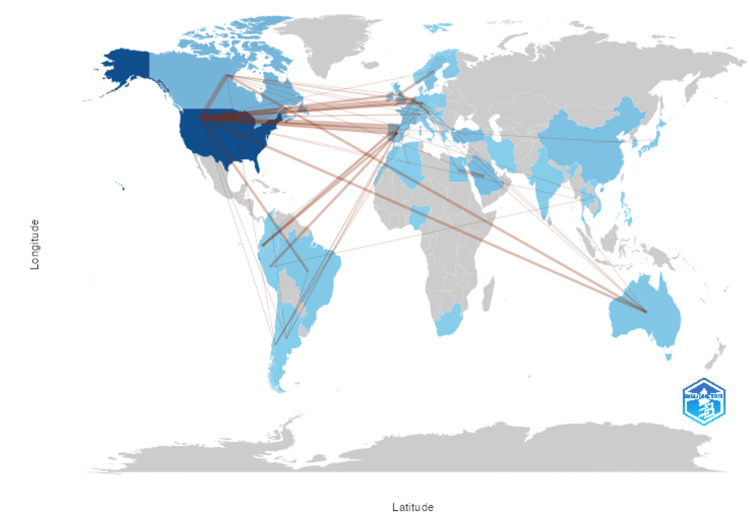 Figure 4
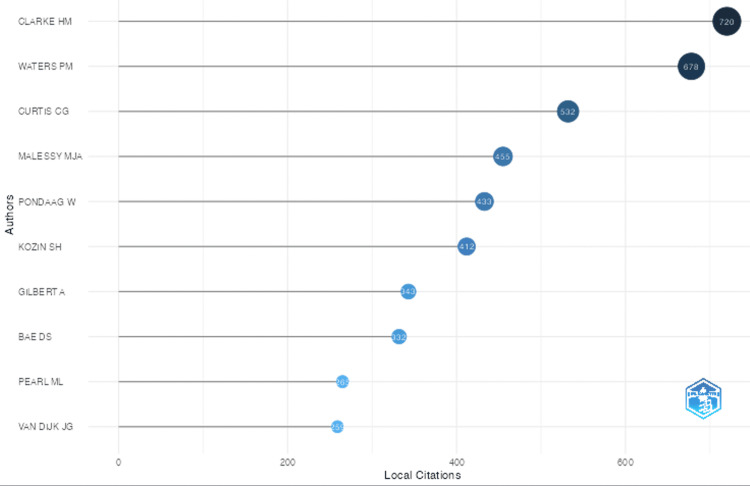 Figure 5
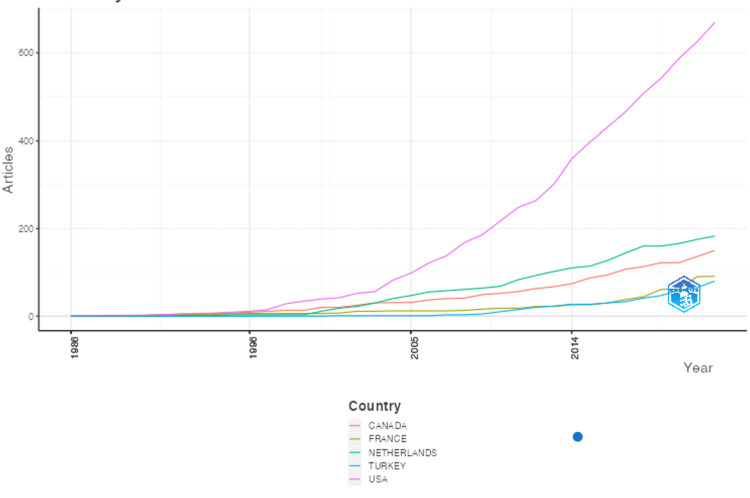 Figure 6
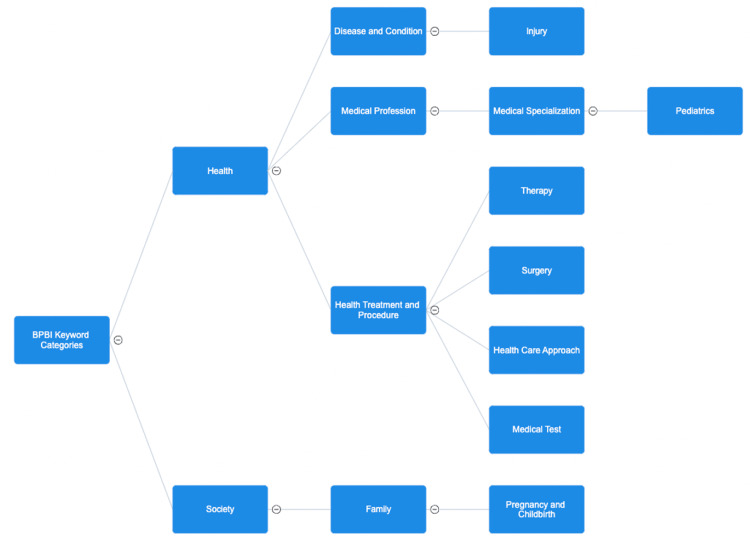 Figure 7
| Bibliometric Variable | Description | Number (n =) |
| Main Information | ||
| Sources (Journals, Books, etc.) | 170 | |
| Documents | 712 | |
| Annual Growth Rate | 7.94% | |
| Document Average Age (years) | 12 | |
| Average Number of Citations per document | 22.53 | |
| Total Number of References | 7457 | |
| Document Contents | ||
| Author’s Keywords | 908 | |
| Authors | ||
| Authors | 1842 | |
| Authors of single-authored docs | 28 | |
| Authors Collaboration | ||
| Single-authored docs | 47 | |
| Co-Authors per Doc | 4.32 | |
| International co-authorships | 9.55% | |
| Top Country Collaboration | Frequency of Overlap | |
| USA and Netherlands | 14 | |
| USA and France | 12 | |
| USA and Canada | 10 | |
| USA and Spain | 10 | |
| Spain and Portugal | 8 |
| Bibliometric Variable | Description | Number (n = ) |
| “Most Relevant” Sources (Journals, Books, etc.) | Publications | |
| Journal of Pediatric Orthopedics | 47 | |
| Journal of Bone and Joint Surgery-American Volume | 43 | |
| Journal of Hand Surgery-American volume | 42 | |
| Plastic and Reconstructive Surgery | 33 | |
| Journal of Hand Surgery-European volume | 29 | |
| Journal of Hand Surgery-British and European volume | 26 | |
| Developmental Medicine and Child Neurology | 23 | |
| Journal of Bone and Joint Surgery-British volume | 23 | |
| Childs Nervous System | 22 | |
| Journal of Shoulder and Elbow Surgery | 20 | |
| Journal of Neurosurgery-Pediatrics | 19 | |
| Pediatric Neurology | 16 | |
| Microsurgery | 13 | |
| Journal of Child Neurology | 12 | |
| Journal of Pediatric Orthopedics-part b | 12 | |
| Annals of Plastic Surgery | 10 | |
| Hand Clinics | 10 | |
| Neurosurgery | 10 | |
| Muscle & Nerve | 9 | |
| Top H-index | ||
| Journal of Bone and Joint Surgery-American Volume | 25 | |
| Plastic and Reconstructive Surgery | 21 | |
| Journal of Bone and Joint Surgery-British Volume | 18 | |
| Journal of Hand Surgery-British and European Volume | 17 | |
| Journal of Pediatric Orthopedics | 17 | |
| Developmental Medicine and Child Neurology | 15 | |
| Journal of Hand Surgery-American Volume | 15 | |
| Journal of Hand Surgery-European Volume | 11 | |
| Journal of Shoulder and Elbow Surgery | 10 | |
| Hand Clinics | 9 | |
| Journal of Neurosurgery-Pediatrics | 9 | |
| Microsurgery | 9 | |
| Journal of Child Neurology | 9 | |
| Journal of Pediatric Orthopedics-part b | 8 | |
| Annals of Plastic Surgery | 8 | |
| Hand Clinics | 8 | |
| Neurosurgery | 8 | |
| Muscle & Nerve | 7 | |
| “Most Relevant” Authors | ||
| Yang Ljs | 35 | |
| Kozin Sh | 32 | |
| Clarke Hm | 29 | |
| Malessy Mja | 28 | |
| Pondaag W | 26 | |
| Al-Qattan Mm | 22 | |
| Chang Kwc | 20 | |
| Waters Pm | 20 | |
| Curtis Cg | 17 | |
| Grossman Jai | 17 | |
| Zlotolow Da | 16 | |
| Chen L | 14 | |
| Cornwall R | 14 | |
| Nelissen Rghh | 14 | |
| Gu Yd | 13 | |
| James Ma | 13 | |
| Bauer As | 12 | |
| Fitoussi F | 12 | |
| Ho Es | 12 |
| Bibliometric Variable | Description | Number (n =) |
| “Most Relevant” Affiliations | Publications | |
| Leiden University Medical Center (LUMC) | 242 | |
| University of Michigan | 158 | |
| University of Toronto | 100 | |
| Hospital for Sick Children | 51 | |
| Boston Children's Hospital | 34 | |
| Vrije Universiteit Amsterdam | 32 | |
| Temple University | 31 | |
| Harvard University | 31 | |
| Cincinnati Children's Hospital Medical Center | 29 | |
| Pennsylvania Commonwealth System of Higher Education | 29 | |
| King Saud University | 27 | |
| Shriners Hospitals for Children Philadelphia | 25 | |
| McMaster University | 23 | |
| Country Scientific Production | ||
| USA | 669 | |
| Netherlands | 183 | |
| Canada | 150 | |
| France | 91 | |
| Turkey | 80 | |
| China | 63 | |
| United Kingdom | 59 | |
| Sweden | 58 | |
| Saudi Arabia | 51 | |
| Finland | 32 | |
| Australia | 29 | |
| Egypt | 26 | |
| Brazil | 24 | |
| Germany | 22 | |
| Spain | 22 | |
| Italy | 19 | |
| Japan | 18 | |
| Belgium | 17 | |
| Greece/Portugal (tied) | 16 |
Peer Reviews
No public reviews on file for this paper yet. If you reviewed it on a platform where reviews are public (OpenReview, ICLR, NeurIPS, ICML), you can paste yours below so the community can read it here.
Videos
No videos yet. Explain this paper in a talk, walkthrough, or lecture? Add one.
Taxonomy
TopicsNerve Injury and Rehabilitation · Orthopedic Surgery and Rehabilitation · Cardiovascular Issues in Pregnancy
Introduction and background
Introduction
Brachial plexus birth injury (BPBI) is a relatively common condition, occurring in an estimated 0.5 to 4.6 cases per 1,000 live births [1]. Although it is speculated that many do recover, recent literature has shown that a significant portion of affected children, approximately 8-36%, do not fully recover and experience permanent functional impairments [2, 3]. For such a relatively common condition (the incidence is equal to clubfoot), the field of literature is somewhat sparse [4]. It is important that researchers and physicians contribute to the field to fill gaps in knowledge and advance understanding of the condition. To fill these gaps, we must understand the literature as it stands, who is contributing, and trends in publications [5]. A quantitative way to sort literature is using bibliometric analysis.
Bibliometric analyses have been performed across various specialties and surgical fields [5-8]. A bibliometric analysis is a form of metascience that utilizes statistical analysis designed to assess literature like authorship, publication frequency, collaboration networks, and more [8]. Gaining an overview of the literature is useful because it gives physicians and researchers the ability to understand trends, fill gaps, and enhance collaboration in an objective way [5, 8]. Therefore, the purpose of this analysis was to use bibliometric data to analyze the BPBI literature quantitatively to inform the medical field and encourage future growth.
Review
Methods
Literature Search
We searched the Web of Science database in November 2023 for articles concerning brachial plexus related birth injuries. The search string was TITLE = (brachial or bpbi) AND (plexus) AND ((neonatal) or (obstetric) or (obstetrical) or (gynecology) or (gynecological) or (birth) or (newborn) or (neonate) or (infant)) AND ((injury) OR (injuries) OR (injury) OR (trauma) OR (lesion) OR (palsy)OR (traumatic) OR (damage)). Documents were included if they were categorized as articles, review articles, or proceeding papers. Articles were included if they were written in English. The search was also narrowed to up until the year 2022 (Figure 1). Although there have been publications in the year 2023, data trend analysis takes place in an annual distribution. Therefore, analytics would be skewed because the full calendar year for 2023 would not be available during the initial document screening.
PRISMA flow diagramPRISMA: Preferred Reporting Items for Systematic Reviews and Meta-Analyses
Bibliometric and Keyword Analysis
Biblioshiny (K-Synth Srl, Naples, Italy) and the ‘Bibliometrix’ R package (K-Synth Srl, Naples, Italy) were used to collect bibliometric data. Data such as annual publication trends, keyword analysis, institutions, geographic data, and co-authorship networks were analyzed [9]. Other variables extracted with Biblioshiny included H-index, impact factor, author-specific demographics, and citation data per article included. VOSviewer [10] (version 1.6.15, Centre for Science and Technology Studies, Leiden University, The Netherlands) was used to create a keyword map to highlight the most prevalent keywords. Keywords were quantified with fractional counting and subsequently used to categorize articles. Fractional counting, which considers the number of keywords, was used to create a more accurate representation of keywords’ impact on the literature [11]. For example, when there were 10 keywords, a keyword received one-tenth of a link. In other words, it weights keywords equally when creating occurrences. In the keyword map‚ the resolution was set to 1.00 to provide the greatest number of clusters that could be visualized at once and separated by color based on what other keywords they were most often linked to. An online platform called TextRazor (TextRazor Ltd., London, UK) was used to extract overarching categories of the keywords pulled from the literature. This allowed us to objectively use artificial intelligence to parse out the most appropriate recurring categories in the literature.
Results
Main Bibliometric Information
Through initial selection, we collected 989 documents. After the criteria were applied, we were left with 712 documents published from 1986 through 2022 from which data was extracted (Figure 1). There were 640 articles, 18 proceedings papers, and 54 reviews. There is an average annual growth rate of 7.94% (Table 1, Figure 2) with a document’s average age being 12 years old. Table 1 shows the main bibliometric information retrieved. There was an average of 22.53 citations per document. There were 1842 unique authors and there was an average of 4.32 authors per document. Furthermore, international co-authorship in this literature was 9.6%. Co-authorship networks are visible in Figure 3, which is a visualization of authors who work together on publications. Biblioshiny code creates these networks by grouping authors into nodes based on their overlap, and links interconnected nodes as well. A greater density link or larger node correlates to greater overlap and more publications respectively. Lastly, country collaboration is listed in Table 1, and mapped in Figure 4. Figure 4 visualizes the links between countries with the red lines and the heat map aspect of Figure 4 visualizes country publication rates which will be discussed later. The United States and the Netherlands had the greatest collaborative efforts amongst any country pairing. The United States also had the greatest overall collaboration rates when compared to other countries.
Brachial plexus birth injury (BPBI) publications over timeTrends in BPBI publication rates over time. The rate at which the literature has risen was 7.94% as per Biblioshiny calculations.
VOSviewer co-authorship networkVisual representation of co-authorship networks and author overlap within the field visualized by the VOSviewer program. Larger nodes correlate to higher publication rates and thicker connecting lines correlate with greater overlap between authors.
Country collaboration and scientific productionCountry collaboration and country scientific production heat map. The red lines indicate authorship crossover between different countries on publications. The darker hues of the heat map correlate to higher publication rates. The color grey indicates that no publications were extracted from that location.
Sources, Authors, and H-index
Table 2 lists the source, author, and h-index information. The top-producing authors are listed in the table, but the top 3 authors of BPBI were Yang, Kozin, and Clarke with approximately 35, 32, and 29 publications identified in this study, respectively. The most locally cited authors were Clarke, Waters, and Curtis (Figure 5), which is the authors most cited by their peers in this literature search. The top producing journals are listed in Table 2, with the 5 highest publishing being the Journal of Pediatric Orthopedics, Journal of Bone and Joint Surgery- American Volume, Journal of Hand Surgery- American volume, Plastic and Reconstructive Surgery, and the Journal of Hand Surgery - European volume with 47, 43, 42, 37, and 29 publications, respectively. Journals with the highest h-index were the Journal of Bone and Joint Surgery-American volume, Plastic and Reconstructive Surgery, and Journal of Bone and Joint Surgery-British volume with h-indices of 25, 21, and 18, respectively. The institutions affiliated with the greatest contribution to the BPBI literature were Leiden University Medical Center, University of Michigan, University of Toronto, Hospital for Sick Children, and Boston Children’s Hospital with their corresponding publishing frequencies listed in Table 3. The countries with the greatest production were the United States, followed by the Netherlands and Canada producing 669, 183, and 150 publications (Table 3). As previously mentioned, Figure 4 visualizes this data with a darker color indicating higher publishing rates. Figure 6 shows the top 5 literature producing countries’ trends in publication over time with the United States publishing rates increasing greatly over time.
Most locally cited authorsThese are the most cited authors as returned by Biblioshiny. Local cited authors are the authors who have been cited by the other authors in this literature review. This metric is confined to the citations authors in this study received by other authors included in this study.
Top country production over timeCountry publication rates over time indicate the growth within the field and within a country specifically. Beginning in 1986 until the end of 2022, these five countries have had the greatest rise in publication rates over time. The United States had the sharpest rise among these countries.
Keyword Analysis and Category Extraction
There were 908 author’s keywords identified in this analysis. Through keyword analysis using VOSviewer, different categories emerged from within the group when plugged into TextRazor programming. These categories and subcategories are illustrated in Figure 7. Two overarching categories were “society” and “health” from which subcategories branched. Aside from overall categories based on keyword analysis, specific topics were identified from the keywords. These topics included “Brachial plexus injury,” “Erb’s palsy,” “Shoulder joint,” “Human anatomy,” “Nervous system,” “Clinical medicine,” “Traumatology,” “Causes of events,” “Obstetrics,” “arthroscopy,” “Denervation,” “hazards,” and others.
Keyword analysis and categorizationKeyword analysis identified these groups and subgroup categorizations within the Brachial Plexus Birth Injury (BPBI) literature. Under BPBI falls health and society, which are then further subdivided within the literature. These specific topics of literature emphasize the importance of treatment modalities, the population affected by BPBI, and other key factors in the field.
Discussion
Main Bibliometric Data
The BPBI field is growing and expanding (Figure 2). Interestingly, as noted earlier, BPBI has the same incidence as clubfoot (congenital talipes equinovarus) [4, 12]. One would expect that a similar bibliometric study on clubfoot would yield similar results to BPBI, yet, more than double the number of studies have been published on clubfoot [13]. Perhaps this is because in BPBI, treatment methods have rapidly expanded over the past decades and the evolution of surgical methods is largely due to years of research. In this sense, BPBI is a relatively new field in which extensive evolutions in treatment are being implemented [12]. There are many reasons it is important that the literature continues to grow. For example, previous literature has revealed that there is increasing interest and expanding knowledge on BPBI [14]. Therefore, this expanding knowledge, advances in treatment, and methodologies should be published to keep up with the growing field. Contributing to the literature will provide physicians and patients with the most up-to-date information and track BPBI progress over time.
Author Information
As we recognize the top producing authors, it is important to note that this analysis can inform other researchers and physicians of points of reference with long-term experience in the field. Interestingly, the top producing authors are Yang, Kozin, and Clarke, but the most cited authors are Clarke, Waters, and Curtis. This could highlight the varying interests and topics of research within the realm of BPBI. For example, Waters et al. have produced reviews and papers that have created a foundation for the BPBI field [15-17]. Therefore, Waters’ papers may take greater amounts of time to produce, lowering the quantity of production, but increasing citations per paper because they are foundational works. An author may also be more likely to produce greater publications if they spend time at a research-heavy institution than if an author spends most of their time in a clinical setting and has less time to conduct research. These data are important because they can be used as a reference. Authors publishing at higher rates may present the most up-to-date research in the field. If one is looking for foundational information that many rely upon, they can look at the most cited publications.
Collaboration
The number of authors, collaboration amongst authors, and collaboration between countries is also important. Previous literature has revealed that there are inconsistent diagnostic, management, and treatment methods with difficult-to-follow guidelines for patients with BPBI, which may leave physicians at odds with the best treatments available [14]. Our results concerning international author collaboration are promising, but there is room for improvement. We currently show that 9.55% of authorships are internationally co-authored. If this number increased, it would likely lead to more consistent treatment methods for BPBI, more effective evolution of research, and improved patient care [14]. We also created networks of authors based on their authorship overlap (Figure 3). The separate nodes cluster authors that are known to work together. These collaborative efforts may be improved if these author networks could become more interconnected with one another. For example, within the network labelled with Clarke, there are many authors that work together, but this node is not linked to the Yang cluster. If we could establish greater links between separate clusters, communication may allow for unity and consistency.
Collaborative efforts across countries are also important. This differs from single-author international co-authorship because it allows us to see which countries are most interconnected. The United States has the greatest collaboration across the globe with connections to Canada, Europe, South America, and others (Figure 4). Transparency in the field allows treatment methods to build on one another and compound advancements. If the goal is optimizing patient care, then sharing technology and clinical findings across nations will have the greatest impact. Some countries may focus on BPBI more than others if their incidence rates vary, their income, or how important this medical issue is in the greater medical sphere. For example, it is less likely that a country will focus on advancing BPBI treatment if they are battling something like COVID-19 and putting clinical efforts towards developing a lifesaving vaccine. There are many factors to account for when analyzing a country’s contribution to the literature and there are ways to improve it.
Sources and H-index
The top producing resources were the Journal of Pediatric Orthopedics, *Journal of Bone and Joint Surgery *- American Volume, *Journal of Hand Surgery *- American Volume, Plastic and Reconstructive Surgery, and *Journal of Hand Surgery *- European Volume. This is important because these journals will likely have the greatest store of information on BPBI and would be inferred to have the most up-to-date information on the topic. Researchers may look to submit their work to these journals or use them as primary resources when brushing up on BPBI. These journals in particular focus on a variety of subspecialties, which speaks to the breadth of coverage that is associated with BPBI. Collaboration between pediatrics, orthopedics, plastics, joints, hand, neurology, and more specialties is necessary to further this field and discover treatments. A possible downside to this breadth is that past research has shown that journals outside of neurology do not provide clear, actionable, or consistent information for treating BPBI, which may indicate a need for consolidation or a more directed approach to choosing a journal in the future [14].
H-index is a leading measure for quantifying a researcher’s record impact proposed by Hirsch in 2005 [18, 19]. This value has become an important factor in researchers and institutions securing funding and position applications because it captures the value and productivity of an author [18]. Our study showed that the *Journal of Bone and Joint Surgery *- American Volume, Plastic and Reconstructive Surgery, and *Journal of Bone and Joint Surgery *- British Volume had the highest H-index. This information may encourage future researchers to submit their work to these journals because they are productive and may have a greater response rate. A journal with a high H-index may also draw in a greater audience. Authors may also submit their work to these journals because they want to increase their influence within the field and their outreach to influence future research. High productivity is linked to higher H-indices so these journals may also have the most up-to-date information on BPBI.
Keyword and Categorization Analysis
There is a great paucity of published studies regarding outcomes of BPBI treatment in the field. Of the published studies on BPBI treatment, they are often limited by retrospective nature, small populations, and short timeframes [12]. Keyword categorization and topic extraction revealed that following injury, the social and familial aspects of BPBI are common across the literature. It can be inferred that if society, family, pregnancy, and childbirth are being discussed in the literature, then physicians are focusing on these patients holistically and placing a focus on the mother. This is important in BPBI because familial support is important after these traumatic events and consideration of family may impact the efforts towards preventative measures to protect the mother and child. Treatment through “surgery,” “health care approaches,” “medical tests,” and “therapy” underlies the goal of improving on current treatment methods while discovering others that may be just as beneficial. Furthermore, the category of medical specialization and pediatrics emphasizes the importance of this field. There are often statistics emphasizing the lack of pediatric specialists and these documents may be focused on the specific role of these types of physicians, as well as the need to focus on such a vulnerable patient population.
Limitations
The field of BPBI is relatively small [5]. Although this gave us the ability to analyze the data that is available more readily, it is still a small sample. In the future, we could expand our method to other sources like media, magazines, and websites, or increase our number of databases to address this. Furthermore, we are limited by the decision of whether to include the year 2023 in analyses. This decreased the sample size and may have discounted prominent literature that was published this year, but it was necessary to accurately track trends from 1986 until 2022 without negatively skewing due to a full year of research being cut short. Another potential limitation is that only one database was used. However, it should be noted that Web of Science includes more than 21,517 journals, provides expansive coverage through a comprehensive content collection, and uses artificial intelligence to scrape the web for publications [5]. Furthermore, we did not categorize and identify the specific topic of each article. This would be a target of future research. Lastly, an area of future exploration could analyze how generative artificial intelligence impacts publishing trends and publishing regulations as technology evolves.
Conclusions
In conclusion, this comprehensive bibliometric analysis provides a rich source of information for researchers, practitioners, and policymakers interested in BPBI. The collaborative and global nature of research, coupled with the enduring impact of the literature, suggests a vibrant and dynamic field that continues to evolve. Researchers and physicians can use this analysis to address gaps in the field and to find the most impactful authors and institutions to reference in their own practice and collaborate with in advancing the treatment and prevention of BPBI.
The reference list from the paper itself. Each links out to its DOI / PubMed record.
- 1Current concepts in the management of brachial plexus birth palsy J Hand Surg Am Hale HB Bae DS Waters PM 3223313520102014190510.1016/j.jhsa.2009.11.026 · doi ↗ · pubmed ↗
- 2Shoulder contracture and osseous deformity in obstetrical brachial plexus injuries J Bone Joint Surg Am Hoeksma AF Ter Steeg AM Dijkstra P Nelissen RG Beelen A de Jong BA 3163228520031257131110.2106/00004623-200302000-00020 · doi ↗ · pubmed ↗
- 3Natural history of obstetric brachial plexus palsy: a systematic review Dev Med Child Neurol W Pondaag MJA Malessy JG Van Dijk 1381444620041497463910.1017/s 0012162204000258 · doi ↗ · pubmed ↗
- 4The global birth prevalence of clubfoot: a systematic review and meta-analysis E Clinical Medicine Smythe T Rotenberg S Lavy C 1021786320233768094710.1016/j.eclinm.2023.102178 PMC 10480528 · doi ↗ · pubmed ↗
- 5Publication trends of nonobstetric brachial plexus injury research: a bibliometric analysis World Neurosurg de Oliveira AJ Ramos MB Bohn D Siqueira MG Figueiredo EG 13113815320213416683310.1016/j.wneu.2021.06.074 · doi ↗ · pubmed ↗
- 6Treatment trends of adult brachial plexus injury: a bibliometric analysis Plast Reconstr Surg Glob Open Čebron U Mayer JA Lu C Daigeler A Prahm C Kolbenschlag J 09202110.1097/GOX.0000000000003803 PMC 844381234548999 · doi ↗ · pubmed ↗
- 7A bibliometric analysis of the most cited articles in global reconstructive surgery Ann Plast Surg Čebron U Zuo KJ Kasrai L 3343398320193088240710.1097/SAP.0000000000001787 · doi ↗ · pubmed ↗
- 8Trends, gaps, and collaboration in facial transplantation: a bibliometric study Plast Reconstr Surg Glob Open Hoffman AF Rodriguez Colon R Diep GK 010202210.1097/GOX.0000000000004248 PMC 1010620837073383 · doi ↗ · pubmed ↗