The complete chloroplast genome of Euphorbia prostrata (Euphorbiaceae)
Ami Oh, Eun Su Kang, Dong-Chan Son, Soo-Rang Lee

TL;DR
This paper reports the complete chloroplast genome of Euphorbia prostrata and its phylogenetic relationships with other Euphorbiaceae species.
Contribution
The study provides the first complete chloroplast genome sequence of Euphorbia prostrata and its phylogenetic placement within the Euphorbiaceae family.
Findings
The complete chloroplast genome of E. prostrata is 162,858 bp long with typical quadripartite structure.
E. prostrata is closely related to E. humifusa, E. thymifolia, and E. hirta in a well-supported clade.
The chloroplast genome data supports Euphorbia as a monophyletic group within Euphorbiaceae.
Abstract
Euphorbia prostrata Aiton 1789, an annual herb, is native to tropical and subtropical Americas and was introduced into many parts of the Old-World including Korea. We determined the genomic characteristics of the complete chloroplast genome of E. prostrata with a de novo assembly strategy. The complete chloroplast genome was 162,858 bp long, and harbored 86 protein coding, 37 tRNA and 8 rRNA. The genome showed the typical quadripartite structure consisting of a large single copy (LSC) (90,580 bp), a small single copy (SSC) (18,570 bp) and a pair of inverted repeats (IRs) (26,854 bp). The phylogenetic tree inferred from chloroplast genomes of 25 taxa, which belong to Euphorbiaceae indicated that the Euphorbia is a monophyletic group and E. prostrata is closely related with E. humifusa, E. thymifolia and E. hirta, forming a well-supported clade. Our findings can be valuable for…
Genes, proteins, chemicals, diseases, species, mutations and cell lines named across the full text — each resolved to its canonical identifier and authoritative record.
Click any figure to enlarge with its caption.
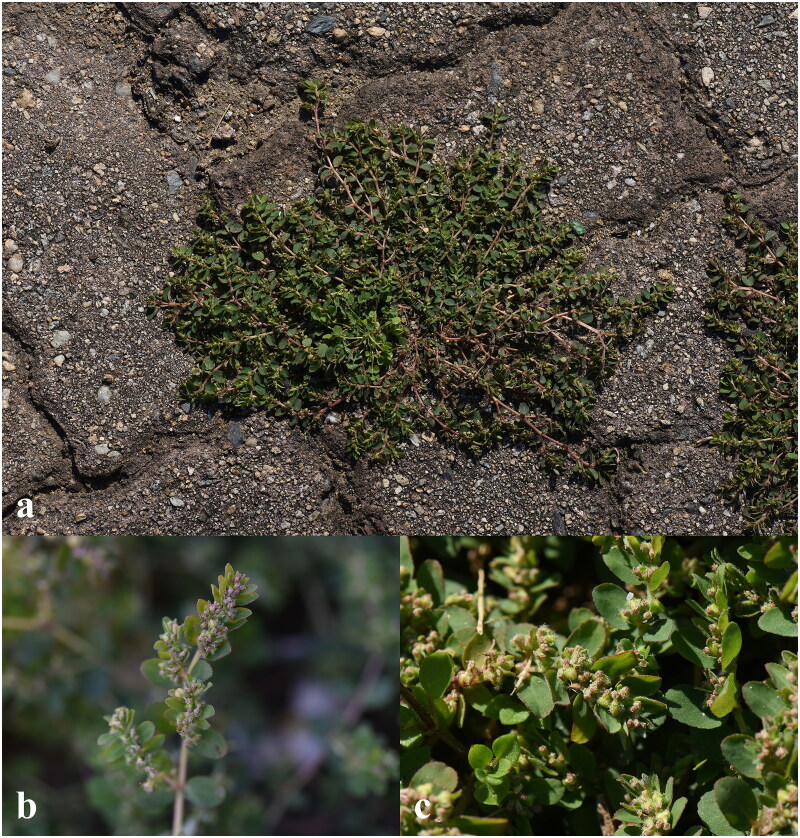 Figure 1
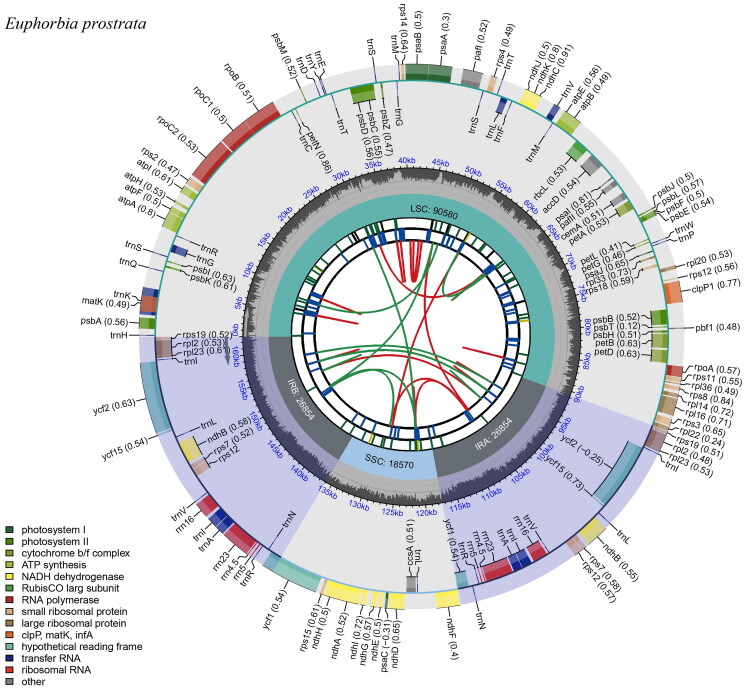 Figure 2
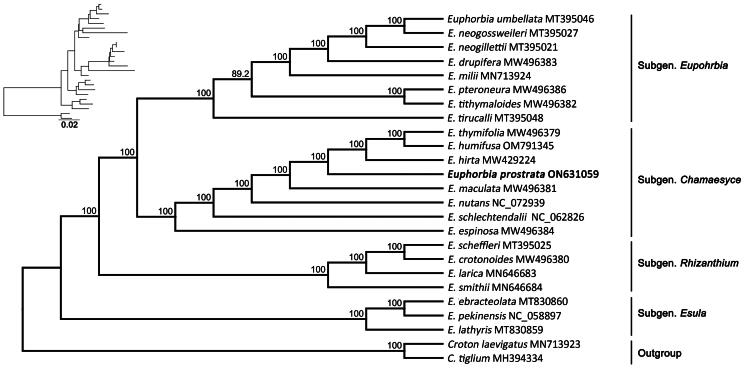 Figure 3
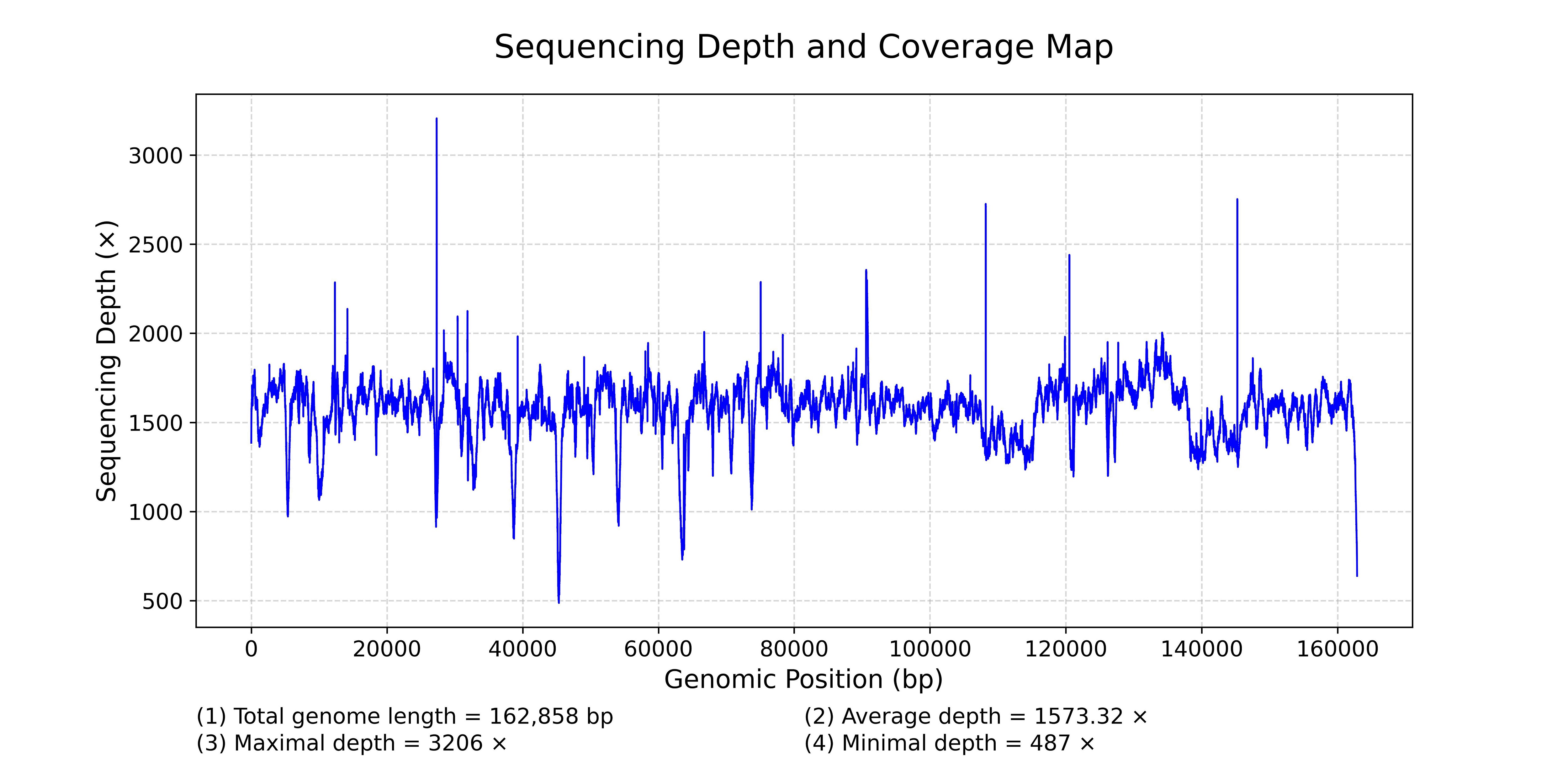 Figure 4
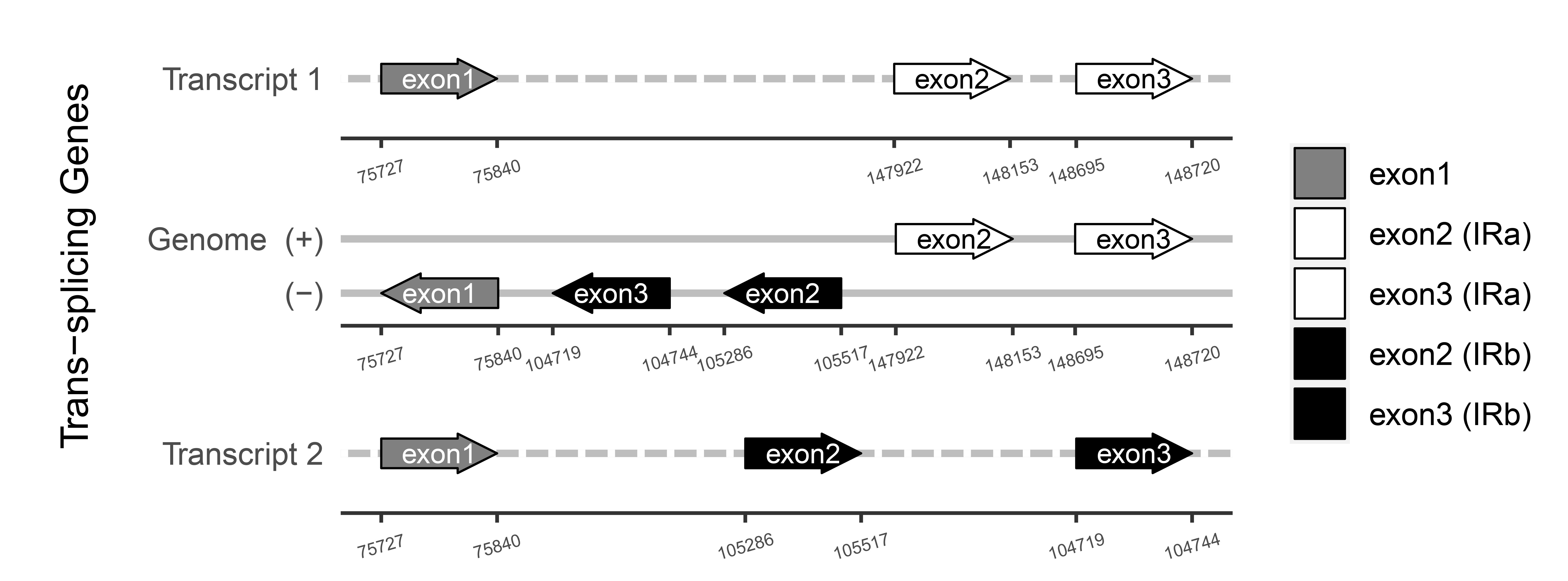 Figure 5
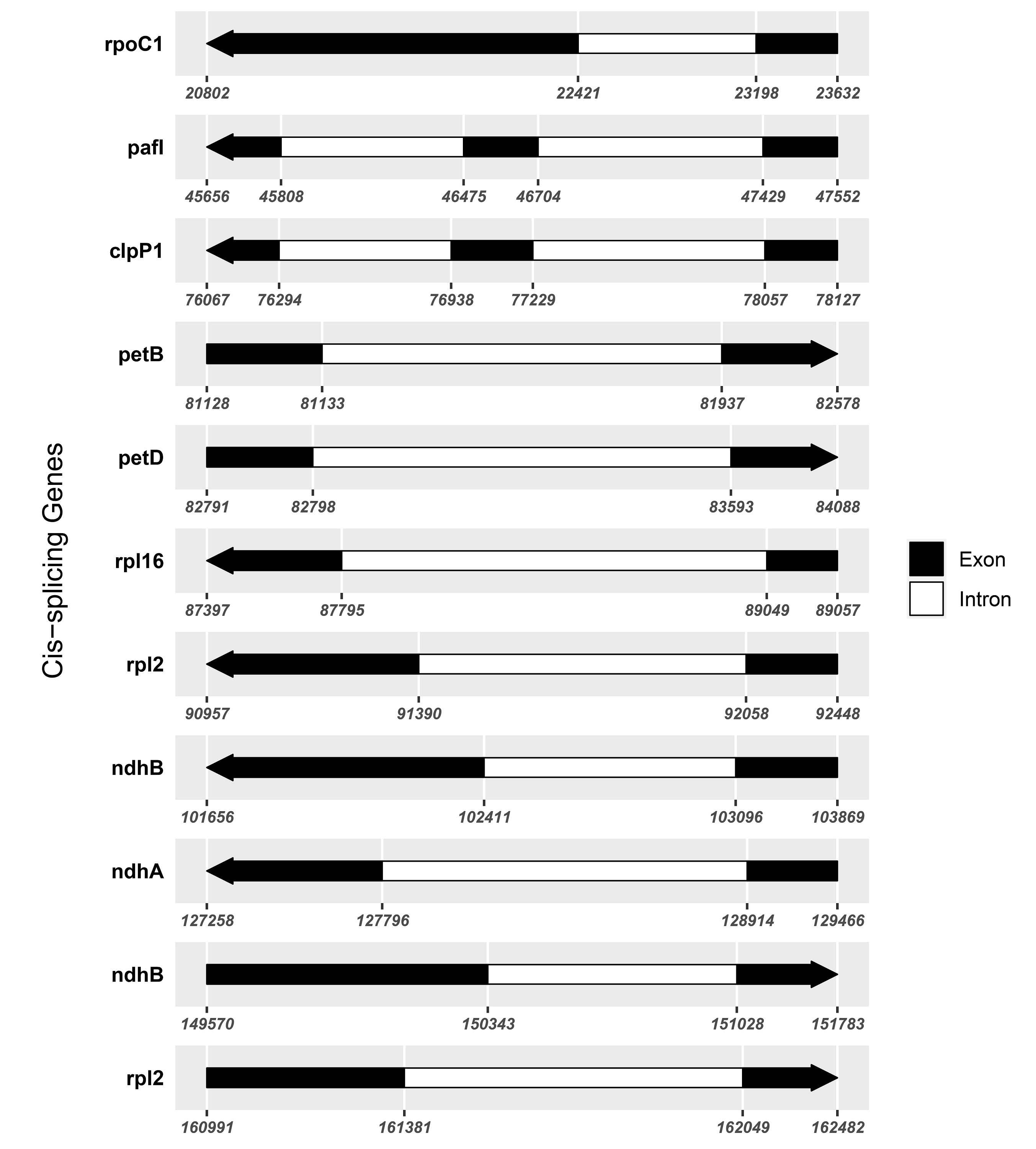 Figure 6
Peer Reviews
No public reviews on file for this paper yet. If you reviewed it on a platform where reviews are public (OpenReview, ICLR, NeurIPS, ICML), you can paste yours below so the community can read it here.
Videos
No videos yet. Explain this paper in a talk, walkthrough, or lecture? Add one.
Taxonomy
TopicsGenomics and Phylogenetic Studies · Plant and Fungal Species Descriptions · Plant Pathogens and Fungal Diseases