Anatomical Quantitative Volumetric Evaluation of Liver Segments in Hepatocellular Carcinoma Patients Treated with Selective Internal Radiation Therapy: Key Parameters Influencing Untreated Liver Hypertrophy
Raphaël Girardet, Jean-François Knebel, Clarisse Dromain, Naik Vietti Violi, Georgia Tsoumakidou, Nicolas Villard, Alban Denys, Nermin Halkic, Nicolas Demartines, Kosuke Kobayashi, Antonia Digklia, Niklaus Schaefer, John O. Prior, Sarah Boughdad, Rafael Duran

TL;DR
This study identifies factors like younger age and treatment specifics that influence liver growth after radiation therapy for liver cancer.
Contribution
The study introduces an anatomical volumetric approach to evaluate liver changes after SIRT and identifies key parameters influencing untreated liver hypertrophy.
Findings
Younger patients with smaller spleen volume and higher 90Y activity showed greater untreated liver hypertrophy.
The amount of treated liver strongly impacts relative untreated liver volume increase.
Liver function stability post-SIRT correlates with increased untreated liver hypertrophy.
Abstract
Selective internal radiation therapy (SIRT) is widely used for hepatocellular carcinoma (HCC) treatment. Following SIRT, complex morphological changes in the liver occur, with hypertrophy of the untreated liver and atrophy of the treated liver. However, the factors affecting these morphological changes are still unclear. This study aimed to investigate liver volume changes after SIRT for HCC with different levels of treatment selectivity and to evaluate the parameters affecting these changes using a segmentation-based 3D software relying on liver vascular anatomy. Our results, based on a cohort of 88 HCC patients treated with SIRT, showed that younger patients with smaller spleen volume, higher administered 90Y activity, and larger amount of treated liver had a higher degree of untreated liver hypertrophy. When SIRT is used in potential surgical candidates, these parameters should be…
Genes, proteins, chemicals, diseases, species, mutations and cell lines named across the full text — each resolved to its canonical identifier and authoritative record.
Click any figure to enlarge with its caption.
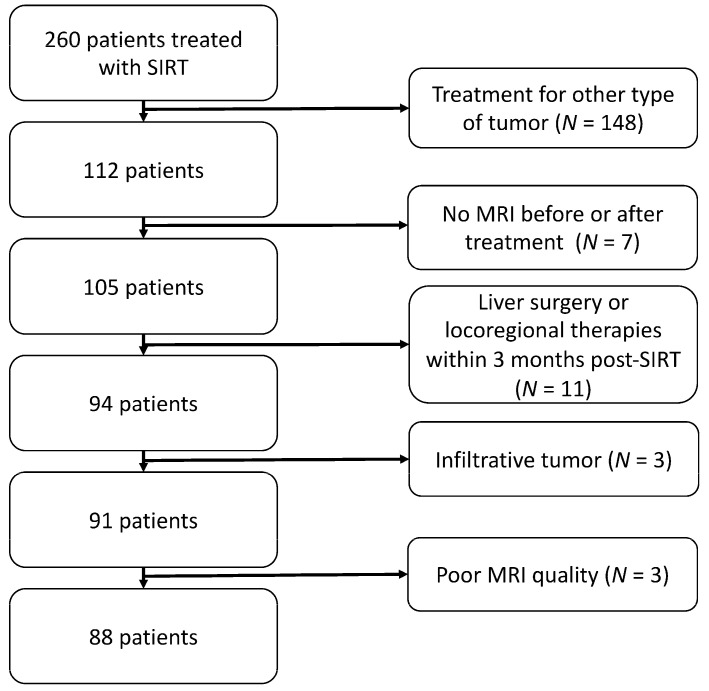 Figure 1
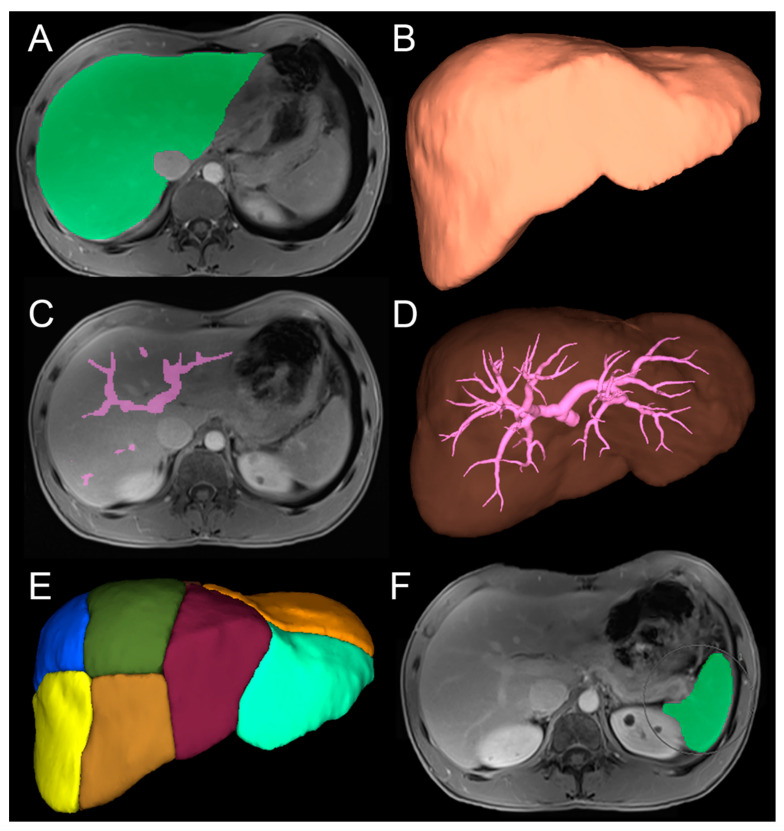 Figure 2
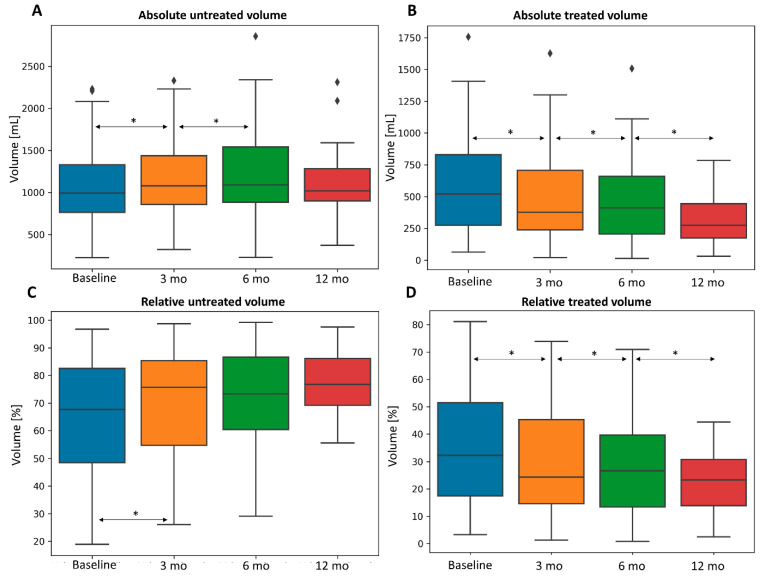 Figure 3
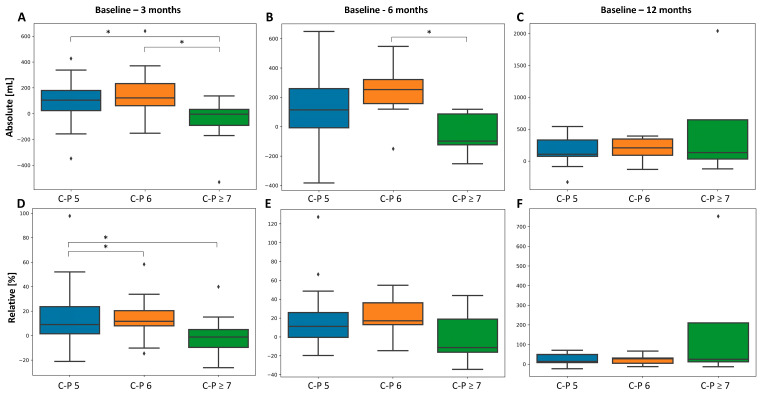 Figure 4
Peer Reviews
No public reviews on file for this paper yet. If you reviewed it on a platform where reviews are public (OpenReview, ICLR, NeurIPS, ICML), you can paste yours below so the community can read it here.
Videos
No videos yet. Explain this paper in a talk, walkthrough, or lecture? Add one.
Taxonomy
TopicsHepatocellular Carcinoma Treatment and Prognosis · Radiomics and Machine Learning in Medical Imaging · Advanced Radiotherapy Techniques