The Aryl Hydrocarbon Receptor: Impact on the Tumor Immune Microenvironment and Modulation as a Potential Therapy
Brian D. Griffith, Timothy L. Frankel

TL;DR
This paper reviews how the aryl hydrocarbon receptor affects cancer progression and the tumor immune environment, and explores its potential as a cancer therapy target.
Contribution
The paper provides a comprehensive review of AhR's dual roles in tumor progression and immune modulation, highlighting gaps in current research and therapeutic potential.
Findings
AhR activation promotes tumor growth through proliferation and epithelial-to-mesenchymal transition.
AhR has both pro- and anti-tumorigenic effects on immune cells in the tumor microenvironment.
Current AhR-targeting therapies show promise in pre-clinical studies but lack clinical success.
Abstract
The aryl hydrocarbon receptor (AhR) is a cytoplasmic and environmental receptor that responds to both exogenous and endogenous ligands to impart a broad range of functions and thereby significantly impact cancer progression. AhR activation impacts both tumor-intrinsic pathways and immune cells in a context-specific manner. Understanding the impact of AhR activation on the tumor immune microenvironment is critical to guide cancer therapies targeting the receptor. The aryl hydrocarbon receptor (AhR) is a ubiquitous nuclear receptor with a broad range of functions, both in tumor cells and immune cells within the tumor microenvironment (TME). Activation of AhR has been shown to have a carcinogenic effect in a variety of organs, through induction of cellular proliferation and migration, promotion of epithelial-to-mesenchymal transition, and inhibition of apoptosis, among other functions.…
Genes, proteins, chemicals, diseases, species, mutations and cell lines named across the full text — each resolved to its canonical identifier and authoritative record.
Click any figure to enlarge with its caption.
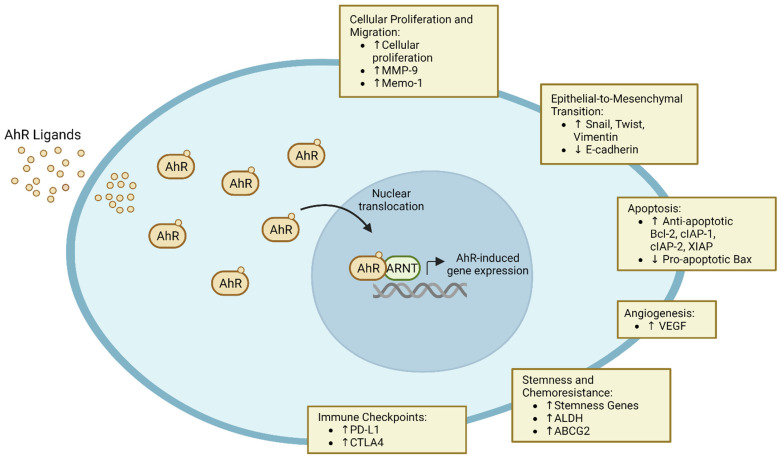 Figure 1
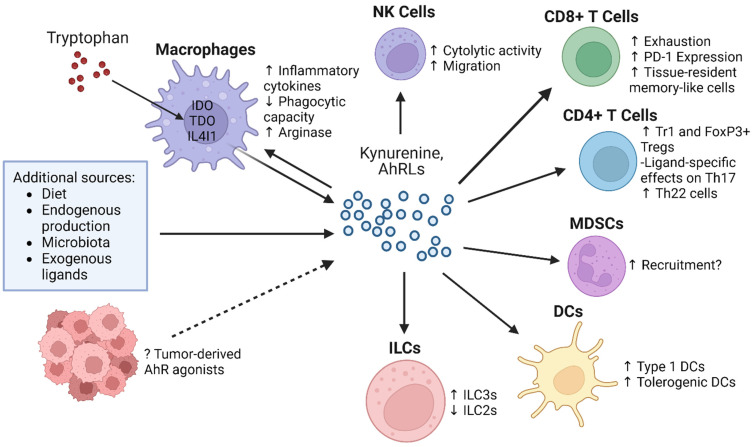 Figure 2
Peer Reviews
No public reviews on file for this paper yet. If you reviewed it on a platform where reviews are public (OpenReview, ICLR, NeurIPS, ICML), you can paste yours below so the community can read it here.
Videos
No videos yet. Explain this paper in a talk, walkthrough, or lecture? Add one.
Taxonomy
TopicsClassical Antiquity Studies