Identifying and modulating neural signatures of stress susceptibility and resilience enables control of anhedonia
Frances Xia, Valeria Fascianelli, Nina Vishwakarma, Frances Grace Ghinger, Stefano Fusi, Mazen A Kheirbek

TL;DR
This study identifies brain activity patterns linked to stress susceptibility and resilience in mice, offering a way to reverse anhedonia through targeted neural manipulation.
Contribution
The study discovers distinct neural signatures in the BLA and vCA1 that differentiate stress susceptibility and resilience, and shows how modulating these can reverse anhedonia.
Findings
Resilient mice show stronger BLA discrimination of reward choices, while susceptible mice exhibit rumination-like BLA activity.
Susceptible mice have higher-dimensional spontaneous BLA activity at rest, allowing accurate decoding of stress history.
Targeted vCA1-BLA manipulation rescues dysfunctional neural dynamics and reverses anhedonic behavior in susceptible mice.
Abstract
Anhedonia is a core aspect of major depressive disorder. Traditionally viewed as a blunted emotional state in which individuals are unable to experience joy, anhedonia also diminishes the drive to seek rewards and the ability to value and learn about them 1–4.The neural underpinnings of anhedonia and how this emotional state drives related behavioral changes remain unclear. Here, we investigated these questions by taking advantage of the fact that when mice are exposed to traumatic social stress, susceptible animals become socially withdrawn and anhedonic, where they cease to seek high-value rewards, while others remain resilient. By performing high density electrophysiological recordings and comparing neural activity patterns of these groups in the basolateral amygdala (BLA) and ventral CA1 (vCA1) of awake behaving animals, we identified neural signatures of susceptibility and…
Genes, proteins, chemicals, diseases, species, mutations and cell lines named across the full text — each resolved to its canonical identifier and authoritative record.
Click any figure to enlarge with its caption.
 Figure 1
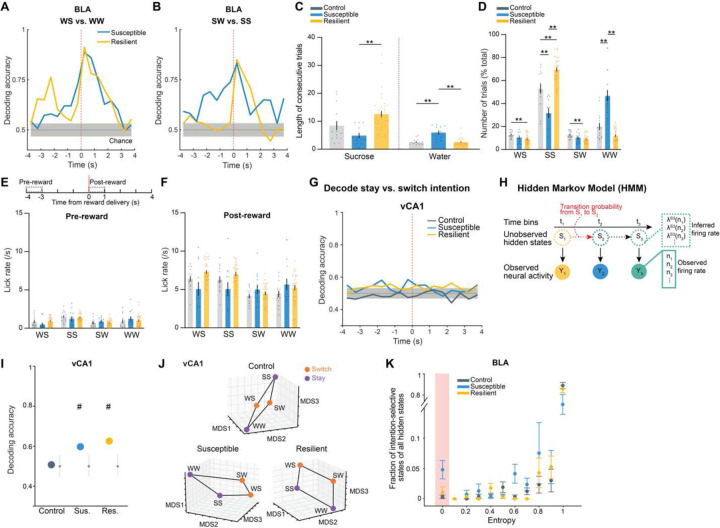 Figure 2
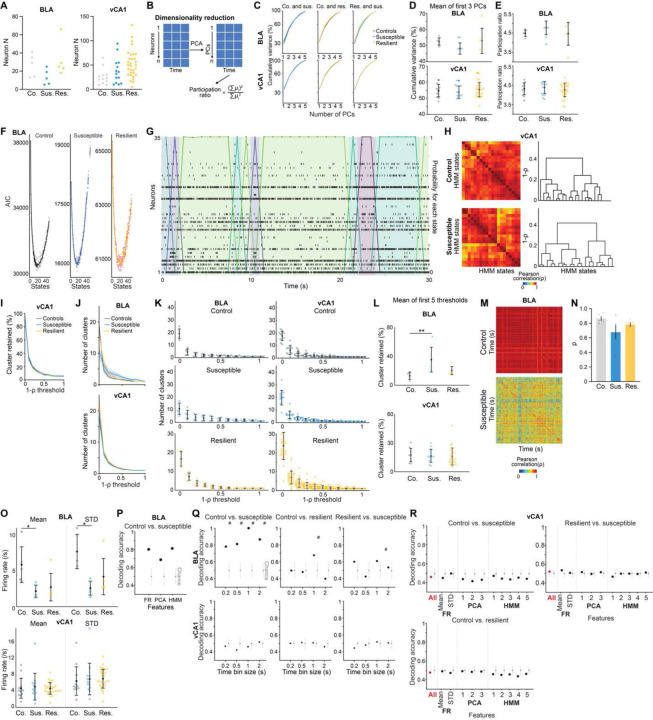 Figure 3
 Figure 4
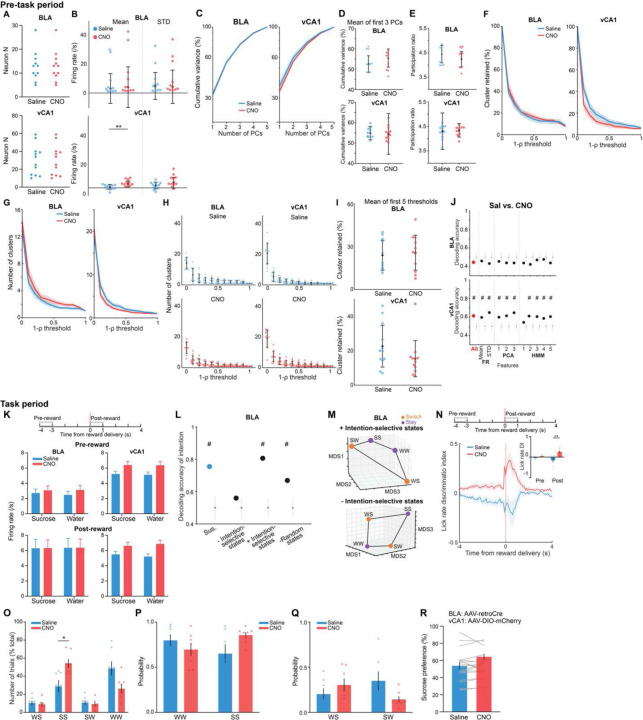 Figure 5
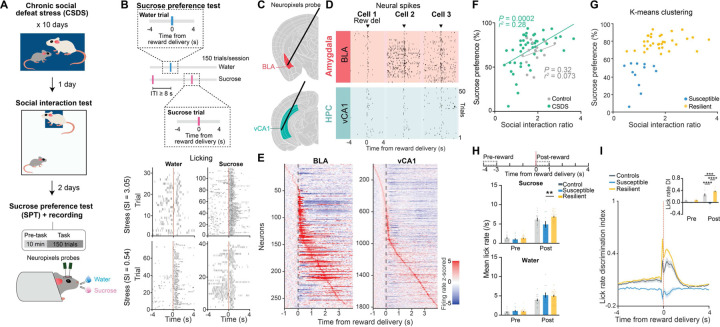 Figure 6
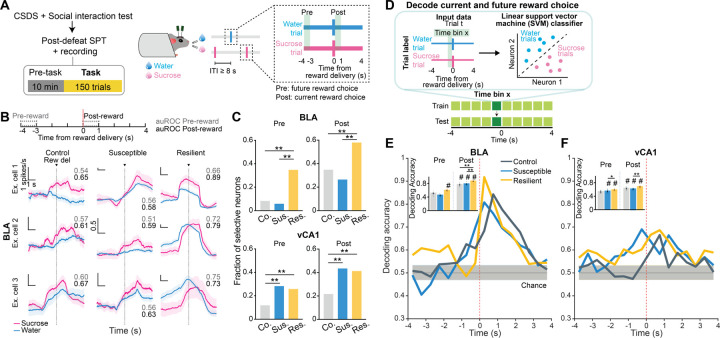 Figure 7
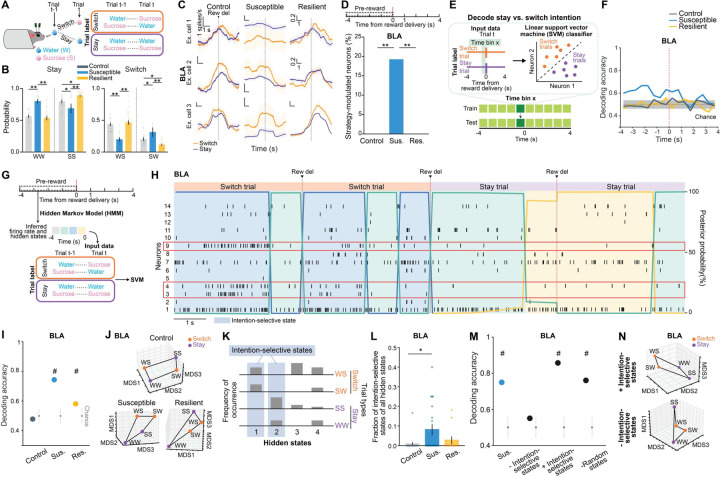 Figure 8
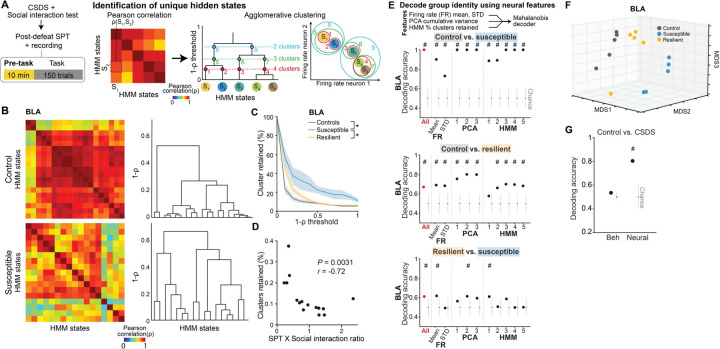 Figure 9
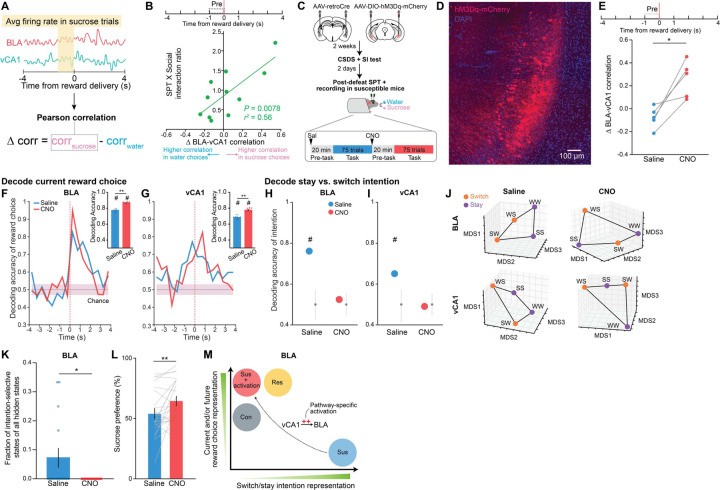 Figure 10
Peer Reviews
No public reviews on file for this paper yet. If you reviewed it on a platform where reviews are public (OpenReview, ICLR, NeurIPS, ICML), you can paste yours below so the community can read it here.
Videos
No videos yet. Explain this paper in a talk, walkthrough, or lecture? Add one.
Taxonomy
TopicsNeuroendocrine regulation and behavior · Memory and Neural Mechanisms · Stress Responses and Cortisol