Pre-Pulse Inhibition of an escape response in adult fruit fly, Drosophila melanogaster
Erika Viragh, Lenke Asztalos, Michaela Fenckova, Tamas Szlanka, Zoltan Gyorgypal, Karoly Kovacs, Joanna IntHout, Pavel Cizek, Mihaly Konda, Emanuela Szucs, Agnes Zvara, Judit Biro, Eniko Csapo, Tamas Lukacsovich, Zoltan Hegedus, Laszlo Puskas, Annette Schenck, Zoltan Asztalos

TL;DR
This paper shows that fruit flies have a startle response similar to mammals, which can help study mental disorders using simpler models.
Contribution
The study introduces a new method to measure PPI in fruit flies and links it to genes associated with schizophrenia.
Findings
Drosophila exhibits PPI with parameters similar to mammals.
Reduced Dysbindin and altered Nmdar1 expression affect PPI in flies.
Using Drosophila can reduce reliance on mammalian models for mental disorder research.
Abstract
Pre-Pulse Inhibition (PPI) is a neural process where suppression of a startle response is elicited by preceding the startling stimulus (Pulse) with a weak, non-startling one (Pre-Pulse). Defective PPI is widely employed as a behavioural endophenotype in humans and mammalian disorder-relevant models for neuropsychiatric disorders. We have developed a user-friendly, semi-automated, high-throughput-compatible Drosophila light-off jump response PPI paradigm, with which we demonstrate that PPI, with similar parameters measured in mammals, exists in adults of this model organism. We report that Drosophila PPI is affected by reduced expression of Dysbindin and both reduced and increased expression of Nmdar1 (N-methyl-D-aspartate receptor 1), perturbations associated with schizophrenia. Studying the biology of PPI in an organism that offers a plethora of genetic tools and a complex and well…
Genes, proteins, chemicals, diseases, species, mutations and cell lines named across the full text — each resolved to its canonical identifier and authoritative record.
Click any figure to enlarge with its caption.
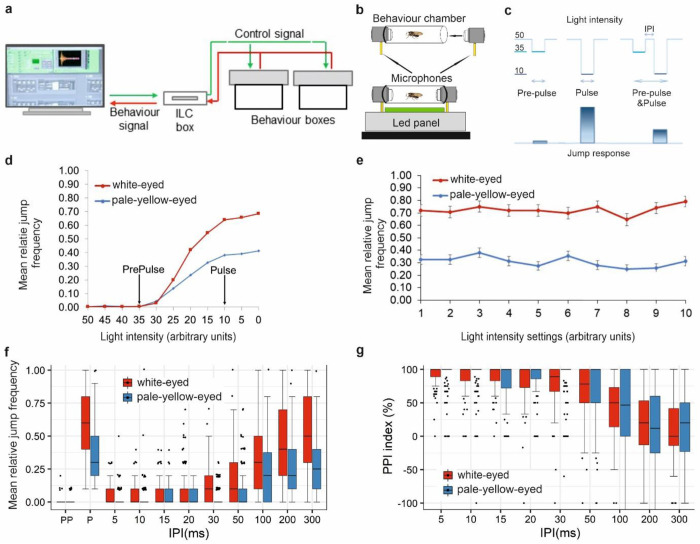 Figure 1
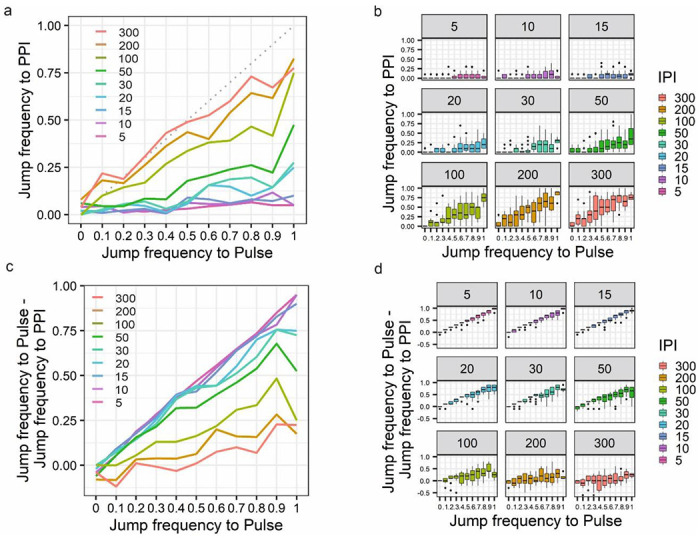 Figure 2
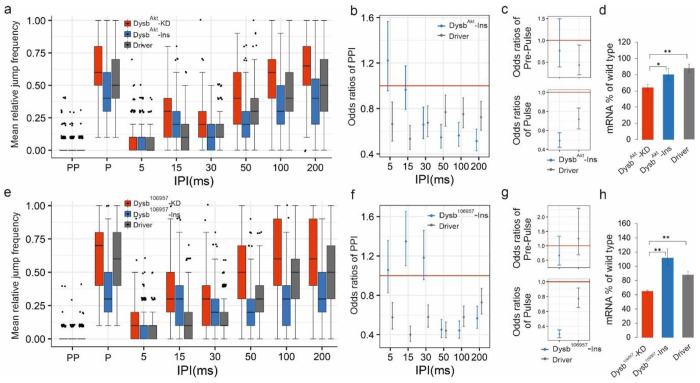 Figure 3
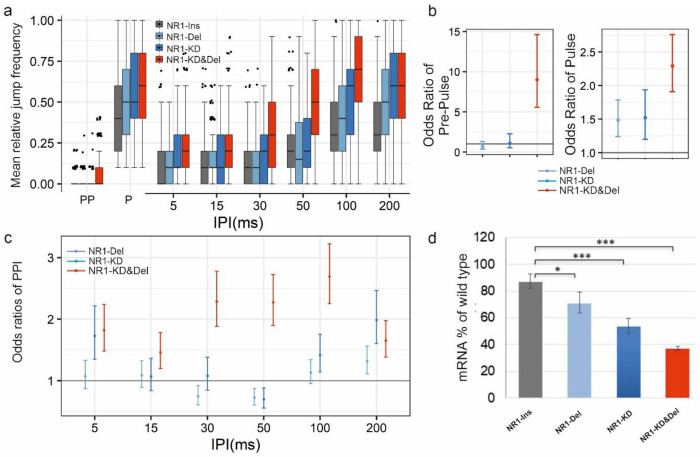 Figure 4
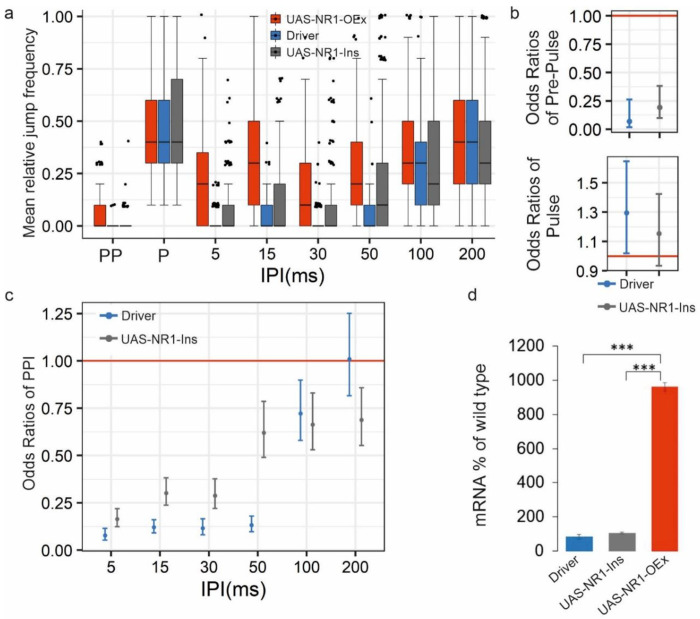 Figure 5
Peer Reviews
No public reviews on file for this paper yet. If you reviewed it on a platform where reviews are public (OpenReview, ICLR, NeurIPS, ICML), you can paste yours below so the community can read it here.
Videos
No videos yet. Explain this paper in a talk, walkthrough, or lecture? Add one.
Taxonomy
TopicsNeurobiology and Insect Physiology Research · Nicotinic Acetylcholine Receptors Study · Receptor Mechanisms and Signaling