Development of primary osteoarthritis during aging in genetically diverse UM-HET3 mice
Sher Bahadur Poudel, Ryan R Ruff, Gozde Yildirim, Richard A. Miller, David E Harrison, Randy Strong, Thorsten Kirsch, Shoshana Yakar

TL;DR
This study examines how aging and mitochondrial-targeted treatments affect primary osteoarthritis in genetically diverse mice, revealing sex-specific responses and inflammation links.
Contribution
The study reveals sex-specific effects of mitochondrial-targeted treatments on OA progression and highlights inflammation's role in OA severity.
Findings
Aged UM-HET3 mice showed high primary OA prevalence with strong correlations between cartilage damage and synovitis/inflammation markers.
Methylene blue reduced cartilage damage in male mice, while MitoQ showed trends but no significant effects.
Female mice exhibited significant correlations between cartilage scores and subchondral bone density, unlike males.
Abstract
Primary osteoarthritis (OA) occurs without identifiable underlying causes such as previous injuries or specific medical conditions. Age is a major contributing factor to OA, and as one ages, various joint tissues undergo gradual change, including degeneration of the articular cartilage, alterations in subchondral bone (SCB) morphology, and inflammation of the synovium. We investigated the prevalence of primary OA in aged, genetically diverse UM-HET3 mice. Articular cartilage (AC) integrity and SCB morphology were assessed in 182 knee joints of 22–25 months old mice using the Osteoarthritis Research Society International (OARSI) scoring system and micro-CT, respectively. Additionally, we explored the effects of methylene blue (MB) and mitoquinone (MitoQ), two agents that affect mitochondrial function, on the prevalence and progression of OA during aging. Aged UM-HET3 mice showed a high…
Genes, proteins, chemicals, diseases, species, mutations and cell lines named across the full text — each resolved to its canonical identifier and authoritative record.
Click any figure to enlarge with its caption.
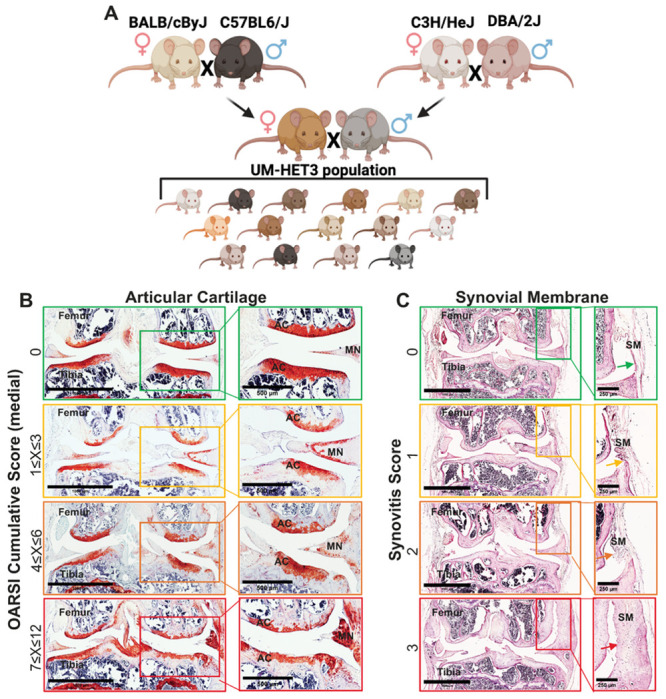 Figure 1
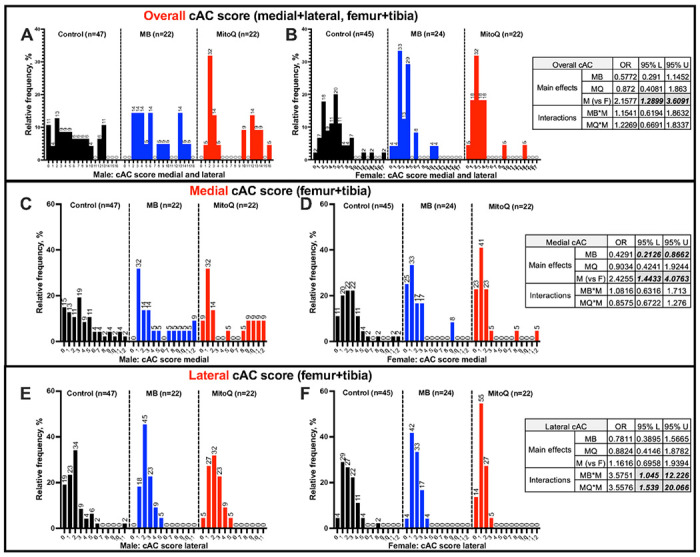 Figure 2
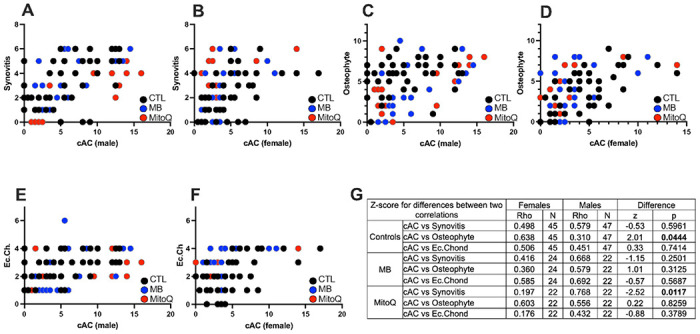 Figure 3
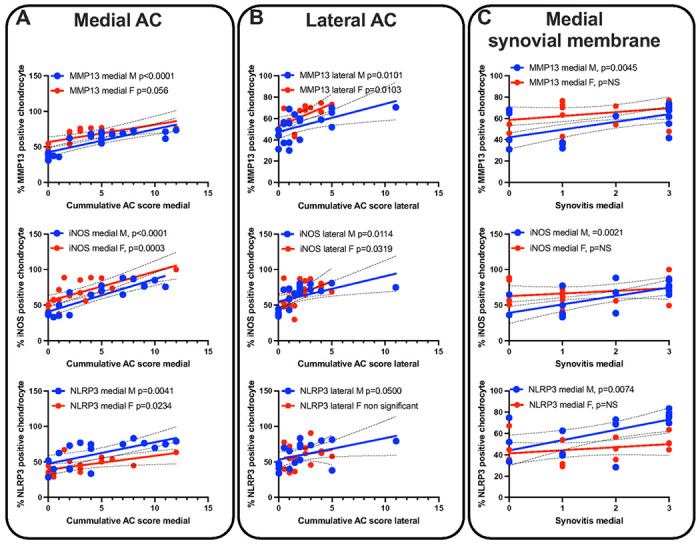 Figure 4
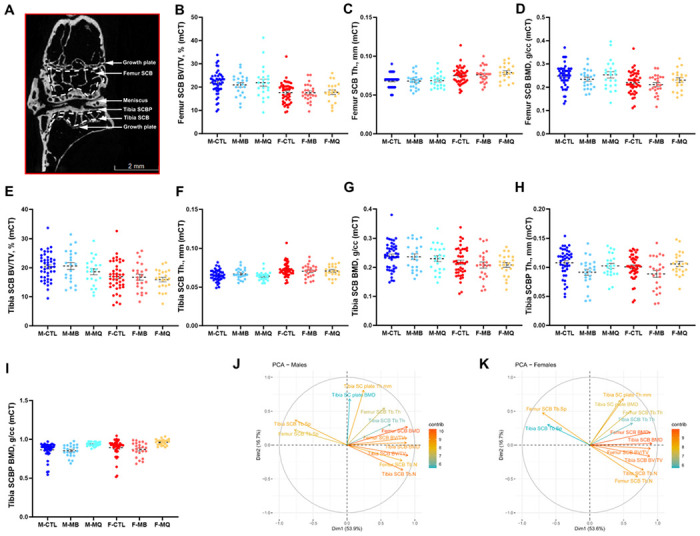 Figure 5
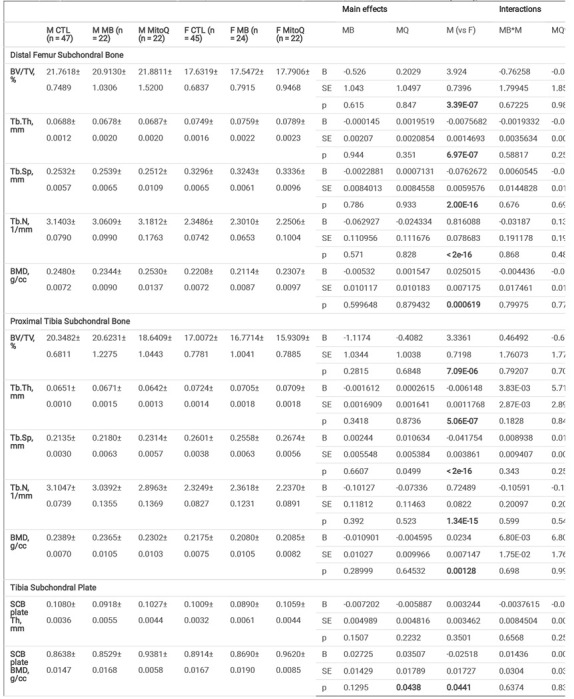 Figure 6
Peer Reviews
No public reviews on file for this paper yet. If you reviewed it on a platform where reviews are public (OpenReview, ICLR, NeurIPS, ICML), you can paste yours below so the community can read it here.
Videos
No videos yet. Explain this paper in a talk, walkthrough, or lecture? Add one.
Taxonomy
TopicsOsteoarthritis Treatment and Mechanisms · Rheumatoid Arthritis Research and Therapies · Bone Metabolism and Diseases