Comparison of Cu+, Ag+, and Au+ Ions as Ionization Agents of Volatile Organic Compounds at Subatmospheric Pressure
Monika Koktavá, Vadym Prysiazhnyi, Jan Preisler, Antonín Bednařík

TL;DR
This study compares how Cu+, Ag+, and Au+ ions ionize volatile organic compounds under subatmospheric pressure, revealing differences in reactivity and detection capabilities.
Contribution
The paper introduces a novel comparison of Au+ ions' reactivity in ionizing VOCs, highlighting their unique detection advantages and challenges.
Findings
Au+ ions showed the highest reactivity but caused more spectral complexity due to side reactions.
Au+ ions enabled detection of saturated hydrocarbons, which Cu+ and Ag+ could not detect.
Detection limits for VOCs ranged from 0.1 to 1.4 nmol/L using the subatmospheric ion source.
Abstract
Ionization of volatile organic compounds (VOCs) by coinage metal ions (Cu+, Ag+, and Au+) generated by laser desorption and ionization (LDI) of a metal nanolayer in subatmospheric conditions is explored. The study was performed in a commercial subatmospheric dual MALDI/ESI ion source. Five compounds representing different VOC classes were chosen for a detailed study of the metal ionization mechanism: ethanol, acetone, acetic acid, xylene, and cyclohexane. In the gas phase, ion molecular complexes of all three metal ions were formed, typically with two ligand molecules. The successful detection of the metal complexes with VOCs strongly depended on the applied voltages across the ion source, minimizing the in-source fragmentation. The employed orbital trap with ultrahigh resolving power and sub-parts-per-million mass accuracy allowed unambiguous identification of the formed complexes…
Genes, proteins, chemicals, diseases, species, mutations and cell lines named across the full text — each resolved to its canonical identifier and authoritative record.
Click any figure to enlarge with its caption.
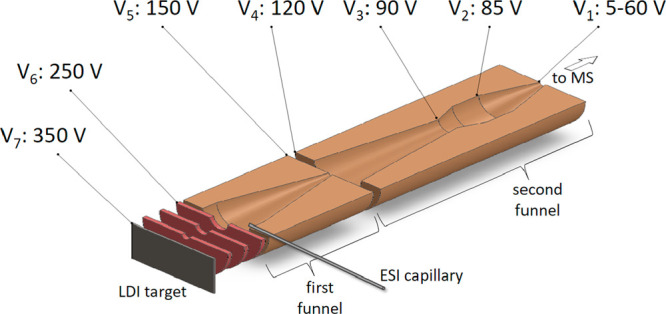 Figure 1
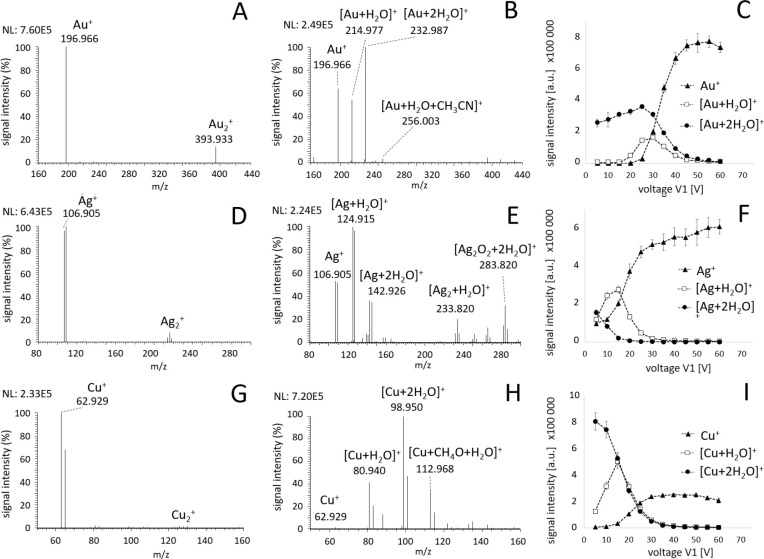 Figure 2
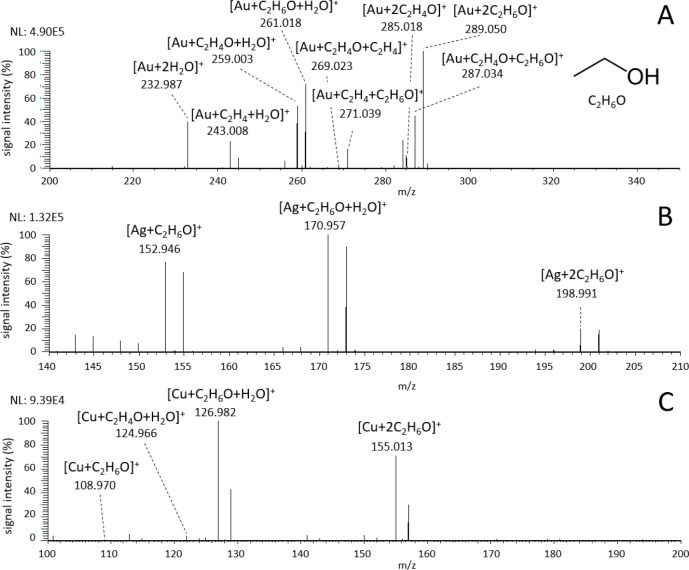 Figure 3
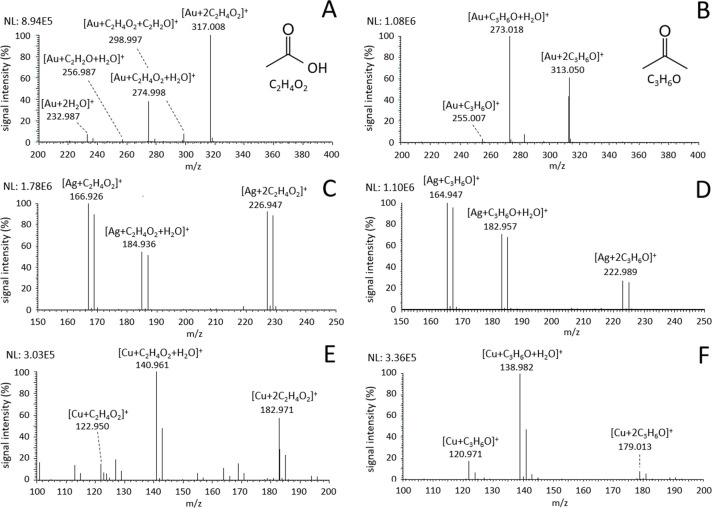 Figure 4
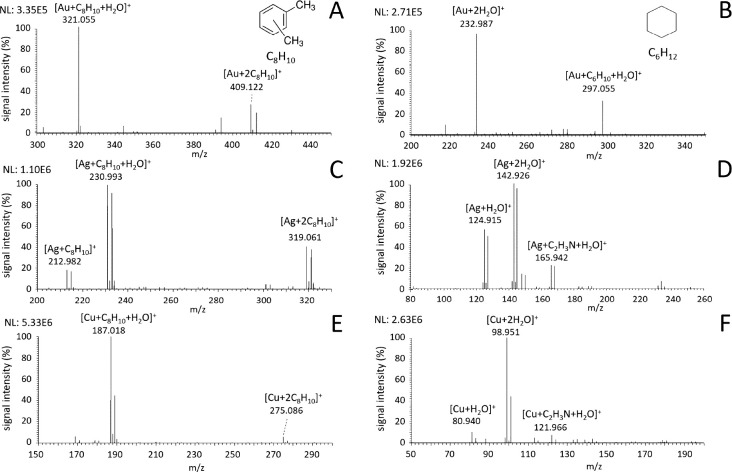 Figure 5
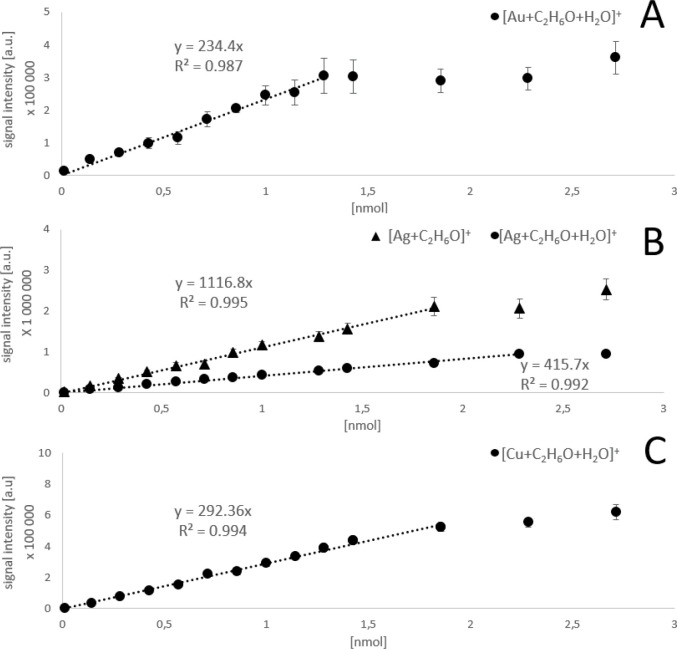 Figure 6
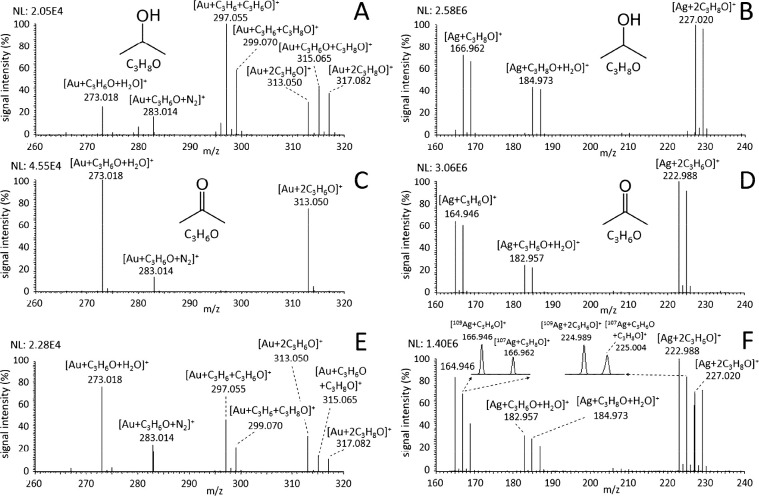 Figure 7
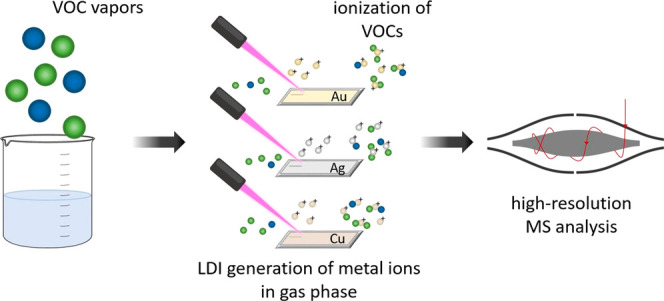 Figure 8
Peer Reviews
No public reviews on file for this paper yet. If you reviewed it on a platform where reviews are public (OpenReview, ICLR, NeurIPS, ICML), you can paste yours below so the community can read it here.
Videos
No videos yet. Explain this paper in a talk, walkthrough, or lecture? Add one.
Taxonomy
TopicsMass Spectrometry Techniques and Applications · Analytical chemistry methods development · Advanced Chemical Sensor Technologies