Electroacupuncture ameliorates neuroinflammation by inhibiting TRPV4 channel in ischemic stroke
Xueqi Ren, Xinyi Gao, Ziqing Li, Yangyang Ding, Ao Xu, Lixia Du, Yufang Yang, Deheng Wang, Zhifei Wang, Shi Shu

TL;DR
Electroacupuncture at specific points reduces brain injury in stroke by suppressing inflammation and a key ion channel called TRPV4.
Contribution
This study reveals that electroacupuncture reduces neuroinflammation in stroke by inhibiting TRPV4 and M1 microglia/macrophage polarization.
Findings
Electroacupuncture improved neurological outcomes and reduced infarction in MCAO mice.
EA suppressed M1 polarization of microglia/macrophages and reduced pro-inflammatory cytokines.
TRPV4 inhibition with GSK219 produced similar effects to EA, but combining both did not enhance outcomes.
Abstract
We investigated the potential mechanisms underlying the therapeutic efficacy of electroacupuncture (EA) at the Shuigou (GV26) and Baihui (GV20) acupoints in the treatment of ischemic stroke. We assessed the therapeutic effects of EA on MCAO mice through behavioral studies and TTC staining. Various techniques, such as RT‐PCR, immunofluorescence, and Western blots, were employed to evaluate the activation and polarization of microglia/macrophages, and changes in the TRPV4 ion channel. We used the TRPV4 antagonist GSK2193874 (GSK219) to verify the involvement of TRPV4 in the therapeutic effects of EA. EA effectively improved neurological impairments and reduced cerebral infarction volume in MCAO mice. It suppressed activated microglia/macrophages and inhibited their polarization toward the M1 phenotype post‐MCAO. EA also downregulated the expression of pro‐inflammatory cytokines,…
Genes, proteins, chemicals, diseases, species, mutations and cell lines named across the full text — each resolved to its canonical identifier and authoritative record.
Click any figure to enlarge with its caption.
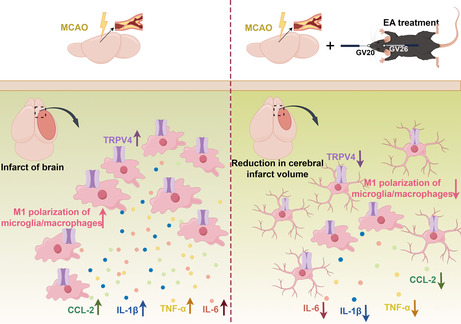 Figure 1
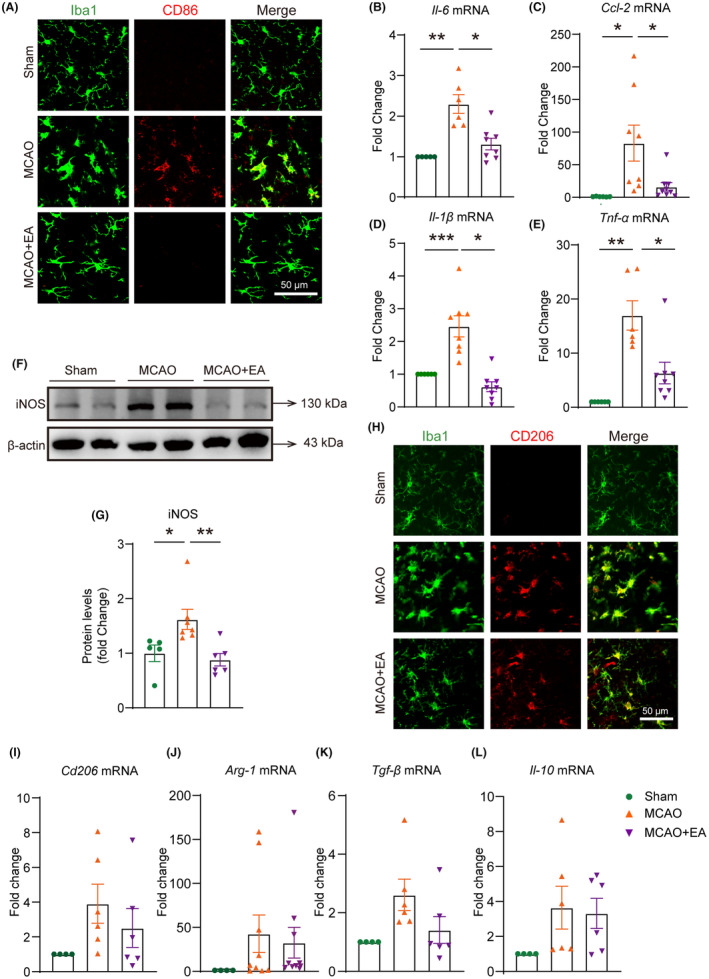 Figure 2
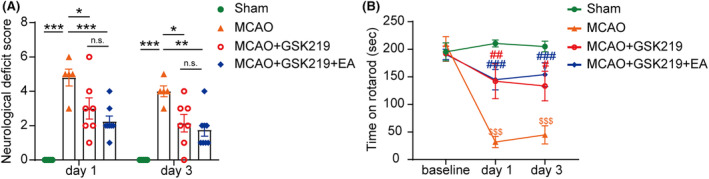 Figure 3
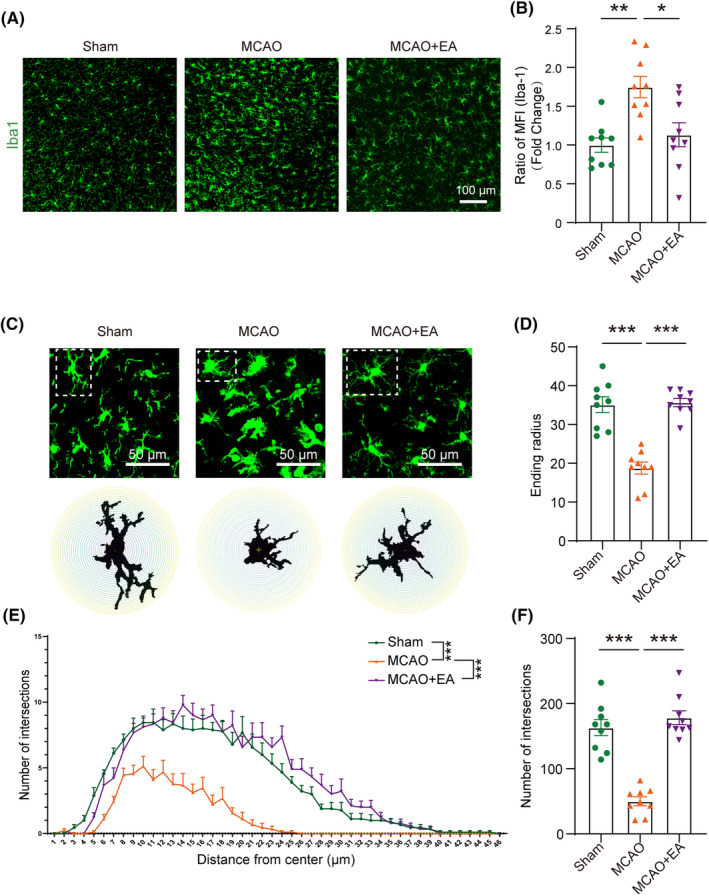 Figure 4
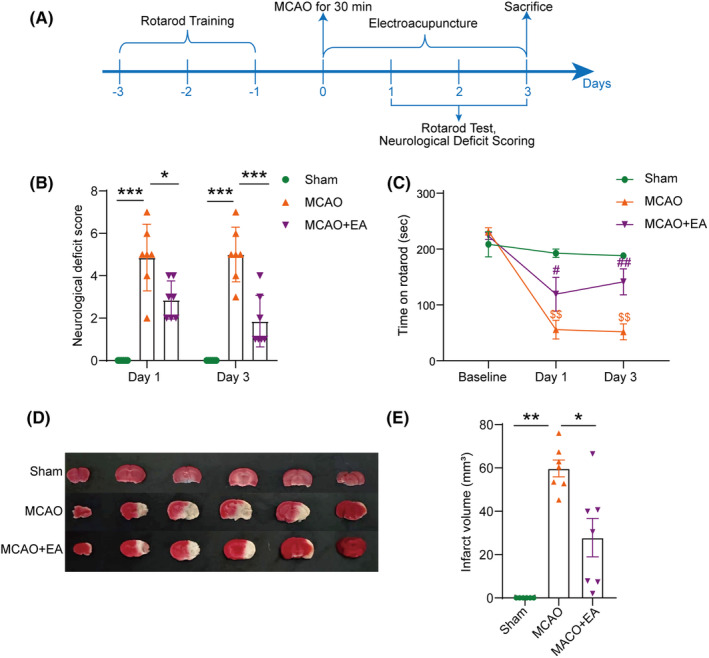 Figure 5
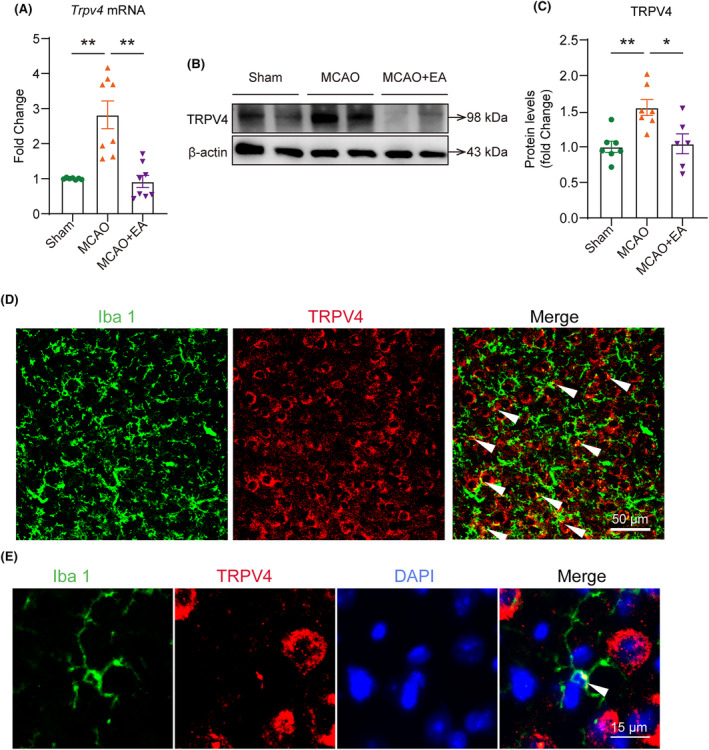 Figure 6
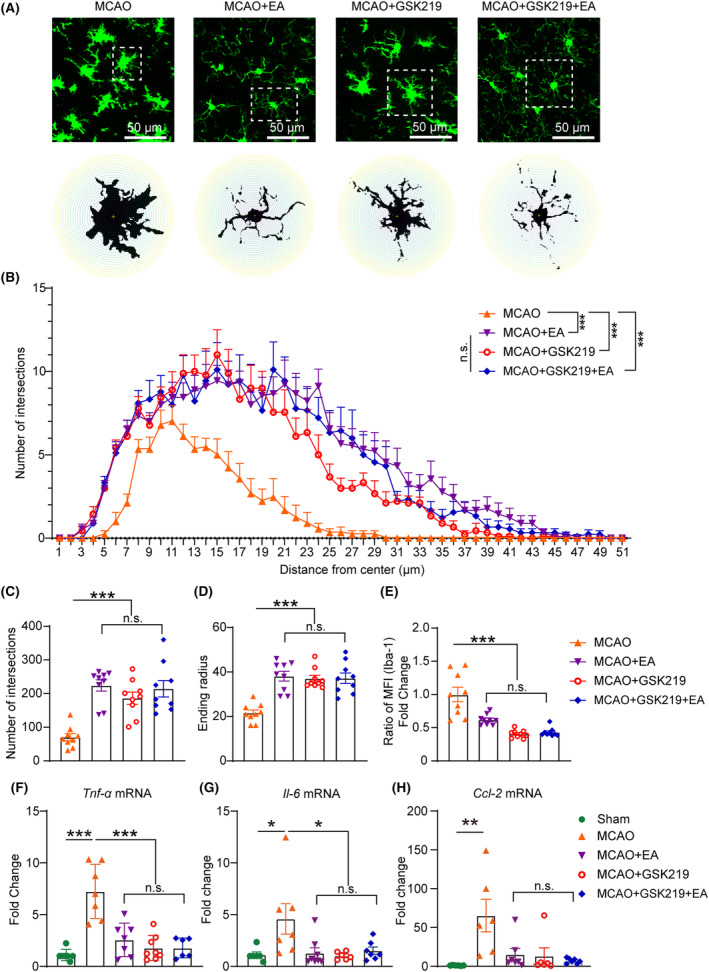 Figure 7
Peer Reviews
No public reviews on file for this paper yet. If you reviewed it on a platform where reviews are public (OpenReview, ICLR, NeurIPS, ICML), you can paste yours below so the community can read it here.
Videos
No videos yet. Explain this paper in a talk, walkthrough, or lecture? Add one.
Taxonomy
TopicsPhilosophical and Cultural Analysis · Psychological Treatments and Disorders · Educational theories and practices