Dynamics of humoral and cellular response to three doses of anti-SARS-CoV-2 BNT162b2 vaccine in patients with hematological malignancies and older subjects
Valentina Laquintana, Carla Mottini, Francesco Marchesi, Benedetta Marcozzi, Irene Terrenato, Eleonora Sperandio, Luisa de Latouliere, Francesca Carrieri, Fulvia Pimpinelli, Martina Pontone, Raul Pellini, Flaminia Campo, Laura Conti, Celeste Accetta, Chiara Mandoj

TL;DR
This study examines how patients with blood cancers and older adults respond to three doses of the BNT162b2 vaccine, finding that a third dose boosts antibody levels and offers some protection.
Contribution
The study provides new insights into immune responses to the third dose of the BNT162b2 vaccine in immunocompromised and older populations.
Findings
Third vaccine dose increases antibody levels in hematological malignancy patients above a protective threshold.
Neutralizing antibodies against Omicron were present in 42.3% of hematological malignancy patients after the third dose.
Memory T-cell responses were lower in hematological malignancy patients compared to other groups.
Abstract
Few data are available about the durability of the response, the induction of neutralizing antibodies, and the cellular response upon the third dose of the anti-severe acute respiratory syndrome coronavirus 2 (SARS-CoV-2) vaccine in hemato-oncological patients. To investigate the antibody and cellular response to the BNT162b2 vaccine in patients with hematological malignancy. We measured SARS-CoV-2 anti-spike antibodies, anti-Omicron neutralizing antibodies, and T-cell responses 1 month after the third dose of vaccine in 93 fragile patients with hematological malignancy (FHM), 51 fragile not oncological subjects (FNO) aged 80–92, and 47 employees of the hospital (healthcare workers, (HW), aged 23-66 years. Blood samples were collected at day 0 (T0), 21 (T1), 35 (T2), 84 (T3), 168 (T4), 351 (T pre-3D), and 381 (T post-3D) after the first dose of vaccine. Serum IgG antibodies against…
Genes, proteins, chemicals, diseases, species, mutations and cell lines named across the full text — each resolved to its canonical identifier and authoritative record.
Click any figure to enlarge with its caption.
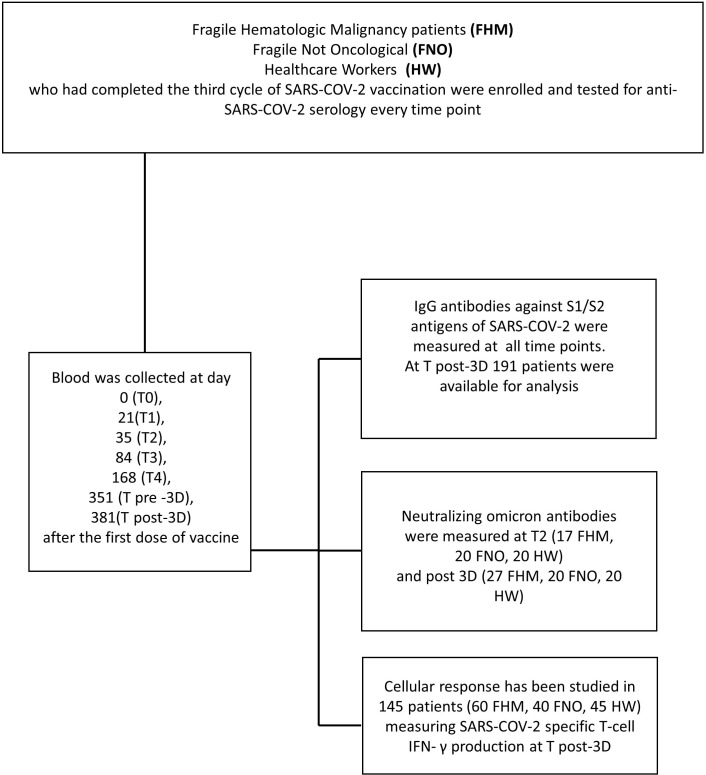 Figure 1
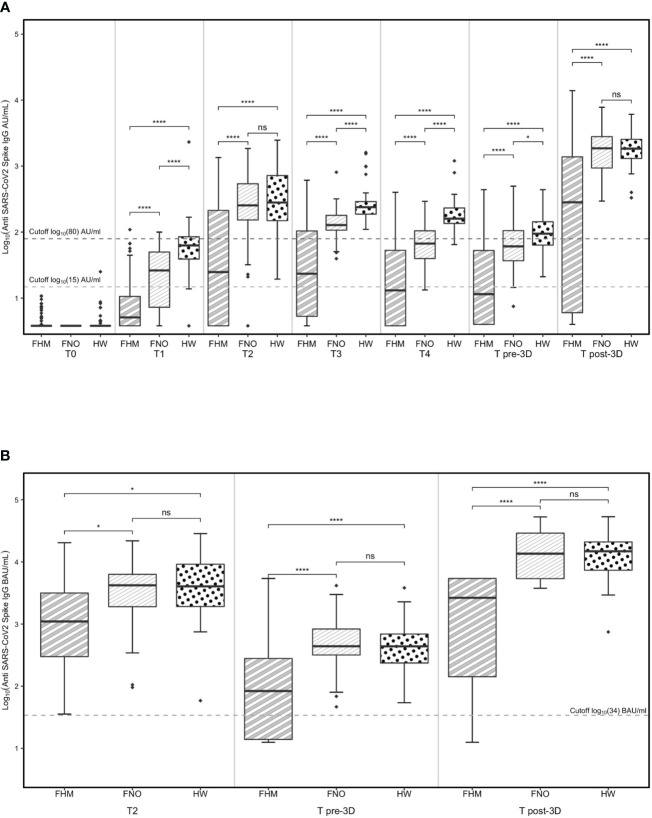 Figure 2
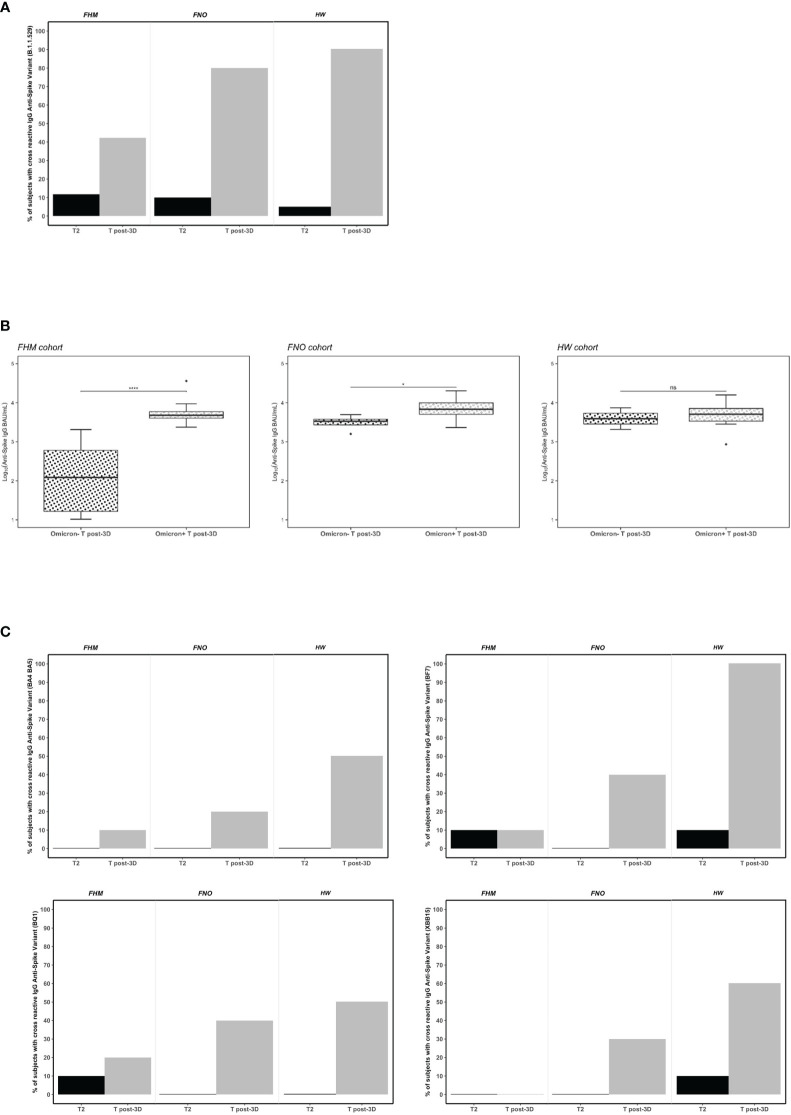 Figure 3
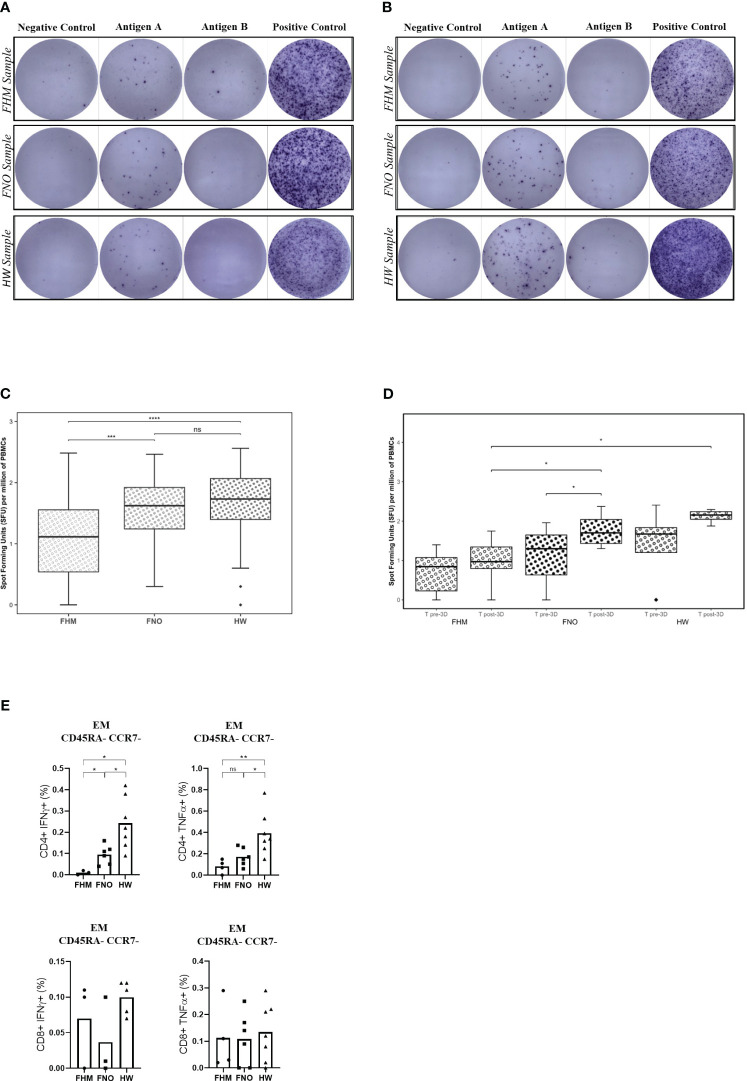 Figure 4
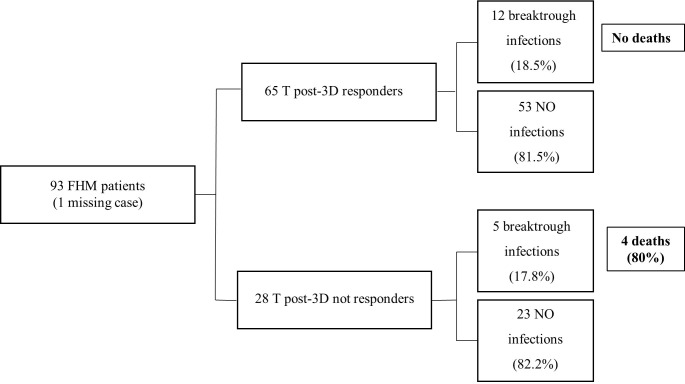 Figure 5
Peer Reviews
No public reviews on file for this paper yet. If you reviewed it on a platform where reviews are public (OpenReview, ICLR, NeurIPS, ICML), you can paste yours below so the community can read it here.
Videos
No videos yet. Explain this paper in a talk, walkthrough, or lecture? Add one.
Taxonomy
TopicsSARS-CoV-2 and COVID-19 Research · COVID-19 Clinical Research Studies · Long-Term Effects of COVID-19