Fungicide ingestion reduces net energy gain and microbiome diversity of the solitary mason bee
Mitzy F. Porras, Juan Antonio Raygoza Garay, Malachi Brought, Tomas López–Londoño, Alexander Chautá, Makaylee Crone, Edwin G. Rajotte, Ngoc Phan, Neelendra K. Joshi, Kari Peter, David Biddinger

TL;DR
This study shows that fungicides used during apple bloom can harm solitary bees by reducing their energy gain and gut bacteria diversity.
Contribution
The study identifies specific fungicides that harm solitary bees and reveals their impact on microbiome diversity.
Findings
Mancozeb and penthiopyrad reduced larval weight and survival at all tested doses.
Mancozeb-treated pollen led to lower bacterial diversity and abundance in larvae.
Some fungicides are particularly harmful to O. cornifrons health during bloom.
Abstract
Fungicides are frequently used during tree fruit bloom and can threaten insect pollinators. However, little is known about how non-honey bee pollinators such as the solitary bee, Osmia cornifrons, respond to contact and systemic fungicides commonly used in apple production during bloom. This knowledge gap limits regulatory decisions that determine safe concentrations and timing for fungicide spraying. We evaluated the effects of two contact fungicides (captan and mancozeb) and four translaminar/plant systemic fungicides (cyprodinil, myclobutanil, penthiopyrad, and trifloxystrobin) on larval weight gain, survival, sex ratio, and bacterial diversity. This assessment was carried out using chronic oral ingestion bioassays where pollen provisions were treated with three doses based on the currently recommended field use dose (1X), half dose (0.5X), and low dose (0.1X). Mancozeb and…
Genes, proteins, chemicals, diseases, species, mutations and cell lines named across the full text — each resolved to its canonical identifier and authoritative record.
Click any figure to enlarge with its caption.
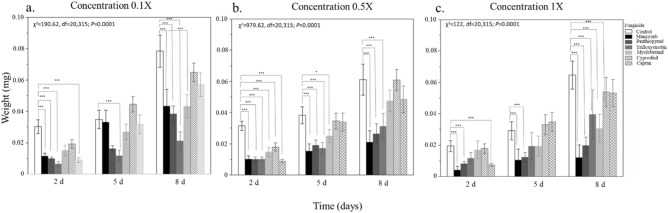 Figure 1
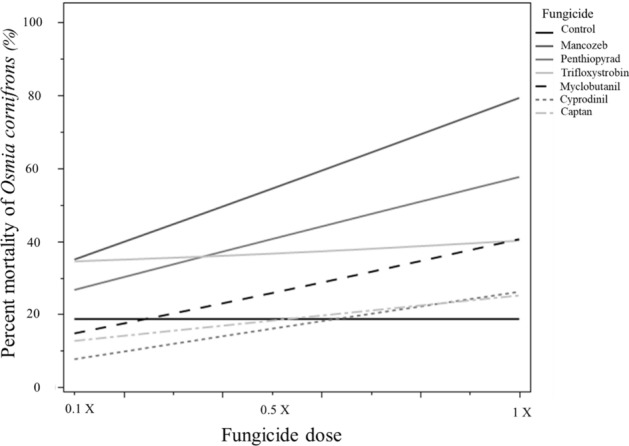 Figure 2
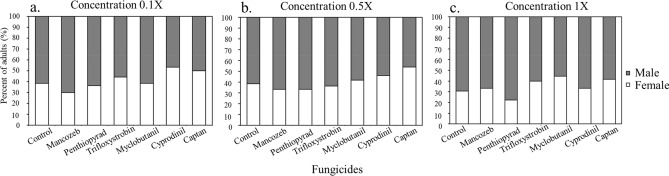 Figure 3
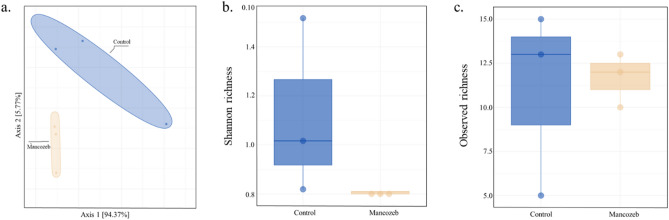 Figure 4
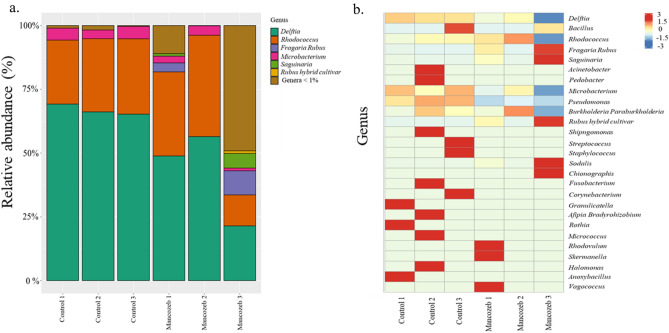 Figure 5
Peer Reviews
No public reviews on file for this paper yet. If you reviewed it on a platform where reviews are public (OpenReview, ICLR, NeurIPS, ICML), you can paste yours below so the community can read it here.
Videos
No videos yet. Explain this paper in a talk, walkthrough, or lecture? Add one.
Taxonomy
TopicsInsect and Pesticide Research · Plant and animal studies · Insect Pheromone Research and Control