Fluorinated Man9 as a High Mannose Mimetic to Unravel Its Recognition by DC-SIGN Using NMR
Adrián Silva-Díaz, Jonathan Ramírez-Cárdenas, Juan C. Muñoz-García, M. Carmen de la Fuente, Michel Thépaut, Franck Fieschi, Javier Ramos-Soriano, Jesús Angulo, Javier Rojo

TL;DR
This paper describes how fluorinated Man9 was used with NMR to study how DC-SIGN recognizes high mannose sugars.
Contribution
A fluorinated Man9 ligand was developed to overcome NMR signal overlap and identify the binding epitope for DC-SIGN.
Findings
Fluorinated Man9 enabled accurate NMR analysis of the Man9/DC-SIGN interaction.
The binding epitope was unequivocally identified using 1H,19F STD-TOCSYreF NMR experiments.
Fluorine tags improved the resolution of complex oligosaccharide interactions in solution.
Abstract
Lectins are capable of reading out the structural information contained in carbohydrates through specific recognition processes. Determining the binding epitope of the sugar is fundamental to understanding this recognition event. Nuclear magnetic resonance (NMR) is a powerful tool to obtain this structural information in solution; however, when the sugar involved is a complex oligosaccharide, such as high mannose, the signal overlap found in the NMR spectra precludes an accurate analysis of the interaction. The introduction of tags into these complex oligosaccharides could overcome these problems and facilitate NMR studies. Here, we show the preparation of the Man9 of high mannose with some fluorine tags and the study of the interaction with its receptor, dendritic cell-specific intercellular adhesion molecule-3-grabbing nonintegrin (DC-SIGN). This fluorinated ligand has allowed us to…
Genes, proteins, chemicals, diseases, species, mutations and cell lines named across the full text — each resolved to its canonical identifier and authoritative record.
Click any figure to enlarge with its caption.
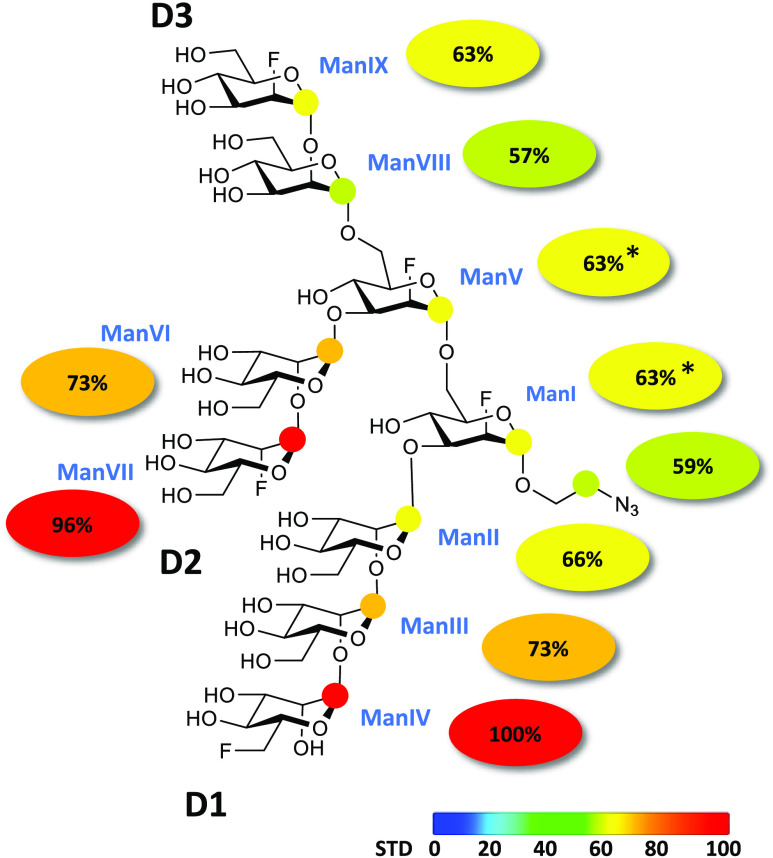 Figure 1
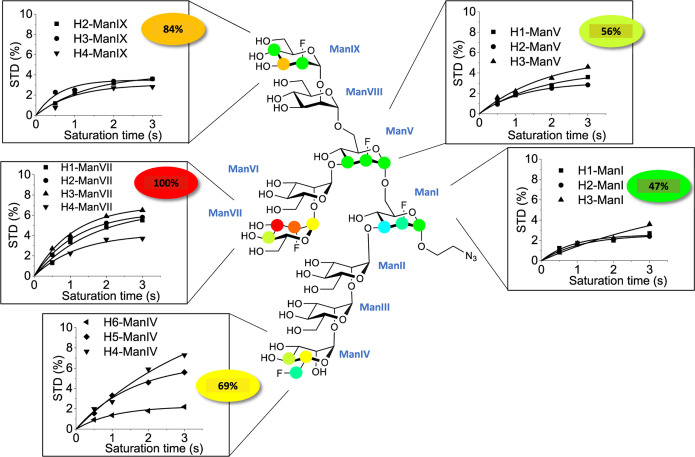 Figure 2
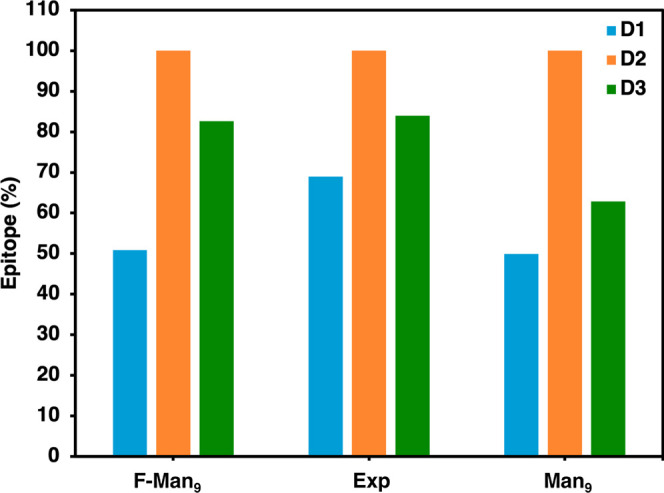 Figure 3
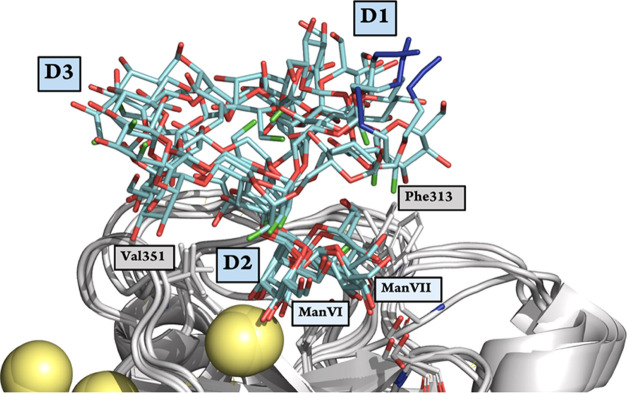 Figure 4
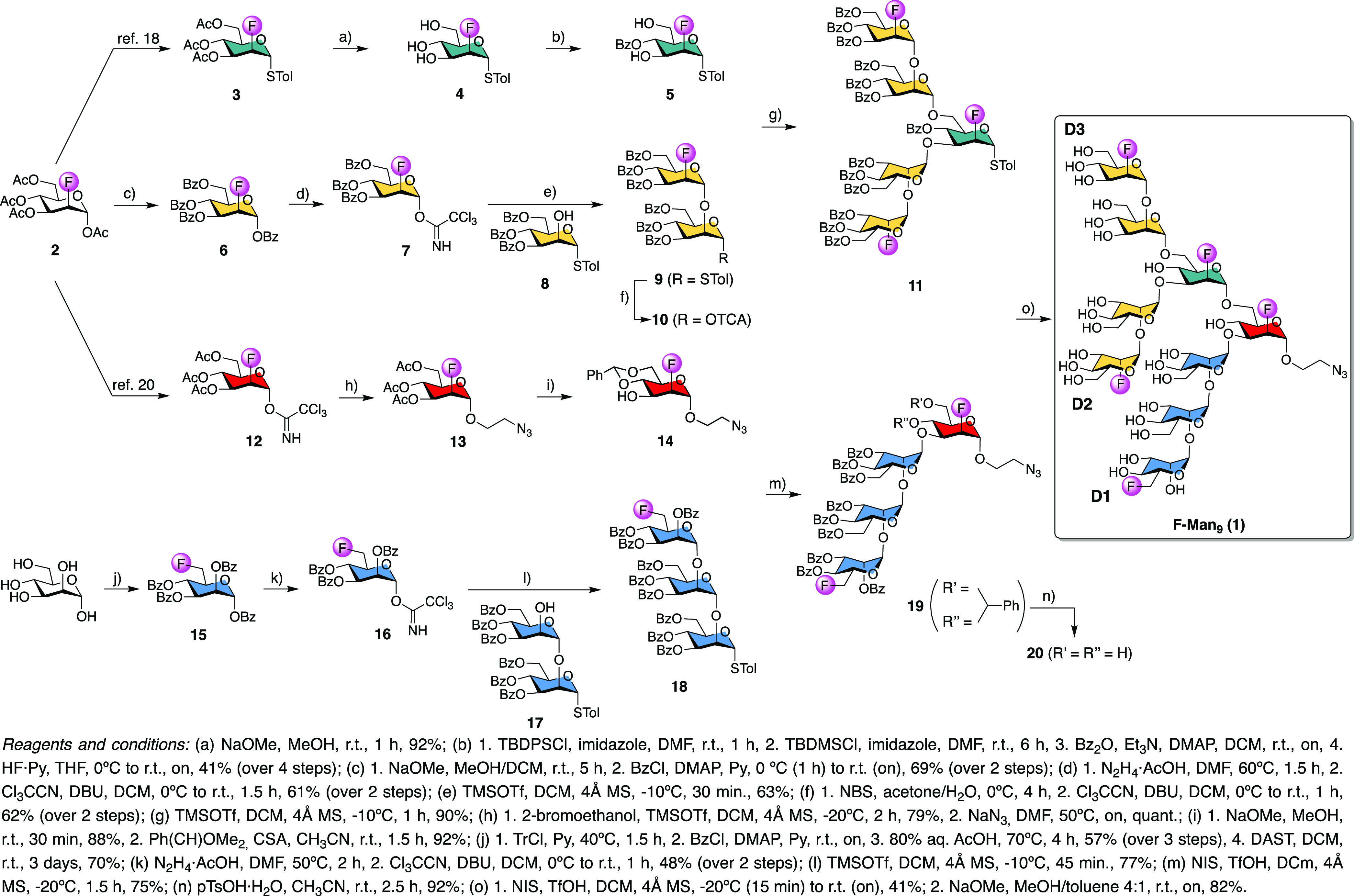 Figure 5
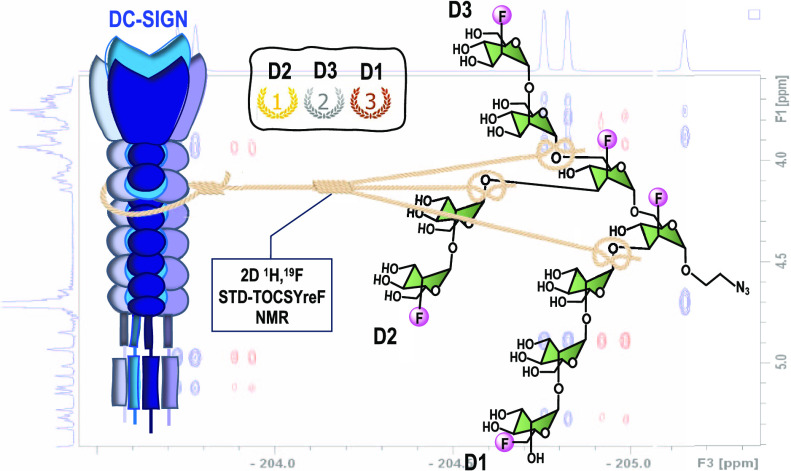 Figure 6
Peer Reviews
No public reviews on file for this paper yet. If you reviewed it on a platform where reviews are public (OpenReview, ICLR, NeurIPS, ICML), you can paste yours below so the community can read it here.
Videos
No videos yet. Explain this paper in a talk, walkthrough, or lecture? Add one.
Taxonomy
TopicsGlycosylation and Glycoproteins Research · Glycosylation and Glycoproteins Research · Supramolecular Self-Assembly in Materials