Profiling endogenous adrenal function during veno-venous ECMO support in COVID-19 ARDS: a descriptive analysis
Clemens Baumgartner, Peter Wolf, Alexander Hermann, Sebastian König, Mathias Maleczek, Daniel Laxar, Marko Poglitsch, Oliver Domenig, Katharina Krenn, Judith Schiefer, Alexandra Kautzky-Willer, Michael Krebs, Martina Hermann

TL;DR
This study examines adrenal function in patients with severe COVID-19 ARDS undergoing ECMO, finding that cortisol levels increase over time and correlate with disease severity.
Contribution
The study provides new insights into adrenal function during ECMO in COVID-19 ARDS patients, highlighting cortisol dynamics and correlations with clinical parameters.
Findings
Cortisol concentrations were lowest at ECMO initiation and increased progressively.
Cortisol levels correlated with disease severity markers like interleukin-6 and procalcitonin.
Angiotensin metabolite data suggested a more uniform aldosterone response after one week of ECMO.
Abstract
Prolonged critical illness is often accompanied by an impairment of adrenal function, which has been frequently related to conditions complicating patient management. The presumed connection between hypoxia and the pathogenesis of this critical- illness- related corticosteroid insufficiency (CIRCI) might play an important role in patients with severe acute respiratory distress syndrome (ARDS). Since extracorporeal membrane oxygenation (ECMO) is frequently used in ARDS, but data on CIRCI during this condition are scarce, this study reports the behaviour of adrenal function parameters during oxygenation support with veno-venous (vv)ECMO in coronavirus disease 2019 (COVID-19) ARDS. A total of 11 patients undergoing vvECMO due to COVID-19 ARDS at the Medical University of Vienna, who received no concurrent corticosteroid therapy, were retrospectively included in this study. We analysed the…
Genes, proteins, chemicals, diseases, species, mutations and cell lines named across the full text — each resolved to its canonical identifier and authoritative record.
Click any figure to enlarge with its caption.
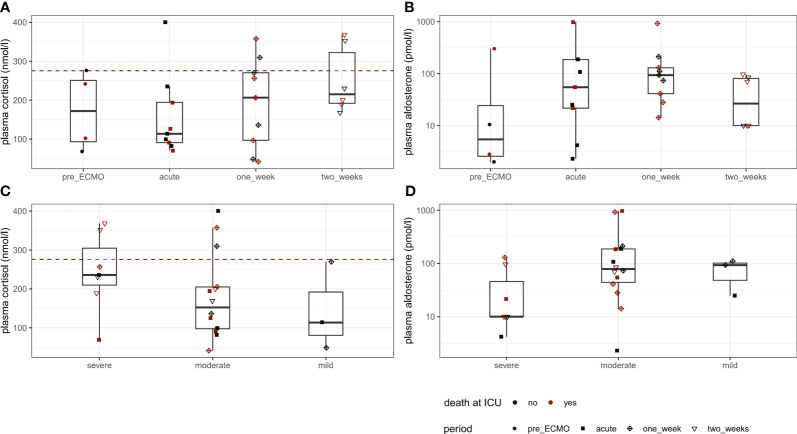 Figure 1
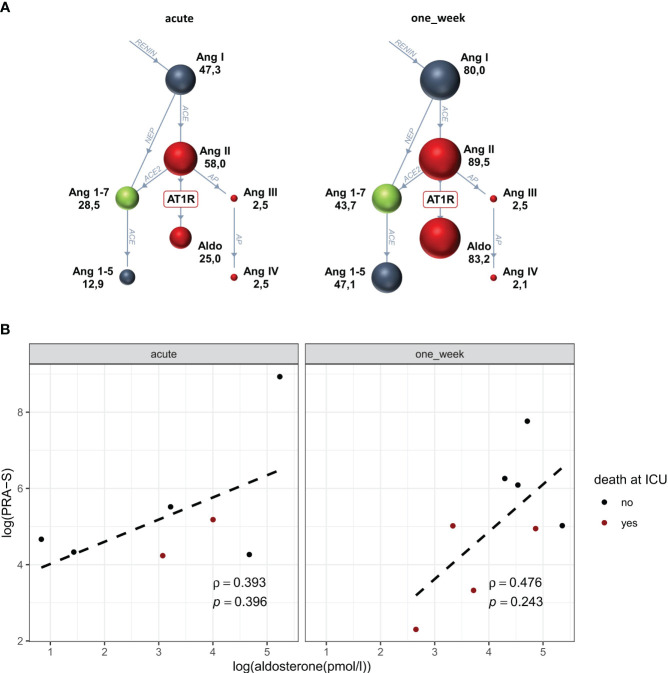 Figure 2
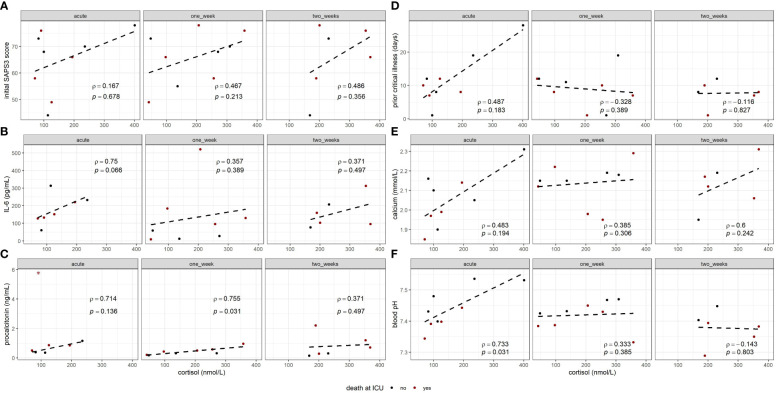 Figure 3
Peer Reviews
No public reviews on file for this paper yet. If you reviewed it on a platform where reviews are public (OpenReview, ICLR, NeurIPS, ICML), you can paste yours below so the community can read it here.
Videos
No videos yet. Explain this paper in a talk, walkthrough, or lecture? Add one.
Taxonomy
TopicsAdrenal Hormones and Disorders · Mechanical Circulatory Support Devices · Electrolyte and hormonal disorders