Validity and reliability of the English version of the Diabetic Foot Self-Care Questionnaire: a cross-cultural adaptation
María Ruiz-Muñoz, Raúl Fernández-Torres, Cynthia Formosa, Alfred Gatt, Gabriel Gijón-Noguerón, Emmanuel Navarro-Flores, Manuel González-Sánchez

TL;DR
This study validated an English version of a questionnaire to assess self-care behaviors in diabetic foot disease patients, ensuring it is reliable and useful for clinical and research purposes.
Contribution
The study provides a cross-culturally adapted and psychometrically validated English version of the Diabetic Foot Self-Care Questionnaire.
Findings
The English version (DFSQ-UMA-En) showed excellent internal consistency (Cronbach’s α = 0.889–0.981) and reliability (ICC = 0.854–0.959).
The questionnaire demonstrated good criterion validity (r = 0.429–0.844) and acceptable construct validity (Kaiser-Meyer-Olkin = 0.752).
The tool has good readability and comprehension features, making it suitable for clinical and research use.
Abstract
The objective of this study was to carry out the cross-cultural adaptation and validation of the Diabetic Foot Self-Care Questionnaire into the English language, broadening the applicability of this patient-reported outcome measure and improving the monitoring of patients with diabetic foot disease. The validation study into English was conducted in two phases: cross-cultural adaptation and psychometric validation study. Short Form-12 Version 2, EuroQoL-5D and Foot Function Index were used to analyze the criterion validity. Item response, internal consistency, standard error of measurement, minimal detectable change and construct validity were calculated in the validation phase. An English version of the questionnaire (DFSQ-UMA-En) was successfully obtained. A total of n = 193 participants were tested to confirm the validity and reliability of the questionnaire. Internal consistency…
Genes, proteins, chemicals, diseases, species, mutations and cell lines named across the full text — each resolved to its canonical identifier and authoritative record.
Click any figure to enlarge with its caption.
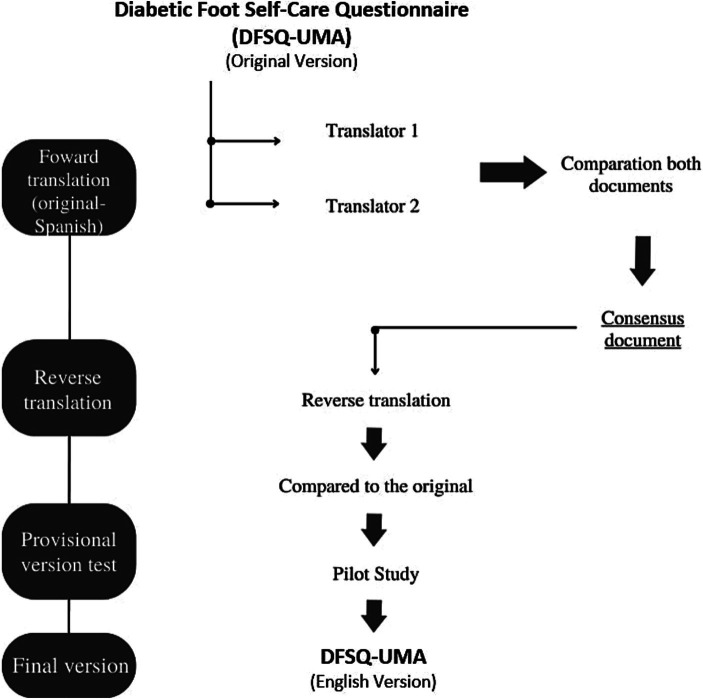 Figure 1
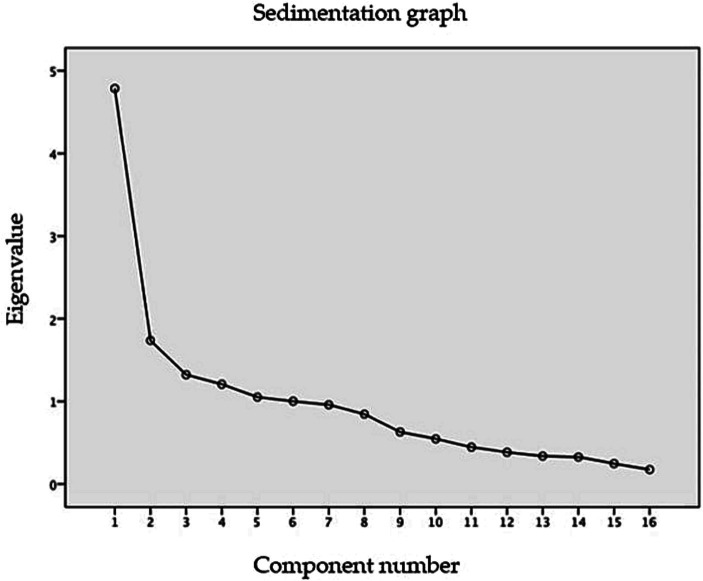 Figure 2
Peer Reviews
No public reviews on file for this paper yet. If you reviewed it on a platform where reviews are public (OpenReview, ICLR, NeurIPS, ICML), you can paste yours below so the community can read it here.
Videos
No videos yet. Explain this paper in a talk, walkthrough, or lecture? Add one.
Taxonomy
TopicsDiabetic Foot Ulcer Assessment and Management · Pressure Ulcer Prevention and Management · Wound Healing and Treatments