Artificial nighttime lighting impacts Plasmodium falciparum mature stage V gametocytes infectivity in Anopheles stephensi
Jose Luis Llergo, Helena Garuti, Celia Lopez, Julia Sanchez, David Calvo

TL;DR
Artificial light at night reduces the infectivity of malaria parasites in mosquitoes, suggesting light could be used to help control disease spread.
Contribution
This study shows artificial light negatively affects Plasmodium falciparum development in Anopheles stephensi mosquitoes.
Findings
Exposure to light after a blood meal reduces P. falciparum oocyst intensity in mosquito midguts.
Aseptic mosquitoes showed a 51% oocyst reduction under light, while septic mosquitoes had an 80% reduction.
Light exposure may offer a new strategy for reducing malaria transmission.
Abstract
Malaria is one of the most important vector-borne diseases of humans with an estimated 241 million cases worldwide in 2020. As an urban and periurban mosquito species, Anopheles stephensi is exposed to artificial human stimuli like light that can alter many aspects of mosquito behaviour, physiology and metabolism. Therefore, fluctuations in the light environment may influence the host, parasite and/or mosquito biology and hence modulate risk for disease transmission. In this study, the effect of artifitial light at night on mosquito infectivity by Plasmodium falciparum during the first hours of blood digestion was tested. A total of three independent standard membrane feeding assays were performed to artificially fed septic and aseptic mosquitoes with P. falciparum infected blood. After blood feeding, females were transferred to incubators with different photoperiod cycles, so…
Genes, proteins, chemicals, diseases, species, mutations and cell lines named across the full text — each resolved to its canonical identifier and authoritative record.
Click any figure to enlarge with its caption.
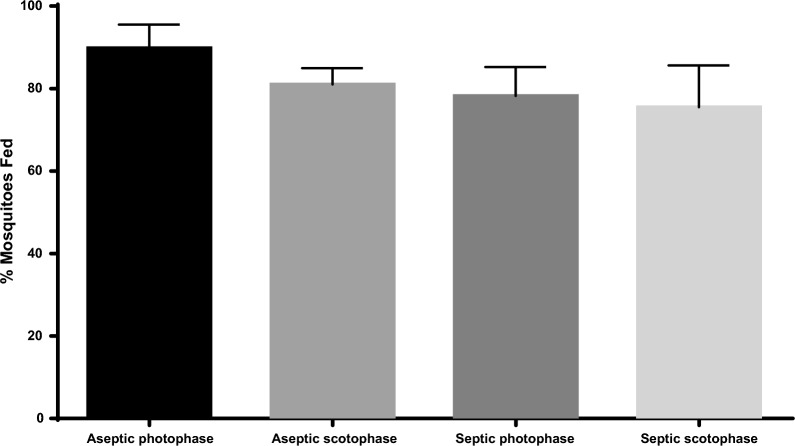 Figure 1
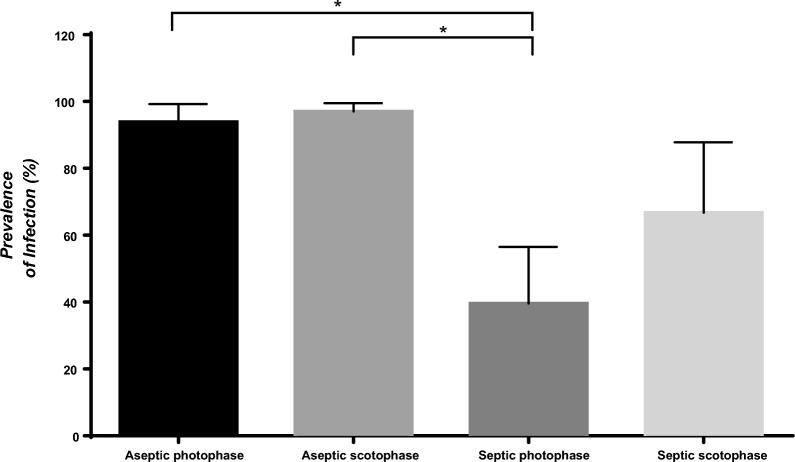 Figure 2
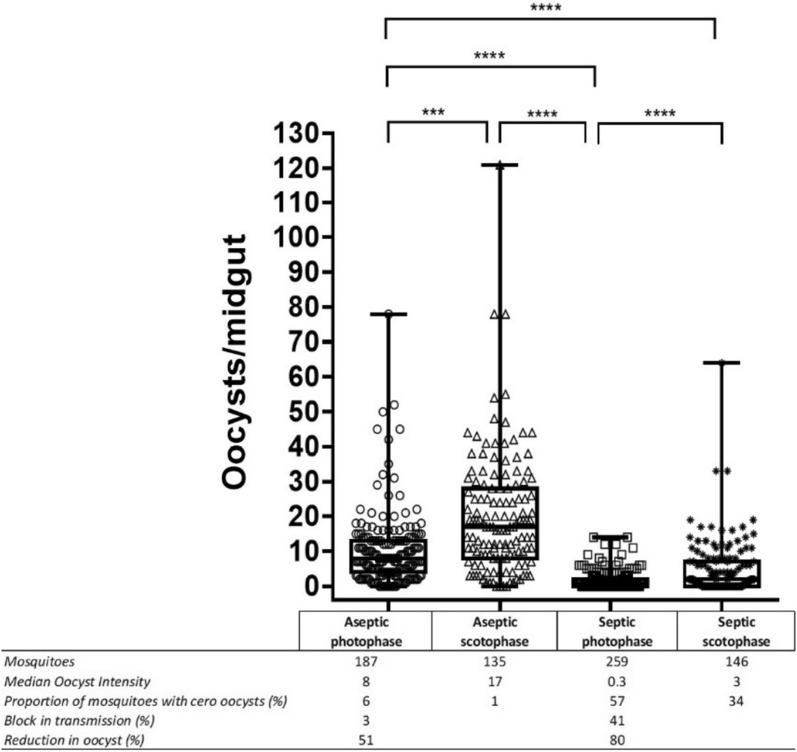 Figure 3
Peer Reviews
No public reviews on file for this paper yet. If you reviewed it on a platform where reviews are public (OpenReview, ICLR, NeurIPS, ICML), you can paste yours below so the community can read it here.
Videos
No videos yet. Explain this paper in a talk, walkthrough, or lecture? Add one.
Taxonomy
TopicsMosquito-borne diseases and control · Malaria Research and Control · Neurobiology and Insect Physiology Research