Diagnosis of posterior staphyloma using the radius of steepest curvature among retinal pigment epithelium segmentation line measured by optic coherent tomography
Sunho Park, Keunheung Park, Sangcheol Yang, Ik Soo Byon, Ji Eun Lee, Sung Who Park

TL;DR
This study explores using the curvature of retinal pigment epithelium in OCT scans to diagnose posterior staphyloma, a complication of high myopia.
Contribution
A novel diagnostic marker based on the radius of steepest curvature on RPE segmentation lines in OCT scans is proposed for posterior staphyloma.
Findings
Eyes with posterior staphyloma had a steeper curvature than those without, with an MC index of 40 (radius 8.44 mm) as a potential diagnostic threshold.
The MC index strongly correlated with axial length and age in highly myopic eyes.
The study found distinct MC index ranges between groups with and without posterior staphyloma.
Abstract
To investigate a novel marker to diagnose posterior staphylomas by measuring the radius of the steepest curvature on the retinal pigment epithelium (RPE) segmentation line using optical coherence tomography (OCT). Retrospective Cross-sectional Study. The authors developed a prototype software to measure the radius of curvature on the RPE segmentation line of OCT. Twelve images of 9-mm radial OCT scans were used. The radius of curvature was measured at the steepest area of the RPE segmentation line, and the macular curvature (MC) index was calculated based on its reciprocal. Based on the wide-field fundus findings, the study sample was divided into three groups: definite posterior staphyloma, no posterior staphyloma, and undetermined. The differences of MC index among the groups and the correlation between the MC index, age, and axial length were analyzed. The present study analyzed…
Genes, proteins, chemicals, diseases, species, mutations and cell lines named across the full text — each resolved to its canonical identifier and authoritative record.
Click any figure to enlarge with its caption.
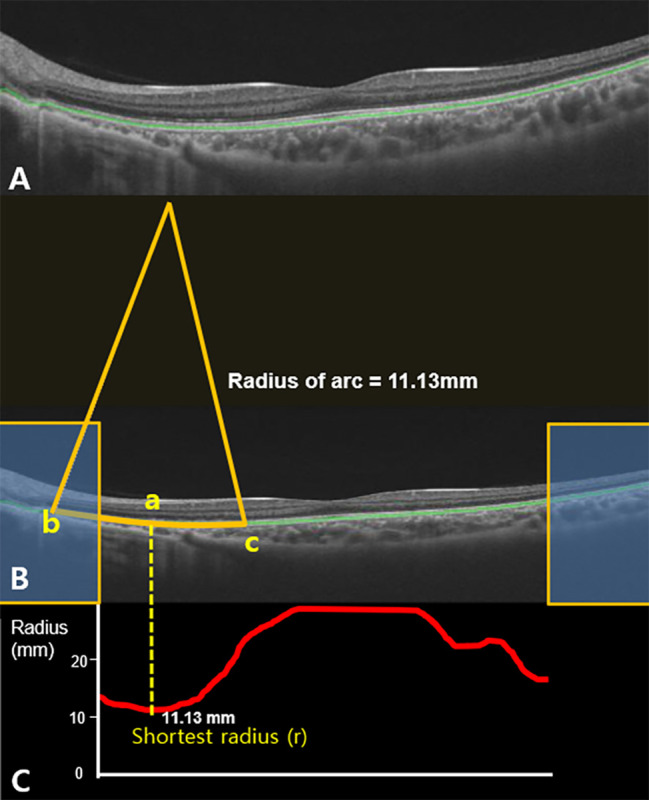 Figure 1
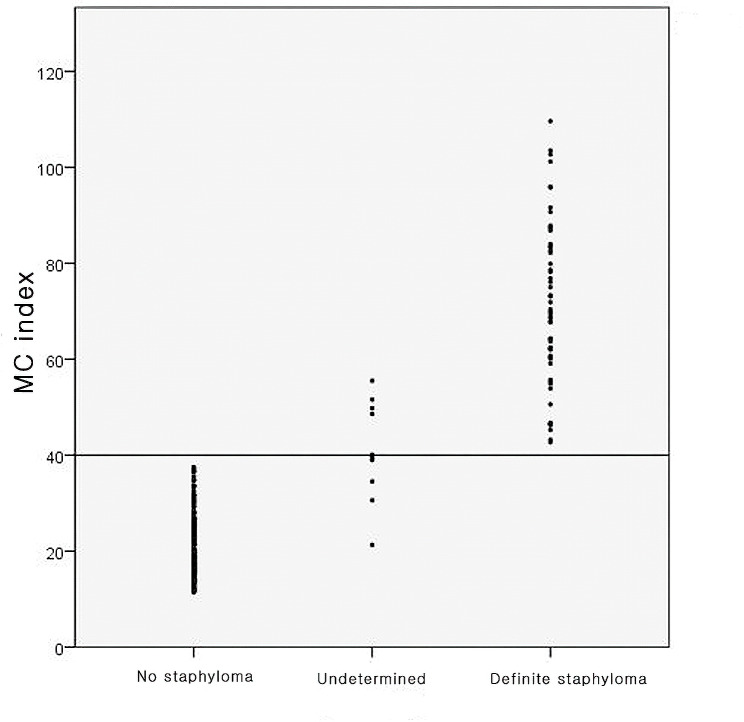 Figure 2
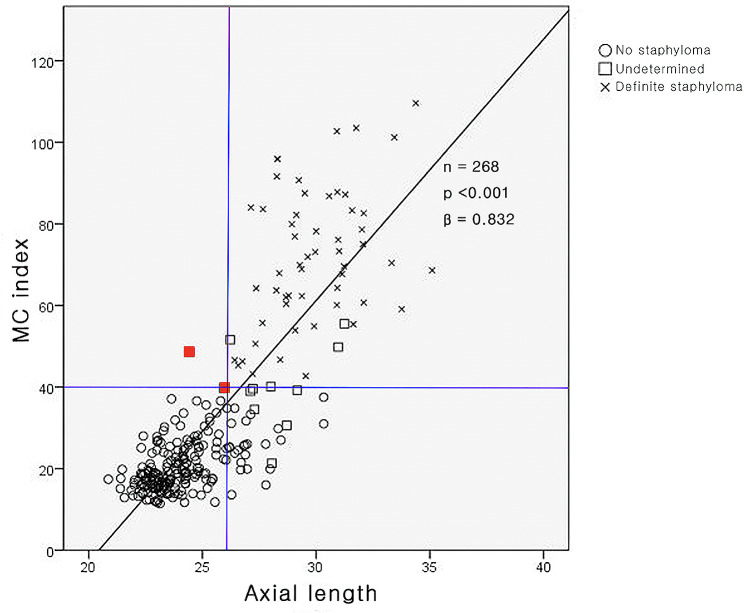 Figure 3
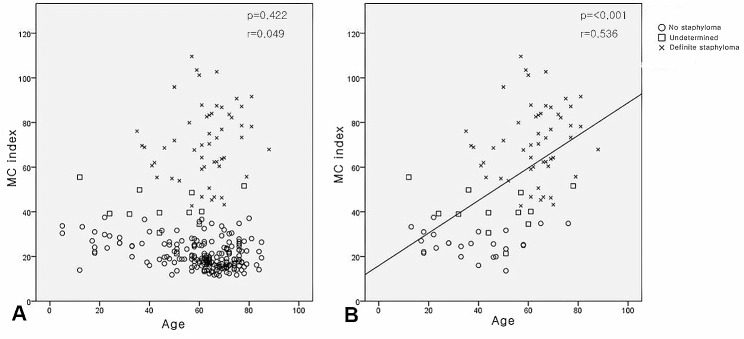 Figure 4
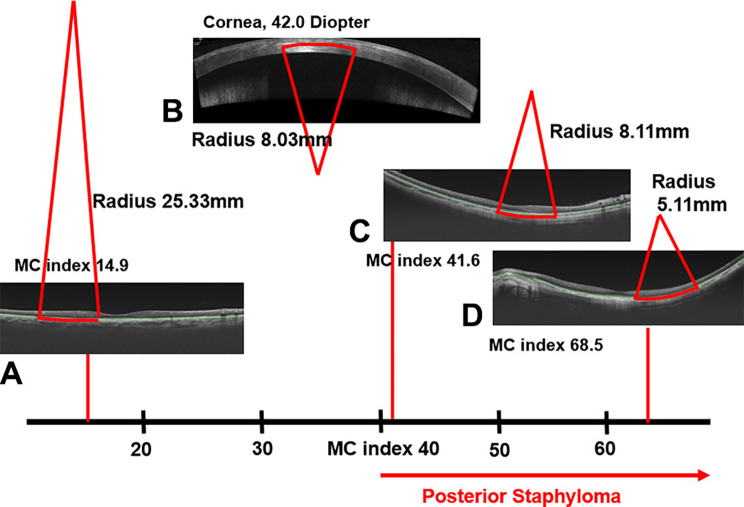 Figure 5
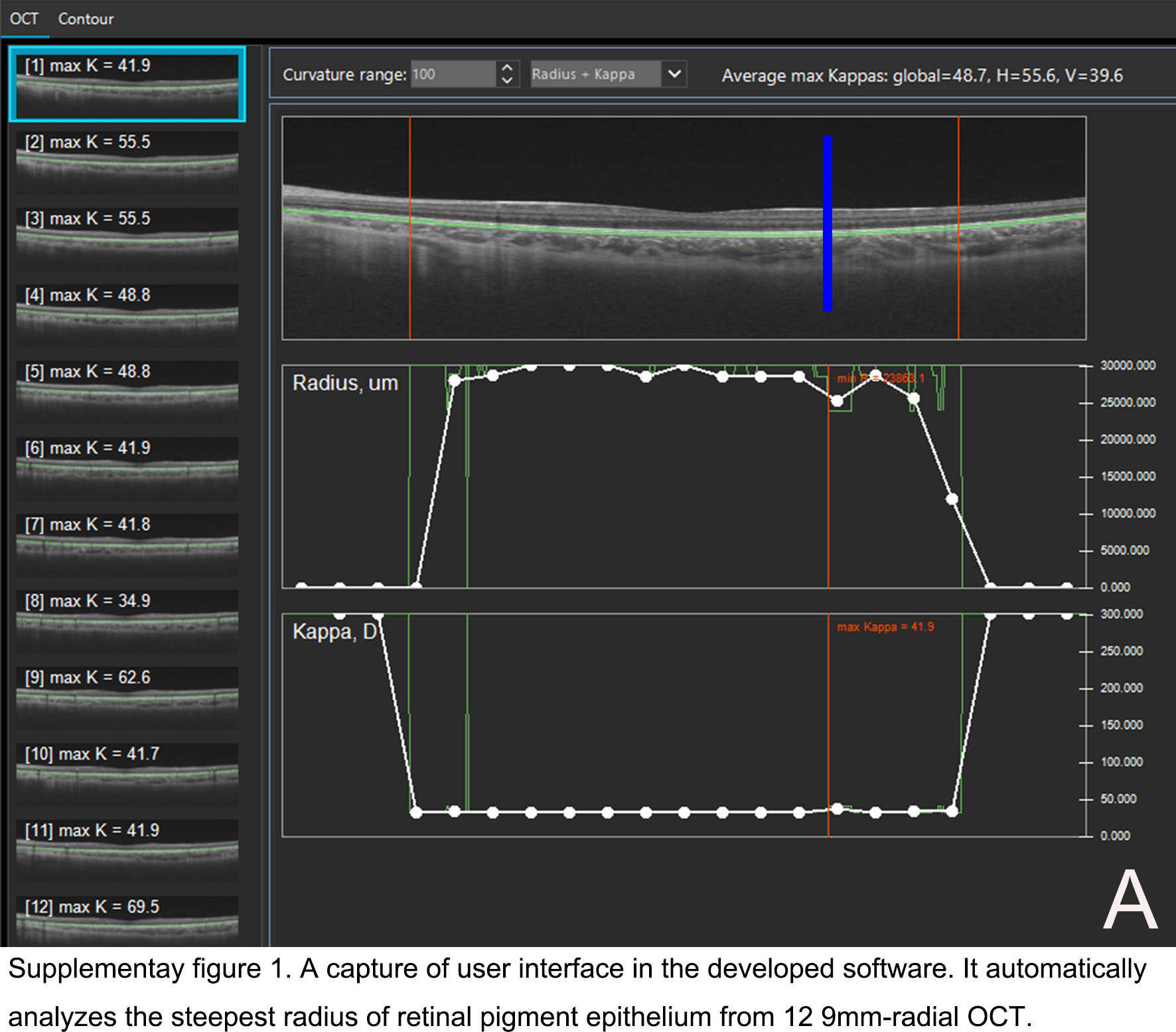 Figure 6
Peer Reviews
No public reviews on file for this paper yet. If you reviewed it on a platform where reviews are public (OpenReview, ICLR, NeurIPS, ICML), you can paste yours below so the community can read it here.
Videos
No videos yet. Explain this paper in a talk, walkthrough, or lecture? Add one.
Taxonomy
TopicsPsychological Treatments and Disorders