Insights into the Enhancement of the Poly(ethylene terephthalate) Degradation by FAST-PETase from Computational Modeling
Rafael García-Meseguer, Enrique Ortí, Iñaki Tuñón, J. Javier Ruiz-Pernía, Juan Aragó

TL;DR
Scientists used computational models to understand why the FAST-PETase enzyme is better at breaking down PET plastic than other enzymes.
Contribution
The study reveals how a specific mutation in FAST-PETase enhances its catalytic efficiency through structural and energetic changes.
Findings
The acylation step in FAST-PETase has a lower free energy barrier (12.1 kcal/mol) compared to PETase (16.5 kcal/mol).
The N233K mutation reduces hydrogen bonding at Asp206, increasing its basic character and improving catalytic interactions.
Abstract
Polyethylene terephthalate (PET) is the most abundant polyester plastic, widely used in textiles and packaging, but, unfortunately, it is also one of the most discarded plastics after one use. In the last years, the enzymatic biodegradation of PET has sparked great interest owing to the discovery and subsequent mutation of PETase-like enzymes, able to depolymerize PET. FAST-PETase is one of the best enzymes hitherto proposed to efficiently degrade PET, although the origin of its efficiency is not completely clear. To understand the molecular origin of its enhanced catalytic activity, we have carried out a thorough computational study of PET degradation by the FAST-PETase action by employing classical and hybrid (QM/MM) molecular dynamics (MD) simulations. Our findings show that the rate-limiting reaction step for FAST-PETase corresponds to the acylation stage with an estimated free…
Genes, proteins, chemicals, diseases, species, mutations and cell lines named across the full text — each resolved to its canonical identifier and authoritative record.
Click any figure to enlarge with its caption.
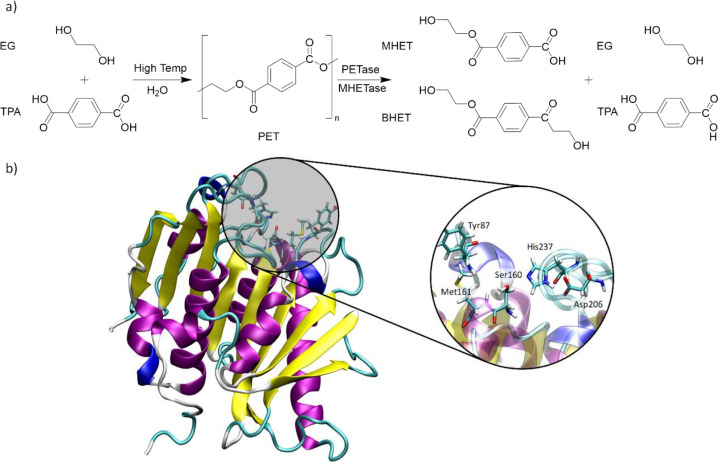 Figure 1
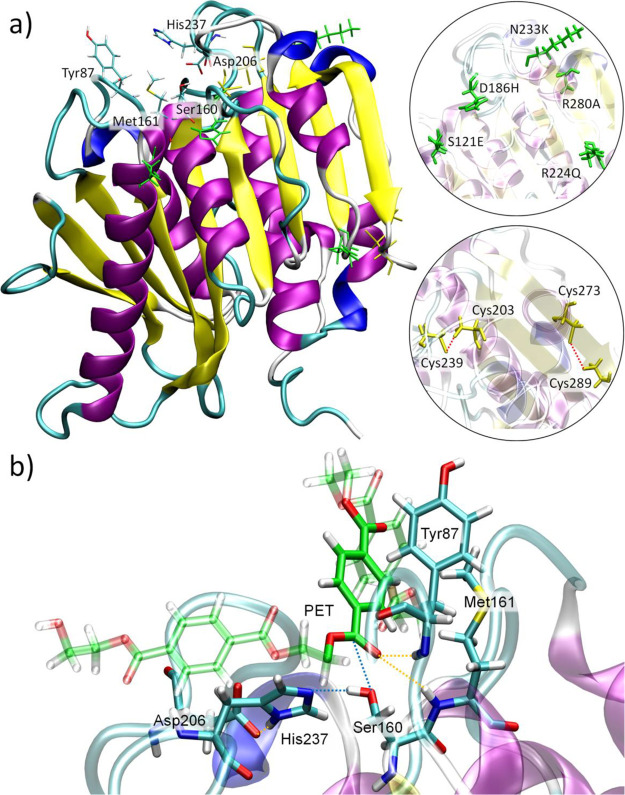 Figure 2
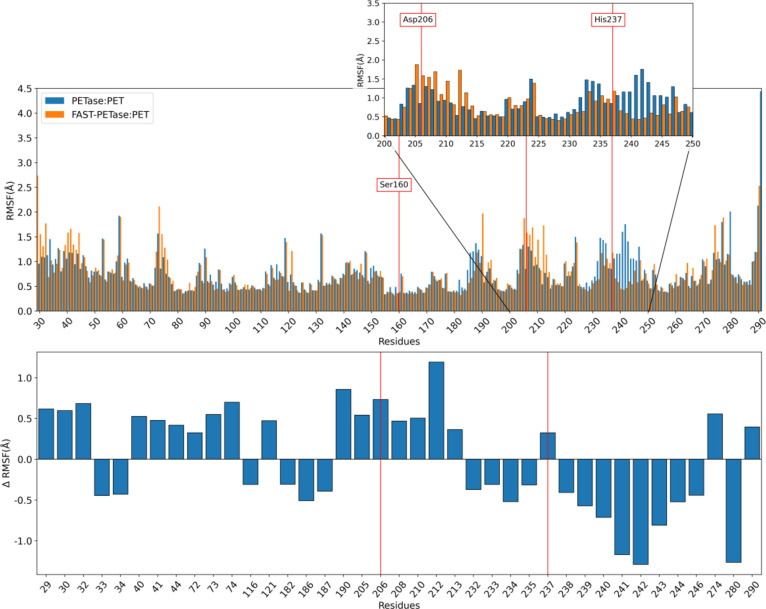 Figure 3
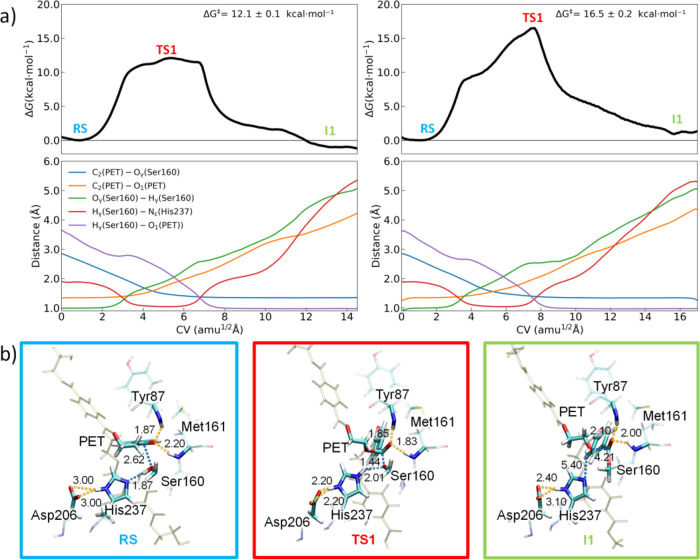 Figure 4
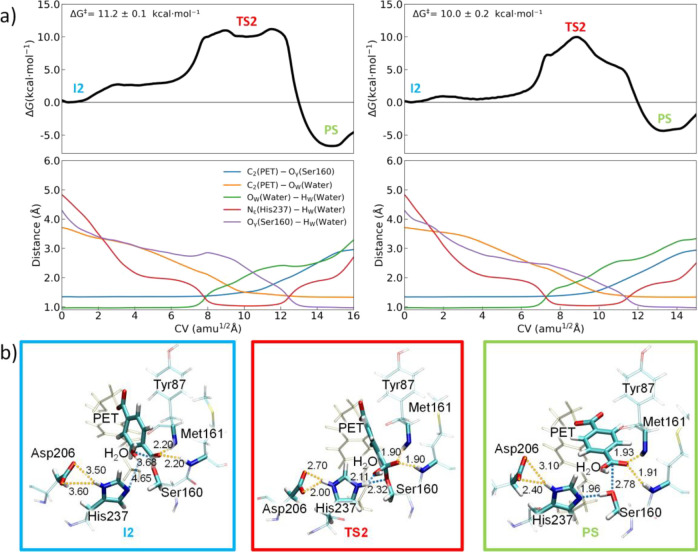 Figure 5
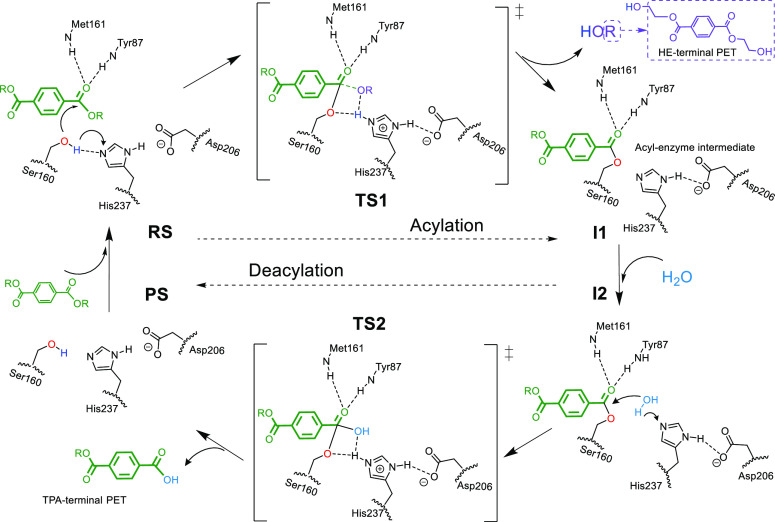 Figure 6
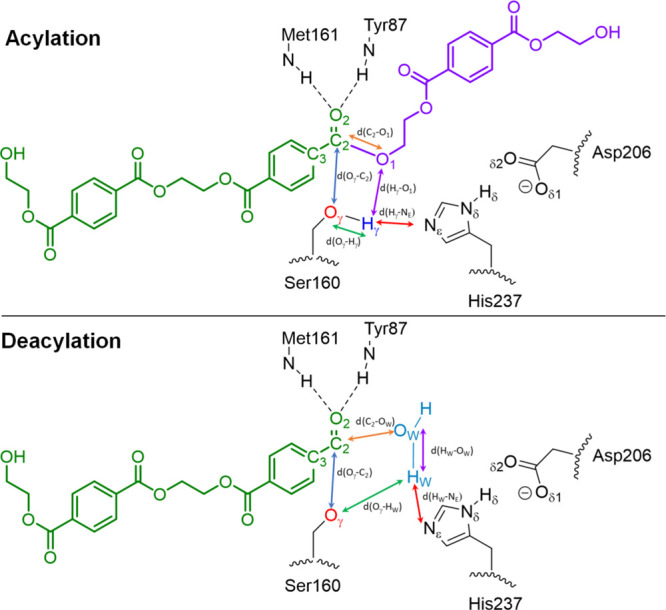 Figure 7
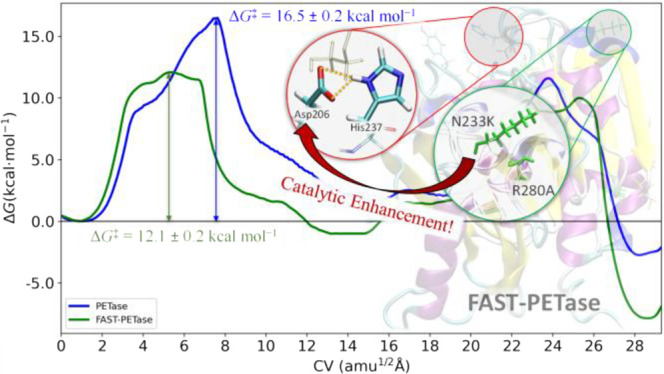 Figure 8
Peer Reviews
No public reviews on file for this paper yet. If you reviewed it on a platform where reviews are public (OpenReview, ICLR, NeurIPS, ICML), you can paste yours below so the community can read it here.
Videos
No videos yet. Explain this paper in a talk, walkthrough, or lecture? Add one.
Taxonomy
TopicsMicroplastics and Plastic Pollution · biodegradable polymer synthesis and properties · Enzyme Production and Characterization