CPX-351 and allogeneic stem cell transplant for a therapy-related acute myeloid leukemia that developed after treatment of acute promyelocytic leukemia: a case report and review of the literature
Alessandra Sperotto, Maria Teresa Lupo Stanghellini, Jacopo Peccatori, Roberta De Marchi, Simona Piemontese, Giulia Ciotti, Marco Basso, Elisabetta Pierdomenico, Paolo Fiore, Fabio Ciceri, Michele Gottardi

TL;DR
A patient developed therapy-related acute myeloid leukemia 15 years after being treated for acute promyelocytic leukemia and was successfully treated with CPX-351 and a stem cell transplant.
Contribution
This case report highlights the use of CPX-351 followed by allogeneic stem cell transplant in treating therapy-related AML after APL.
Findings
The patient achieved remission after three cycles of CPX-351 therapy.
An allogeneic stem cell transplant was performed following remission induction.
The case underscores the importance of long-term monitoring in APL survivors.
Abstract
Therapy-related myeloid neoplasms (t-MNs), which develop after cytotoxic, radiation, or immunosuppressive therapy for an unrelated disease, account for 7%–8% of acute myeloid leukemia (AML). Worse outcomes and consequently shortened survival are associated with t-MNs as compared with de novo AML. Therapy-related MNs are being reported with increasing frequency in successfully treated acute promyelocytic leukemia (APL), in particular, before the introduction of all-trans retinoic acid (ATRA) plus arsenic trioxide (ATO). Considering the high curability of APL, t-MNs represent one of the prognosis-limiting factors in this setting of leukemia. We report our experience with a patient who developed t-AML 15 years after treatment for APL. Treatment included three cycles of chemotherapy with CPX-351 (Vyxeos, Jazz Pharmaceuticals) followed, as in remission, by an allogeneic hematopoietic stem…
Genes, proteins, chemicals, diseases, species, mutations and cell lines named across the full text — each resolved to its canonical identifier and authoritative record.
Click any figure to enlarge with its caption.
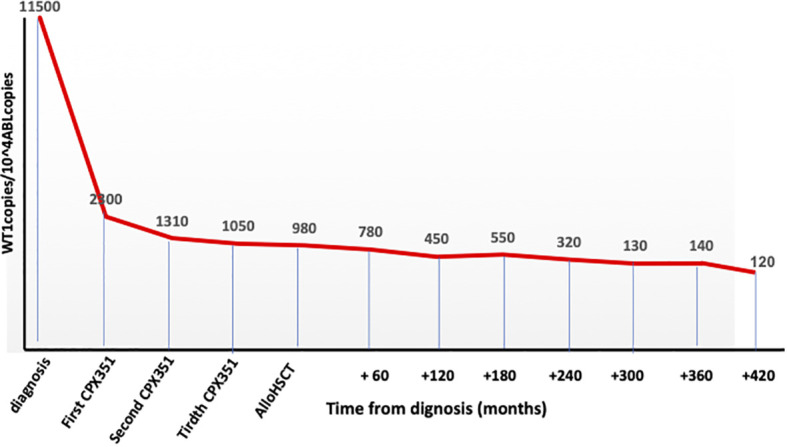 Figure 1
Peer Reviews
No public reviews on file for this paper yet. If you reviewed it on a platform where reviews are public (OpenReview, ICLR, NeurIPS, ICML), you can paste yours below so the community can read it here.
Videos
No videos yet. Explain this paper in a talk, walkthrough, or lecture? Add one.
Taxonomy
TopicsAcute Myeloid Leukemia Research · Retinoids in leukemia and cellular processes · Acute Lymphoblastic Leukemia research