Effectiveness of antipsychotics for managing agitated delirium in patients with advanced cancer: a secondary analysis of a multicenter prospective observational study in Japan (Phase-R)
Ken Kurisu, Shuji Inada, Isseki Maeda, Hiroyuki Nobata, Asao Ogawa, Satoru Iwase, Megumi Uchida, Tatsuo Akechi, Koji Amano, Nobuhisa Nakajima, Tatsuya Morita, Masahiko Sumitani, Kazuhiro Yoshiuchi

TL;DR
This study found that olanzapine may be effective in managing agitation in delirium among advanced cancer patients.
Contribution
The study provides real-world evidence on the effectiveness of olanzapine for agitated delirium in advanced cancer patients.
Findings
Olanzapine showed a statistically significant adjusted odds ratio for improving agitation in delirium.
32% of patients with agitated delirium showed reduced agitation within 72 hours of pharmacotherapy.
Abstract
Delirium is a common and serious comorbidity in patients with advanced cancer, necessitating effective management. Nonetheless, effective drugs for managing agitated delirium in patients with advanced cancer remain unclear in real-world settings. Thus, the present study aimed to explore an effective pharmacotherapy for this condition. We conducted a secondary analysis of a multicenter prospective observational study in Japan. The analysis included patients with advanced cancer who presented with agitated delirium and received pharmacotherapy. Agitation was defined as a score of the Richmond Agitation-Sedation Scale for palliative care (RASS-PAL) of ≥ 1. The outcome was defined as -2 ≤ RASS-PAL ≤ 0 at 72 h after the initiation of pharmacotherapy. Multiple propensity scores were quantified using a multinomial logistic regression model, and adjusted odds ratios (ORs) were calculated for…
Genes, proteins, chemicals, diseases, species, mutations and cell lines named across the full text — each resolved to its canonical identifier and authoritative record.
Click any figure to enlarge with its caption.
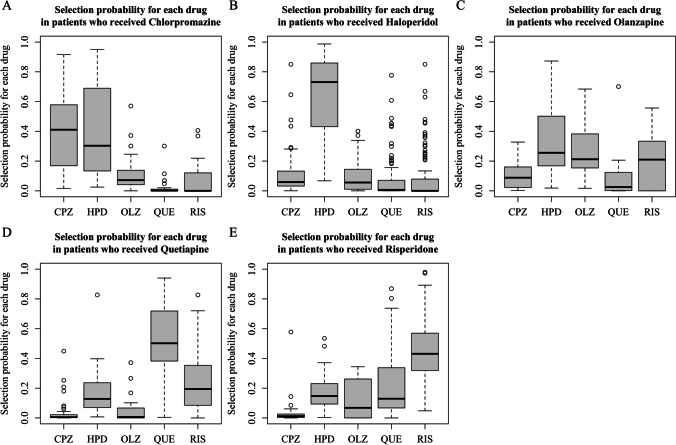 Figure 1
Peer Reviews
No public reviews on file for this paper yet. If you reviewed it on a platform where reviews are public (OpenReview, ICLR, NeurIPS, ICML), you can paste yours below so the community can read it here.
Videos
No videos yet. Explain this paper in a talk, walkthrough, or lecture? Add one.
Taxonomy
TopicsIntensive Care Unit Cognitive Disorders · Healthcare Decision-Making and Restraints · Anesthesia and Sedative Agents