Spherization indices measured by resting SPECT improve risk stratification in patients with ischemia with non-obstructive coronary artery disease (INOCA)
Yuting Zhao, Yingqi Hu, Yuanyuan Li, Yanhui Wang, Yuxin Xiao, Li Xu, Tailin Ren, Qiuyan Wu, Ruonan Wang, Zhifang Wu, Sijin Li, Ping Wu

TL;DR
Resting SPECT imaging helps predict heart risks in patients with non-obstructive coronary disease by measuring heart shape indices.
Contribution
Spherization indices from resting SPECT improve risk prediction in INOCA patients beyond traditional methods.
Findings
Higher shape index (SI) and lower E2 were linked to major adverse cardiac events (MACE) in INOCA patients.
Abnormal SI was an independent predictor of MACE in multivariate analysis.
Adding SI to baseline models improved predictive accuracy for MACE.
Abstract
The prevalence of ischemia with non-obstructive coronary artery disease (INOCA) is substantial, but its risk stratification has been suboptimal. Resting SPECT myocardial perfusion imaging (MPI) could provide useful heart information including spherical indices. We aimed to evaluate the prognostic value of spherical indices in individuals with INOCA. During a median follow-up of 47.2 ± 20.8 months, 49 (17.2%) patients experienced major adverse cardiac events (MACE). Compared to those without MACE, those with MACE had a higher shape index (SI) (0.60 ± 0.07 vs. 0.58 ± 0.06; P = 0.028) and a lower E2 (eccentricity index calculated by the QPS) (0.81 ± 0.05 vs. 0.83 ± 0.04; P = 0.019). MACE event-free survival analysis revealed significant differences in the SI and E2 among all patients (all log-rank P < 0.01). Multivariate Cox analysis showed abnormal SI (HR: 2.73, 95% CI 1.44–5.18, P =…
Genes, proteins, chemicals, diseases, species, mutations and cell lines named across the full text — each resolved to its canonical identifier and authoritative record.
Click any figure to enlarge with its caption.
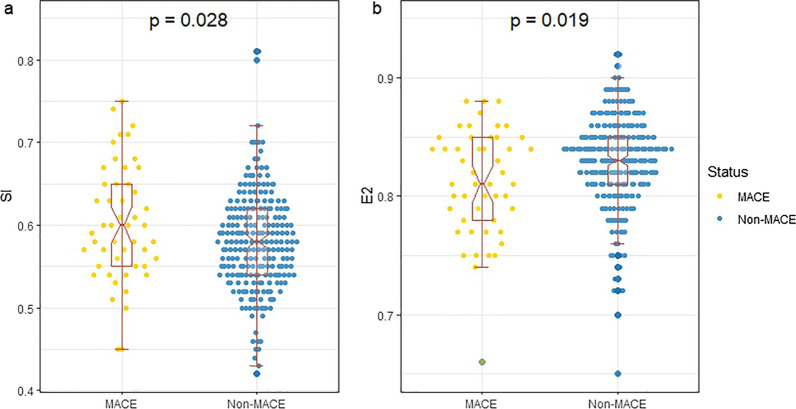 Figure 1
 Figure 2
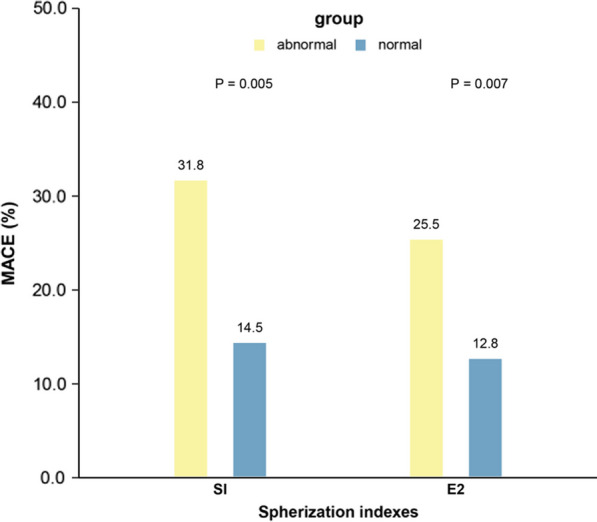 Figure 3
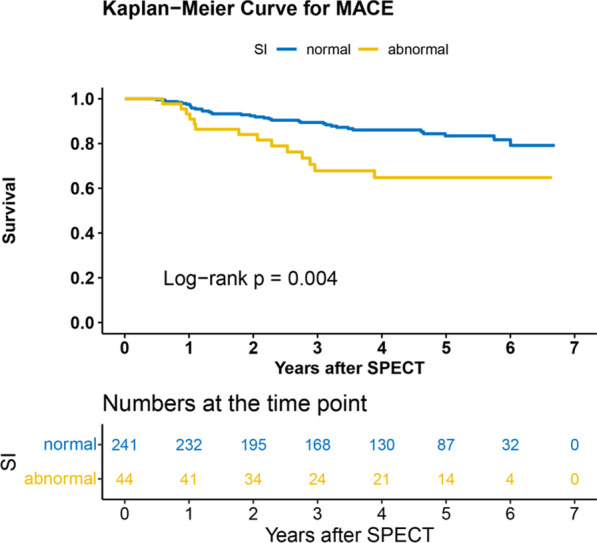 Figure 4
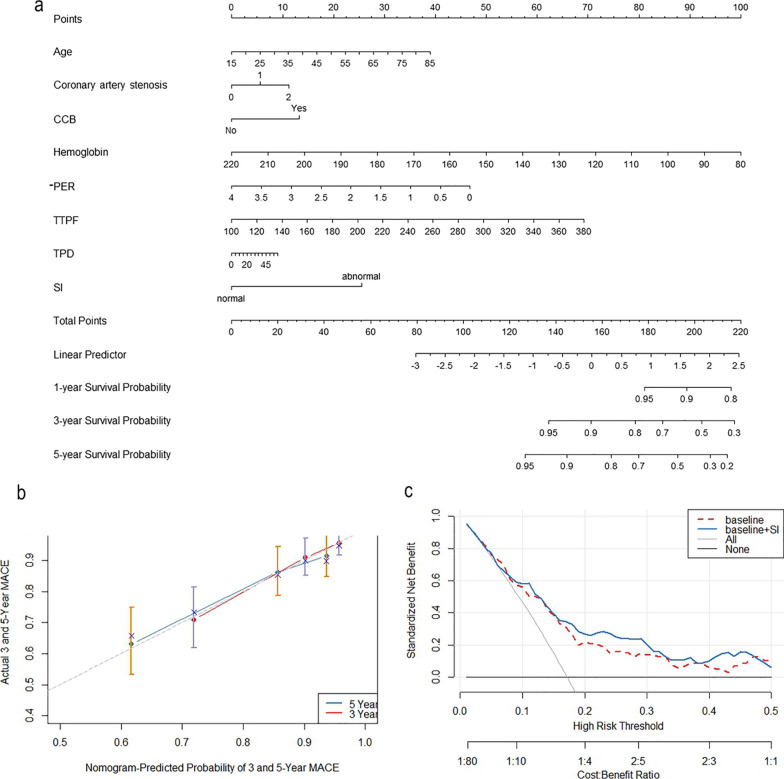 Figure 5
Peer Reviews
No public reviews on file for this paper yet. If you reviewed it on a platform where reviews are public (OpenReview, ICLR, NeurIPS, ICML), you can paste yours below so the community can read it here.
Videos
No videos yet. Explain this paper in a talk, walkthrough, or lecture? Add one.
Taxonomy
TopicsCardiac Imaging and Diagnostics · Advanced MRI Techniques and Applications · Medical Imaging Techniques and Applications