Extended Endoscopic Endonasal Transplanum and Transdorsum Sellar Approach for the Resection of Retroinfundibular Craniopharyngioma With Two-Piece Dural Opening: A Technical Case Report
Maruf Matmusayev, Gayrat M Kariev, Ulugbek Asadullaev, Kazuhito Takeuchi, Yuichi Nagata, Hideo Harada, Ryuta Saito

TL;DR
This case report describes a surgical technique for removing a brain tumor near the pituitary gland using an endoscopic approach with a two-piece dural opening to reduce complications.
Contribution
The paper introduces an extended endoscopic endonasal approach with a two-piece dural opening for retroinfundibular craniopharyngioma resection.
Findings
The transdorsum sellar approach with posterior clinoidectomy provides direct access to the lesion.
A two-piece dural opening helps prevent postoperative cerebrospinal fluid leakage.
Direct cyst puncture without cerebrospinal fluid drainage is effective for large cystic lesions.
Abstract
The surgical treatment of retroinfundibular craniopharyngiomas is challenging due to their location and the surrounding neurovascular structures. In this report, the transdorsum sellar approach with posterior clinoidectomy, the efficacy of direct cyst puncture, and the suitability of a two-piece dural opening are presented. A 56-year-old male with visual and cognitive disturbances was referred to our hospital. Preoperative CT and MRI demonstrated a mostly cystic lesion with calcifications in the suprasellar and retroinfundibular areas. The imaging findings were suspected craniopharyngioma, and an extended endoscopic endonasal transdorsum sellar approach with posterior clinoidectomy was performed for direct access to the lesion. Two pieces of the dura were opened to prevent postoperative CSF leakage. The patient’s postoperative course was uneventful. The endoscopic transdorsum sellar…
Genes, proteins, chemicals, diseases, species, mutations and cell lines named across the full text — each resolved to its canonical identifier and authoritative record.
Click any figure to enlarge with its caption.
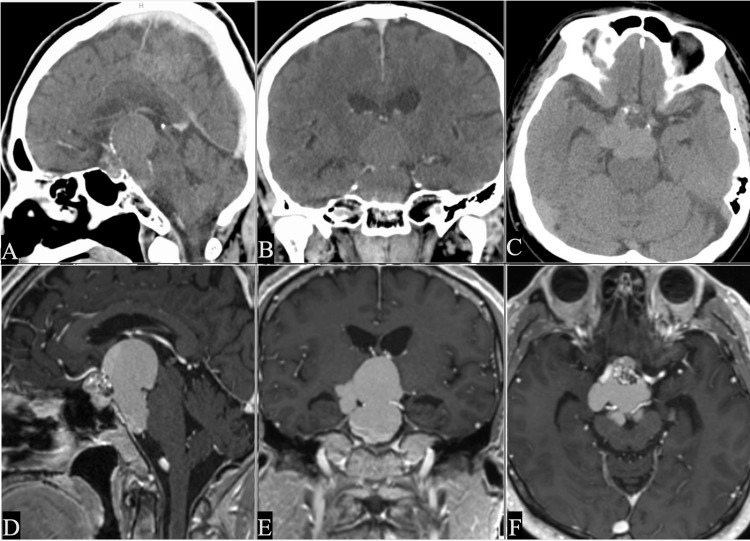 Figure 1
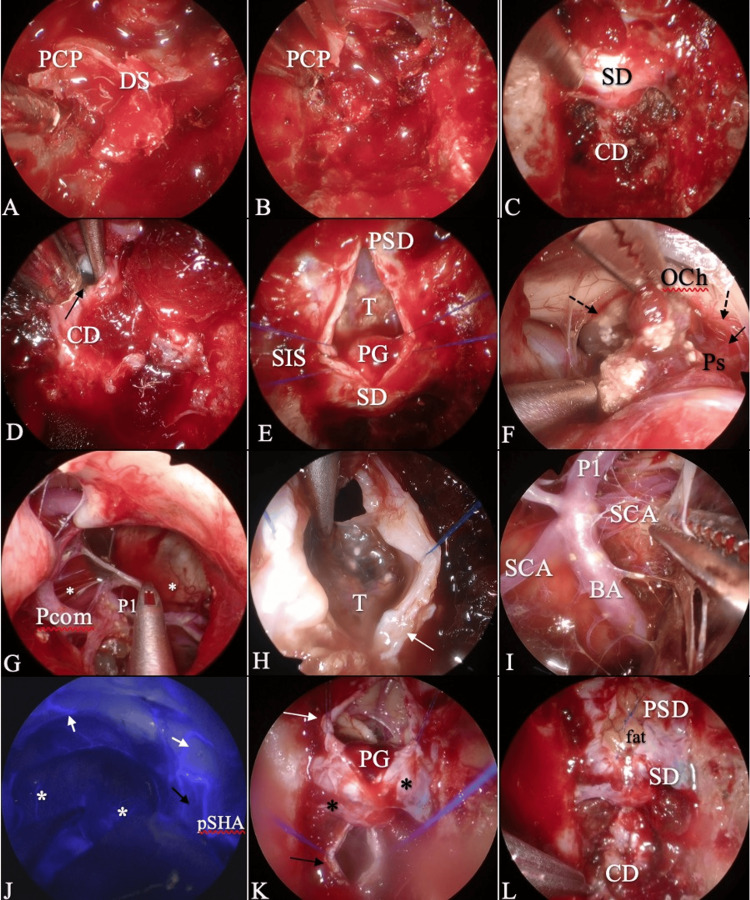 Figure 2
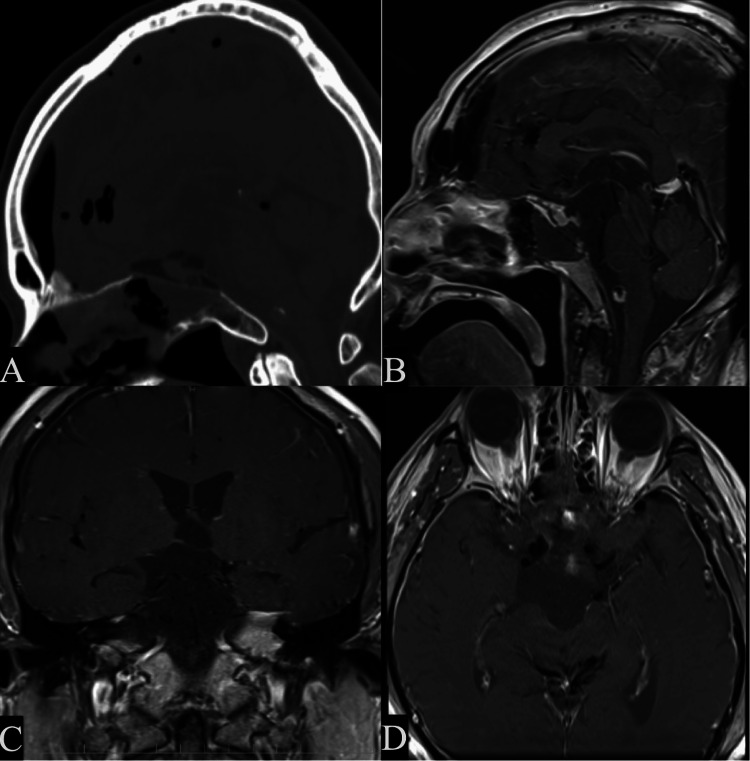 Figure 3
Peer Reviews
No public reviews on file for this paper yet. If you reviewed it on a platform where reviews are public (OpenReview, ICLR, NeurIPS, ICML), you can paste yours below so the community can read it here.
Videos
No videos yet. Explain this paper in a talk, walkthrough, or lecture? Add one.
Taxonomy
TopicsPituitary Gland Disorders and Treatments · Head and Neck Surgical Oncology · Meningioma and schwannoma management