The effect of an occlusion-induced delay on braking behavior in critical situations: A driving simulator study
Joost C F de Winter, Mehdi Saffarian, John W Senders

TL;DR
This study used a driving simulator to explore how drivers adjust braking behavior when forced to wait due to visual occlusion, revealing how urgency affects their responses.
Contribution
The study introduces visual occlusion as a novel method to simulate waiting time and examines its impact on driver braking behavior in critical situations.
Findings
Drivers adapted to late braking instructions by braking harder in non-urgent conditions.
In urgent situations, most drivers collided with the lead vehicle due to braking limits.
Some drivers lightly touched the brake pedal while waiting for the occlusion to clear.
Abstract
To share results of an experiment that used visual occlusion for a new purpose: inducing a waiting time. Senders was a leading figure in human factors. In his research on the visual demands of driving, he used occlusion techniques. In a simulator experiment, we examined how drivers brake for different levels of urgency and different visual conditions. In three blocks (1 = brake lights, 2 = no brake lights, 3 = occlusion), drivers followed a vehicle at 13.4 or 33.4 m distance. At certain moments, the lead vehicle decelerated moderately (1.7 m/s2) or strongly (6.5 m/s2). In the occlusion condition, the screens blanked for 0.4 s (if 6.5 m/s2) or 2.0 s (if 1.7 m/s2) when the lead vehicle started to decelerate. Participants were instructed to brake only after the occlusion ended. The lack of brake lights caused a delayed response. In the occlusion condition, drivers adapted to the…
Genes, proteins, chemicals, diseases, species, mutations and cell lines named across the full text — each resolved to its canonical identifier and authoritative record.
Click any figure to enlarge with its caption.
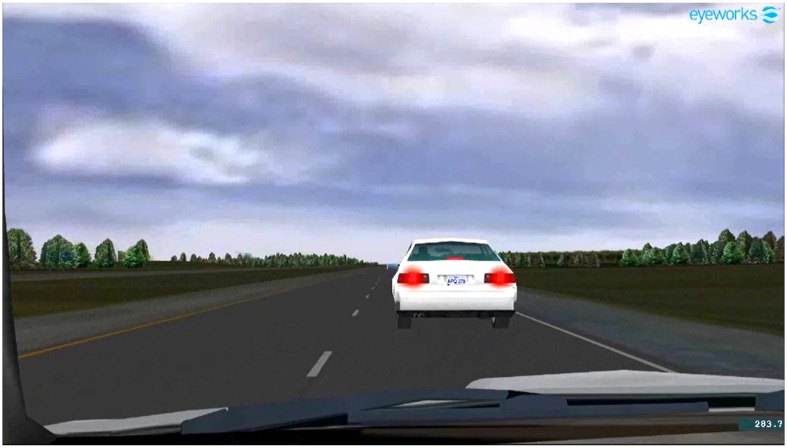 Figure 1
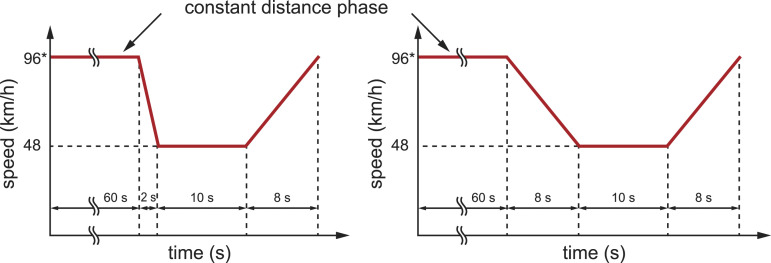 Figure 2
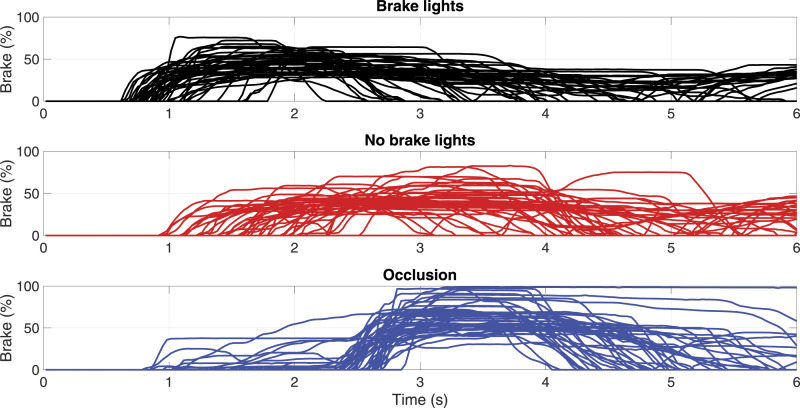 Figure 3
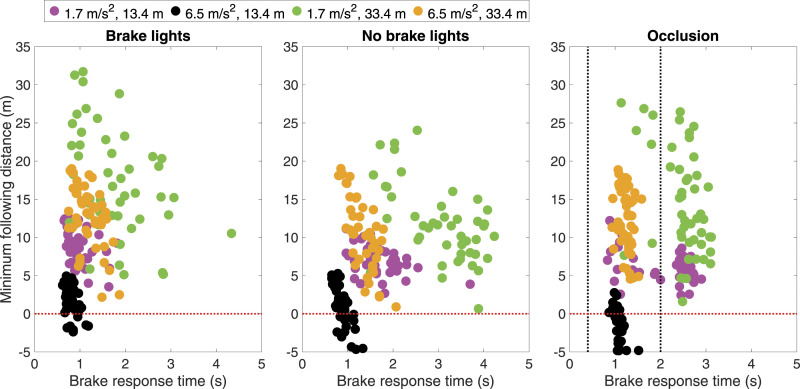 Figure 4
Peer Reviews
No public reviews on file for this paper yet. If you reviewed it on a platform where reviews are public (OpenReview, ICLR, NeurIPS, ICML), you can paste yours below so the community can read it here.
Videos
No videos yet. Explain this paper in a talk, walkthrough, or lecture? Add one.
Taxonomy
TopicsAutomotive and Human Injury Biomechanics · Automotive and Human Injury Biomechanics · Brake Systems and Friction Analysis