Bedside zero-fluoroscopy temporary permanent pacemaker implantation in the electrical storm treatment under the guidance of EnSite 3D system: a case report
Lei Wang, Pengfei Li, Jun li, Jicheng Xi, Zhibiao Zhang, Fang Yan, Yanan Zhang, Haixiong Wang, Huiyuan Han

TL;DR
A 55-year-old man with an electrical storm was successfully treated using a temporary permanent pacemaker implanted at the bedside with the EnSite 3D system.
Contribution
This case demonstrates the feasibility and safety of bedside zero-fluoroscopy pacemaker implantation during an electrical storm.
Findings
The EnSite system enabled successful implantation without fluoroscopy.
Atrial overdrive pacing significantly inhibited the electrical storm.
The procedure was performed safely and effectively at the bedside in an emergency.
Abstract
Electrical storm (ES) is a clinical emergency characterized by multiple malignant ventricular arrhythmias or ICD discharges within 24 h, requiring early rational management. We report a 55-year-old man who underwent aortic valve replacement experienced recurrent ventricular tachycardia/ventricular fibrillation. A temporary permanent pacemaker with the EnSite system was implanted, and significant inhibition of the electrical storm, attributed to the atrial overdrive pacing, ensued. In emergency regarding an electrical storm, the bedside temporary permanent pacemaker implantation with the EnSite system is concluded to be feasible and safe.
Genes, proteins, chemicals, diseases, species, mutations and cell lines named across the full text — each resolved to its canonical identifier and authoritative record.
Click any figure to enlarge with its caption.
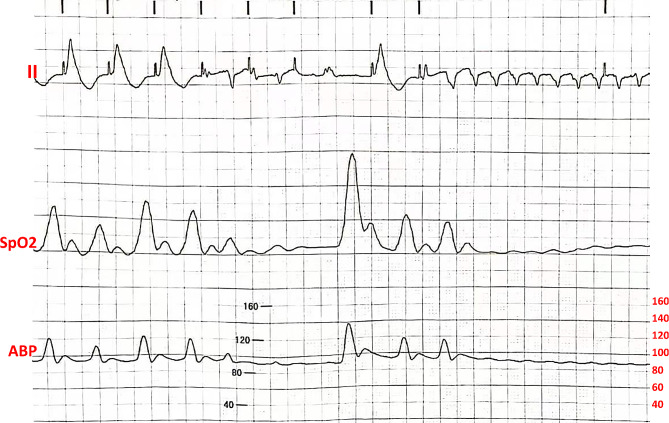 Figure 1
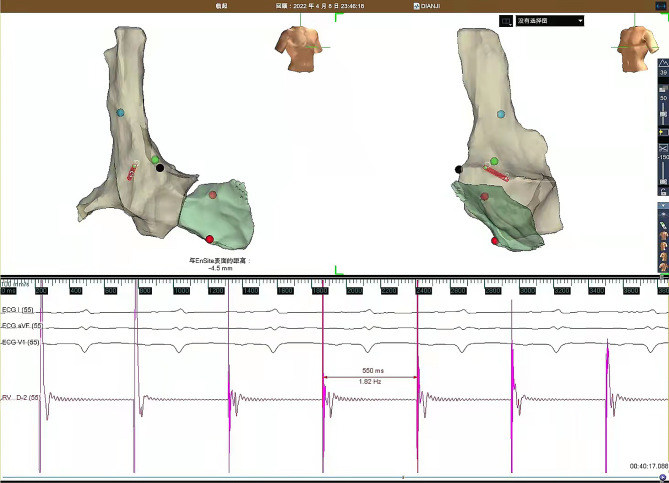 Figure 2
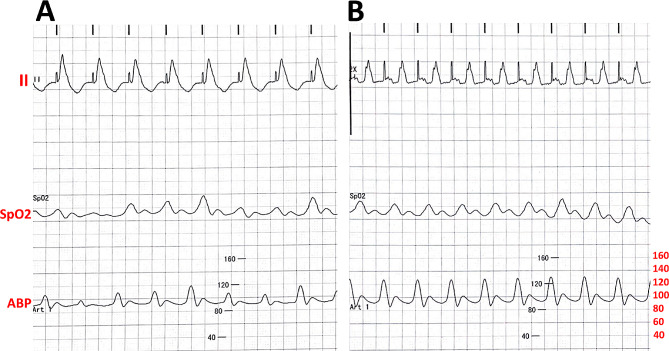 Figure 3
Peer Reviews
No public reviews on file for this paper yet. If you reviewed it on a platform where reviews are public (OpenReview, ICLR, NeurIPS, ICML), you can paste yours below so the community can read it here.
Videos
No videos yet. Explain this paper in a talk, walkthrough, or lecture? Add one.
Taxonomy
TopicsCardiac electrophysiology and arrhythmias · Cardiac Arrhythmias and Treatments · Cardiac pacing and defibrillation studies