Serpentirhabdias mexicanus n. sp. (Nematoda: Rhabdiasidae), a parasitic lungworm of the nauyaca viper Bothrops asper (Serpentes: Viperidae) in the Mexican Neotropics
Andrés Velázquez-Brito, Luis García-Prieto, Uriel Garduño-Montes de Oca, Víctor Manuel Sosa-Jiménez, Mirna Crizel Vera-Chávez, Virginia León-Règagnon

TL;DR
A new parasitic lungworm species, Serpentirhabdias mexicanus, is described from the lungs of a viper in Mexico, adding to the understanding of nematode diversity in the region.
Contribution
The discovery and description of a new nematode species based on morphological, host, and genetic data.
Findings
Serpentirhabdias mexicanus differs from related species by having only one excretory gland.
Phylogenetic analysis shows Serpentirhabdias is monophyletic with subgroups linked to morphological and host traits.
The new species is distinguished by unique morphological features and host-specific traits.
Abstract
Serpentirhabdias mexicanus n. sp. (Nematoda: Rhabdiasidae) is described from the lung of the nauyaca viper Bothrops asper in Puebla State, central Mexico. This new species is the fifth of the genus described having onchia. Among the species included in this group, the new species is morphologically closest to S. viperidicus and S. atroxi. However, it differs from both species mainly by having only one excretory gland (compared to two present in S. viperidicus and S. atroxi). In addition, S. mexicanus n. sp. can be separated of S. viperidicus by tail length, shape of vulval lips, geographic distribution and host species and from S. atroxi by body length, number of papillae in the cephalic region, as well as the host species and geographic distribution. In the present study, we propose the new species based on morphological, host spectrum and genetic evidence. Phylogenetic analysis…
Genes, proteins, chemicals, diseases, species, mutations and cell lines named across the full text — each resolved to its canonical identifier and authoritative record.
Click any figure to enlarge with its caption.
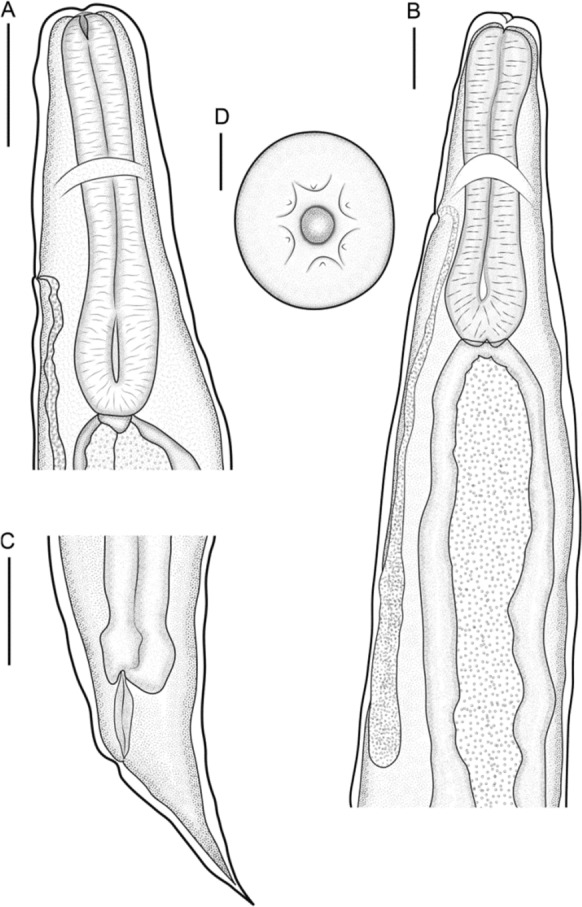 Figure 1
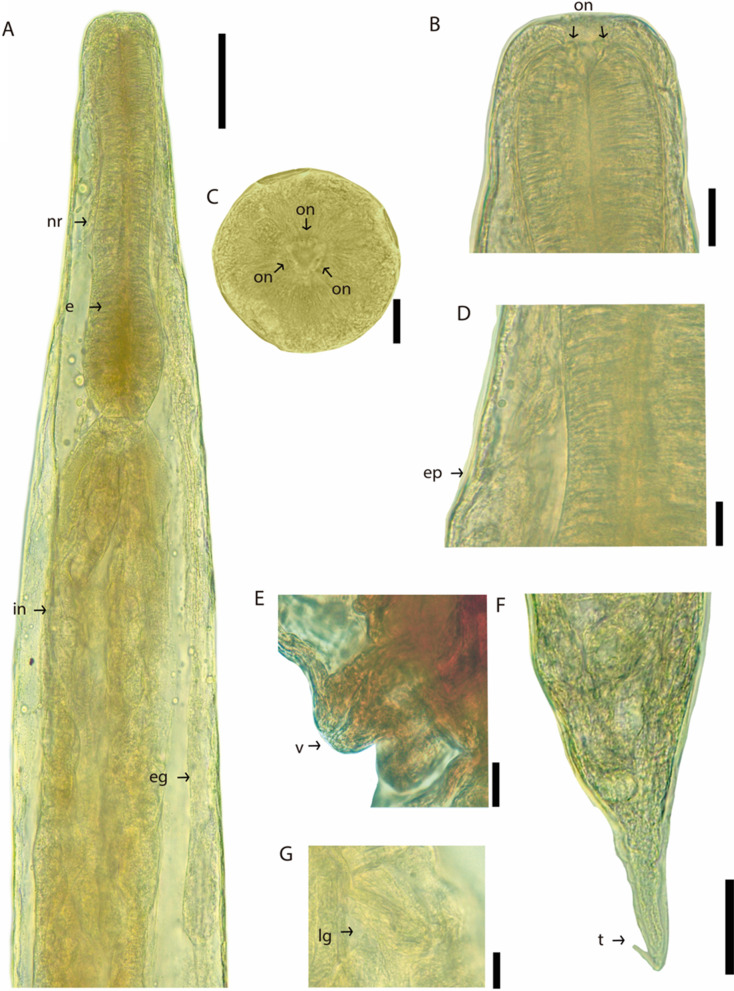 Figure 2
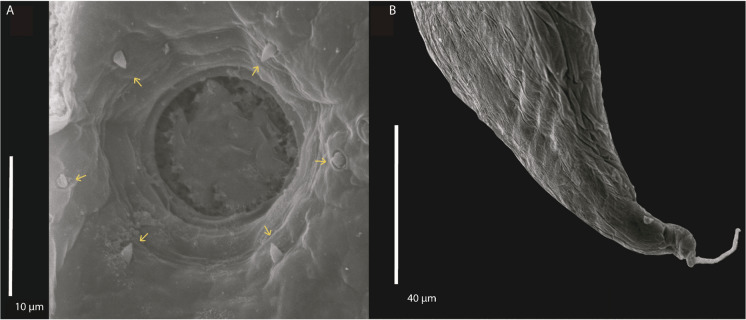 Figure 3
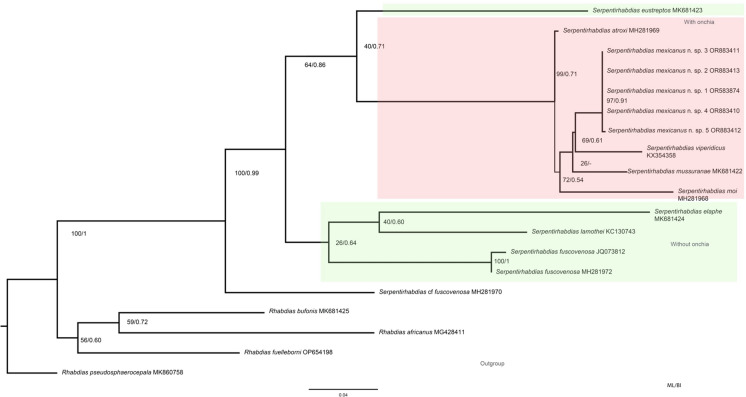 Figure 4
Peer Reviews
No public reviews on file for this paper yet. If you reviewed it on a platform where reviews are public (OpenReview, ICLR, NeurIPS, ICML), you can paste yours below so the community can read it here.
Videos
No videos yet. Explain this paper in a talk, walkthrough, or lecture? Add one.
Taxonomy
TopicsParasite Biology and Host Interactions · Leech Biology and Applications · Amphibian and Reptile Biology