A monoclonal antibody targeting a large surface of the receptor binding motif shows pan-neutralizing SARS-CoV-2 activity
Leire de Campos-Mata, Benjamin Trinité, Andrea Modrego, Sonia Tejedor Vaquero, Edwards Pradenas, Anna Pons-Grífols, Natalia Rodrigo Melero, Diego Carlero, Silvia Marfil, César Santiago, Dàlia Raïch-Regué, María Teresa Bueno-Carrasco, Ferran Tarrés-Freixas, Ferran Abancó

TL;DR
A new monoclonal antibody, 17T2, shows broad protection against multiple SARS-CoV-2 variants, including Omicron subvariants.
Contribution
17T2 is a novel pan-neutralizing antibody with a large RBD contact area, retaining activity against evolving SARS-CoV-2 variants.
Findings
17T2 neutralizes SARS-CoV-2 variants including XBB.1.16 and BA.2.86.
17T2 binds to the RBD in the 'up' position and blocks the receptor binding motif.
17T2 retains neutralizing activity due to a larger RBD contact area compared to similar antibodies.
Abstract
Here we report the characterization of 17T2, a SARS-CoV-2 pan-neutralizing human monoclonal antibody isolated from a COVID-19 convalescent individual infected during the first pandemic wave. 17T2 is a class 1 VH1-58/κ3-20 antibody, derived from a receptor binding domain (RBD)-specific IgA+ memory B cell, with a broad neutralizing activity against former and new SARS-CoV-2 variants, including XBB.1.16 and BA.2.86 Omicron subvariants. Consistently, 17T2 demonstrates in vivo prophylactic and therapeutic activity against Omicron BA.1.1 infection in K18-hACE2 mice. Cryo-electron microscopy reconstruction shows that 17T2 binds the BA.1 spike with the RBD in “up” position and blocks the receptor binding motif, as other structurally similar antibodies do, including S2E12. Yet, unlike S2E12, 17T2 retains its neutralizing activity against all variants tested, probably due to a larger RBD contact…
Genes, proteins, chemicals, diseases, species, mutations and cell lines named across the full text — each resolved to its canonical identifier and authoritative record.
Click any figure to enlarge with its caption.
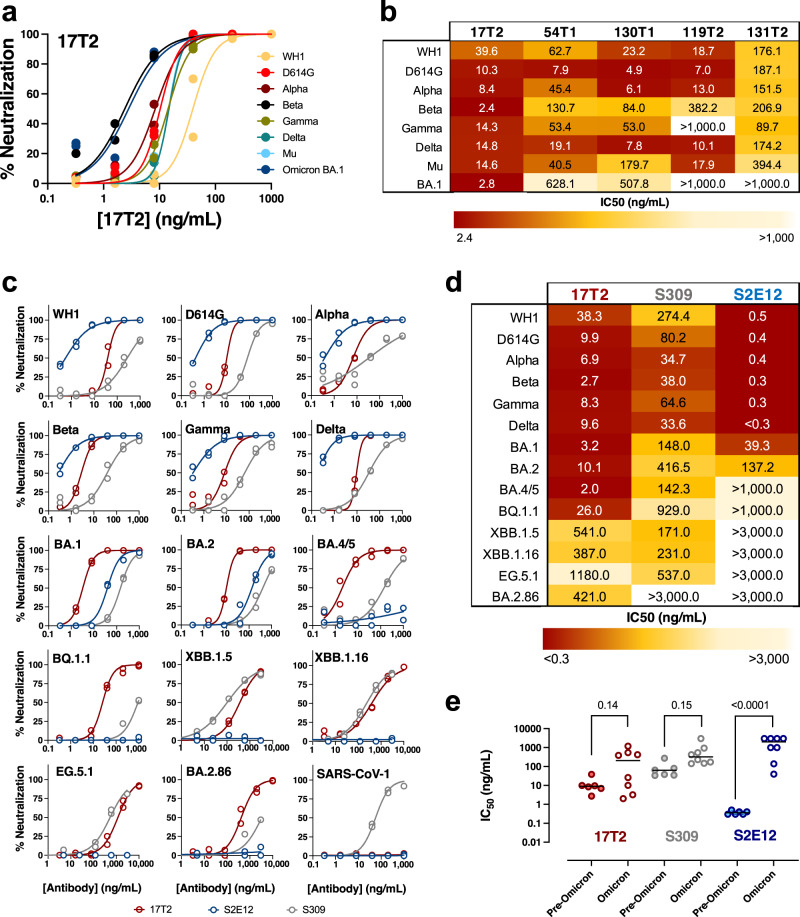 Figure 1
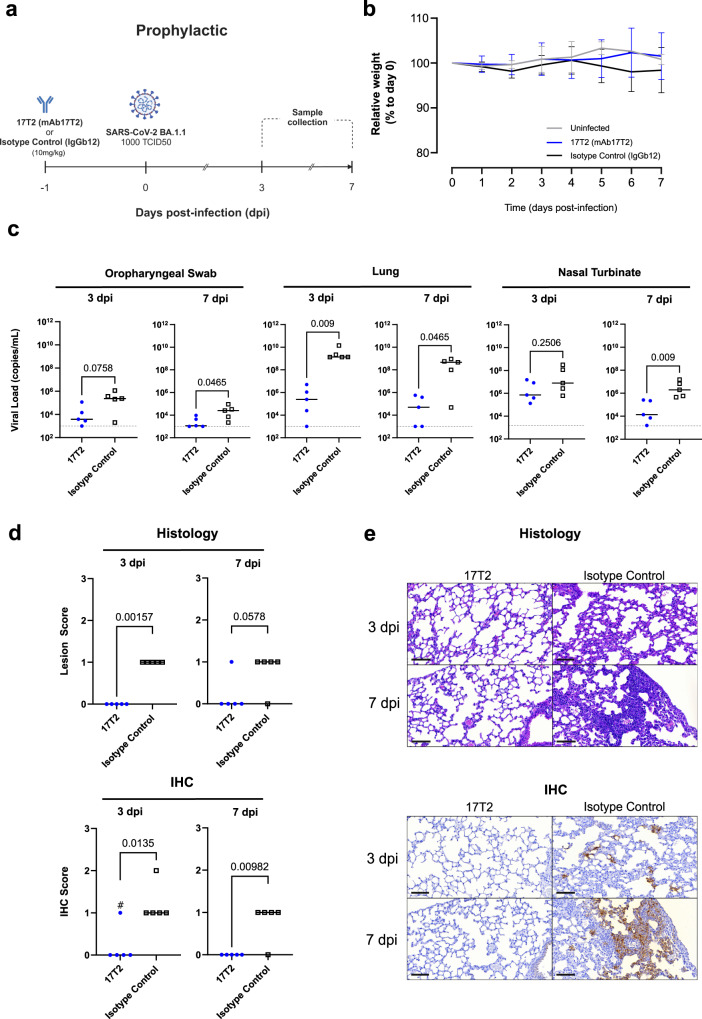 Figure 2
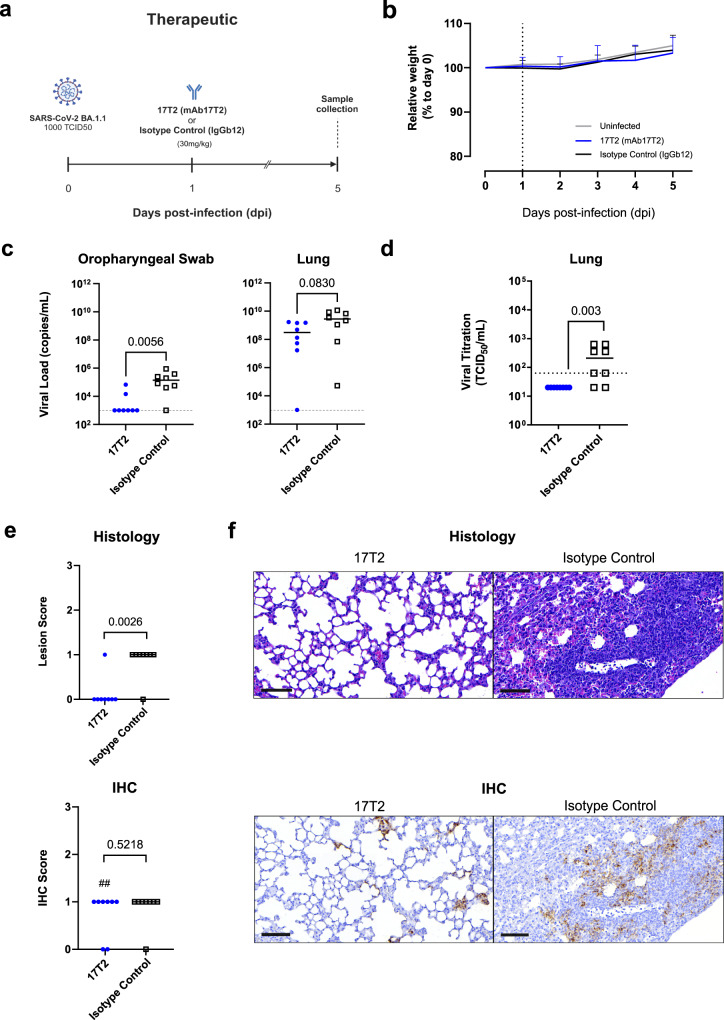 Figure 3
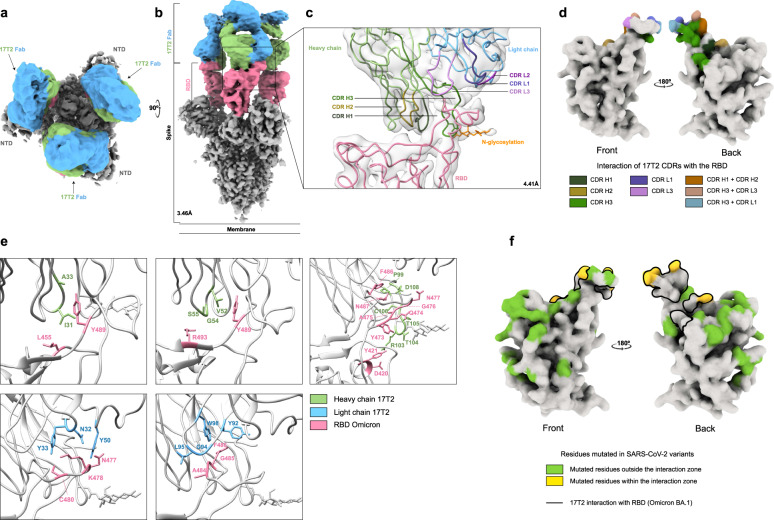 Figure 4
Peer Reviews
No public reviews on file for this paper yet. If you reviewed it on a platform where reviews are public (OpenReview, ICLR, NeurIPS, ICML), you can paste yours below so the community can read it here.
Videos
No videos yet. Explain this paper in a talk, walkthrough, or lecture? Add one.
Taxonomy
TopicsSARS-CoV-2 and COVID-19 Research · COVID-19 Clinical Research Studies · Monoclonal and Polyclonal Antibodies Research