Evaluation of a Problem-Solving Program on Developmental Disorders: A Qualitative Appraisal
Nanami Murata, Soma Sagara, Rinhi Higashiguchi, Yukine Hori, Yi Ning Tan, Yasuhiro Kotera, Akihiko Ozaki

TL;DR
This study evaluates a program for middle and high school students in Japan to improve understanding of developmental disorders and promote inclusive attitudes.
Contribution
The study provides a qualitative appraisal of a problem-solving program's effectiveness in improving understanding and attitudes toward developmental disorders.
Findings
The program's project-based learning approach raised awareness and understanding of developmental disorders.
Participants reported positive changes in attitudes and behavior toward developmental disorders.
Areas for improvement included program administration and addressing specific challenges related to developmental disorders.
Abstract
Background In Japan, effective educational methods to promote understanding of developmental disorders (DD) among young people have not been established, something that is necessary for an inclusive society. Aims This paper aimed to identify both the positive aspects and areas for improvement in a problem-solving program for middle and high school students on the topic of DD called inochi Gakusei Innovators Program (i-GIP). The study also sought to determine the changes in attitudes toward DD that occurred as a result of participating in the program. Method Semi-structured interviews were conducted online, with middle and high school students who participated in i-GIP, university students who helped manage the program, and cooperators with DD or their families. Inductive thematic analysis was conducted, and codes and themes were identified. Results Positive aspects of i-GIP…
Genes, proteins, chemicals, diseases, species, mutations and cell lines named across the full text — each resolved to its canonical identifier and authoritative record.
Click any figure to enlarge with its caption.
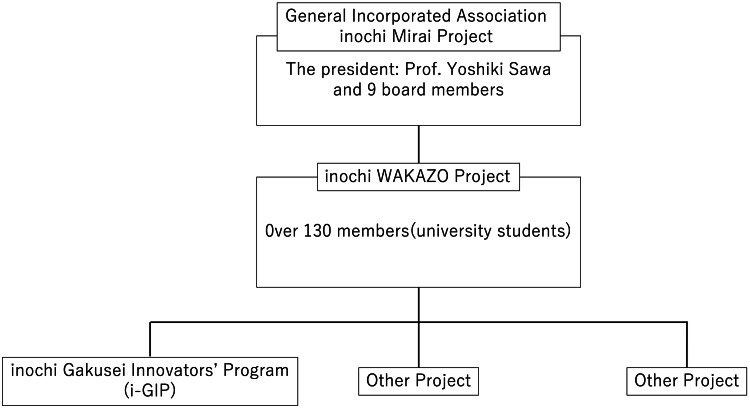 Figure 1
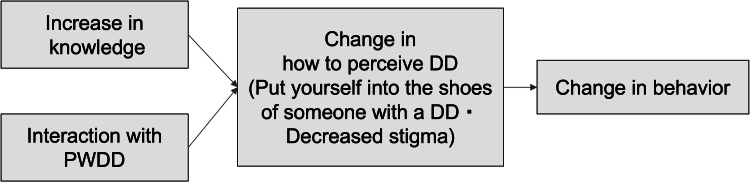 Figure 2
| Month | Objectives | Content |
| July | Acquire knowledge of DD | Lecture on how to conduct interviews |
| Be able to put oneself in PWDD’s shoes | Lecture by PWDD | |
| August | Identify and select an issue to tackle | Workshops by design-thinking instructors |
| Learn how to create prototypes | ||
| September | Determine a solution | Introduction of case studies of solutions to social issues |
| October | Implement solutions | Presentation and competition |
| Present results |
| Three Sample Groups | Category |
| Middle/High School Students | The program was intriguing |
| Had time because of COVID-19 | |
| Interest in the topic | |
| Influenced by an acquaintance/ Participation of acquaintances | |
| University Students | The program was intriguing |
| Had time because of COVID-19 | |
| Interest in the topic | |
| Influenced by an acquaintance/ Participation of acquaintances | |
| Cooperators | The program was intriguing |
| High hopes for students/youth |
| RQ | Three Groups | Theme | Comments |
| Good points | Middle/High School students | Characteristics of program (Q1-H-T1) | I was glad I got to listen to many lectures not only on DD but also on how to make presentations and prototypes and how to realize them. (H5) |
| Understanding of developmental disorders (Q1-H-T2) | Through speaking to parents of children with DD, I realised many things about these children's experiences. The ones facing these difficulties are the children. When their parents/adults with DD asked if I had attempted to see things from the children's perspectives, I realised that that was something I had to do. I realised the importance of trying to put myself in the shoes of the relevant parties. (H6) | ||
| Personal growth (Q1-H-T3) | There were many good things about working with people from other schools. It was more interesting when the groups were mixed. For interviews, not only could we widen the scope of our investigation, but we could also interview a variety of people from schools with different environments/cultures. This helped us to stay open-minded. (H3) | ||
| University Students | Characteristics of program (Q1-U-T1) | The easiest part (of society) to bring about change is middle and high school students, yet what DD specialists find most difficult when trying to raise awareness is "how to target schools". Until now, approaching teachers has been the most they could do. GIP targets middle and high school students. (U1) | |
| Understanding of developmental disorders (Q1-U-T2) | Both middle/high school students and university students conducted interviews. I had an image of DD as reported in media, but after actually talking to them, I realized that it was different from what is portrayed in media. Hearing about first-hand experiences was truly eye-opening for me. (U5) | ||
| Personal growth (Q1-U-T3) | I become more accepting of diversity. (U4) | ||
| Cooperators | Use of project-based learning (Q1-C-T1) | What I found most wonderful was that the students did not just listen passively but were proactive and engaged (in communicating with PWDD). (C1) | |
| Raising awareness and understanding (Q1-C-T2) | As a parent, I am reassured to know that the students who are trying to tackle and are paying attention (to DD) will be the future leaders of the next generation. (C6) | ||
| Attitude of students (Q1-C-T3) | It was great to learn that there are people who really care about DD. (C1) | ||
| Improvements | Middle/High School students | Challenges related to developmental disorders (Q2-H-T1) | Some PWDD do not want to meet strangers or cannot accommodate sudden requests. I think conducting interviews was more difficult in comparison to previous years. (H2) |
| Administration (Q2-H-T2) | Although we had no choice because of the pandemic, it would have been nice to be able to do it (GIP) in person. (H8) | ||
| Capacity of participants (Q2-H-T3) | The only area for improvement I can think of is a personal issue. I thought it was unfortunate that I only participated in my second year of high school then stopped (when deciding whether to continue working on the project after GIP) because of exams. (H4) | ||
| University Students | Challenges related to developmental disorders (Q2-U-T1) | We could only interview people who face difficulties in daily life, who have self-understanding, and can talk about their experiences to others. (U4) | |
| Administration (Q2-U-T2) | In terms of education for understanding disabilities, it is questionable whether it was good to rank the participants' proposed solutions. It is also true that competition is required for motivation. They were ranked according to whether it was feasible as a business, but the rankings do not reflect the severity of the problem. (U2) | ||
| Capacity of participants (Q2-U-T3) | That I had to sacrifice sleep to complete tasks. (U4) | ||
| Cooperators | Administration (Q2-C-T1) | I don't know what they did with it (the projects) after that, or what happened after the award was given. (C6) | |
| Improvements solution-wise (Q2-C-T2) | I also felt that it could be easily misunderstood that just by solving the obvious problems, the difficulties of existing as someone with DD in this society would also be eased. I feel that if more in-depth questions had been asked, that could have become a guide for tackling other related issues. (C2) | ||
| Emotional barrier whilst cooperating (Q2-C-T3) | They asked me to use 'Discord' and I was troubled. I feel some resistance to something I have not touched before. There are people from different generations involved, so please make it accessible. (C1) | ||
| Changes in attitudes and behavior | Middle/High School students | Changing perceptions of developmental disability(Q3-H-T1) | At first I didn't feel familiar with it (DD) and had no idea about it, but it's not strange at all; and in a way, we all have DD. I don't think it's surprising to find them (PWDD) around me. (H8) |
| Behavioral Changes (Q3-H-T2) | I've become sensitive to the term "DD". Whenever I see it on the news or on YouTube, I can't help but watch it. (H4) | ||
| Changes in relationships (Q3-H-T3) | I used to think that they (PWDD) were scary or strange. After learning about DD through the program, I do not even feel scared. (H4) | ||
| Future prospects (Q3-H-T4) | I now want to make society easier for people with DD and minorities to live in. (H4) | ||
| University Students | Changing perceptions of developmental disability(Q3-U-T1) | At the time, the idea of social model was new. I have come to believe that I am responsible for how I can change the environment, because I too can exist as a element of the environment. (U1) | |
| Behavioral Changes (Q3-U-T2) | Now, when I happen to meet people in the gray zone, I am able to understand that they might have particular traits, and treat them with consideration. (U6) | ||
| Changes in relationships (Q3-U-T3) | I am able to apply the lessons learned in GIP to my interpersonal relationships. I now have a different way of viewing relationships. I feel like this was an opportunity to become a more mature thinker. (U3) | ||
| Cooperators | Increased awareness of contribution to their own activities (Q3-C-T1) | I felt sorry for the researchers (of DD) that there are not enough mutual support groups around the country for them too. I feel a sense of duty for what I am doing now. (C2) | |
| Reflection on how to deal with one's children (Q3-C-T2) | Personally I think, "I have to face my children". Thanks to the interview, there are instances where I feel I should not say too much (to my children). (C5) | ||
| Hope for the future (Q3-C-T3) | A generation that has gone through the inclusive education curriculum is growing up, and I eagerly anticipate seeing the future society that these children will build. (C6) |
Peer Reviews
No public reviews on file for this paper yet. If you reviewed it on a platform where reviews are public (OpenReview, ICLR, NeurIPS, ICML), you can paste yours below so the community can read it here.
Videos
No videos yet. Explain this paper in a talk, walkthrough, or lecture? Add one.
Taxonomy
TopicsAutism Spectrum Disorder Research
Introduction
As many as 15% of the world's population lives with some form of disability [1], and in order to enable diverse people to enjoy a high quality of life (QOL), it is essential that all citizens gain an understanding of disability, as well as how to interact with persons with disabilities. The United Nations adopted the “Convention on the Rights of Persons with Disabilities” in 2006 [2] and in Japan, the “Act for the Elimination of Discrimination against Persons with Disabilities” was enacted in 2016 and revised in 2021 [3]. It became a legal obligation for the national government, local governments, and private businesses to provide reasonable accommodation for persons with disabilities. In reality, however, a lack of understanding of disability, as well as disparities caused by disability still exist. In particular, people with developmental disorders (DD) have been reported to feel more isolated and less socially connected [4], and to have a lower QOL [5,6].
DD are behavioral and cognitive disorders that arise during the developmental period that involve significant difficulties in the acquisition and execution of specific intellectual, motor, language, or social functions [7]. It is estimated that globally, there are 52 million children under the age of five with DD [8]. DD are not only difficult to identify, but even once identified, the lack of easily observable DD traits makes it difficult to promote understanding of persons with DD among the people around them [9]. For school-aged children, one of the DD-related issues is the high rate of truancy. While the general rate of truancy is 0.32% in elementary school and 2.89% in middle school, the percentage of patients diagnosed with DD who are found to be truant is 44.3% [10]. Here, interpersonal problems with friends and teachers are often cited as triggers for non-attendance. Another pertinent issue is the high turnover rate during employment. Despite the fact that the employment rate of persons with disabilities has been increasing yearly [11], the turnover rate within one year for persons with DD is 37.5%, compared to the 19.4% turnover rate for new graduates in the general population [12,13]. Again, interpersonal problems are cited as the reason for the high turnover rate [13]. The understanding of DD is not yet widespread in Japan.
In order to deepen societal understanding of DD, it is essential to educate the middle/high school student population [14]. These students not only have sufficient cognitive ability but are also highly interested as well as greatly influential in society. It has been reported that traditional education regarding DD is often limited to promoting the self-understanding of the individuals concerned, and the understanding of their families and supporters; it is difficult to educate students without disabilities because these disabilities are “hard to spot” [15]. In other words, there is no established means of promoting understanding of DD among middle/high school students in Japanese educational settings.
Therefore, we, the inochi WAKAZO Project (hereafter referred to as inochi), conducted a problem-solving program on DD in 2020 (inochi Gakusei Innovators Program 2020, hereafter referred to as i-GIP). This study aims to identify positive aspects and areas for improvement in i-GIP and to clarify what changes in attitudes toward DD have occurred as a result of i-GIP. The study consists of interviews with the middle/high school students who participated in i-GIP, the university students who managed the program, as well as the persons with DD (PWDD) and their families who cooperated with us. The goal of this study is to evaluate this program as a way to promote the understanding of disability. In this paper, we looked into three key questions to comprehensively examine the impact of i-GIP. Firstly, we sought to identify the positive aspects of i-GIP. Secondly, we focused on identifying areas of improvement. Finally, we investigated changes in attitudes toward DD that have occurred in participants and cooperators as a result of i-GIP.
Materials and methods
Overview of the project
What is the inochi WAKAZO Project?
The inochi WAKAZO Project is a student organization whose mission is “to create a society that saves lives through the power of youths”. There are approximately 130 university student members throughout Japan. Most of the members are medical students, but there are also students from other faculties.
The parent organization of the inochi WAKAZO Project is the inochi Mirai Project, a generally incorporated association consisting of 10 directors, some of whom are university professors (Figure 1). The project itself is managed entirely by university students, but the board members provide consultation on administrative matters, such as fundraising and public relations.
Organization chart of the inochi Mirai Project
What Is i-GIP2020?
One of the main activities of the inochi WAKAZO project is i-GIP (inochi-Gakusei Innovators Program). i-GIP is a problem-solving program offered to middle/high school students. The program began in 2015, making 2020 its sixth year. Each year, the university students who manage the program decide on a theme related to a critical healthcare issue, and participating students aim to come up with problem-solving ideas related to the theme. In response to the growing attention on DD in Japan in recent years, the theme for 2020 was "The co-creation of a society where no one with developmental disorders is left behind”.
How Did We Conduct i-GIP2020?
We recruited participants, mainly from elite schools across Japan, through distributing flyers, publicizing the program on social media, and holding information sessions. Participants applied in teams of two to four members. A total of 140 teams (434 students) sent in applications, and after an interview and selection process, 33 teams (115 students) were invited to participate in i-GIP. Fifty-five university students were involved in i-GIP's management. Details of the selection process are as follows: two university students worked as a pair and served as interviewers. The pair then conducted a 20-minute interview for each team using ZOOM (Zoom Video Communications, California, USA). Each interviewer gave a score out of 100 points based on items such as enthusiasm, the ability to think logically, and the ability to take the initiative. Taking these scores into consideration, the university students discussed which teams to select.
Through a four-month-long program, each team of participants identified issues related to DD and created and implemented solutions for their selected issues. One university student mentor was assigned to each team, accompanying the students in their activities. The overview of the program is shown in Table 1. A total of 10 lectures on DD and design thinking were conducted during the program. Each lecture took about six hours and was conducted online mainly. An objective was pre-established by the management, and corresponding guest lecturers were invited to present and/or aid individual groups. Firstly, 3/4 guest lecturers who were PWDD were invited to talk about their experiences and work in the community. The goal was for participants to be able to put themselves in the shoes of people with DD. To aid in their understanding of DD, a handbook about DD was given out to all participants in the first lecture. This handbook was created by management under the supervision of experts. Several lectures were dedicated to deciding on an issue for groups to tackle. Workshops by design-thinking professionals and guest lectures by real-life initiatives tackling issues of DD were conducted. This allowed participants to have a rough overview of the whole problem-solving process, and how issues of DD looked, and how solutions could be implemented. There were opportunities for PWDD and professionals working with DD to provide feedback on issues and solutions of individual groups. Lectures on prototyping and implementation were also provided. In addition to the lectures, i-GIP strongly encouraged participants to personally interview PWDD and experts in DD. The goal was for participants to be able to determine crucial DD issues, create meaningful solutions for PWDD, implement them, and receive feedback. At the end of the program, there was a presentation competition where each team presented their solutions.
Method and participants
This study employed a qualitative design with thematic analysis of semi-structured interviews. The interviews were conducted using ZOOM approximately one year after the program ended. The interview participants comprised eight middle or high school students who participated in the program, seven university students from the management team, and six people either with DD or who were family members of PWDD, hereafter also referred to as cooperators. Inclusion criteria were people who had participated or were involved in i-GIP. Individuals excluded from the study comprised the four authors of this paper who also served on the management team. A message was sent using pre-existing contacts (e.g. emails) explaining our study and that we were recruiting participants. Those who were interested then replied via email, upon which we sent them explanatory documents and consent forms. Written consent was obtained from all participants and participants under 20 years of age had written consent from their parents or guardians. Subsequently, we conducted interviews with those who demonstrated understanding of and agreement with the research content.
All questions were asked in a single interview, meaning the questions were not spread across multiple interviews, and each interview lasted for 30-50 minutes. After 21 interviews, the researchers confirmed that data saturation was achieved. Four of the authors of this article conducted the interviews, and all participants were aware that the interviewers were involved in the management of i-GIP. The interviewers conducted the interviews from their homes in Japan and confirmed that no one else was around to ensure confidentiality. All interview data were audio-recorded.
Interview guide
Aside from the basic information of the participants (age, gender, and affiliation), the interview guide focused on three main questions: 1) positive aspects of i-GIP, 2) areas of improvement of i-GIP, and 3) changes in the understanding of DD, both before and after i-GIP, as well as one year after the end of i-GIP. Four of the authors created this interview guide.
Data analysis
Inductive thematic analysis [16] was chosen due to its exploratory nature, allowing us to explore this relatively unexamined area (i.e. our research question and target population group in Japan): no themes were identified in advance. The social constructionism approach was undertaken to establish shared understandings of i-GIP with the participants. The analysis was divided among the four authors (NM, SS, RH, and YH) and each followed the six phases recommended by Braun and Clarke.
First, we transcribed the data and requested all the participants to check the summarized contents, following COREQ (COnsolidated criteria for REporting Qualitative research). Then, we read and re-read the data to get ourselves familiarized with the data and noted down initial ideas that summarized the interviews (Phase 1). Next, we systematically identified features of the data across the entire data set and collated data relevant to each code (Phase 2). Following that, we gathered similar codes and created a higher level of themes (Phase 3). All authors checked the themes in relation to the coded extracts and the entire data set (Phase 4). After several discussions to clarify the definitions and names of each theme (Phase 5), we finalized the analysis as reported in this paper (Phase 6). The results of our analysis were again reviewed and agreed upon by all researchers.
Analysis was performed manually. No software was used. Finally, the transcripts and the final output of our analysis were shown to all participants, who confirmed the accuracy of the results.
Results
The reasons for participation in i-GIP, the positive aspects of i-GIP, the areas for improvement in i-GIP, and the changes in attitudes and behavior toward DD before and after participation in i-GIP are described in this order, corresponding to the research questions. A total of 21 people were interviewed: eight middle/high school student participants, seven university students from the management team, and six cooperators (Supplementary Material 1).
Reasons for participation
Reasons for participation extracted from each group are shown in Table 2.
In terms of reasons for participation, there were four reasons: “The program was intriguing”, “Had time because of COVID-19”, “Interest in the topic”, and “Influenced by an acquaintance/Participation of acquaintances”. These were common reasons for middle/high school participants and university students. On the other hand, among the cooperators, some motives were similar to middle/high school and university students, such as “The program was intriguing”, while others were not seen in the other two groups, such as “High hopes for students/youth”.
Table 3 summarizes the positive aspects of i-GIP, areas for improvement in i-GIP, as well as changes in attitudes and behavior toward DD before and after participation in i-GIP, along with the themes and comments for each group. Themes were numbered with the following rules: (Qa-b-Tc) where Qa (a= 1, 2, 3) corresponds to question number, b corresponds to an attribute of interviewee (H: Middle/ High school students, U: University students, C: Cooperators) and c (c= 1, 2, …) refers to number c of themes extracted from this question and attribute.
Q1. Positive aspects
We asked interviewees ‘Tell us what you liked about i-GIP’ (Q1) and extracted 45 codes (Supplementary Material 2 (Code Table)). For middle/high school students, three themes were extracted. The themes were “Characteristics of Program” (Q1-H-T1), “Understanding of developmental disorders” (Q1-H-T2), and “Personal growth” (Q1-H-T3). Example sentences include "I was glad I got to listen to many lectures not only on DD but also on how to make presentations and prototypes and how to realize them (H5-Characteristics of program)".
Three themes “Use of project-based learning” (Q1-C-T1), “Raising awareness and understanding in different people” (Q1-C-T2), and “Attitude of students” (Q1-C-T3) were extracted from cooperators. One cooperator said “What I found most wonderful was that the students did not just listen passively but were proactive and engaged (in communicating with PWDD)” (C1-Use of project-based learning).
As can be seen, in Q1, responses from middle/high school students and university students regarding the program content and personal growth were similar. There were differences present too. For example, for the “Characteristics of Program” theme, middle/high schoolers focused on the opportunities i-GIP could offer outside of the traditional curriculum while university students found being able to work with middle/high school students a point of interest. For cooperators, we could conclude that they appreciated not only the content of the program itself but also the students’ attitude towards learning.
Q2. Areas of improvement
We asked interviewees ‘Please tell us if there are any improvements that need to be made for i-GIP’ (Q2) and extracted 28 codes (Supplementary Material 3 (Code Table)). In both middle/high school students and university students, the following themes were identified: “Challenges related to developmental disorders” (Q2-H-T1 and Q2-U-T1), “Administration” (Q2-H-T2 and Q2-U-T2), and “Capacity of participants” (Q2-H-T3 and Q2-U-T3). A notable difference for the theme “Challenges related to developmental disorders” was that while middle/high school students found conducting interviews difficult due to PWDD’s characteristics, university students found the topic of DD hard to learn and teach given its diverse and spectral nature, which stems from their perspective through managing and mentoring middle/ high school students. One university student shared “In terms of education for understanding disabilities, it is questionable whether it was good to rank the participants' proposed solutions. It is also true that competition is required for motivation. They were ranked according to whether it was feasible as a business, but the rankings do not reflect the severity of the problem” (U2-Administration).
For cooperators, apart from the theme, “Administration” (Q2-C-T1), which can be seen in middle/high school students, two other themes “Improvements solution-wise “(Q2-C-T2) and “Emotional barrier whilst cooperating” (Q2-C-T3) were extracted. Thus, from Q2, we identified areas for improvement not only with regard to program management, but also with regard to the ideas generated by the middle/high school students and the difficulty of addressing DD as a topic in an educational program.
Q3. Changes in attitudes and behavior toward DD
Middle/high school students and university students were asked two of the following questions: ‘Was there any change in your understanding of developmental disability before and after your participation in the program? If so, what kind?’ and ‘It has been a year since your participation in the program; has there been any change in your awareness of developmental disorders and behavior compared to before your participation? If so, what changes?’. As no differences were found in the answers to these questions (Q3), the answers were merged for analysis. Forty codes were extracted (Supplementary Material 4 ((Code Table)).
For middle/high school students and university students, three themes “Changing perceptions of developmental disorders” (Q3-H-T1), “Behavioral changes” (Q3-H-T2), and “Changes in relationships” (Q3-H-T3) were extracted. Apart from this, we extracted another code from middle/high school students: “Future Prospects” (Q3-H-T4). To provide a more detailed examination of these codes, we cite the perspectives of two participants. The first stated, “At first I didn't feel familiar with it (DD) and had no idea about it, but it's not strange at all; and in a way, we all have DD. I don't think it's surprising to find them (PWDD) around me.” (H8-Changing perceptions of developmental disability) and another, “I used to think that they (PWDD) were scary or strange. After learning about DD through the program, I do not even feel scared” (H4-Changes in relationships).
In Q3, middle/high school students reported not only changes in awareness and behavior toward DD, which was the topic of i-GIP, but also that what they had learned in i-GIP could be applied in their daily lives. In addition, some middle/high school students said that their experiences in i-GIP had influenced their career decisions.
We asked the cooperators: ‘It has been a year since you were involved in the program. Have you noticed any changes in yourself and the people around you in terms of attitudes and behaviors towards developmental disorders compared to before you were involved in the programme? If so, what changes?’ (Q3). Six codes and three themes “Increased awareness of contribution to their own activities” (Q3-C-T1), “Reflection on how to deal with one's children” (Q3-C-T2), “Hope for the future” (Q3-C-T3) were extracted (Supplementary Material 4 (Code Table)). One cooperator expressed, “A generation that has gone through the inclusive education curriculum is growing up, and I eagerly anticipate seeing the future society that these children will build” (C6-Hope for the future).
As can be seen in Q3, it is worth noting that there was a change in daily life for cooperators in terms of understanding and awareness of DD activities and parenting, as well as a newfound increased hope for the future of society.
Discussion
The purpose of this study was to evaluate the validity and effectiveness of i-GIP. Through this study, we were able to extract the reasons for participants' participation, positive and negative aspects of i-GIP, and changes in participants' behaviors toward DD. These three objectives are discussed in turn below.
The good points of i-GIP reported by middle/high school students and university students were the “Characteristics of the program” (Q1-H-T1), “Understanding of DD” (Q1-H-T2), and their “Personal growth” (Q1-H-T3). This suggests that the characteristics of i-GIP met the expectations of the participants. i-GIP is a problem-solving program that allows participants to experience various activities, from interviews with PWDD and experts to presentations, and it can be said that these activities managed to match their reasons for participation. It has been reported that in Japan, the most common educational activities for understanding disabilities are simulation activities or joint learning in elementary and middle schools [17,18]. Furthermore, there are still challenges in developing programs that promote understanding of disabilities specific to DD [19]. As this program provides an experience outside of the regular school curriculum, we feel that it is not surprising that many participants felt that they had experienced personal growth and that their understanding of DD had been deepened through this program.
One of the good points reported by the cooperators was that through the program, young people were becoming involved in DD-related issues. Research has shown that the process of learning to understand disabilities should be supported by systematic and scientific information appropriate for children's stages of development [20,21]. However, there are few initiatives for the general public or in general education, in Japan [22], and the fact that this program targets middle/high school students itself was rare and thus a good point for the cooperators.
In addition to this, prior to their participation in i-GIP, some cooperators “thought that non-participants were “‘uninterested’ in developmental disorders”. This may be because they had witnessed or experienced behaviors that showed attitudes of “non-interference and indifference” by the general public [23]. On the other hand, some middle/high school students felt that PWDD “might get hurt because of getting involved with us”. This assumption of PWDD toward the general public and the resistance of the general public (the participating students in this case) with regard to being involved with PWDDs creates a misunderstanding within society and may be one of the factors reducing the interaction between the two groups. The increase in the general public’s interest in DD means that social misunderstanding and rejection, which are the sources of prejudice and discrimination [24], could possibly be gradually eliminated.
Three points for improvement were raised by the middle/high school students. The first point was regarding the administration (Q2-H-T1), including “the downside of the business contest format”. Second, challenges related to DD (Q2-H-T2) were reported, including the fact that DD is “difficult to conceptualize” and that there were “limitations in the recruitment of interviewees”. Third, the limitations of the middle/high school participants’ capacity (Q2-H-T3) were reported, mainly the difficulty of “balancing the program and entrance exams”. Three points were also reported by the cooperators. First, they reported a need for change in the administration (Q2-C-T1), where “support for social implementation” and “avenues to disseminate information” were lacking. Secondly, the cooperators reported a desire for improvements in the solutions generated, (Q2-C-T2) citing a “lack of depth of understanding of issues”. Finally, for example, “difficulty in adapting to digital tools” was reported to contribute to the emotional barrier whilst cooperating (Q2-C-T3). Since many of these points are very pertinent, we believe that they should be paid attention to when designing future programs.
This study revealed a variety of changes in the participants' attitudes and behaviors toward DD. First, many reported that their knowledge had increased. According to Torii and Someki [25], those who have correct knowledge about ASD have less stigma; thus, the acquisition of correct knowledge is important for reducing prejudice. Given that currently half of the population in Japan has never had contact with people with disabilities [26] and that many participants had little prior knowledge of DD unless they had been personally acquainted with someone with DD, we can infer that the impact of this program was significant.
In addition, being able to “Put yourself into the shoes of someone with DD” was reported by both middle/high school students and university students. One contributing factor might be the emphasis on interviewing PWDD within the program. Previous research [27,28] has shown that interviews with PWDD are effective in reducing stigma. Because DD varies greatly from person to person, listening to the stories of individual participants, rather than learning only generalized knowledge and stories, may have led to a deeper understanding of the disabilities.
In addition to the change in awareness, the program also contributed to concrete changes in the behavior of the middle/high school students, as can be seen through the results: “I am now able to help students (PWDD) around me if they are in trouble” and “Learned to take into account the traits of others”. Thus, the changes in the middle/high school participants and the university students who managed the program can be summarized in Figure 2.
Changes of middle/high school participants and university studentsDD: Developmental Disorders, PWDD: Persons with Developmental Disorders
One of the sub-themes “I began to consider the circumstances of people who act in ways incomprehensible to me (e.g. whether they have unique characteristics)” is an example that shows that the middle/high school students and university students who interacted with PWDD through i-GIP were able to become more open-minded not only towards PWDD but also other people in general. This suggests that learning about disabilities and seeing the world through the perspective of people with disabilities through interviews will ultimately lead to the creation of a society that is welcoming of diversity.
Limitations
During the recruitment stage, i-GIP mainly focuses on recruiting students from elite schools. In addition, participants have to go through interviews before being selected for the program. Therefore, participants are likely to be highly motivated, and also able to have a good understanding of the educational program, which may lead to a positive bias. Therefore, if the average middle/high school student were to participate in i-GIP, the program may not be as effective as the reported results.
With regard to the interviews conducted by participants during i-GIP 2020, the PWDD who were able to be interviewed were limited to those who could reflect on and verbalize their experiences. As such, the information from PWDD was limited, and the participants might have only gained a partial understanding of DD. It is necessary to consider a system that would enable interviews about the problems of PWDD who are on the severe end of the spectrum or those who have difficulties regarding self-identity and verbal communication [29].
In addition, this study was conducted one year after the program ended. Therefore, it is possible that the results may be subject to recall bias.
Conclusions
The purpose of this study was to review i-GIP, a problem-solving program targeting middle/high school students, and to clarify how i-GIP has changed the way in which participants view DD. While this study pointed out the positive effects of i-GIP, such as the participants learning to put themselves in the shoes of PWDD, it also reported some difficulties specific to dealing with DD. The strength of this study lies in its ability to conduct a comprehensive evaluation of i-GIP by interviewing three different groups: participating middle/high school students, university students involved in administration, and PWDD and their families (cooperators). We propose that regarding the topic of DD, a problem-solving program like i-GIP is more effective than classroom learning in terms of knowledge acquisition and the reduction of stigma. However, further research is required to verify its effectiveness. In order to provide this program to a wider audience, it is necessary to examine the method of implementation, duration, and target audience and consider packaging the program or introducing it into the school curricula.
The reference list from the paper itself. Each links out to its DOI / PubMed record.
- 1World Report on Disability World Health Organization & World Bank 2011 https://www.who.int/publications/i/item/9789241564182
- 2Convention On The Rights Of Persons With Disabilities (CRPD) 6 2023 2006 https://social.desa.un.org/issues/disability/crpd/convention-on-the-rights-of-persons-with-disabilities-crpd
- 3Act for Eliminating Discrimination against Persons with Disabilities (Act No. 65) 6 2023 2013 https://www.japaneselawtranslation.go.jp/ja/laws/view/3052
- 4Loneliness, friendship quality and the social networks of adolescents with high‐functioning autism in an inclusive school setting J Res Spec Educ Needs Locke J Ishijima EH Kasari C London N 7481102010
- 5Quality of life of high-functioning children and youth with autism spectrum disorder and typically developing peers: Self- and proxy-reports Autism Egilson ST Ólafsdóttir LB Leósdóttir T Saemundsen E 1331412120172704835410.1177/1362361316630881 · doi ↗ · pubmed ↗
- 6Health-related quality of life in children with autism spectrum disorders and children with developmental language disorders Autism Dev Lang Impair Coales C Heaney N Ricketts J 11442019
- 7ICD-11 for Mortality and Morbidity Statistics (Version : 01/2023)"Neurodevelopmental disorders". 6 2023 2023 https://icd.who.int/browse 11/l-m/en#/http://id.who.int/icd/entity/1516623224?view=G 0
- 8Developmental disabilities among children younger than 5 years in 195 countries and territories, 1990-2016: a systematic analysis for the Global Burden of Disease Study 2016 Lancet Glob Health 0216201810.1016/S 2214-109X(18)30309-7PMC 613925930172774 · doi ↗ · pubmed ↗