Endoscopic submucosal dissection using a detachable snare for a large colorectal tumor with muscle retraction
Shunsuke Horitani, Takeshi Yamashina, Natsuko Saito, Hironao Matsumoto, Masahiro Orino, Masataka Kano, Masaaki Shimatani

Abstract
Genes, proteins, chemicals, diseases, species, mutations and cell lines named across the full text — each resolved to its canonical identifier and authoritative record.
Click any figure to enlarge with its caption.
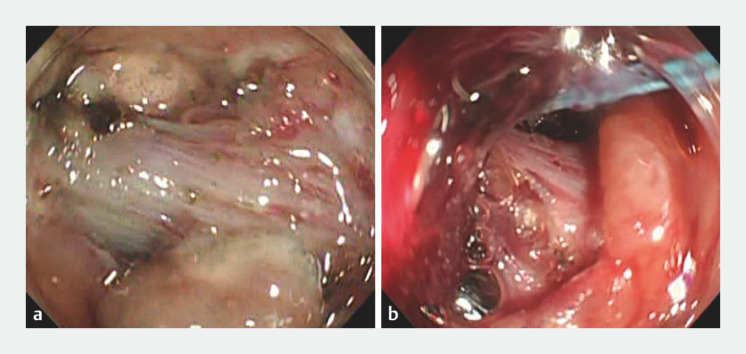 Fig. 1
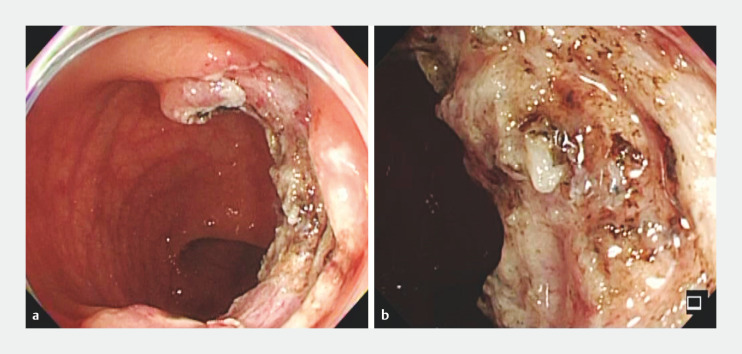 Fig. 2
Peer Reviews
No public reviews on file for this paper yet. If you reviewed it on a platform where reviews are public (OpenReview, ICLR, NeurIPS, ICML), you can paste yours below so the community can read it here.
Videos
No videos yet. Explain this paper in a talk, walkthrough, or lecture? Add one.
Taxonomy
TopicsGastric Cancer Management and Outcomes · Gastrointestinal Tumor Research and Treatment · Metastasis and carcinoma case studies
Large colorectal sessile tumors sometimes exhibit severe submucosal fibrosis with muscle retraction 1 . Endoscopic submucosal dissection (ESD) for tumors with muscle retraction tends to result in incomplete resection because submucosal dissection is difficult and carries a risk of perforation 1 . Conventional methods such as the double-tunnel and pocket-creation methods are useful for large sessile tumors with muscle retraction because good traction can be maintained and the dissection line is easier to recognize 2 3 . We report successful resection of a large colorectal tumor with muscle retraction at the center of the lesion using a detachable snare (PolyLoop Ligating Device; Olympus, Tokyo, Japan), which differs from conventional methods.
A 74-year-old man was referred to our hospital for the treatment of a large sigmoid sessile tumor, approximately 50 mm in diameter. ESD was performed using a DualKnife (KD-650U; Olympus). During submucosal dissection, extensive muscle retraction was observed in the center of the lesion ( Fig. 1 a ). To reveal muscle retraction without causing damage, mucosal incisions and submucosal dissection were repeated toward the distal side. Subsequently, the weight of the tumor was used to create appropriate traction on the retracted muscle by changing the patient’s position, followed by strangulation of the tumor with a detachable snare for extensive muscle retraction ( Fig. 1 b ). This method allowed good traction to be maintained and an appropriate dissection line to be identified, even in the presence of muscle retraction ( Video 1 ). The lesion was easily and completely resected en bloc without complications ( Fig. 2 ). The tumor measured 50×45 mm, and histological examination revealed a tubular adenocarcinoma in a tubulovillous adenoma, with free tumor margins.
Resection of a large colorectal tumor with muscle retraction. a Extensive muscle retraction was observed in the center of the lesion. b Strangulation with a detachable snare for extensive muscle retraction provided good traction and facilitated identification of the dissection line.
Endoscopic submucosal dissection using a detachable snare for a large colorectal sessile tumor with muscle retraction. This method allowed good traction to be maintained and easy recognition of the muscularis for identification of a safe and appropriate dissection line.Video 1
Endoscopy images. a After completion of submucosal dissection. b No complications occurred after resection of the retracted muscle.
ESD using the method of strangulation with a detachable snare for muscle retraction provides good traction and facilitates identification of the dissection line. This method is relatively easy and may reduce the treatment time compared with conventional methods.
Endoscopy_UCTN_Code_TTT_1AQ_2AD
The reference list from the paper itself. Each links out to its DOI / PubMed record.
- 1Toyonaga T Tanaka S Man-I Clinical significance of the muscle-retracting sign during colorectal endoscopic submucosal dissection Endosc Int Open 20153 E 246E 25126171438 10.1055/s-0034-1391665 PMC 4486035 · doi ↗ · pubmed ↗
- 2Chiba H Ohata K Takita M Double-tunnel method for treatment of colorectal lesions with severe fibrosis with endoscopic submucosal dissection Endoscopy 201850 E 168E 16929742763 10.1055/a-0599-0401 · doi ↗ · pubmed ↗
- 3Yamashina T Hayashi Y Fukuda H The pocket-creation method may facilitate endoscopic submucosal dissection of large colorectal sessile tumors Endosc Int Open 20208 E 1021 E 103010.1055/a-1190-788032743053 PMC 7373650 · doi ↗ · pubmed ↗