The collection of the genus Epepeotes Pascoe, 1866 housed in the Natural History Museum, London (Coleoptera, Cerambycidae)

Abstract
Genes, proteins, chemicals, diseases, species, mutations and cell lines named across the full text — each resolved to its canonical identifier and authoritative record.
Click any figure to enlarge with its caption.
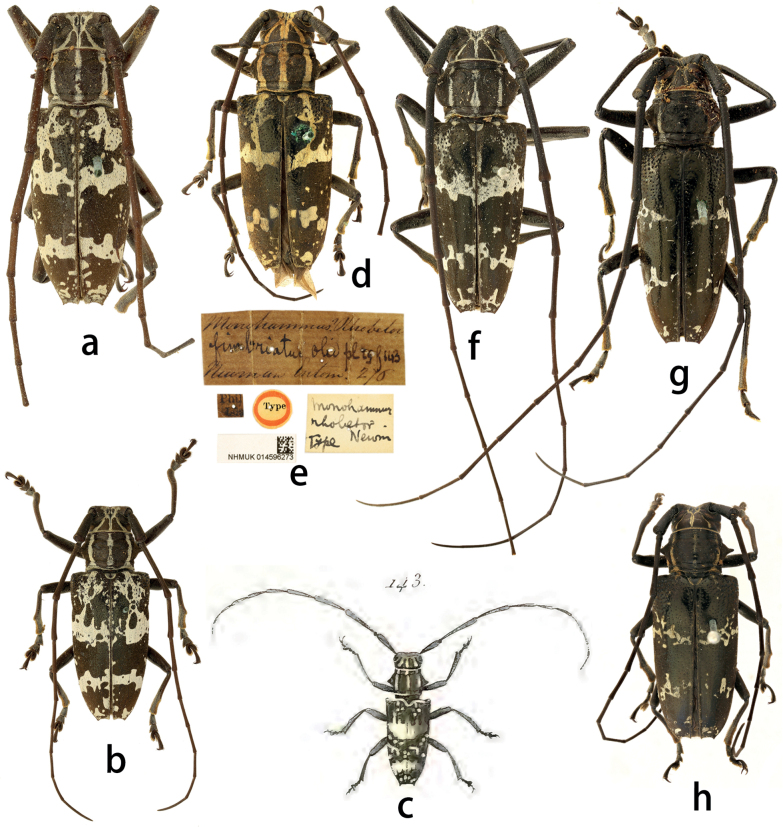 Figure 1
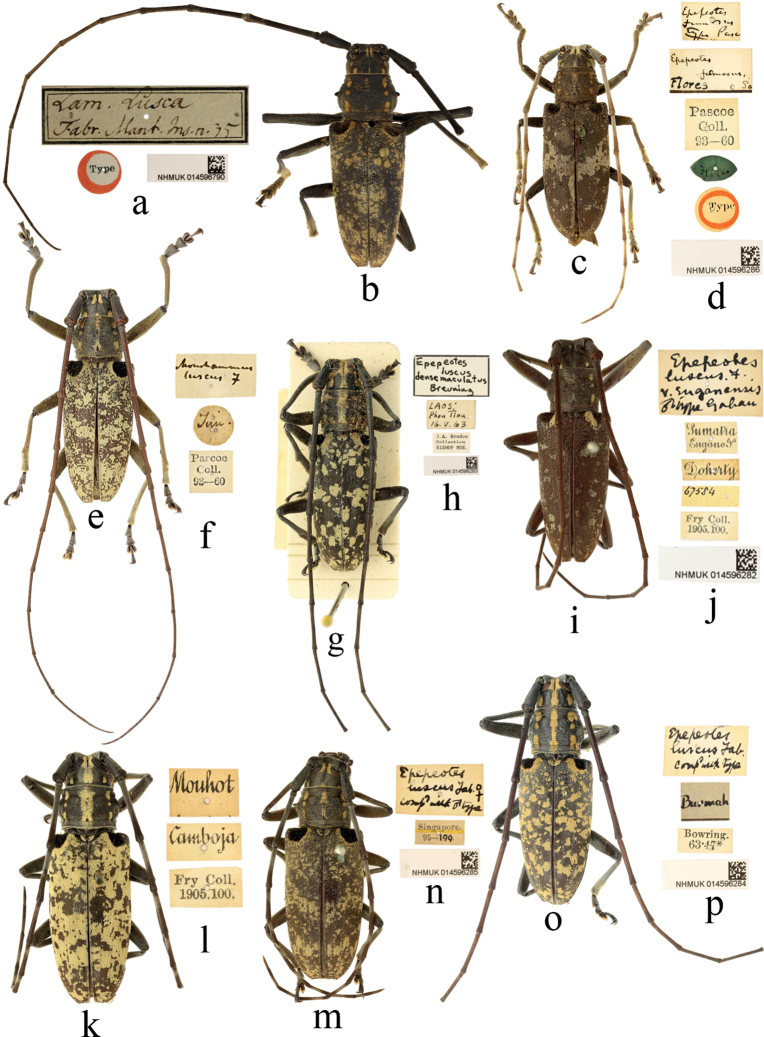 Figure 2
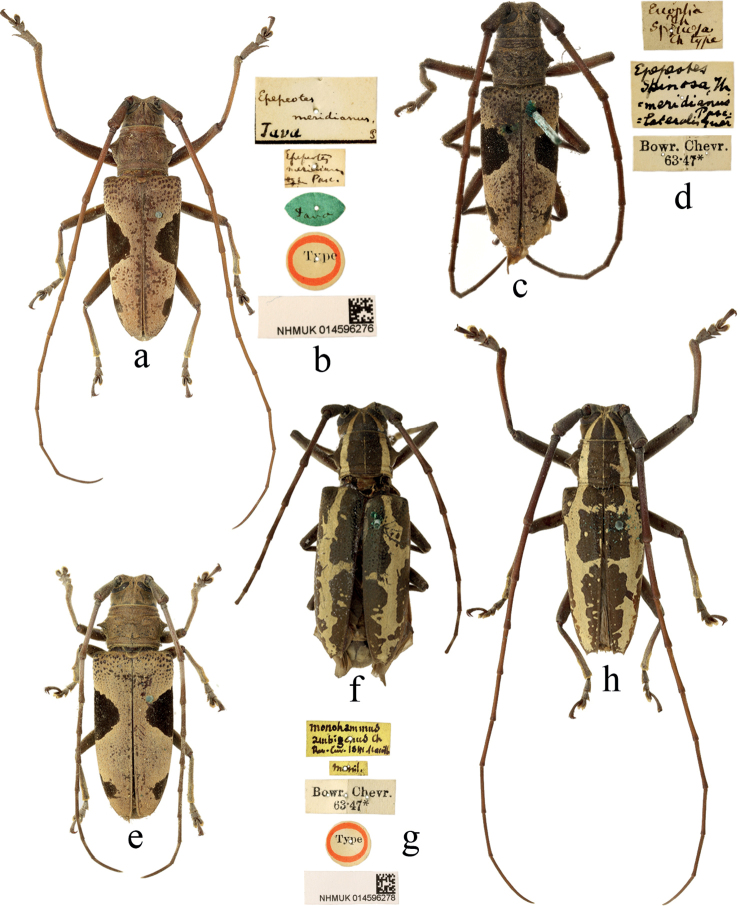 Figure 3
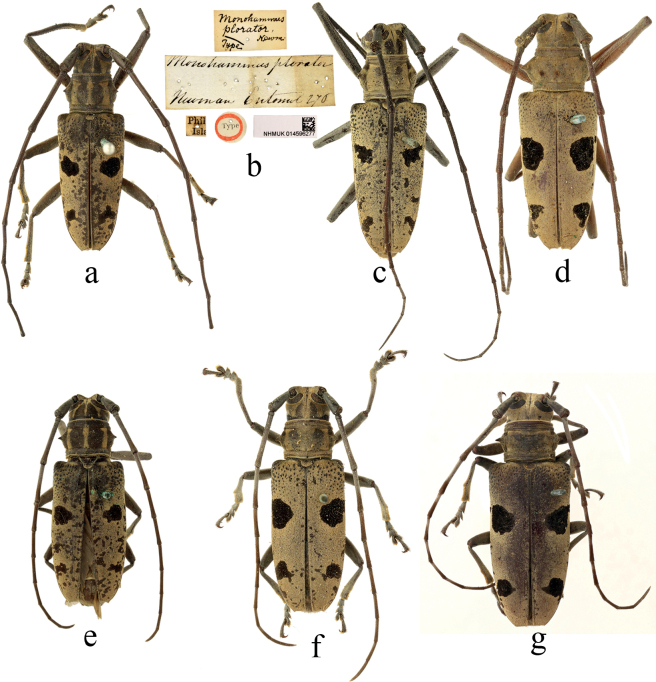 Figure 4
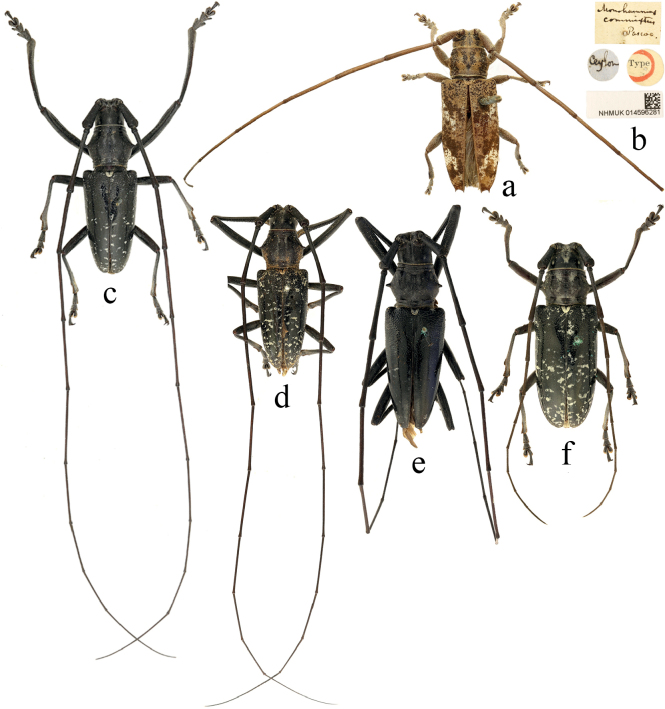 Figure 5
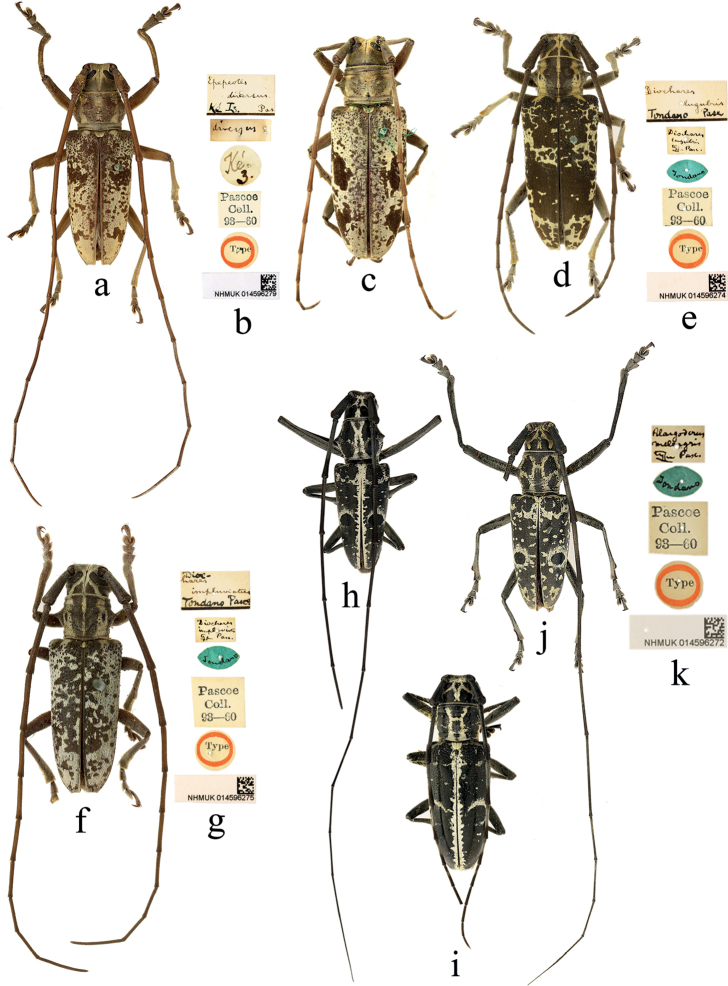 Figure 6
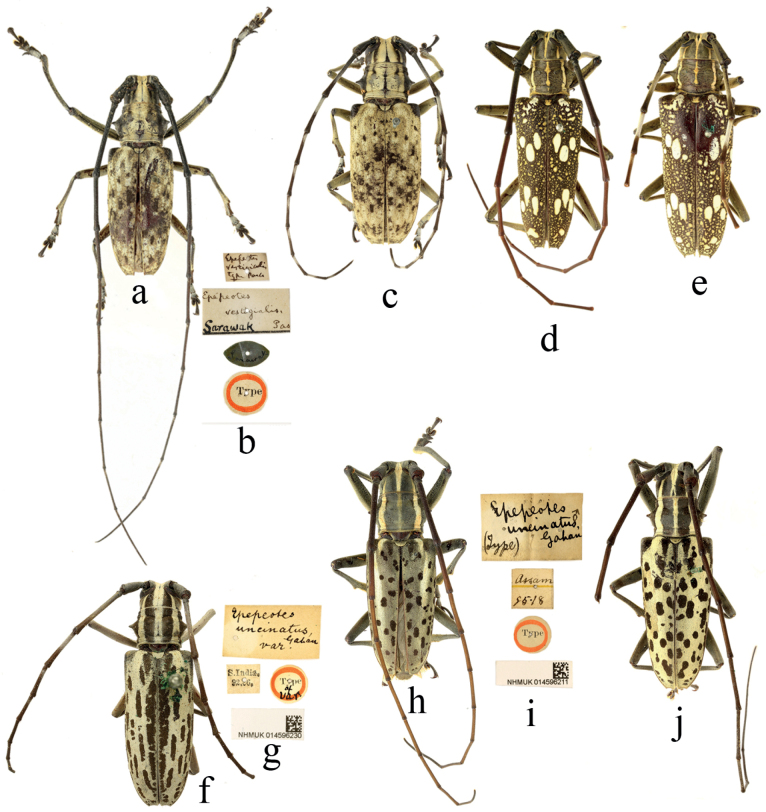 Figure 7
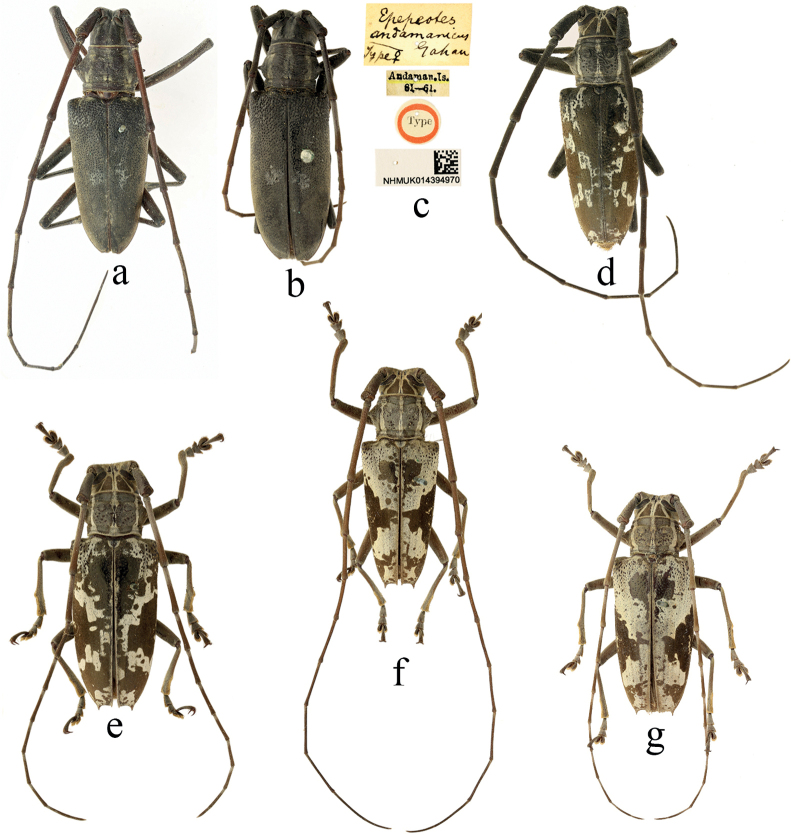 Figure 8
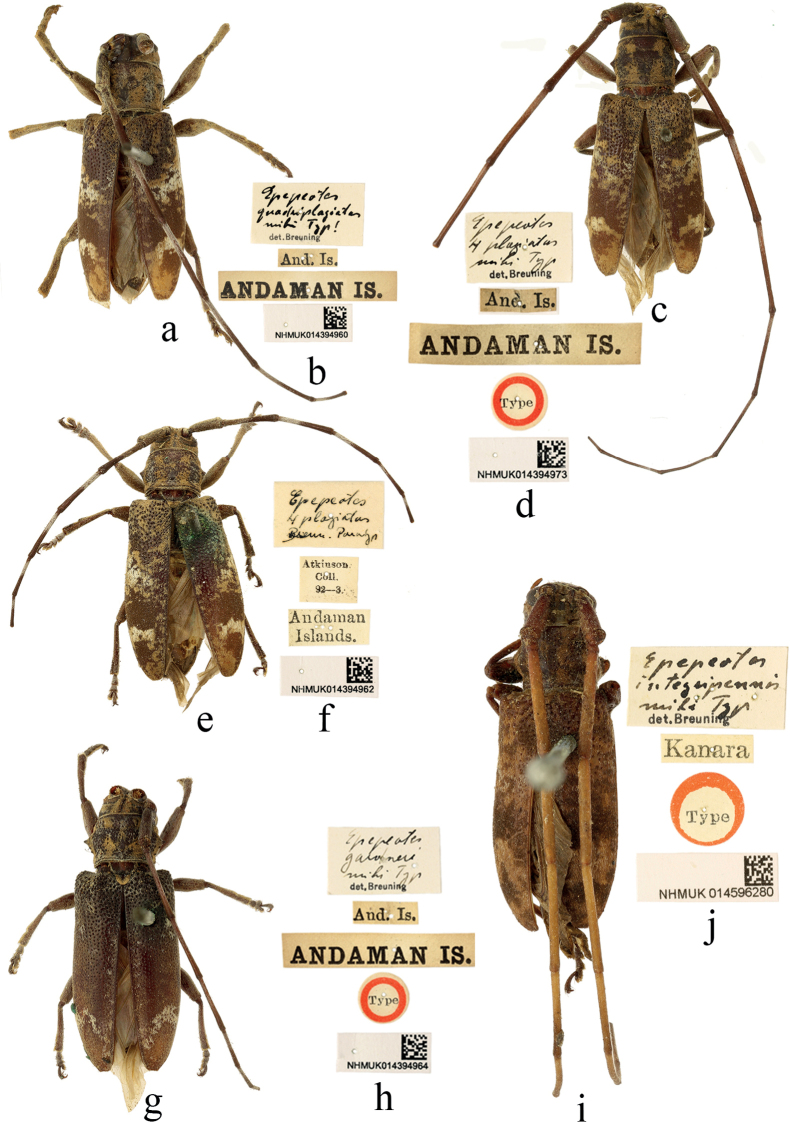 Figure 9
Peer Reviews
No public reviews on file for this paper yet. If you reviewed it on a platform where reviews are public (OpenReview, ICLR, NeurIPS, ICML), you can paste yours below so the community can read it here.
Videos
No videos yet. Explain this paper in a talk, walkthrough, or lecture? Add one.
Taxonomy
TopicsColeoptera: Cerambycidae studies · Coleoptera Taxonomy and Distribution · Forest Insect Ecology and Management
Introduction
The genus Epepeotes was established for the species Lamialusca Fabricius, 1787 by Pascoe (1866a). It currently consists of 39 species/subspecies widespread in Asia (Tavakilian and Chevillotte 2023). The following genera are considered as synonyms: Diochares Pascoe, 1866 [type-species: Cerambyxfimbriatus Olivier, 1795 (= Cerambyxdesertusdesertus Linnaeus, 1758)], Mengelotes Dillon & Dillon, 1941 [type-species: Mengelotesambiguus Dillon & Dillon, 1941 (= Macrochenusambigenus Chevrolat, 1841)] and Falsomonohammus Pic, 1943 [type-species: Falsomonohammusdiverseglabratus Pic, 1943].
This study is based on the collection of the Natural History Museum, London [formerly British Museum, Natural History (BMNH), and hereafter NHM or NHMUK], which houses 620 categorized specimens (not counting those not sorted) of 23 valid species/subspecies, of which 13 valid taxa and five junior synonyms are represented by type material. A record of all species is given below.
Material and methods
The material examined in this study, already identified by earlier specialists, is deposited in the NHM. Verbatim quotation is used here for all labels of studied type specimens and the label text is given in single quotation marks. Labels of non-type specimens are summarized briefly, to provide the reader with information on the country of origin, locality, but more detail, such as acquisition numbers, collector names and month and year of collecting and other information, is generally not reproduced. Individual labels are separated by a semicolon, and data on different rows by a single slash. Additional and explanatory comments by the authors are given in square brackets. Abbreviations are used in the text for label text: h for handwritten, p for printed. In the list, species records are listed in chronological order of publication, different subspecies of the same species are presented together in chronological order.
Photographs were taken using a Canon 7D Mark II SLR camera with a Canon EFS 100 mm lens and edited using Adobe Photoshop 2020 release. Extended depth of field at magnifications was achieved by combining multiple images from a range of focal planes using Combine ZM or Helicon Focus software.
Results
Data on the genus Epepeotes from the collection of the NHM are summarized on the basis of 620 observed specimens. The collection comprises 23 valid taxa, including types of 18 names, of them 13 valid and five invalid. Labeling details of each type specimen are reproduced verbatim without corrections or additions. Some additional information is provided as comments. The list of Epepeotes deposited in the NHM collection is given as follows.
Epepeotes
desertus desertus
Taxon classificationAnimaliaColeopteraCerambycidae
(Linnaeus, 1758)
D15EEE0A-F964-52EA-8DE5-4001FCED40CB
Cerambyx desertus Linnaeus, 1758: 391. Type locality: America [wrong locality record].Cerambix (Lamia) fimbriatus Olivier, 1795: 71 [misspelling]. Lamia lineator Fabricius, 1801: 283. Type locality: India. Diochares fimbriatus : Pascoe 1866: 303. Epepeotes desertus : Breuning 1943: 229.
Non-type material.
8 specimens. India (5): E. India (1 male, 1 female), Goram (1 male, 2 females). Indonesia (2): Ceram (1 female); Moluccas (1 male). Country unknown (1): Pascoe collection (1): Mano (1 female).
Habitus of Epepeotesdesertus (Linnaeus, 1758) a–cEpepeotesdesertusdesertus (Linnaeus, 1758) d–fEpepeotesdesertusrhobetor (Newman, 1842) g, hEpepeotesdesertusobscurus (Aurivillius, 1926) d, e holotype a, f, g male b, d, h female.
Epepeotes
desertus rhobetor
Taxon classificationAnimaliaColeopteraCerambycidae
(Newman, 1842)
CF29D9B8-7FD6-56E7-9184-192411FE5AB1
Monohammus ? Rhobetor [sic] Newman, 1842: 276. Type locality: Manila [Philippines]. Diochares desertus var. rhobetor : Aurivillius 1922: 81. Epepeotes desertus s.- sp. rhobetor : Breuning 1943: 229. Epepeotes desertus ssp. rhobetor : Breuning 1961: 326. Epepeotes desertus rhobetor : Barševskis 2020: 180.
Type material.
Phllippines. Holotype of Monohammus? Rhobetor Newman, 1842, female: ‘Type [p, label circular, red framed]; Phil / Isla [p]; Monohammus? Rhobetor / fimbriatus Oliv. Pl 19 f 143 / Newman Entom. 276 [h]; Monohammus / rhobetor / Type Newm [h]; NHMUK014596273 [p]’.
Non-type material.
40 specimens. Indonesia (33): Moluccas (1 male, 4 females); Amboina (2 males, 2 females); Ceram (5 males, 3 females); Celebes (1 female); Bouru [Borneo] (2 males, 1 female); Seram (4 females); Mausela (4 males, 4 females). Philippines (4): Philippine Islands (1 male, 3 females). India (1): Goram (1 female). Country unknown (2): Bowring collection (1): maki. (1 male); Ent. Club (1 male).
Epepeotes
desertus obscurus
Taxon classificationAnimaliaColeopteraCerambycidae
(Aurivillius, 1926)
6604300A-70E5-508B-AAE6-3E7C6AB2C278
Diochares desertus var. obscurus Aurivillius, 1926: 102. Type locality: Buru [Indonesia]. Epepeotes desertus s.- sp. obscurus : Breuning 1943: 229. Epepeotes desertus ssp. obscurus : Breuning 1961: 326. Epepeotes desertus obscurus : Barševskis 2020: 180.
Non-type material.
14 specimens. Indonesia (14): Ceram (2 females); Mausela (5 males, 7 females).
Comments.
Breuning (1943) stated that the subspecies E.desertusrhobetor is distinguished from the subspecies E.d.desertus by the body usually smaller, the antennae more slender, the body markings yellow, and the elytral spots small and separate, with only a few individuals uniting into narrow transverse bands before and after the middle; the subspecies E.d.obscurus is separated from the nominate subspecies by the elytron with less concave apex and reduced body markings. However, the holotype of E.d.rhobetor (Fig. 1d) has the complete premedian transverse band and the postmedian band consisting of several large spots that are not fully fused, which is different from the description and illustration by Breuning (1943). Olivier (1808) illustrated the dorsal view of the species Cerambixfimbriatus Olivier, 1795 (Fig. 1c, now a synonym of the nominate subspecies), which differs from E.d.rhobetor and E.d.obscurus mainly in the large and complete premedian and postmedian transverse bands on the elytra. However, the body markings and size are variable in this species, which make it difficult to accurately distinguish the three subspecies. The taxonomic status of the three subspecies is expected to be resolved by further study of more type and non-type material, perhaps with the possible removal of the subspecies-level status.
Epepeotes
luscus luscus
Taxon classificationAnimaliaColeopteraCerambycidae
(Fabricius, 1787)
B93DAB7C-43CF-57B5-90E9-D7B0217CF339
Lamia lusca Fabricius, 1787: 139. Type locality: Siam [Thailand].Cerambyx (Lamia) luscus : Gmelin 1790: 1836. Epepeotes luscus : Pascoe 1866a: 249. Epepeotes fumosus Pascoe, 1866b: 301. Type locality: Flores [Indonesia]. Epepeotes luscus var. enganensis Gahan, 1907: 80. Type locality: Engano [Indonesia]. Epepeotes luscus ab. flavomaculatus Aurivillius, 1924: 27. Type locality: Sumatra [Indonesia]. Epepeotes soembanicus Schwarzer, 1931: 66. Type locality: Mao Marroe: Ost-Soemba [Indonesia]. Epepeotes luscus m. densemaculatus Breuning, 1943: 223. Type locality: Birmanie [Burma]. Epepeotes luscus m. ochreosticticus Breuning, 1943: 223. Type locality: Nicobar Island [India]. Epepeotes luscus m. interruptus Breuning, 1943: 223. Type locality: Nias Island [Indonesia]. Epepeotes luscus alorensis Breuning, 1960: 29. Type locality: Alor Island [Indonesia]. Epepeotes luscus var. subuniformis Gilmour & Breuning, 1963: 125. Type locality: Sumatra: P. Sebuku [Indonesia].
Type material.
Thailand. Holotype, male: ‘Type [p, label circular, red framed]; Lam. Lusca / Fabr. Mant. Ins. n. 35 [h]; NHMUK014596790 [p]’. Indonesia. Holotype of Epepeotesfumosus Pascoe, 1866, female: ‘Type [p, label circular, red framed]; Flores [h, label oval, dark green]; Pascoe / Coll. / 93–60 [p]; Epepeotes / fumosus / Type Pasc [h]; Epepeotes / fumosus / Flores Pa [h]; NHMUK014596286 [p]’; Indonesia. One syntype of Epepeotesluscusvar.enganensis Gahan, 1907, male: ‘Sumatra / Engano Is. [p]; Doherty [p]; 67584 [h]; Fry Coll. / 1905. 100. [p]; Epepeotes / luscus. F. / v. enganesis / ♂ Type Gahan [h], NHMUK014596282’; Indonesia. Syntypes of Epepeotesluscusvar.enganensis Gahan, 1907, two females: ‘Sumatra / Engano Is. [p]; Doherty [p]; 67584 [h]; Fry Coll. / 1905. 100. [p]’.
Non-type material.
264 specimens. Indonesia (77): Gunung Perak (1 female); Java (15 males, 7 females); Sumatra (27 males, 16 females); Borneo (4 males, 3 females); Tambang Sawah (1 male, 1 female); Lom. [Lombok] (1 male); Nias (1 female); Malaysia (135): N. Borneo (4 males, 3 females); Dindings (1 female); Malacca (1 male); Penang (2 males, 5 females); Perak (6 males, 4 females); Pahang (2 females); Malay (2 males, 1 female); Malay Peninsula (15 males, 12 females); Malaya (5 males, 5 females); Kinabalu (1 male), Kumching (6 males, 6 females); Malay States (4 males, 1 female); Sarawak (26 males, 16 females); Bukit kutu (1 male, 1 female); Gunung Angsi (1 female); Tenasserim Hill (2 males); Siam: Malay states (1 female); Pulau Tioman (1 male). Cambodia (2): Camboja (2 females). India (7): India (1 female), India Orient (3 males, 1 female); Jalor (2 males). Myanmar (5): Burmah (2 females), Rangoon (3 males). Thailand (6): Peninsular Siam, Nakon Sri Tammarat (2 males, 1 female), Siam, Me Song Forest (1 female); Khao Ram, Siam (1 female); Ronpilum (1 female). Laos (2): Phou Tiou (2 males). Singapore (10): Singapore (3 male, 5 females), Singapore Island (2 females). Country unknown (20): Bowring–Chevrolat collection (2): locality label not present (1 male); locality label unreadable (1 male). Ex. F. M. S. Museum (4): Gap (1 male); Kia moo (1 female); locality label unreadable (1 female); locality label not present (1 male). Pascoe collection (1): locality label unreadable (1 male). G. Bryant Collecton (3): Maling (3 males). E. I. C. (3): locality label not present (2 males, 1 female). Ind. Mus. (1): locality label not present (1 female). Imp. Bur. Ent. (1): Th Gap (1 male). Timol (1 male). Thassauaddy (1 male). Kne (1 female). locality label unreadable (1 male). locality label not present (1 male).
Comments.
Two specimens from Camboja [Cambodia] (Fig. 2k, l) and 10 specimens from Singapore (Fig. 2m, n) were found in the collection, which represent the new country record respectively.
Habitus of Epepeotesluscusluscus (Fabricius, 1787) a, b holotype of Lamialusca Fabricius, 1787 c, d holotype of Epepeotesfumosus Pascoe, 1866 i, j syntype of Epepeotesluscusvar.enganensis Gahan, 1907 b, e, g, i, o male c, k, m female f, h, l, n, p labels.
Epepeotes
lateralis
Taxon classificationAnimaliaColeopteraCerambycidae
(Guérin-Ménevilie, 1831)
E1580CED-D06C-545F-85CA-C6362D1794D6
Monochamus lateralis Guérin-Ménevilie, 1831: 113. Type locality: unknown. Leprodera spinosa Thomson, 1857: 179. Type locality: Java [Indonesia]. Epepeotes meridianus Pascoe, 1866: 302. Type locality: Java, Sumatra, Tondano [Indonesia]; Sarawak [Malaysia], Singapore. Epepeotes lateralis : Aurivillius 1922: 79. Epepeotes lateralis var. niasica Aurivillius, 1923: 452. Type locality: Nias [Indonesia]. Epepeotes spinosus m. bimaculatus Breuning, 1943: 225. Type locality: Java [Indonesia].
Type material.
Indonesia. Syntype of Epepeotesmeridianus Pascoe, 1866, male: ‘Type [p, label circular, red framed]; Java [h, label oval, dark green]; Epepeotes / meridianus / type Pasc. [h]; Epepeotes / meridianus / Java P [h]; NHMUK014596276 [p]’.
Non-type material.
72 specimens. Indonesia (31): Nias (2 males, 2 females); Java (7 males, 10 females); Sumatra (3 males, 3 females); Borneo (1 male, 3 females). Malaysia (25): Sarawak (12 males, 8 females); Penang (1 male); Perak (2 females); Siamess Malay states (1 male); Malay states (1 female). Singapore (3): Singapore (2 males, 1 female). Country unknown (13): G. Bryant collection (6): Maling (4 males, 2 females), Bowring–Chevrolat collection (4): locality label not present (2 males, 1 female); locality unreadable (1 female). E. I. C. (1): locality label not present (1 male). locality label not present (2 females).
Comments.
There is a specimen from Bowring–Chevrolate collection labeled with a handwritten “Type” label [Fig. 3c, d]: ‘Euoplia / Th / spinosa / Th type’. ‘Th’ should be the abbreviation of ‘Thomson’. However, the genus Euoplia was erected by Hope (1839), and Thomson (1857) published this species with the name of ‘Leproderaspinosa’, and the type specimens are deposited in the Muséum national d’Histoire naturelle, Paris. Obviously, this is a labelling error by a curator and it is not the type specimen.
Habitus of Epepeotes spp. a–eEpepeoteslateralis (Guérin-Méneville, 1831) f–hEpepeotesambigenusambigenus (Chevrolat, 1841) a, b syntype of Epepeotesmeridianus Pascoe, 1866 f, g holotype a, c, h male e, f female.
Epepeotes
ambigenus ambigenus
Taxon classificationAnimaliaColeopteraCerambycidae
(Chevrolat, 1841)
D6028D39-BE61-5A8E-A395-AFC7736FF13F
Monohammus ambigenus Chevrolat, 1841: 228. Type locality: Manila [Philippines]. Diochares ambigenus : Pascoe 1866: 303. Mengelotes ambiguus : Dillon and Dillon 1941: 43. Type locality: Mexico. Epepeotes ambigenus : Breuning 1943: 228. Epepeotes ambigenus ambigenus : Hua 2002: 207.
Type material.
Philippines. Holotype, female: ‘Type [p, label circular, red framed]; Manil. [h]; Monohammus / ambigenus Ch / Rev. Zoo, 1841 Manille [h] / Bowr. Chevr. /, 63· 47* [p] / NHMUK014596278 [p]’.
Non-type material.
22 specimens. Philippines (18): Philippine Islands (8 males 4 females), Philippines (1 male, 1 female), PHIL. (1 male, 1 female), Luzon (1 male); Albay (1 female); Indonesia (1): Java (1 male); Country unknown (3): Corla (1 male); locality label not present (1 male, 1 female).
Epepeotes
plorator plorator
Taxon classificationAnimaliaColeopteraCerambycidae
(Newman, 1842)
B9CCD20A-5CC1-546C-AFAE-904005C70C35
Monohammus plorator Newman, 1842: 276. Type locality: Manille [Philippines]. Rhamses vitticollis Thomson, 1878: xviii. Type locality: Borneo [Indonesia]. Pelargoderus vitticollis : Ritsema 1885: 44. Diochares mindanaonis Heller, 1915: 240. Type locality: Mindanao, Davao [Philippines]. Epepeotes plorator : Heller 1916: 306. Epepeotes multinotatus Pic, 1925: 19. Type locality: Japan. Epepeotes plorator m. mindanaonis: Breuning 1943: 225. Epepeotes spinosoides Breuning, 1980: 170. Type locality: Mindanao [Philippines].
Type material.
Philippines. Holotype, male: ‘Type [p, label circular, red framed]; Phil / Isla [p]; Monohammusplorator / Newman Entomol 276 [h]; Monohammus / plorator / Type Newm. [h]; NHMUK014596277’.
Habitus of Epepeotesplorator (Newman, 1842) a, b, eEpepeotesploratorplorator (Newman, 1842) c, fEpepeotesploratorsanghiricus Breuning, 1938 d, gEpepeotesploratorcelebensis Aurivillius, 1922 a, b holotype a,c, d male e, f, g female.
Non-type material.
3 specimens. Philippines (3): Philippine Islands (1 male, 2 females).
Epepeotes
plorator celebensis
Taxon classificationAnimaliaColeopteraCerambycidae
Aurivillius, 1922
9A4D476B-117E-5F3C-BA6A-68394ABC135F
Epepeotes plorator var. celebensis Aurivillius, 1922: 80. Type locality: Celebes [Indonesia]. Epepeotes plorator s.- sp. celebensis : Breuning 1943: 225. Epepeotes plorator ssp. celebensis : Breuning 1961: 326. Epepeotes plorator celebensis : Fahri and Sataral 2015: 152.
Non-type material.
14 specimens. Indonesia (10): Celebes (5 males, 2 females), Borneo (1 male), New Guinea (1 female), Macassar (1 male); Country unknown (4): Bowring collection (1), locality label not present or unclear (1 male). Pascoe collection (3): Tond. (2 males, 1 female).
Epepeotes
plorator sanghiricus
Taxon classificationAnimaliaColeopteraCerambycidae
Breuning, 1938
5F0E6849-BEDC-586C-8D66-5FE0713AD758
Epepeotes sanghiricus Breuning, 1938: 183. Type locality: Sanghir [Indonesia]. Epepeotes plorator ssp. sanghiricus Breuning, 1970: 376. Type locality: Sanghir [Indonesia].
Non-type material.
18 specimens. Indonesia (12): Celebes (7 males, 2 female), Borneo (1 male), Macassar (1 female), Koepang (1 female). Country unknown (6): Pascoe collection (6): Macanor (2 males), Mak. (1 female, 3 females).
Comments.
Subspecies E.p.plorator (Newman, 1842) is different from subspecies E.p.celebensis Aurivillius, 1922 and E.p.sanghiricus Breuning, 1938 by the pronotum and vertex mostly black, with three distinct yellow longitudinal stripes, E.p.celebensis Aurivillius, 1922 is distinguished from E.p.sanghiricus Breuning, 1938 by the pronotum and vertex completely covered with pubescence, the elytra seldom with small spots among the four main black spots, while in E.p.sanghiricus Breuning, the pronotum and vertex is decorated with two inconspicuous black longitudinal strips, sometimes reduced to black spots, the elytra usually is dotted with some small and irregular black spots in addition to the main markings.
This subspecies was described twice by Breuning (1938, 1970), the first time as species Epepeotessanghiricus (type in Naturhistorisches Museum Basel, Switzerland) and the second time as subspecies Epepeotesploratorssp.sanghiricus (type in Muséum national d’Histoire naturelle, Paris, France).
Epepeotes
commixtus
Taxon classificationAnimaliaColeopteraCerambycidae
(Pascoe, 1859)
C43A786A-9EB5-5F3C-B1D1-2224BFEA9CC5
Monohammus commixtus Pascoe, 1859: 42. Type locality: Ceylon [Sri Lanka]. Epepeotes commixtus : Breuning 1943: 227.
Type material.
Sri Lanka. Holotype, male: ‘Type [p, label circular, red framed]; Ceylon [h, label circular]; Monohammus / commixtus / Pascoe. [h]; NHMUK014596281 [p]’.
Non-type material.
8 specimens. Sri Lanka (6): Ceylon (1 male, without head, 5 females). Malaysia (1): Sarawak (1 female). Country unknown (1): Bowring–Chevrolat collection (1): locality label not present (1 female).
Habitus of Epepeotes spp. a, bEpepeotescommixtus (Pascoe, 1859) c–fEpepeotesceramensis (Thomson, 1861) a, b holotype a, c–e male f female.
Epepeotes
ceramensis
Taxon classificationAnimaliaColeopteraCerambycidae
(Thomson, 1861)
A6FA6685-AF46-5BC6-9315-A2457B8AEF98
Rhamses ceramensis Thomson, 1861: 361. Type locality: Ceram [Indonesia]. Pelargoderus Ceramensis[sic]: Pascoe 1866: 279. Epepeotes ceramensis : Breuning 1943: 148, 226.
Non-type material.
14 specimens. Indonesia (14): Ceram (7 males, 7 females).
Comments.
The light-colored spots on the elytra are variable, from very distinct to nearly invisible (Fig. 5d, e).
Epepeotes
diversus
Taxon classificationAnimaliaColeopteraCerambycidae
Pascoe, 1866
82D2D3D1-9856-57B3-BB19-6D6C882F5DB5
Epepeotes diversus Pascoe, 1866: 302. Type locality: Kei [Indonesia].
Type material.
Indonesia. Holotype, male: ‘Type [p, label circular, red framed]; Ké / 3. [h, label circular]; Pascoe / Coll. / 93–60 [p]; diversus [h]; Epepeotes / diversus / Ké Is. Pas [h]; NHMUK014596279 [p]’.
Habitus of Epepeotes spp. a–cEpepeotesdiversus Pascoe, 1866 d–gEpepeoteslugubris (Pascoe, 1866) h–kEpepeotesmeleagris (Pascoe, 1866) f, g holotype of Diocharesimpluviatus Pascoe, 1866 a, b, d, e, j, k holotype a, f, h, j male c, d, i female.
Non-type material.
1 specimen. Indonesia (1): Key [Kei] (1 female).
Epepeotes
lugubris
Taxon classificationAnimaliaColeopteraCerambycidae
(Pascoe, 1866)
A5615ECE-C614-56E7-A303-EFABB4164E16
Diochares lugubris Pascoe, 1866: 304. Type locality: Tondano [Indonesia]. Diochares impluviatus Pascoe, 1866: 305. Type locality: Tondano [Indonesia]. Epepeotes lugubris : Breuning 1943: 230.
Type material.
Indonesia. Holotype, female: ‘Type [p, label circular, red framed]; Tondano [h, label oval, dark green]; Pascoe / Coll. / 93–60 [p]; Diochares / lugubris / Type Pasc. [h] / Diochares / lugubris / Tondano Pasc [h]; NHMUK014596274 [p]’; Indonesia. Holotype of Diocharesimpluviatus Pascoe, 1866, male: ‘Type [p, label circular, red framed]; Tondano [h, label oval, dark green]; Pascoe / Coll. / 93–60 [p]; Diochares / impluviatus / Type Pasc. [h] / Dioc- / hares / impluviatus / Tondano Pasc [h]; NHMUK014596275’.
Non-type material.
1 specimen. Indonesia (1): Celebes (1 female).
Epepeotes
meleagris
Taxon classificationAnimaliaColeopteraCerambycidae
(Pascoe, 1866)
A0D24B1B-D0E4-5E01-8E1A-1D36625BC41E
Pelargoderus meleagris Pascoe, 1866: 279. Type locality: Tondano [Indonesia]. Epepeotes meleagris : Breuning 1943: 226.
Type material.
Indonesia. Holotype, male: ‘Type [p, label circular, red framed]; Tondano [h, label oval, dark green]; Pascoe / Coll. / 93–60 [p]; Pelargoderus / meleagris / Type Pasc. [h]; NHMUK014596272’.
Non-type material.
10 specimens. Indonesia (8): Celebes (6 males, 2 females). Country unknown (2): ex H. J. Carter (2 males).
Comments.
Dorsal markings of this species are reduced in some male individuals, as in females, with the eyelike black spot on each elytron is without conspicuous posterior pale margins and spots along the suture are uniting into a white line.
Epepeotes
vestigialis vestigialis
Taxon classificationAnimaliaColeopteraCerambycidae
Pascoe, 1866
45B3E5DD-A88F-5BD6-AA1A-D94A3E767559
Epepeotes vestigialis Pascoe, 1866: 301. Type locality: Sarawak [Malaysia].
Type material.
Malaysia. Holotype, male: ‘Type [p, label circular, red framed]; Sarawak [h, label oval, dark green]; Epepeotes / vestigialis / Type Pasc. [h]; Epepeotes / vestigialis. / Sarawak Pas [h]; NHMUK014596265 [p]’.
Habitus of Epepeotes spp. a–cEpepeotesvestigialisvestigialis Pascoe, 1866 d, eEpepeotesschlegelii Lansberge, 1884 f, gEpepeotesuncinatuslineatopunctatus Breuning, 1960 stat. Resurrected h, iEpepeotesuncinatusuncinatus Gahan, 1888, lectotype jEpepeotesuncinatusuncinatus m. salvazai Pic, 1925 a, d, h, j male c, e, f female.
Non-type material.
9 specimens. Indonesia (2): Borneo (2 males). Malaysia (5): Sarawak (1 female), Perak (2 males, 1 female), Malay Penin. (1 female). Laos (1): Parkading (1 male). Country unknown (1): Ex. F. M. S. Museum. B.M. 1955–354, locality label unreadable (1 female).
Epepeotes
schlegelii
Taxon classificationAnimaliaColeopteraCerambycidae
Lansberge, 1884
71AC7FFF-587F-5ACC-A0E8-F4CCBBD56781
Epepeotes Schlegelii [sic] Lansberge, 1884: 90. Type locality: Sumatra [Indonesia]. Epepeotes diversemaculatus Schwarzer, 1927: 60. Type locality: Gunung Singalang [Indonesia]. Epepeotes schlegelii : de Jong 1942: 28 (synonymy).
Non-type material.
5 specimens. Indonesia (5): Sumatra (4 males), Sungei Kumbang (1 female)
Epepeotes
uncinatus uncinatus
Taxon classificationAnimaliaColeopteraCerambycidae
Gahan, 1888
345994E5-B7FE-5836-AEDB-2B0524DD6F64
Epepeotes uncinatus Gahan, 1888: 271. Type locality: Assam [India]. Epepeotes uncinatus v. salvazai Pic, 1925: 18. Type locality: Laos. Pseudopsacothea lineata Pic, 1944: 14. Type locality: Annam [Vietnam].
Type material.
India. Lectotype, male (designated herein): ‘Type [p, label circular, red framed]; Assam / 95·18[h]; Epepeotes / ♂ / uncinatus / (Type) Gahan [h]; NHMUK014596211’.
Non-type material.
47 specimens. India (28): India (1 female); India, Bowring collection (1 male 1 female); India Orient (1 male 1 female); N. India, Bowring collection (1 male); S. India kanara (1 female); Assam (3 males, 7 females); Cachar [Assam] (1 male); Cherra Poonjee [now Cherrapunji], E. I. C. (1 male); Darjeeling (1 male, 1 female); Gopaldhara (2 females); Lebong (1 female); Shilong (1 male, 2 females); Sikkim (1 female). Burma (6): Burma, Fry collection (1 male); Chin Hills (1 male, 1 female); Upper Burma, Nam Tamai Valley, 25. viii. 1938 (2 males, 1 female). Bangladesh (7): Silhet [now Sylhet], Bowring/Chevrolat collection (1 male); Silhet, Bowring collection (1 male, 1 female); Sehet [now Sylhet] (1 male, 1 female); Silhet, E. I. C (1 male); Silhet, Pascoe collection (1 female). Country unknown (6): Bowring–Chevrolat collection (1), locality label not present (1 female); Dharg, Bowring collection (1 male, 1 female); Silcurl (1 male, 1 female); locality label not present (1 female).
Comments.
One syntype was confirmed in the collection. Herein we designated it as the lectotype, which has been labeled with a red-framed circular printed label and a handwritten identification label, both marked with ‘Type’. This species is recorded in Bangladesh for the first time.
Epepeotes
uncinatus lineatopunctatus
Taxon classificationAnimaliaColeopteraCerambycidae
Breuning, 1960, stat. resurrected
C99A17ED-23F1-5750-9AD7-4192C57964F0
Epepeotes uncinatus lineatopunctatus Breuning, 1960: 29. Type locality: Travancore [India]. Epepeotes uncinatus m. lineatopunctatus Breuning, 1961: 325.
Non-type material.
12 specimens. India (12): Nilgiri Hills (4 males); S. India (1 male, 6 females); Upper Assam (1 male).
Comments.
A female specimen from South India (Fig. 7f, g) was mislabeled with a red-framed circular printed type label in the collection, which represents actually a subspecies of E.uncinatus Gahan, 1888, not the type specimen. Breuning (1960) described the subspecies Epepeotesuncinatuslineatopunctatus, then he (1961) regarded it as a morph of E.uncinatus Gahan. However, this subspecies is distinctly different from the nominate subspecies by the elytron mostly with conspicuous, short, longitudinal black spots, rather than rounded to oblong spots, which are almost united into a long longitudinal strip along the suture, the vertex and pronotum with more expanded median longitudinal strip. On this basis, herein we restore it to subspecies-level status.
Epepeotes
andamanicus
Taxon classificationAnimaliaColeopteraCerambycidae
Gahan, 1893
6CCB60DF-70F5-583B-BE92-732CFBE601F4
Epepeotes andamanicus Gahan, 1893: 380. Type locality: Andaman Islands [India].
Type material.
India. Lectotype, female (designated herein): ‘Type [p, label circular, red framed]; Andaman. Is. / 61–61. [p]; Epepeotes / andamanicus / Type ♀ Gahan [h]; NHMUK014394970 [p]’.
Non-type material.
8 specimens. India (8): Andaman Islands (2 males, 6 females).
Comments.
One syntype was confirmed in the collection. Herein we designated it as the lectotype (Fig. 8b, c), which has been labeled with a red-framed circular printed label and a handwritten identification label, both marked with ‘Type’.
Habitus of Epepeotes spp. a–cEpepeotesandamanicus Gahan, 1893 d–gEpepeotestaeniotinustaeniotinus (Heller, 1924) b, c lectotype a, d, f male b, e, g female.
Epepeotes
taeniotinus taeniotinus
Taxon classificationAnimaliaColeopteraCerambycidae
(Heller, 1924)
4ADAF509-EBB1-5D05-93CD-EEDB8FEE4AED
Diochares desertus taeniotinus Heller, 1924: 424. Type locality: Samar [Philippines]. Epepeotes taeniotinus : Breuning 1943: 229. Epepeotes taeniotinus taeniotinus : Barševskis 2020: 181.
Non-type material.
27 specimens. Indonesia (18): Maluccas [Moluccas] (2 males, 3 females); Celebes (1 male); Batchian (1 male, 3 females); Ternate (3 males, 3 females); Morty (2 females). Country unknown (9): H.L. Andrewes Bequest. (4): locality label unclear (3 males, 1 female); Pascoe collection (5): Mai (1 female); Gil (1 female); Maki (1 male, 1 female); locality label unreadable (1 female).
Comments.
The pale markings on elytra are variable, ranging from occupying most of the elytra to being almost a narrow X-like stripe.
Epepeotes
strandi
Taxon classificationAnimaliaColeopteraCerambycidae
(Breuning, 1935)
F5D5E617-74A7-50BE-8553-56EC44D9F0CF
Pelargoderus strandi Breuning, 1935: 253. Type locality: Andaman [India]. Epepeotes quadriplagiatus Breuning, 1936: 296. Type locality: Andaman [India]. Epepeotes strandi : Breuning 1943: 148, 226 (synonymy).
Type material.
India. Syntypes of Epepeotesquadriplagiatus Breuning, 1936: one male: ‘Type [p, label circular, red framed]; Andaman Is. [p]; And. Is. [p]; Epepeotes / 4 plagiatus / mihi Typ. [h] / det. Breuning [p]; NHMUK014394973 [p]’; one male: ‘Andaman Is. [p]; And. Is. [p]; Epepeotes / quadriplagiatus / mihi Typ! [h] / det. Breuning [p]; NHMUK014394960 [p]’. India. Paratypes of Epepeotesquadriplagiatus Breuning, 1936: one female: ‘Andaman / Islands. [p]; Atkinson / Coll. / 92–3 [p]; Epepeotes / 4 plagiatus / Breun. Paratyp [h]; NHMUK014394962 [p]’; One male: ‘91–17 [p]; Epepeotes / 4 plagiatus / Breun. Paratyp [h]; NHMUK014394963 [p]’.
Comments.
A total of four type specimens of E.quadriplagiatus are found in the collection, of which two male specimens are marked with ‘Type’ and the others (one male and one female) are marked with ‘Paratype’ by Breuning’s handwriting (Fig. 9b, d, f). Though Breuning (1936) originally designated one male as the type, the two male specimens labeled as ‘type’ by Breuning become de facto syntypes.
Habitus of Epepeotes spp. a–f types of Epepeotesquadriplagiatus Breuning, 1936 g, h holotype of Epepeotesgardneri Breuning, 1936 i, j holotype of Epepeotesintegripennis Breuning, 1940 a, c, i male e, g female.
Epepeotes
gardneri
Taxon classificationAnimaliaColeopteraCerambycidae
Breuning, 1936
2F0F4800-B9A0-5D61-B203-B077F95E4E8D
Epepeotes gardneri Breuning, 1936: 287. Type locality: Andaman [India].
Type material.
India. Holotype, female: ‘Type [p, label circular, red framed]; Andaman Is. [p]; And. Is. [p]; Epepeotes / gardneri / mihi Typ. [h] / det. Breuning [p]; NHMUK014394964 [p]’.
Epepeotes
integripennis
Taxon classificationAnimaliaColeopteraCerambycidae
Breuning, 1940
35F99D79-BA34-5837-9727-0ABFF24ABDD0
Epepeotes integripennis Breuning, 1940: 123. Type locality: Kanara [India].
Type material.
India. Holotype, male: ‘Type [p, label circular, red framed]; Kanara [p]; Epepeotes / integripennis / mihi Typ [p] / det. Breuning [p]; NHMUK014596280 [p]’.
Supplementary Material
XML Treatment for Epepeotes desertus desertus
XML Treatment for Epepeotes desertus rhobetor
XML Treatment for Epepeotes desertus obscurus
XML Treatment for Epepeotes luscus luscus
XML Treatment for Epepeotes lateralis
XML Treatment for Epepeotes ambigenus ambigenus
XML Treatment for Epepeotes plorator plorator
XML Treatment for Epepeotes plorator celebensis
XML Treatment for Epepeotes plorator sanghiricus
XML Treatment for Epepeotes commixtus
XML Treatment for Epepeotes ceramensis
XML Treatment for Epepeotes diversus
XML Treatment for Epepeotes lugubris
XML Treatment for Epepeotes meleagris
XML Treatment for Epepeotes vestigialis vestigialis
XML Treatment for Epepeotes schlegelii
XML Treatment for Epepeotes uncinatus uncinatus
XML Treatment for Epepeotes uncinatus lineatopunctatus
XML Treatment for Epepeotes andamanicus
XML Treatment for Epepeotes taeniotinus taeniotinus
XML Treatment for Epepeotes strandi
XML Treatment for Epepeotes gardneri
XML Treatment for Epepeotes integripennis
The reference list from the paper itself. Each links out to its DOI / PubMed record.
- 1Aurivillius C (1922) Cerambycidae: Lamiinae I. In: Schenkling S (Ed.) Coleopterorum Catalogus Auspiciis et Auxilio W. Junk, pars 73, Cerambycidae: Lamiinae. W.Junk, Berlin, 322 pp. https://www.biodiversitylibrary.org/page/10202648
- 2Aurivillius C (1923) Neue oder wenig bekannte Coleoptera Longicornia. 19.Arkiv för Zoologi 15(25): 1–43. [=pp. 437–479] 10.5962/bhl.part.20147 · doi ↗
- 3Aurivillius C (1924) III. – Cerambyciden aus Sumatra gesammelt von Edw. Jacobson bestimmt und beschrieben.Zoologische Mededeelingen, Leiden 8: 24–35.
- 4Aurivillius C (1926) Fauna Buruana. Coleoptera, Fam. Cerambycidae.Treubia 7: 100–109.
- 5Barševskis A (2020) To the knowledge of long-horned beetles (Coleoptera: Cerambycidae) of the Oriental Region. Part 3.Acta Biologica Universitatis Daugavpiliensis 20(2): 173–188.
- 6Breuning S (1935) Novae species Cerambycidarum. IV.Folia Zoologica et Hydrobiologica, Riga 8(2): 251–276.
- 7Breuning S (1936) Novae species Cerambycidarum. V. Festschrift zum 60. Geburtstage von Professor Dr.Embrik Strand, Riga 1: 274–325.
- 8Breuning S (1938) Novae species Cerambycidarum VI. Festschrift zum 60. Geburtstage von Professor Dr.Embrik Strand, Riga 4 [1937]: 180–392.