Inner Ear Function Evaluation in Mobile Phone Users: A Cross-Sectional Study From a Tertiary Care Centre in North India
Nitin Sharma, Bhawana Pant, Mohammad Mohsin Raza, Avanish Chamoli

TL;DR
This study examines the impact of mobile phone use on inner ear function in young adults in India.
Contribution
It is one of the first studies to evaluate inner ear function in relation to mobile phone usage in a large Indian population.
Findings
No significant differences in hearing thresholds between dominant and non-dominant ears.
Absent otoacoustic emissions were not significantly associated with mobile phone usage duration.
Abstract
Background India has approximately 1.02 billion mobile phone users. The electromagnetic radiations emitted by telecommunication systems are absorbed by the recipient's body, leading to changes in brain electrical activity, sensations of warmth or burning around the ear, and alterations in the blood-brain barrier. The inner ear, being the closest organ during mobile phone use, directly receives these electromagnetic radiations. This study aims to assess the inner ear function among mobile phone users, investigate the impact of mobile phones on the hearing thresholds of volunteers through pure-tone audiometry (PTA), and delve into the same using otoacoustic emissions (OAE). Methodology A cross-sectional study was conducted at a single center in North India from September 2020 to March 2021. The sample size of around 100 was determined using G Power software (G Power, Aichach, Germany),…
Genes, proteins, chemicals, diseases, species, mutations and cell lines named across the full text — each resolved to its canonical identifier and authoritative record.
Click any figure to enlarge with its caption.
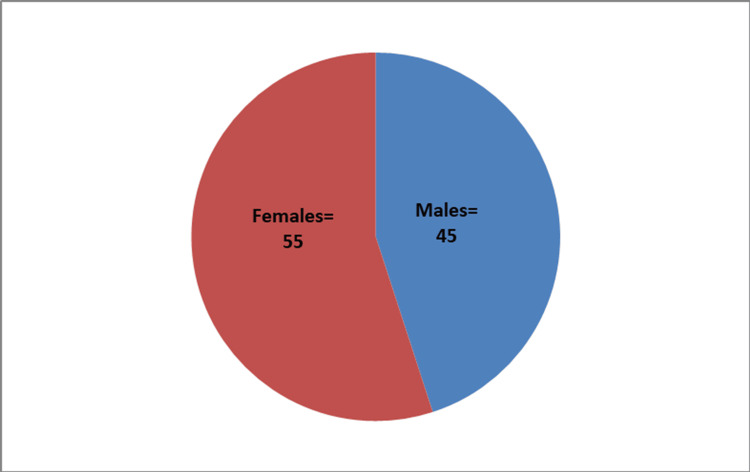 Figure 1
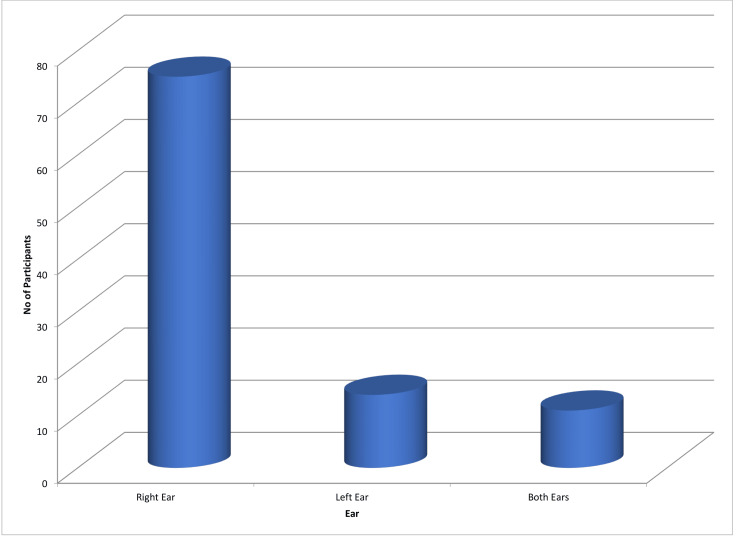 Figure 2
| Age Group | Males | Females | Total | Percentage (%) |
| 18–20 years | 6 | 12 | 18 | 18% |
| 21–23 years | 25 | 31 | 56 | 56% |
| 24–25 years | 14 | 12 | 26 | 26% |
| Total | 45 | 55 | 100 | 100% |
| Usage (min/day) | No. of participants |
| Less than 60 mins | 16 |
| 60–120 mins | 41 |
| 120–180 mins | 43 |
| Hearing threshold level | Dominant group | Non-dominant group |
| Bone conduction | 7 ± 2.45 dB | 7.05 ± 2.75 dB |
| Air conduction | 11.26 ± 2.58 dB | 12.13 ± 2.26 dB |
| Air bone gap | 4.39 ± 2.29 dB | 4.98 ± 2.5 dB |
| Usage (min/day) | No. of participants | OAE absent |
| Less than 60 mins | 16 | 2 |
| 60–120 mins | 41 | 7 |
| 120–180 mins | 43 | 15 |
| Total | 100 | 24 |
Peer Reviews
No public reviews on file for this paper yet. If you reviewed it on a platform where reviews are public (OpenReview, ICLR, NeurIPS, ICML), you can paste yours below so the community can read it here.
Videos
No videos yet. Explain this paper in a talk, walkthrough, or lecture? Add one.
Taxonomy
TopicsElectromagnetic Fields and Biological Effects · Noise Effects and Management · Hearing, Cochlea, Tinnitus, Genetics
Introduction
Mobile phones have become an integral part of everyone’s life. In India, there are around 1.02 billion mobile phone users as of 2016 [1]. The growing accessibility of affordable smartphones has led to an upsurge in their usage, expanding beyond mere communication to encompass internet services, gaming, the global positioning system (GPS), and various productivity and recreational activities. While these devices have undoubtedly enhanced convenience and productivity, their prolonged usage has also raised concerns regarding a cascade of potential health hazards [1].
Mobile phones use electromagnetic signals to receive and transmit signals in various radiofrequency bands. Although the electromagnetic waves are within an acceptable range, the data on the long-term effect is still lacking [2]. The operating frequency of mobile phones ranges from 500 to 2700 MHz, with peak powers between 0.1 and 2 watts [3]. The electromagnetic radiation emitted from the telecommunication system is absorbed by the recipient body and also brings about changes in brain electric activity and produces local effects on the skin and ear [1,3-5]. Utilizing hands-free options maintains a distance of 30-40 cm between the mobile phone and the user, resulting in lower exposure to radiofrequency fields compared to holding the phone close to the ears [5]. The Specific Absorption Rate (SAR) serves as the metric for measuring the radiofrequency dose received by an individual, expressed in power (Watts) per unit of tissue mass (kilograms). The SAR tolerance limit has been set to a limit of 10 W/kg by radiological protection committees from various countries. One can check one’s mobile’s SAR by typing *#07#. [3] A person using a mobile phone away from the body will have lower exposure to radiofrequency waves than someone holding the mobile phone closer [3].
Recent studies have raised concerns regarding the adverse effects of mobile phone usage, including the possible link to an increased risk of vehicular accidents, leukemia, sleep disturbances, and more serious brain tumors [4]. The inner ear is closest to mobile phone use and is a direct recipient of electromagnetic radiation. The hair cells in the Organ of Corti do not have regenerative potential, so the changes produced can be irreparable [2]. There are limited studies available evaluating the impact of continuous mobile phone usage on inner ear and hair cell function. With this study, the author aims to study the impact of mobile phones on the hearing thresholds of the volunteers using pure-tone audiometry (PTA) and explore the same using OAE.
Materials and methods
A single-center-based cross-sectional study was conducted in North India between September 2020 and March 2021. The sample size was determined using G Power Statistical Analysis software, keeping an effect size of 0.5, an alpha error of probability of 0.10, and power to be 0.90, leading to a rounded-off sample size of around 100. The participants were selected by the convenience sampling method.
The volunteers included in the study were of either sex and were between the ages of 18 and 25. They used mobile phones for more than a year with apparently normal hearing in both ears. The volunteers with a history of chronic ear disease, a history of any ear disease or deafness, any history of ear surgery, a history of prolonged exposure to loud noise, a history of use of any ototoxic medications, any history of a chronic systemic illness known to cause hearing loss or a recent history of an ear, nose, or throat infection were excluded from the study. As it was difficult to find nonmobile users, we compared the findings of the dominant ear with those of the non-dominant ear, depending on the history of mobile phone usage. While using the mobile phone, electromagnetic absorption is maximum on the side where the mobile phone is held, and absorption decreases to 1/10th on the opposite side [2]. The ear that was frequently used was considered the dominant ear as it received the most radiation.
All volunteers underwent a closed questionnaire regarding their use of mobile phones. All volunteers underwent a complete ENT examination, including an otoscopic examination followed by PTA at frequencies of 250, 500, 1000, 2000, 4000, and 8000 Hz, and an otoacoustic emissions (OAE) study.
Following this, the volunteers were categorized into two groups: the dominant group, encompassing hearing results of the dominant ear, including those without any side preference, and the non-dominant group, comprising hearing results of the non-dominant ear. Side preference was determined based on which ear was more frequently used during phone calls. The audiologist was blinded, unaware of the dominant ear. Subsequently, the hearing results of the dominant ear were compared with those of the non-dominant ear for analysis.
The study was approved by the Institutional Ethics Committee (IHEC) of GDMC with IEC no. GDMC/2020/92 and the subjects were recruited after detailed informed consent.
Statistical analyses were conducted employing SPSS Version 22.0 (IBM Corp., Armonk, NY). Descriptive statistics, including the number of patients and percentages, were presented for discrete variables. The normality of the distribution was assessed using the Shapiro-Wilk test. Additionally, the paired Student t-test and chi-square test were employed to compare the variables among the two groups.
Results
Demographic characteristics
The age distribution of participants in the study, as presented in Table 1, reveals a concentration of volunteers between the ages of 21 and 23, constituting 56% of the total. The mean age of the participants was 22.16 ± 1.77 years. The gender distribution, depicted in Figure 1, demonstrates a balanced representation, with 45 males and 55 females out of 100 volunteers, maintaining a ratio close to 1:1.22.
Sex distribution of participants for the study
Mobile phone usage and ear preference
Table 2 outlines the mean usage duration of mobile phones, indicating an average of 6.6 ± 1.98 years, with some participants reporting usage durations of up to 180 minutes per day. Figure 2 highlights the dominant ear for mobile phone usage, with the right ear being dominant in 75 participants, the left ear in 14 participants, and 11 participants exhibiting no preference for either side.
Dominant ear for mobile phone usage
Audiometric measurements
For audiometric measurements, the bone conductance threshold in the dominant ear group (including those with no ear preference) was 7 ± 2.45 dB, and in the non-dominant group, it was 7.05 ± 2.75 dB. The air conduction threshold for the dominant ear group was 11.26 ± 2.58 dB, and for the non-dominant ear group, it was 12.13 ± 2.26 dB. The air-bone gap for the dominant ear group was 4.39 ± 2.29 dB, and for the non-dominant ear group, it was 4.98 ± 2.5 dB, with a non-significant p-value of 0.2382, as determined by the Student’s paired t-test (Table 3).
In this study, we observed the absence of OAE in a cohort of 24 participants. Among these participants, 11 individuals (11%) exhibited absent OAE in the dominant ear group, while 5 participants showed absent OAE bilaterally, with no discernible preference for mobile phone usage. Additionally, 8 participants demonstrated absent OAE in the non-dominant ear, resulting in a non-statistically significant p-value of 0.1729 as determined by the Chi-square test.
When examining the association between the duration of mobile phone usage and the absence of OAE, we obtained a non-statistically significant p-value of 0.410656 through the Chi-square test. Notably, the highest incidence of absent OAE was observed among individuals who used mobile phones for durations ranging from 120 to 180 minutes, as illustrated in Table 4. Overall, our findings suggest a potential association between mobile phone usage and absent OAE, particularly in specific duration ranges.
Discussion
The prevalence of mobile phone usage is steadily increasing, with these devices serving as miniature computers in everyone's pocket, facilitating voice calls, text messages, and internet services [6]. However, concerns have arisen regarding exposure to radiofrequency electromagnetic fields (RF-EMF) during mobile phone use, leading to a spectrum of symptoms such as headaches, nausea, dizziness, and fatigue [6]. Notably, concerns have arisen regarding the potential impact of electromagnetic field (EMF) exposure, linking it to sleep disturbances, vehicular accidents, and brain tumors, particularly acoustic neuromas, due to the close proximity of the acoustic nerve to mobile phones [4]. Studies suggest that the ear closest to the electromagnetic radiation source is more susceptible, with absorption significantly decreasing on the opposite side of the head [2]. While it is common practice to keep mobile phones at a distance of 30-40 cm from the body during activities such as text messaging or internet use, which effectively reduces exposure to radiofrequency fields in comparison to holding them against the ear, the potential risk of adverse effects persists [3].
In this study, the majority of participants, mainly aged 21-23 (56%), exhibited a mean age of 22.16 ± 1.77 years, with a gender distribution of 45 males and 55 females. The average duration of mobile phone usage was 6.6 ± 1.98 years, with a range of daily usage durations. Interestingly, the right ear was predominantly favored for mobile phone usage among 75 participants. Research on the long-term impact of mobile phone usage on hearing function is limited. The study by Al-Khlaiwi et al. reported prevalent symptoms like headache, sleep disturbance, tension, fatigue, and dizziness. Interestingly, our study found no evidence of symptoms related to prolonged mobile phone usage among participants [7].
Pure-tone audiometry results revealed no statistically significant differences between dominant and non-dominant ears. Despite variations in daily usage, 24 participants displayed absent OAE, and intriguingly, no significant association was established between OAE absence and mobile phone usage duration. Notably, the 120-180 minute usage category demonstrated the highest incidence of absent OAE. Hearing function assessment through pure-tone audiometry has revealed abnormal thresholds at higher frequencies among similar participants (above 8 to 16 kHz) [2]. Studies by Jadia et al. [3], Hegde et al. [8], Callejo et al. [9], and others highlighted sensorineural hearing loss in mobile phone users compared to non-users. Our research discerned variations in bone conduction thresholds, air conduction thresholds, and air-bone gaps, revealing noteworthy distinctions between dominant and non-dominant ears, albeit without reaching statistical significance. As an illustrative instance, in the context of OAE, eight participants manifested the absence of OAE in the non-dominant ear, resulting in a non-statistically significant p-value of 0.1729, as determined by the Chi-square test. Similarly, the examination of the relationship between the duration of mobile phone usage and the absence of OAE yielded a non-statistically significant p-value of 0.410656, determined through the Chi-square test [3,8-11]. On similar lines, Ramya et al. [10] also found that there was a significant increase in the hearing thresholds at all frequencies for air conduction and bone conduction in the right ear (test group) compared with the control group. Exploring OAEs as a reliable measure of cochlear function, research by Panda et al. [12]. Alsanosi et al. [13] have indicated associations between mobile phone usage and the absence of OAE. Notably, our study aligns with and supports these findings [11-13]. Additionally, studies on auditory brainstem responses revealed prolonged latency in individuals using mobile phones for extended periods, while short-term exposure seemed to have no significant impact [4,14-19]. Our findings further align with Kerekhanjanarong et al. [18], who found that subjects who used a mobile phone for more than 60 minutes per day had a worse hearing threshold for the dominant ears than the non-dominant ears, showing a direct relationship with time of exposure. Our participants also showed a similar association.
As mobile phones continue to be an integral part of individuals' lives with a surging user base, this study emphasizes the need for concern regarding the inner ear, given its proximity to mobile phone usage. Although existing evidence hints at potential adverse effects on the inner ear, comprehensive, long-term studies involving larger populations are imperative to fully understand and evaluate the impact of mobile phone usage on inner ear function.
In summary, our study, although recognizing limitations such as a small sample size and the absence of a non-mobile phone user control group, adds to the growing body of evidence indicating the potential impacts of mobile phone usage on hearing function. The identified variations in audiometric parameters and the absence of OAE highlight the need for continued research and vigilance regarding the widespread use of mobile phones. Further investigation is essential to better understand the implications of mobile phone usage on hearing health.
Conclusions
This study provides valuable insights into the potential adverse effects of mobile phone usage on inner ear function. The findings indicate a proportional relationship between the duration of mobile phone usage and its impact on the dominant ear. Conducted on a cohort of healthy young adults, the study highlights a noteworthy observation: even mild losses in inner ear function at a younger age pose a heightened risk of future hearing impairment. Considering the escalating reliance of the younger population on mobile phones, it becomes imperative to adopt safer usage practices. Encouraging the use of hands-free devices during calls, imposing limitations on daily phone usage, and implementing restrictions on mobile phone usage for children emerge as crucial measures. The study suggests that mobile phones could potentially act as a risk factor for early onset hearing loss, possibly attributed to electromagnetic radiation.
To mitigate potential risks, it is essential to advocate for responsible mobile phone usage. While our study sheds light on these concerns, we acknowledge the need for more comprehensive, long-term studies involving larger and more diverse populations, including control groups not using mobile phones. Such investigations will provide a more thorough understanding of the adverse effects of mobile phones on inner ear function, helping to formulate informed guidelines for safer technology usage.
The reference list from the paper itself. Each links out to its DOI / PubMed record.
- 1Study of brainstem evoked response audiometry in medical students having long time mobile usage Indian J Otol Kothari R Karwande A Bokariya P 2026262020 https://api.semanticscholar.org/Corpus ID:211260255
- 2High-frequency hearing loss among mobile phone users Indian J Otolaryngol Head Neck Surg Velayutham P Govindasamy GK Raman R Prepageran N Ng KH 1691726620142453337810.1007/s 12070-011-0406-4PMC 3918279 · doi ↗ · pubmed ↗
- 3Adverse effects of mobile phone on hearing in healthy individuals: a clinical study Indian J Otolaryngol Head Neck Surg Jadia S Qureshi S Jain L Shringirishi M 11691173712019 https://doi.org/10.1007/s 12070-018-1247-13175014410.1007/s 12070-018-1247-1PMC 6841797 · doi ↗ · pubmed ↗
- 4Auditory brainstem responses and EM Fs generated by mobile phones Indian J Otolaryngol Head Neck Surg Khullar S Sood A Sood S 645649652013 https://doi.org/10.1007/s 12070-013-0676-02442773010.1007/s 12070-013-0676-0PMC 3889369 · doi ↗ · pubmed ↗
- 5Hearing evaluation in mobile phone users at a tertiary care hospital Indian J Otol Karthikeyan P Christian JS Audhya A 2428202014 https://journals.lww.com/ijoo/fulltext/2014/20010/hearing_evaluation_in_mobile_phone_users_at_a.6.aspx
- 6Are some people sensitive to mobile phone signals? Within participants double blind randomised provocation study BMJ Rubin GJ Hahn G Everitt BS Cleare AJ Wessely S 88689133220061652032610.1136/bmj.38765.519850.55PMC 1440612 · doi ↗ · pubmed ↗
- 7Association of mobile phone radiation with fatigue, headache, dizziness, tension and sleep disturbance in Saudi population Saudi Med J Al-Khlaiwi T Meo SA 732736252004 https://europepmc.org/article/med/1519520115195201 · pubmed ↗
- 8Mobile phones: its effect on hearing Indian J Otol Hegde MC Shenoy VS Kamath PM Rao RA Prasad V Varghese BS 122126192013 https://journals.lww.com/ijoo/fulltext/2013/19030/mobile_phones__its_effect_on_hearing.7.aspx