Regulus infers signed regulatory relations from few samples’ information using discretization and likelihood constraints
Marine Louarn, Guillaume Collet, Ève Barré, Thierry Fest, Olivier Dameron, Anne Siegel, Fabrice Chatonnet, Ilya Ioshikhes, Ilya Ioshikhes, Ilya Ioshikhes, Ilya Ioshikhes

TL;DR
Regulus is a new method that identifies how transcription factors regulate genes using limited samples and biological knowledge.
Contribution
Regulus integrates TF binding, gene expression, and region accessibility data with biological constraints to infer signed regulatory relations from few samples.
Findings
Regulus identifies both known and new regulators consistent with gene expression and region accessibility data.
The method includes low-expressed genes in regulatory relations and reduces the space of putative TF-gene relations.
It applies likelihood constraints to qualify regulatory relations as activation or inhibition.
Abstract
Transcriptional regulation is performed by transcription factors (TF) binding to DNA in context-dependent regulatory regions and determines the activation or inhibition of gene expression. Current methods of transcriptional regulatory circuits inference, based on one or all of TF, regions and genes activity measurements require a large number of samples for ranking the candidate TF-gene regulation relations and rarely predict whether they are activations or inhibitions. We hypothesize that transcriptional regulatory circuits can be inferred from fewer samples by (1) fully integrating information on TF binding, gene expression and regulatory regions accessibility, (2) reducing data complexity and (3) using biology-based likelihood constraints to determine the global consistency between a candidate TF-gene relation and patterns of genes expressions and region activations, as well as…
Genes, proteins, chemicals, diseases, species, mutations and cell lines named across the full text — each resolved to its canonical identifier and authoritative record.
Click any figure to enlarge with its caption.
 Figure 1
 Figure 2
 Figure 3
 Figure 4
 Figure 5
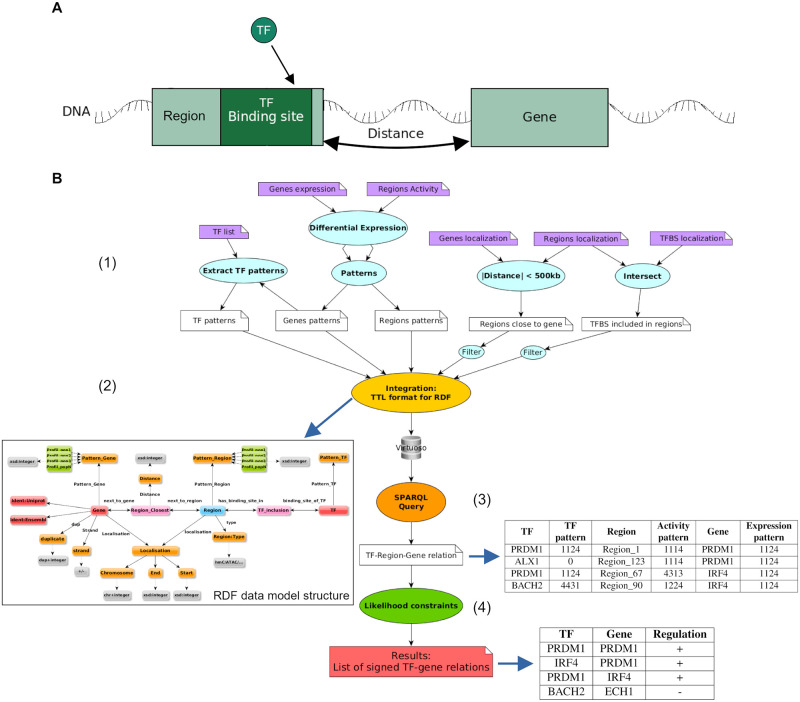 Figure 6
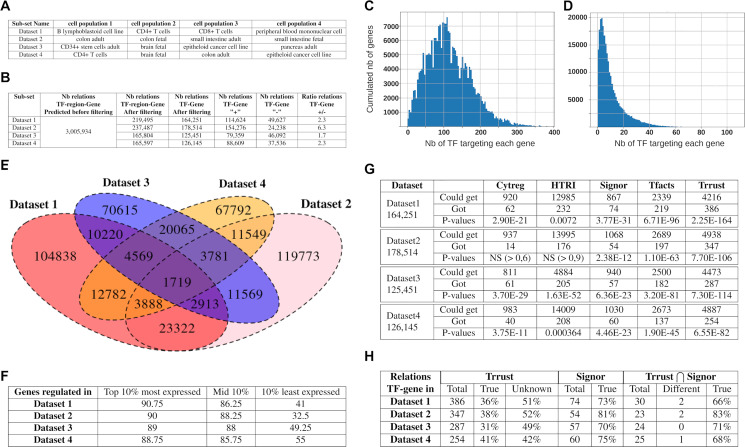 Figure 7
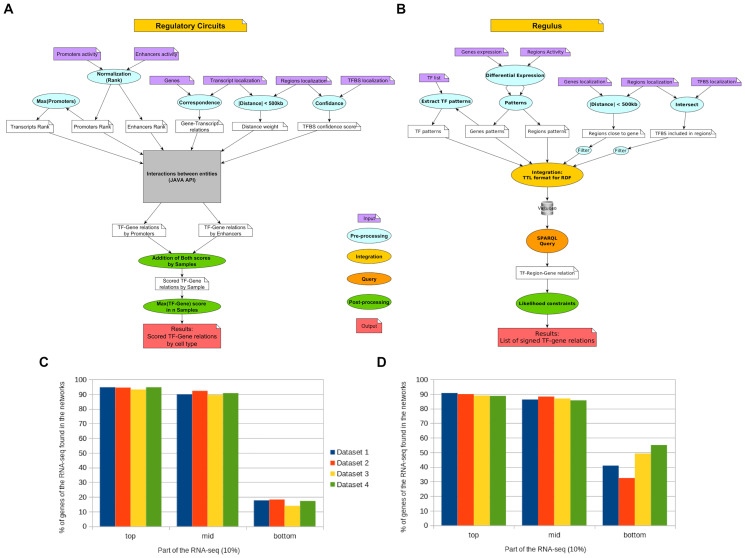 Figure 8
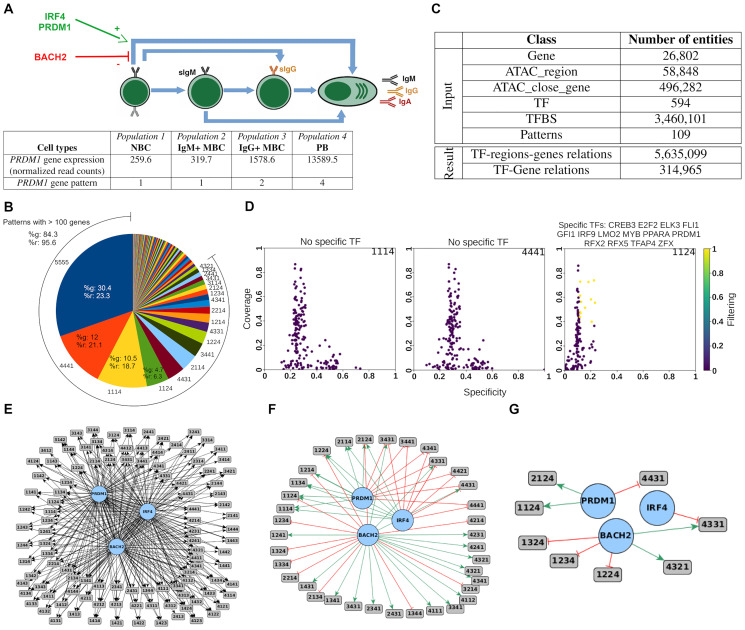 Figure 9
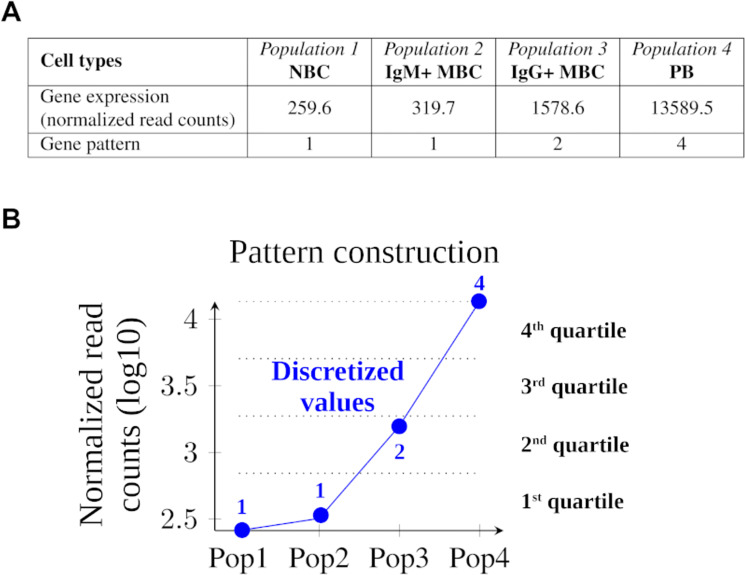 Figure 10
Peer Reviews
No public reviews on file for this paper yet. If you reviewed it on a platform where reviews are public (OpenReview, ICLR, NeurIPS, ICML), you can paste yours below so the community can read it here.
Videos
No videos yet. Explain this paper in a talk, walkthrough, or lecture? Add one.
Taxonomy
TopicsGene expression and cancer classification · Gene Regulatory Network Analysis · Genomics and Chromatin Dynamics