Comparative evaluation of bioinformatic tools for virus-host prediction and their application to a highly diverse community in the Cuatro Ciénegas Basin, Mexico
Alejandro Miguel Cisneros-Martínez, Ulises E. Rodriguez-Cruz, Luis D. Alcaraz, Arturo Becerra, Luis E. Eguiarte, Valeria Souza, Ricardo Santos, Ricardo Santos, Ricardo Santos

TL;DR
This study compares tools for predicting virus-host relationships and applies them to a unique hypersaline environment in Mexico.
Contribution
The study evaluates and compares virus-host prediction tools and emphasizes the importance of using custom databases for accurate predictions in diverse environments.
Findings
Alignment-free methods outperformed alignment-based methods in precision and sensitivity for virus-host prediction.
Custom databases improved agreement between predicted hosts and the source environment's characteristics.
Predictions suggest AD viruses infect archaea and bacteria adapted to extreme conditions.
Abstract
Due to the enormous diversity of non-culturable viruses, new viruses must be characterized using culture-independent techniques. The associated host is an important phenotypic feature that can be inferred from metagenomic viral contigs thanks to the development of several bioinformatic tools. Here, we compare the performance of recently developed virus-host prediction tools on a dataset of 1,046 virus-host pairs and then apply the best-performing tools to a metagenomic dataset derived from a highly diverse transiently hypersaline site known as the Archaean Domes (AD) within the Cuatro Ciénegas Basin, Coahuila, Mexico. Among host-dependent methods, alignment-based approaches had a precision of 66.07% and a sensitivity of 24.76%, while alignment-free methods had an average precision of 75.7% and a sensitivity of 57.5%. RaFAH, a virus-dependent alignment-based tool, had the best overall…
Genes, proteins, chemicals, diseases, species, mutations and cell lines named across the full text — each resolved to its canonical identifier and authoritative record.
Click any figure to enlarge with its caption.
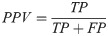 Figure 1
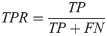 Figure 2
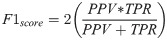 Figure 3
 Figure 4
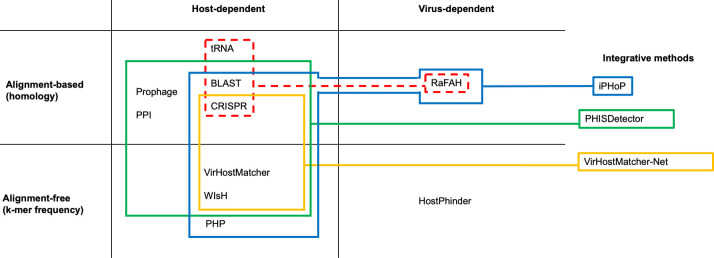 Figure 5
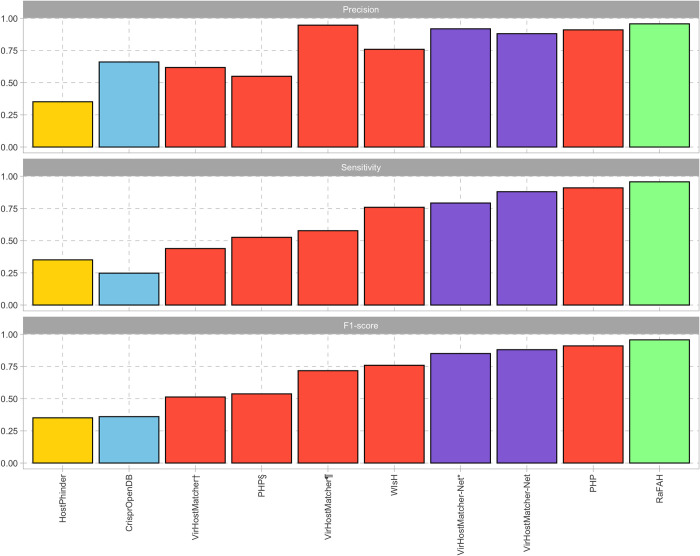 Figure 6
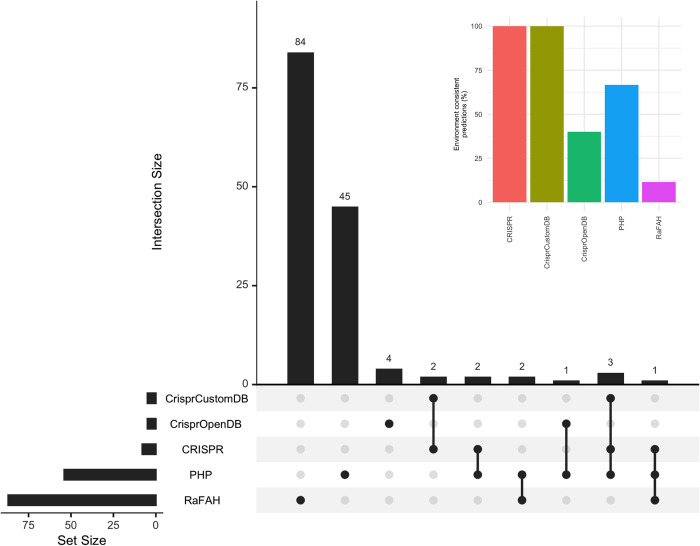 Figure 7
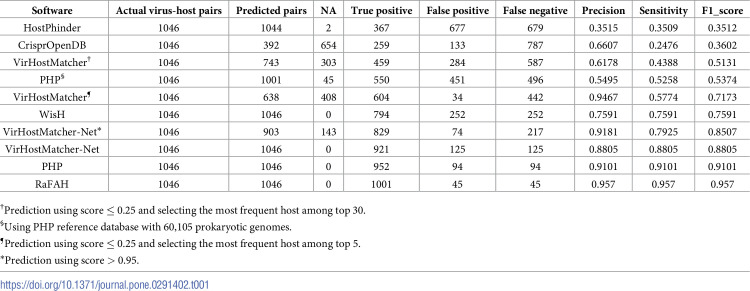 Figure 8
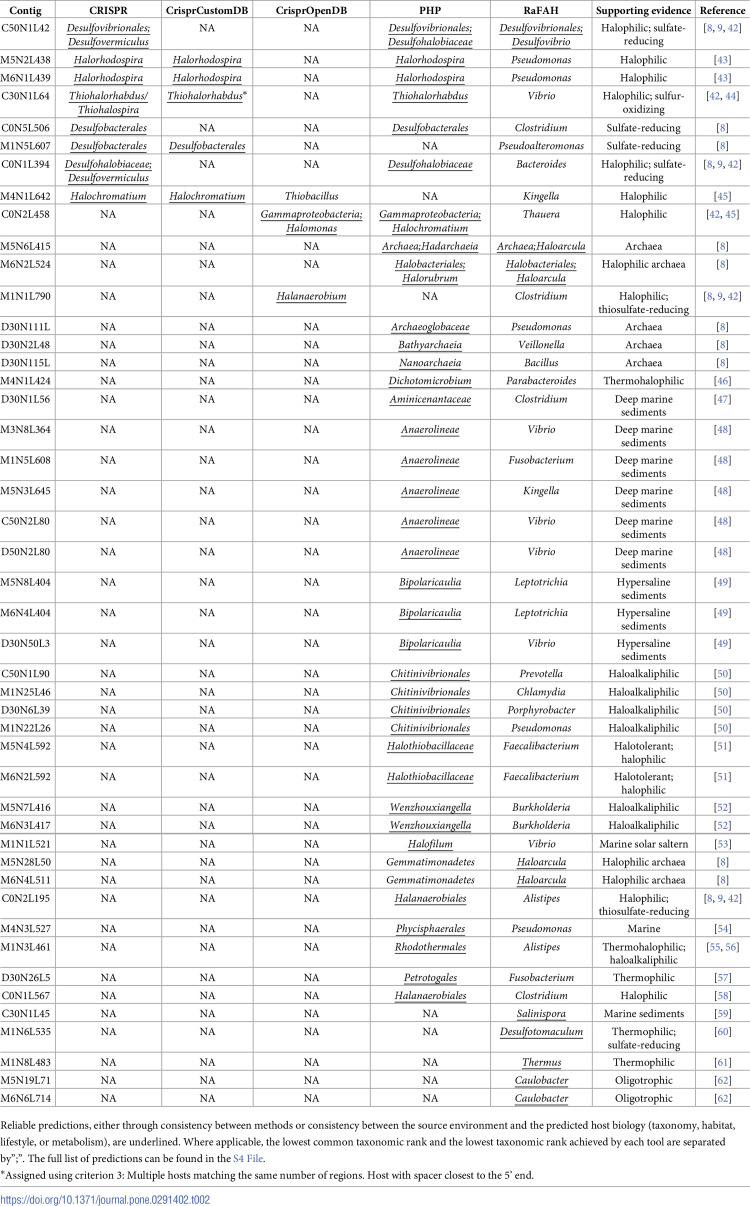 Figure 9
Peer Reviews
No public reviews on file for this paper yet. If you reviewed it on a platform where reviews are public (OpenReview, ICLR, NeurIPS, ICML), you can paste yours below so the community can read it here.
Videos
No videos yet. Explain this paper in a talk, walkthrough, or lecture? Add one.
Taxonomy
TopicsBacteriophages and microbial interactions · Genomics and Phylogenetic Studies · Microbial Community Ecology and Physiology