Study of the influence of nanoscale porosity on the microbial electroactivity between expanded graphite electrodes and Geobacter sulfurreducens biofilms
M. Ramírez‐Moreno, R. Berenguer, J. M. Ortiz, A. Esteve‐Núñez

TL;DR
This study shows that creating nanopores in expanded graphite electrodes significantly boosts microbial electroactivity, making them more useful for microbial electrochemical technologies.
Contribution
The novel contribution is demonstrating that nanoporosity in expanded graphite enhances microbial electroactivity through ion adsorption rather than direct bacterial access.
Findings
Nanopores increase microbial current density by 60-fold in expanded graphite electrodes.
The enhancement is attributed to ion adsorption compensating for charge exchange, not direct bacterial access to nanopores.
Abstract
Expanded graphite (EG) electrodes gather several advantages for their utilization in microbial electrochemical technologies (MET). Unfortunately, the low microbial electroactivity makes them non‐practical for implementing them as electrodes. The objective of this work is to explore the enhancement of microbial electroactivity of expanded graphite (commercial PV15) through the generation of nanopores by CO2 treatment. The changes in properties were thoroughly analysed by TG, XRD, Raman, XPS, gas adsorption, SEM and AFM, as well as microbial electroactivity in the presence of Geobacter sulfurreducens. Nanopores remarkably enhance the microbially derived electrical current (60‐fold increase). Given the inaccessibility of micron‐sized bacteria to these nanopores, it is suggested that the electric charge exchanged by electroactive microorganisms might be greatly affected by the capability of…
Genes, proteins, chemicals, diseases, species, mutations and cell lines named across the full text — each resolved to its canonical identifier and authoritative record.
Click any figure to enlarge with its caption.
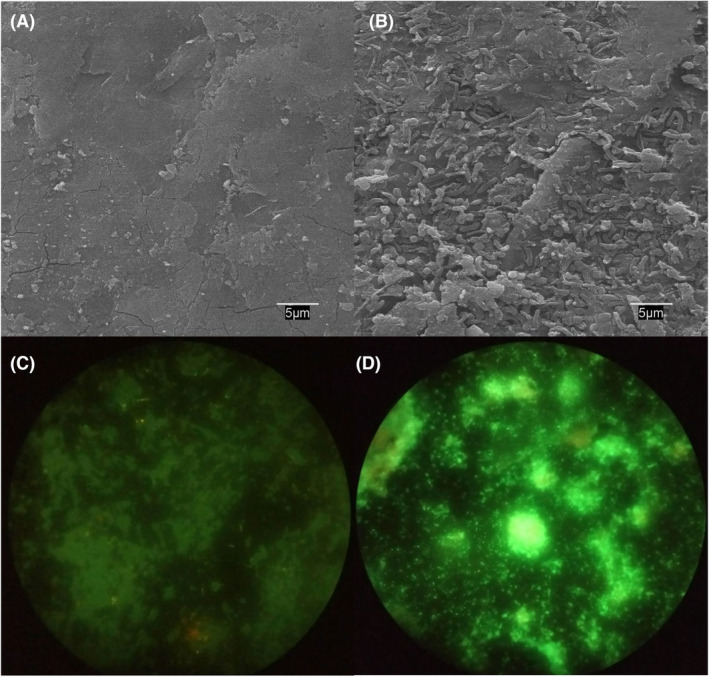 Figure 1
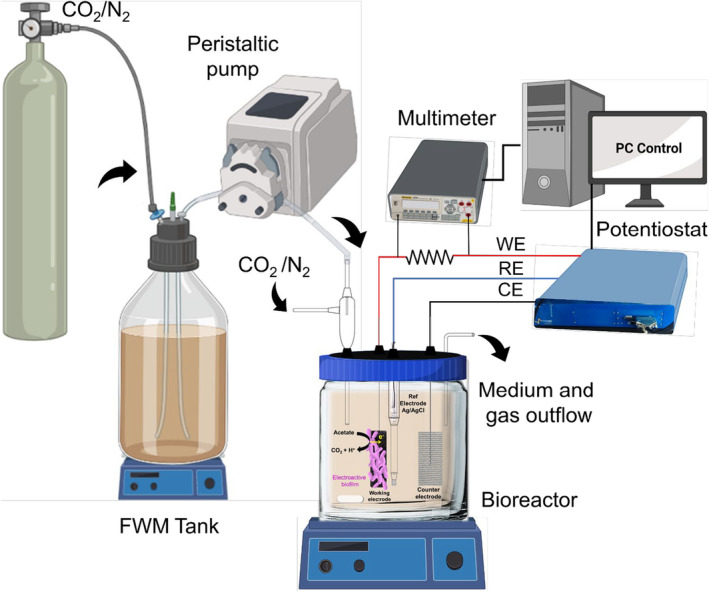 Figure 2
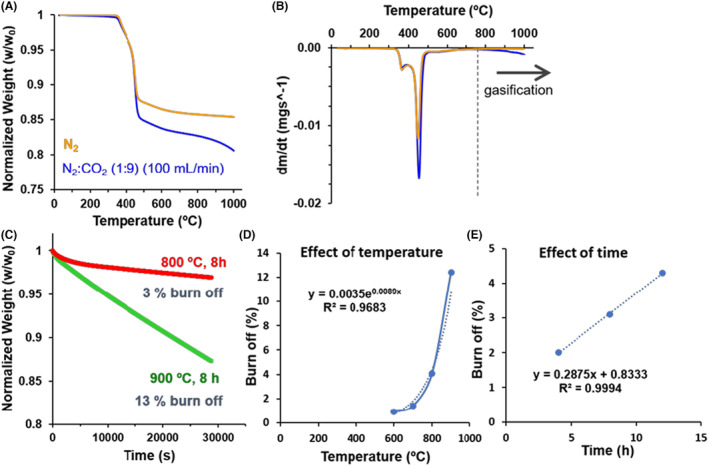 Figure 3
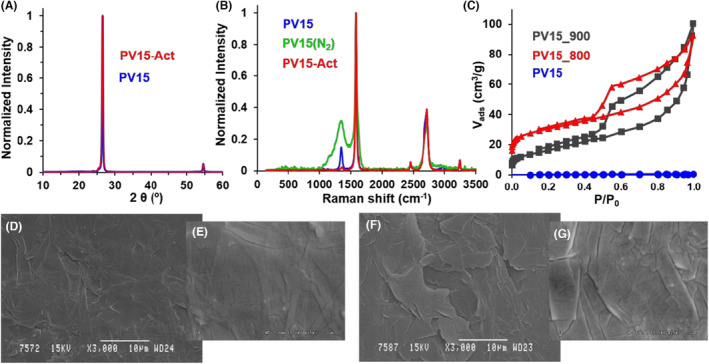 Figure 4
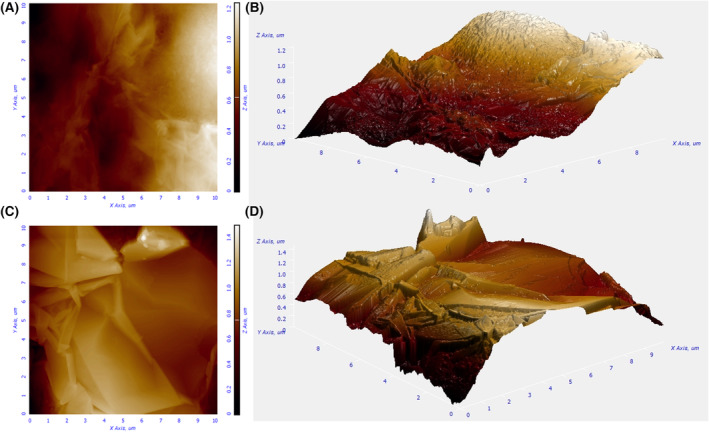 Figure 5
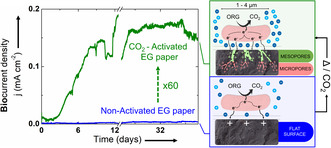 Figure 6
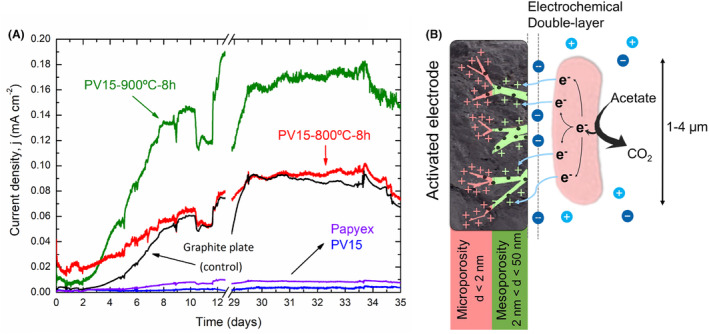 Figure 7
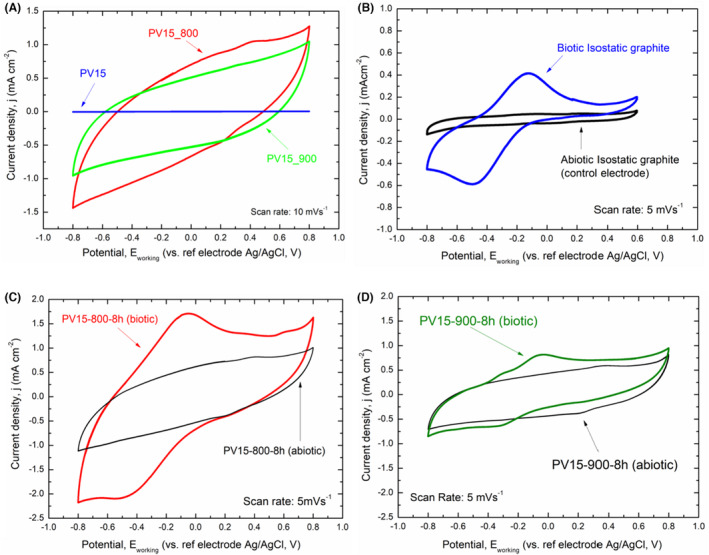 Figure 8
Peer Reviews
No public reviews on file for this paper yet. If you reviewed it on a platform where reviews are public (OpenReview, ICLR, NeurIPS, ICML), you can paste yours below so the community can read it here.
Videos
No videos yet. Explain this paper in a talk, walkthrough, or lecture? Add one.
Taxonomy
TopicsMicrobial Fuel Cells and Bioremediation · Microbial Applications in Construction Materials · Iron oxide chemistry and applications