A language-independent hearing screening self-test at school-entry
Elien Van den Borre, Gaziz Tufatulin, Lea Zupan, Nina Božanić Urbančič, Limor Lavie, Inga Holube, Vinay Swarnalatha Nagaraj, Emre Gurses, Sam Denys, Astrid van Wieringen, Jan Wouters

TL;DR
A new hearing test for young children uses sounds and works across different languages and countries, offering a potential global solution for hearing screening.
Contribution
The Sound Ear Check is a novel, language-independent hearing screening method validated across multiple countries and age groups.
Findings
The Sound Ear Check demonstrated high sensitivity and specificity for detecting hearing loss over 30 dB HL.
Test results were consistent across seven different countries, showing cultural independence.
Three test procedures all effectively identified hearing impairments in children aged 5 to 9 years.
Abstract
The usage of a tablet-based language-independent self-test involving the recognition of ecological sounds in background noise, the Sound Ear Check, was investigated. The results of 692 children, aged between 5 and 9 years and 4 months, recruited in seven different countries, were used to analyze the validity and the cultural independence of test. Three different test procedures, namely a monaural adaptive procedure, a procedure presenting the sounds dichotically in diotic noise, and a procedure presenting all the sounds with a fixed signal-to-noise ratio and a stopping rule were studied. Results showed high sensitivity and specificity of all three procedures to detect conductive, sensorineural and mixed hearing loss > 30 dB HL. Additionally, the data collected from different countries were consistent, and there were no clinically relevant differences observed between countries.…
Genes, proteins, chemicals, diseases, species, mutations and cell lines named across the full text — each resolved to its canonical identifier and authoritative record.
Click any figure to enlarge with its caption.
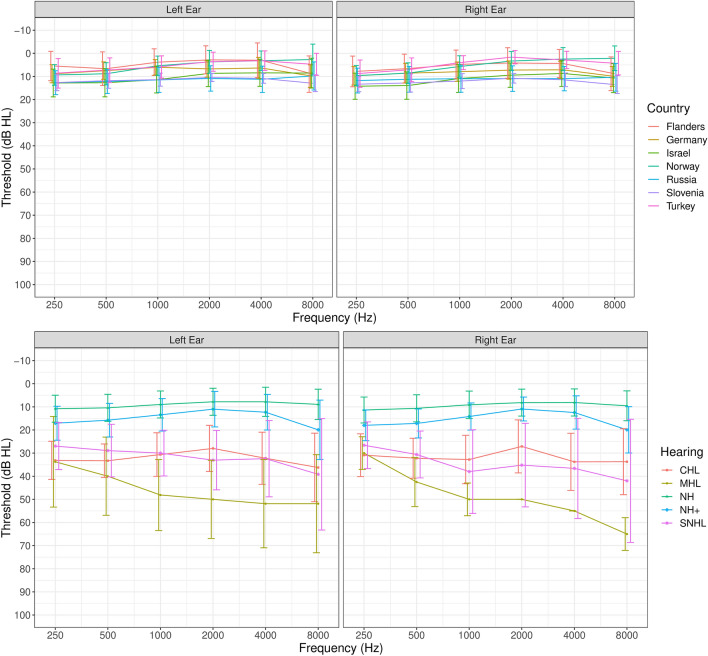 Figure 1
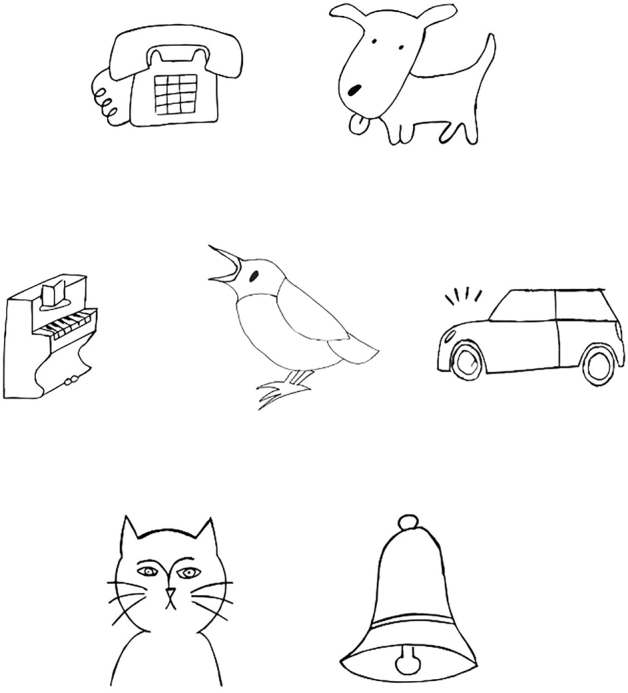 Figure 2
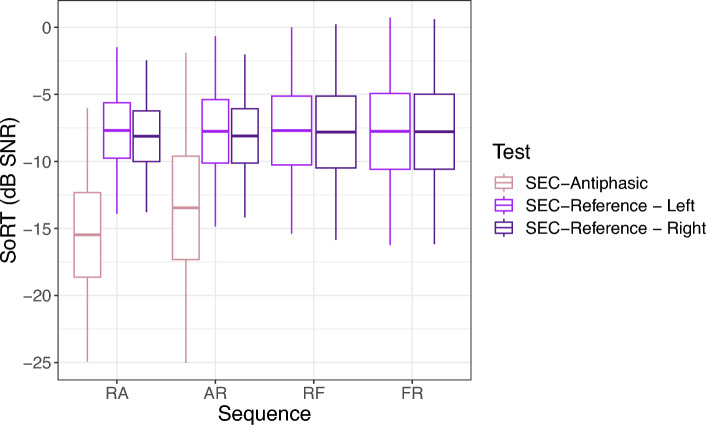 Figure 3
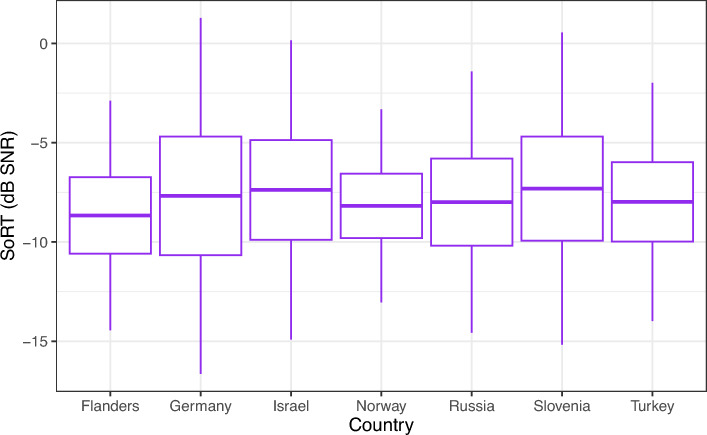 Figure 4
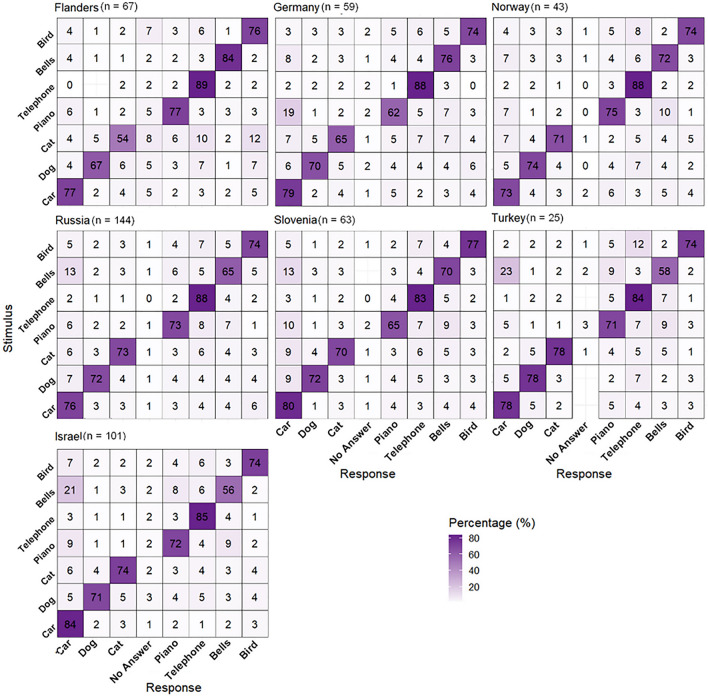 Figure 5
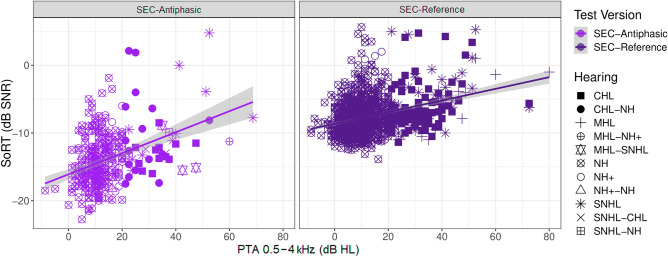 Figure 6
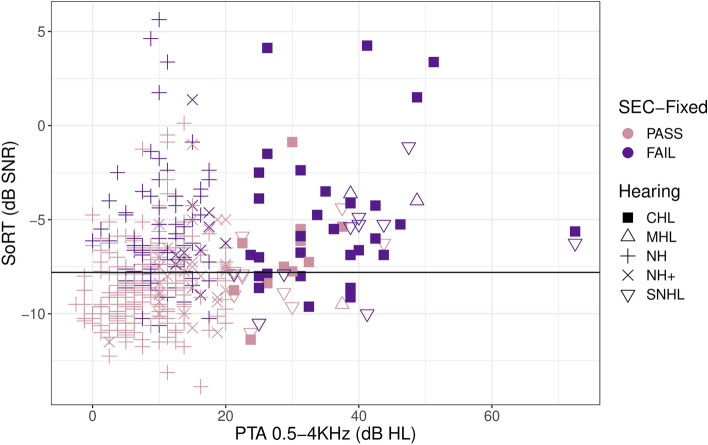 Figure 7
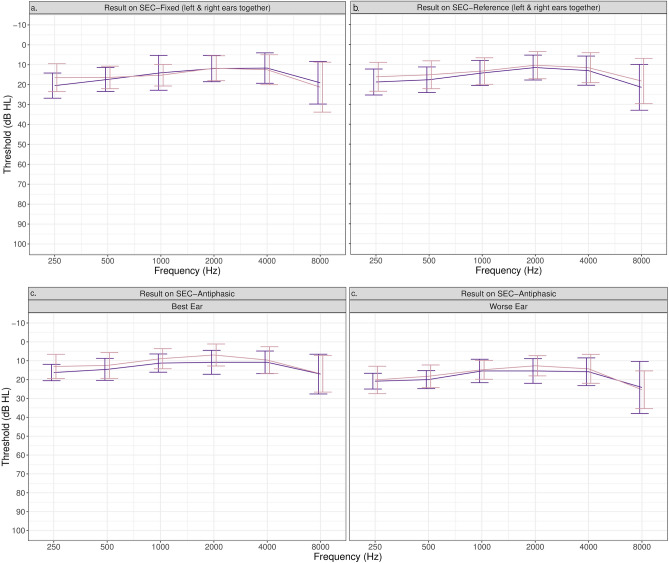 Figure 8
Peer Reviews
No public reviews on file for this paper yet. If you reviewed it on a platform where reviews are public (OpenReview, ICLR, NeurIPS, ICML), you can paste yours below so the community can read it here.
Videos
No videos yet. Explain this paper in a talk, walkthrough, or lecture? Add one.
Taxonomy
TopicsHearing Loss and Rehabilitation · Hearing, Cochlea, Tinnitus, Genetics · Noise Effects and Management