Community ecological response to polycyclic aromatic hydrocarbons in Baiyangdian Lake based on an ecological model
Yong Zeng, Jiaxin Li, Yanwei Zhao, Wei Yang

TL;DR
This study explores how polycyclic aromatic hydrocarbons affect ecological communities in Baiyangdian Lake using an ecological model.
Contribution
The study reveals that community-level toxicological dynamics are more complex than single-species responses and identifies interaction strength as a useful indicator.
Findings
Toxicity and interaction strength drive community-level responses to pollutants in three distinct stages.
Interaction strength is a better indicator of ecosystem transitions than food web stability metrics.
Pollution reduction and long-term monitoring are recommended for ecological management.
Abstract
The dynamic response of a single population to chemicals can be represented by a Weibull function. However, it is unclear whether the overall response can still be represented in this manner when scaled up to the community level. In this study, we investigated the responses of biological communities to polycyclic aromatic hydrocarbons by using an ecological model of Baiyangdian Lake in northern China. The community dynamics process was divided into the following three stages. In the first stage, toxicity, played a dominant role and strong, medium, and weak species responses were observed according to the toxicity sensitivity. In the second stage, the dynamic process was dominated by the interaction strength with three alternative dynamic pathways comprising of direct response, no response, or inverse response. In the third stage, the toxicity was again dominant, and the biomasses of all…
Genes, proteins, chemicals, diseases, species, mutations and cell lines named across the full text — each resolved to its canonical identifier and authoritative record.
Click any figure to enlarge with its caption.
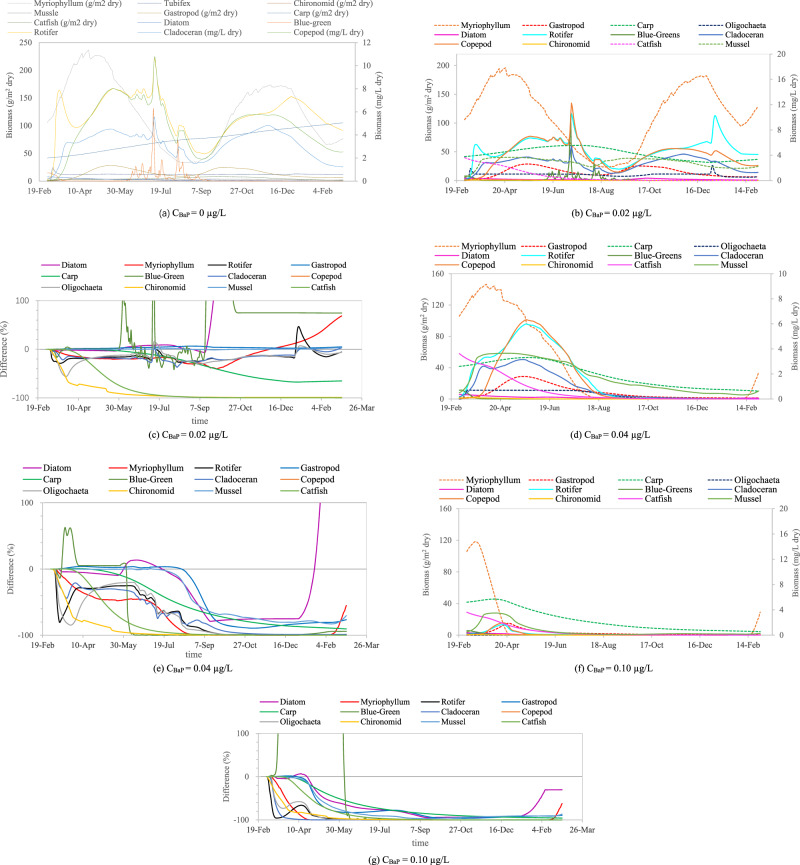 Figure 1
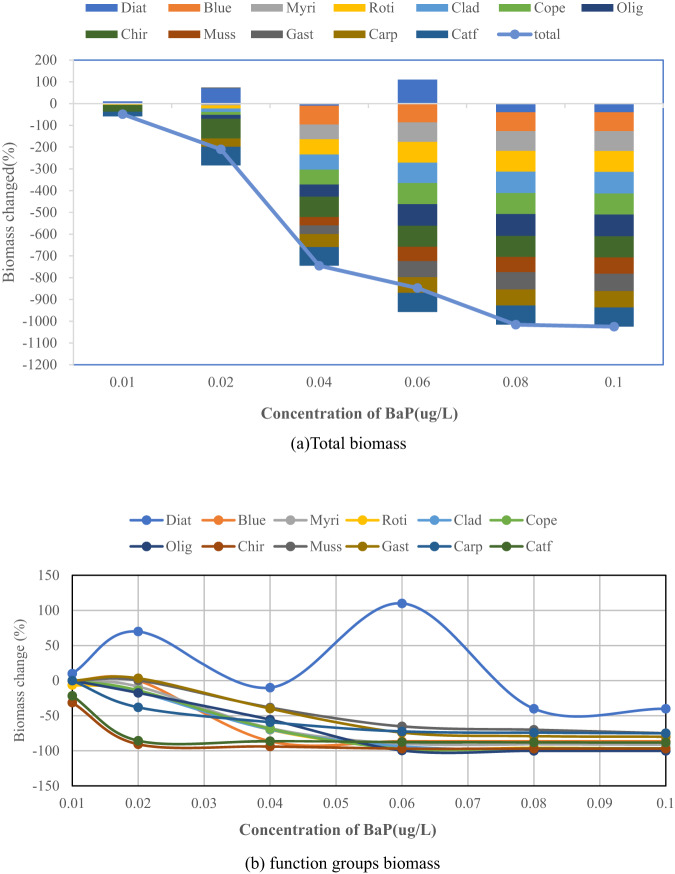 Figure 2
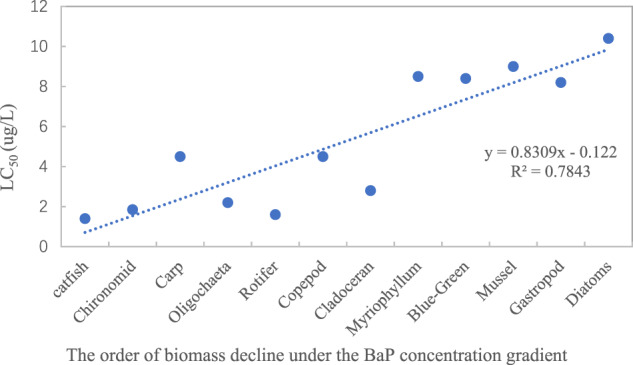 Figure 3
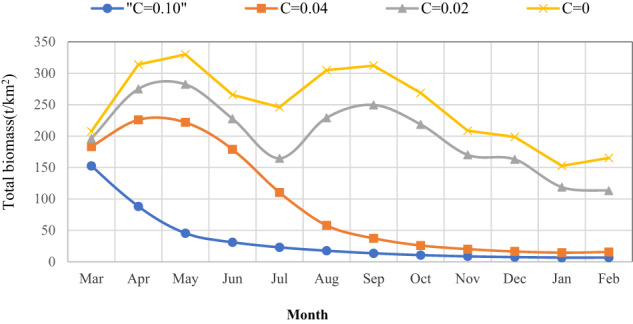 Figure 4
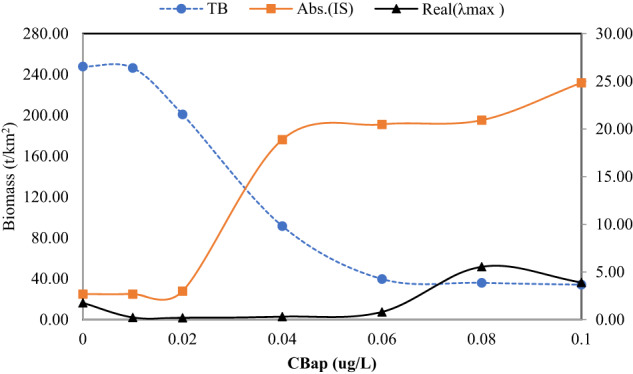 Figure 5
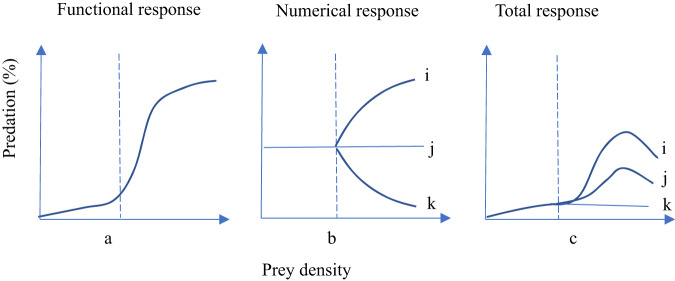 Figure 6
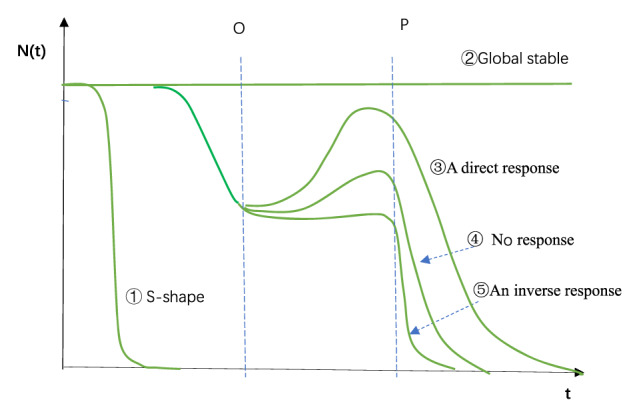 Figure 7
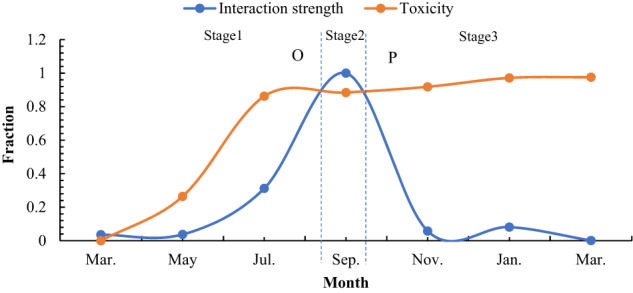 Figure 8
Peer Reviews
No public reviews on file for this paper yet. If you reviewed it on a platform where reviews are public (OpenReview, ICLR, NeurIPS, ICML), you can paste yours below so the community can read it here.
Videos
No videos yet. Explain this paper in a talk, walkthrough, or lecture? Add one.
Taxonomy
TopicsAnimal Ecology and Behavior Studies · Ecosystem dynamics and resilience · Environmental Toxicology and Ecotoxicology