Cutting-edge novel device in the treatment of obesity
Jan Kral, Jana Selucka, Katerina Waloszkova, Marek Buzga, Julius Spicak, Evzen Machytka

Abstract
Genes, proteins, chemicals, diseases, species, mutations and cell lines named across the full text — each resolved to its canonical identifier and authoritative record.
Click any figure to enlarge with its caption.
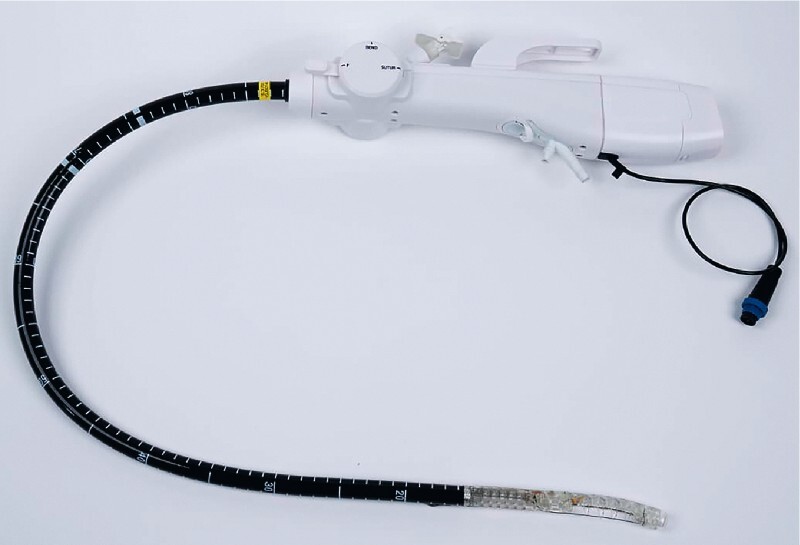 Fig. 1
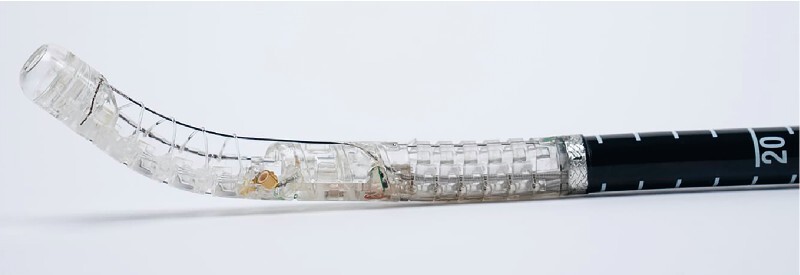 Fig. 2
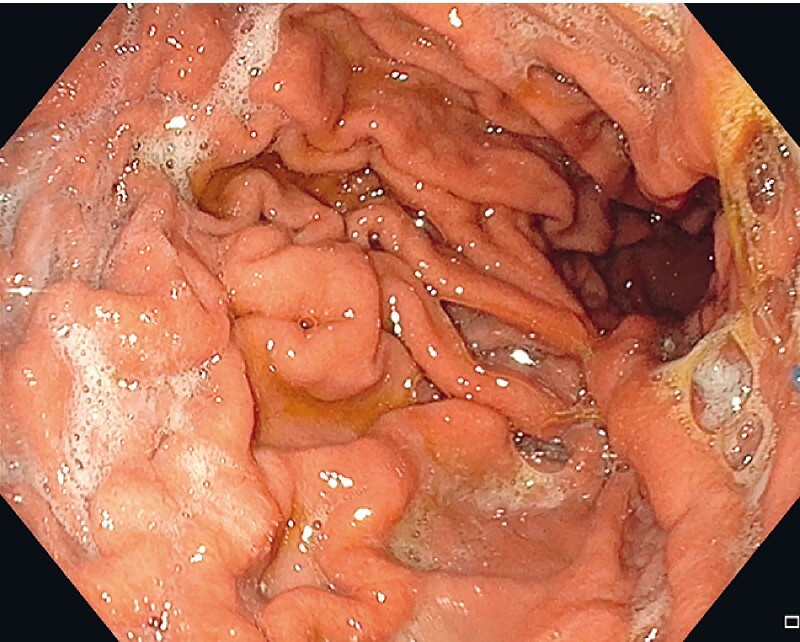 Fig. 3
Peer Reviews
No public reviews on file for this paper yet. If you reviewed it on a platform where reviews are public (OpenReview, ICLR, NeurIPS, ICML), you can paste yours below so the community can read it here.
Videos
No videos yet. Explain this paper in a talk, walkthrough, or lecture? Add one.
Taxonomy
TopicsBariatric Surgery and Outcomes · Body Contouring and Surgery · Diet and metabolism studies
A 57-year-old patient with arterial hypertension, dyslipidemia, and obesity grade I (BMI 34.9 kg/m ^2^ , 95 kg, 165 cm) underwent a new and unique sleeve gastroplasty procedure for weight reduction ( Video 1 ).
Video 1 Endoscopic sleeve gastroplasty using a novel device.
A novel device is used to perform the sleeve gastroplasty ( Fig. 1 ). The specialized device is inserted into the patient through an overtube, and a thin nasal endoscope is passed through the device into the stomach. Under visual guidance, the appropriate position in the stomach (antrum) is identified, and a vacuum (–84 kPa) is initiated. Subsequently, the nasal endoscope is removed, and the device channel is closed to maintain the vacuum. In this phase of the procedure, full-thickness suturing of the gastric wall is performed using a circular stitch ( Fig. 2 ). The device automatically terminates the stitch, and it is withdrawn through the overtube. The sutures are then inspected using an endoscope. This process is repeated 4–5 times, depending on the appearance of the sleeve gastroplasty. After completing all 4–5 sutures, the resulting sleeve is inspected, including checking for possible complications such as bleeding or perforation. The procedure is performed under general anesthesia, with observation continuing until the following day. The average duration of the procedure is 40 minutes.
Device overview.
Assembled device.
After three months, the patient achieved a weight loss of 8 kg (8.4 % total body weight loss) without any signs of complications. This novel device appears to be a promising new method for weight reduction that is fast, feasible, and safe ( Fig. 3 ). Randomized studies comparing its effectiveness to other devices intended for endoscopic sleeve gastroplasty, where the percentage of total body weight loss at 6 months averages around 15 %, are now needed 1 .
Device introduction via overtube.
Endoscopy_UCTN_Code_TTT_1AO_2AN
Citation Format Endoscopy 2023; 55: E1124–E1125. doi: 10.1055/a-2173-7560 .
The reference list from the paper itself. Each links out to its DOI / PubMed record.