Design, Synthesis, Antibacterial, and Antifungal Evaluation of Phenylthiazole Derivatives Containing a 1,3,4-Thiadiazole Thione Moiety
Guoqing Mao, Yao Tian, Jinchao Shi, Changzhou Liao, Weiwei Huang, Yiran Wu, Zhou Wen, Linhua Yu, Xiang Zhu, Junkai Li

TL;DR
This study designed and tested new phenylthiazole compounds with strong antibacterial and antifungal properties against plant pathogens.
Contribution
The paper introduces novel phenylthiazole derivatives with enhanced antibacterial and antifungal activities against plant pathogens.
Findings
Compound 5k showed excellent antibacterial activity against Ralstonia solanacearum with an EC50 of 2.23 μg/mL.
Compound 5b exhibited strong antifungal activity against Sclerotinia sclerotiorum with an EC50 of 0.51 μg/mL.
Electron-withdrawing groups at specific benzene ring positions improved antibacterial and antifungal activities.
Abstract
To effectively control the infection of plant pathogens, we designed and synthesized a series of phenylthiazole derivatives containing a 1,3,4-thiadiazole thione moiety and screened for their antibacterial potencies against Ralstonia solanacearum, Xanthomonas oryzae pv. oryzae, as well as their antifungal potencies against Sclerotinia sclerotiorum, Rhizoctonia solani, Magnaporthe oryzae and Colletotrichum gloeosporioides. The chemical structures of the target compounds were characterized by 1H NMR, 13C NMR and HRMS. The bioassay results revealed that all the tested compounds exhibited moderate-to-excellent antibacterial and antifungal activities against six plant pathogens. Especially, compound 5k possessed the most remarkable antibacterial activity against R. solanacearum (EC50 = 2.23 μg/mL), which was significantly superior to that of compound E1 (EC50 = 69.87 μg/mL) and the…
Genes, proteins, chemicals, diseases, species, mutations and cell lines named across the full text — each resolved to its canonical identifier and authoritative record.
Click any figure to enlarge with its caption.
 Figure 1
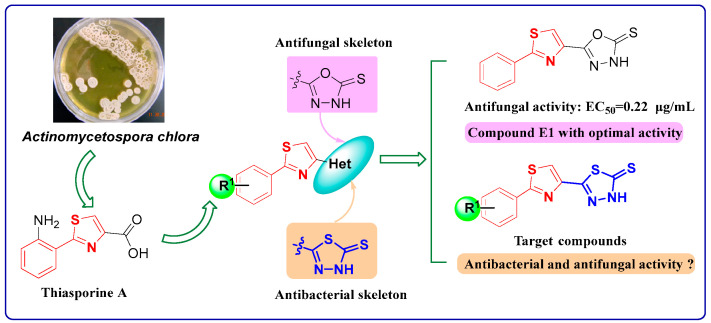 Figure 2
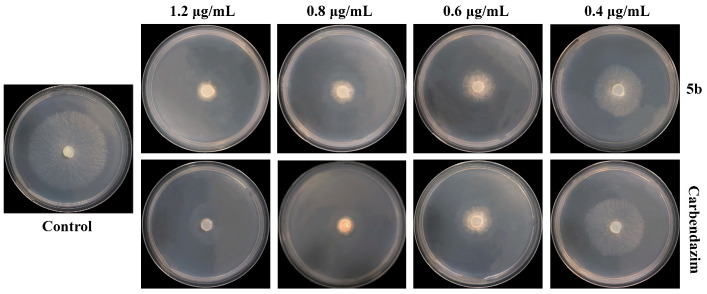 Figure 3
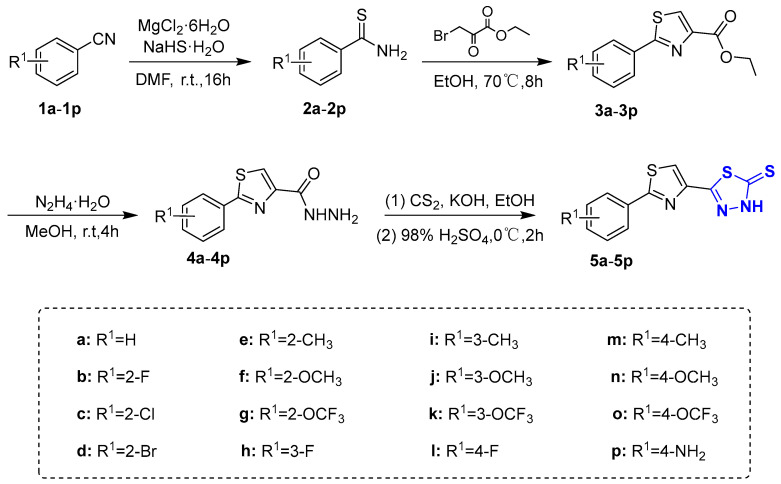 Figure 4
- —National Natural Science Foundation of China
- —Open Fund of Engineering Research Center of Ecology and Agricultural Use of Wetland, Ministry of Education
- —Nature Science Foundation of Hubei Province
- —China Postdoctoral Science Foundation
Peer Reviews
No public reviews on file for this paper yet. If you reviewed it on a platform where reviews are public (OpenReview, ICLR, NeurIPS, ICML), you can paste yours below so the community can read it here.
Videos
No videos yet. Explain this paper in a talk, walkthrough, or lecture? Add one.
Taxonomy
TopicsPlant Disease Resistance and Genetics · Fungal Plant Pathogen Control · Plant-Microbe Interactions and Immunity
1. Introduction
Plant pathogens possess an extremely infectious ability, resulting in a high incidence of plant mortality, which severely affect agricultural production and significantly reduce crop yield and quality [1,2,3,4]. For instance, R. solanacearum, belongs to a common Gram-negative opportunistic pathogen, can infect an array of crop species including rice, ginger, tomato, potato and tobacco [5,6]. S. sclerotiorum, a necrotrophic phytopathogenic fungus distributed globally, is capable of causing various symptoms, such as stem rot and pod reduction, leading to annual production losses of 10–50% [7,8]. At present, the application of chemical pesticides is the most effective measure to manage bacterial and fungal diseases of crops [9,10]. However, the misuse and overuse of many conventional pesticides for a long time have created ever-rising resistance, resulting in a significant decrease in the control efficacy of commercial agents [11,12]. Thus, it is urgently needed to develop novel and efficient antibacterial and antifungal agents for the control of crop bacterial and fungal diseases.
Structural optimization based on natural products has been an important way to discover novel pesticides, which is of great significance to delay the development of resistance and enhance pharmacodynamic effects [13,14]. Thiasporine A (Figure 1) is a heterocyclic natural product initially isolated from marine-derived Actinomycetospora chlora SNC-032 by MacMillan in 2015 [15]. In our previous work, we synthesized several series of thiasporine A derivatives with potent antifungal activity and demonstrated that phenylthiazole was a promising antifungal activity skeleton [16]. Notably, Shi [17] introduced an 1,3,4-oxadiazole thione into phenylthiazole to synthesize compound E1 (Figure 1), exhibiting the most excellent antifungal activity against S. sclerotiorum with an EC50 value of 0.22 μg/mL, which was superior to that of the commercial fungicide Carbendazim (EC_50_ = 0.70 μg/mL). Regrettably, compound E1 did not perform excellent antibacterial activity, but this result provides valuable guidance for carrying out subsequent molecular design.
1,3,4-thiadiazole is an important class of five-membered heterocycle ring containing nitrogen and sulfur with broad biological activities as antimicrobial [18], anti-inflammatory [19], antibacterial [20], insecticidal [21] and herbicidal [22], widely applied in the fields of pharmaceutical and agricultural chemistry. Especially in agricultural antibacterial agents, considering 1,3,4-thiadiazole as a “privileged” scaffold, large numbers of commercial pesticides have been developed ceaselessly since 1950s, such as Bismerthiazol and Thiodiazole copper (Figure 1) [23,24,25]. Motivated by the above observation, we intended to introduce an antibacterial scaffold 1,3,4-thiadiazole into phenylthiazole active skeleton to discover and synthesize a series of compounds with antibacterial and antifungal potency (Figure 2). All the target compounds were assayed for their antibacterial activities against R. solanacearum and Xoo, as well as their antifungal activities against S. sclerotiorum, R. solani, M. oryzae and C. gloeosporioides, and the preliminary SARs of these compounds were discussed.
2. Results and Discussion
2.1. Chemistry
The synthetic steps of the target compounds 5a–5p are outlined in Scheme 1. In brief, benzonitrile 1a was provided by professional suppliers and used as the starting material. Intermediate 2a was harvested via the reaction of benzonitrile 1a, magnesium chloride hexahydrate and sodium hydrosulfide hydrate in N, N dimethylformamide [26]. Subsequently, intermediate 3a was afforded via the reaction of intermediate 2a and ethyl 3-bromopyruvate in ethanol [27]. The corresponding intermediate 3a was reacted with hydrazine hydrate in methanol to synthesize intermediate 4a by a hydrazinolysis reaction [28]. Finally, intermediate 4a was ring-cyclized with carbon disulfide and potassium hydroxide under 98% sulfuric acid under ice-salt bath conditions to obtain the target compound 5a [29]. It was of great importance for the last step to keep the temperature at 0 °C. The synthesized target compounds were obtained with yields of 80–90%. The structures of all target compounds were confirmed utilizing ^1^H NMR, ^13^C NMR, and HRMS. All corresponding signals of protons and carbons were recorded in the ^1^H NMR and ^13^C NMR spectra. In the ^1^H NMR spectra of target compounds 5a–5p, the signals around δ = 17.37–13.71 ppm suggested the appearance of the N-NH group. The signals δ = 191.81–177.23 ppm in the ^13^C NMR indicated the presence of the thione group (C=S). Additionally, the OCF_3_ was observed as a quartet with a large coupling constant. More detailed information is shown in the Supplementary Materials.
2.2. Antibacterial Activity
The preliminary antibacterial activities of the target compounds 5a–5p against R. solanacearum and Xoo were evaluated at concentrations of 200 and 100 μg/mL via the turbidimeter test. The results in Table 1 suggested that most of the target compounds exhibited moderate to remarkable antibacterial activities against R. solanacearum and Xoo. Among them, compounds 5b, 5h, 5i and 5k possessed excellent antibacterial activities against R. solanacearum at 100 μg/mL with inhibition rates of 92.00%, 93.81%, 94.00% and 100%, respectively, which were superior to those of compound E1 (79.77%) and the commercial agent Thiodiazole copper (70.22%). Meanwhile, compound 5k also performed good activity against Xoo at 100 μg/mL with an inhibition rate of 72.63%, which was higher than that of compound E1 (53.96%), but it had a certain gap compared with Thiodiazole copper (94.61%).
Based on the preliminary screening results, the EC_50_ values of compounds 5b, 5h, 5i and 5k against R. solanacearum were further tested. The results were statistically analyzed and shown in Table 2. Satisfactorily, the EC_50_ values of all tested compounds ranged from 2.23 to 40.33 μg/mL. Notably, compounds 5h, 5i and 5k possessed excellent antibacterial activities against R. solanacearum, with EC_50_ values of 6.66, 7.20 and 2.23 μg/mL, respectively, which were lower than those of compound E1 (EC_50_ = 69.87 μg/mL) and the commercial agent Thiodiazole copper (EC_50_ = 52.01 μg/mL). The EC_50_ value of compound 5b was relatively large, but it was still lower than that of compound E1 and the Thiodiazole copper.
2.3. Antifungal Activity
The antifungal activities of the target compounds 5a–5p against four phytopathogenic fungi (S. sclerotiorum, R. solani, M. oryzae and C. gloeosporioides) were determined at 50 μg/mL utilizing the mycelial growth rate method. The results of antifungal activities were outlined in Table 3 and indicated that most of the target compounds displayed moderate to excellent antifungal activities against each of the test fungi. Particularly, compounds 5b, 5h, 5i and 5p possessed remarkable antifungal activities against S. sclerotiorum with the inhibition rates of 90.48%, 82.14%, 83.63% and 80.06%, respectively, which surpassed that of the commercial agent Thifluzamide (72.92%). Meanwhile, compound 5b also exhibited good activity against R. solani, M. oryzae and C. gloeosporioides, with the inhibition rates of 72.32%, 55.36% and 52.98%, respectively. The inhibition rates of compounds 5b, 5e, 5h, 5i and 5j against R. solani were more than 50%. Furthermore, selected compounds with activity higher than 80% were further tested for EC_50_ values to evaluate their excellent antifungal activities more accurately. The results in Table 4 indicated that all of them showed more potent antifungal activities compared with Thifluzamide (EC_50_ = 27.24 μg/mL). Especially, the EC_50_ value of compound 5b against S. sclerotiorum was 0.51 μg/mL, which was equivalent to that of the commercial fungicide Carbendazim (EC_50_ = 0.57 μg/mL). From the pictures in Figure 3, it was displayed the antifungal effects of compound 5b and Carbendazim against S. sclerotiorum at different concentrations. It can be intuitively observed that the antifungal activity of compound 5b against S. sclerotiorum was equivalent to Carbendazim at the same concentration.
2.4. Preliminary Analysis of Structure-Activity Relationship (SAR)
The preliminary SAR results were deduced from the inhibitory activity data of the antibacterial and antifungal activities shown in Table 1, Table 2, Table 3 and Table 4. The results indicated that the type and position of substituents on the benzene ring had a great impact on antibacterial and antifungal activities. Briefly, introducing an electron-withdrawing group at the meta-position can endow the final structure with more potent antibacterial activity. For example, the antibacterial activity of compound 5k (R^1^ = 3-OCF_3_) was superior to that of compound 5i (R^1^ = 3-CH_3_). In addition, introducing the same substituents at different positions of the benzene ring, the meta-position was of great benefit for improving antibacterial activity. The inhibition rates of compounds 5k (R_1_ = 3-OCF_3_), 5g (R^1^ = 2-OCF_3_), and 5o (R^1^ = 4-OCF_3_) against R. solanacearum at 100 μg/mL were 100%, 48.26% and 35.11%, respectively. Similarly, introducing an electron-withdrawing group could contribute to promoting antifungal activity, but the same substituent at the ortho-position of the benzene ring took a stronger advantage in improving activity. For instance, the inhibition rates of compounds 5b (R^1^ = 2-F), 5h (R^1^ = 3-F) and 5l (R^1^ = 4-F) against S. sclerotiorum were 90.48%, 82.14% and 32.14%, respectively. Moreover, by introducing the ortho-fluoro group of the benzene ring, the antifungal activity of compound 5b (R^1^ = 2-F) was more potent than that of compound 5c (R^1^ = 2-Cl) and compound 5d (R^1^ = 2-Br).
Fortunately, some of the target compounds possessed potent antibacterial and antifungal potencies against R. solanacearum and S. sclerotiorum, respectively, and the SAR results were summarized. In this study, we introduced an antibacterial active scaffold into the phenylthiazole active skeleton, hoping to further improve antibacterial activity while retaining antifungal activity as far as possible. Compounds 5k and 5b exhibited excellent activities against R. solanacearum and S. sclerotiorum with EC_50_ values of 2.23 and 0.51 μg/mL, respectively. From the results, the purpose of the design has been preliminarily achieved, and it heralds that these compounds have the potential to serve as lead compounds. Regrettably, it is not the same compound that simultaneously possesses optimal antibacterial and antifungal activity. On the other hand, this study lacks further determination of bioactivity as well as the exploration of mechanisms. We will further optimize the structure to enhance activity and explore the mechanism of action in future work.
3. Materials and Methods
3.1. Materials and Instruments
A commercial bactericide of Thiodiazole copper, commercial fungicides Thifluzamide and Carbendazim were supplied by the College of Agriculture, Yangtze University. All reagents and solvents used in the experiment were provided by professional suppliers and utilized without further purification unless otherwise indicated. ^1^H NMR and ^13^C NMR of all target compounds were performed on a AVANCE DPX 400 spectrometer (Bruker Co., Ltd., Fällanden, Switzerland) using tetramethylsilane (TMS) and dimethyl sulfoxide-d6 (DMSO-d6) as an internal standard and solvent, respectively (2.50 ppm for ^1^H and 39.52 ppm for ^13^C). High-resolution mass spectrometry (HRMS) data were acquired from Thermo Scientific Q Exactive (Thermo Fisher Scientific, Bremen, Germany). All reactions were indicated via thin-layer chromatography (TLC) utilizing silica gel 60 GF254 (Qingdao Hai Yang Chemical Co., Ltd., Qingdao, China). The melting point of the target compounds were measured by WRR melting point apparatus, provided by Shanghai Precision Scientific Instrument Co., Ltd., Shanghai, China.
3.2. Bacterial and Fungal Strains
Phytopathogenic bacterial and fungi, including Ralstonia solanacearum (R. solanacearum), Xanthomonas oryzae pv. oryzae (Xoo), Sclerotinia sclerotiorum (S. sclerotiorum), Rhizoctonia solani (R. solani), Magnaporthe oryzae (M. oryzae) and Colletotrichum gloeosporioides (C. gloeosporioides) were provided by the Agricultural College Plant Pathology Laboratory of Yangtze University.
3.3. Chemical Synthesis
3.3.1. General Procedure for the Preparation of Intermediate 2a
In a 250 mL flask, the compound 1a (5.0 g, 42.3 mmol) and MgCl_2_·6H_2_O (10.9 g, 53.4 mmol) were dissolved in N, N dimethylformamide (DMF, 20 mL), and stirred at room temperature for 15 min. Then, NaHS·H_2_O (5.9 g, 106.7 mmol) was added, and the reaction solution was maintained at room temperature for 16 h. After the reaction was completed (indicated by TLC), the solution was extracted 3–4 times directly with ethyl acetate and saturated salt water. Finally, the organic layers were dried with anhydrous sodium sulfate, filtered, and concentrated to acquire crude intermediate 2a [26].
3.3.2. General Procedure for the Preparation of Intermediate 3a
In a 250 mL flask, the crude intermediate 2a (4.0 g, 29.2 mmol) was dissolved completely using ethanol (30 mL). Immediately, 80% ethyl 3-bromopyruvate (5.7 g, 29.2 mmol) was added. The solution was stirred and refluxed for 4–6 h at 70 °C until the reaction was completed (indicated by TLC). Then, the pure intermediate 3a was yielded via silica gel column chromatography (petroleum ether/EtOAc = 10:1, v/v) [27].
3.3.3. General Procedure for the Preparation of Intermediate 4a
In a 250 mL flask, the intermediate 3a (3.0 g, 12.9 mmol) was dissolved in methanol (30mL), 80% hydrazine hydrate (3.9 g, 77.4 mmol) was slowly added. The mixture was reacted at room temperature for 4 h. After completion of the reaction (indicated by TLC), the ice water was added to the reaction solution until a white solid was precipitated out. Eventually, the crude product was further washed several times with water to afford intermediate 4a [28].
3.3.4. General Procedure for the Preparation of Target Compound 5a
Under the condition of an ice salt bath, 98% sulfuric acid (15 mL) was added to a 250 mL flask. When the temperature dropped below 0 °C, intermediate 4a (2.3 g, 7.2 mmol), potassium hydroxide (0.77 g 15.4 mmol), and carbon disulfide (1.95 g, 25.6 mmol) were added successively. The reaction was stirred for 2 h at 0 °C. After the reaction was completed (indicated by TLC), the solution was poured into a large amount of ice water to precipitate a white solid. This was the target product that we wanted. Subsequently, the target compound 5a was purified by recrystallizing with methanol and water [29]. The chemical structures of the target compounds were accurately confirmed using ^1^H NMR, ^13^C NMR, and HRMS. The yields, physical properties, melting points and spectral data of target compounds 5a–5p are given below.
5a. 83.2% yield; White solid. m. p. >250 °C. ^1^H NMR (400 MHz, DMSO-d6) δ: 14.45 (s, 1H), 8.43 (s, 1H), 8.02–7.87 (m, 2H), 7.62–7.44 (m, 3H). ^13^C NMR (101 MHz, DMSO-d6) δ: 188.38, 169.10, 155.37, 144.85, 132.30, 131.53, 129.85 (2C), 126.86 (2C), 120.54. HRMS (ESI): calcd for C_11_H_7_N_3_S_3_ [M + H]^+^: 277.9875, found, 277.9875.
5b. 84.7% yield; White solid. m. p. 238.5–239.5 °C. ^1^H NMR (400 MHz, DMSO-d6) δ: 17.37 (s, 1H), 11.20 (s, 1H), 10.77 (t, J = 7.8 Hz, 1H), 10.12 (q, J = 7.0 Hz, 1H), 10.03–9.86 (m, 2H). ^13^C NMR (101 MHz, DMSO-d6) δ: 177.23, 161.46 (d, J = 5.0 Hz), 159.46 (d, J = 250.8 Hz), 156.44, 138.05, 132.81 (d, J = 8.8 Hz), 128.46, 125.51 (d, J = 9.1 Hz), 125.41 (d, J = 3.2 Hz), 119.59 (d, J = 11.4 Hz), 116.50 (d, J = 21.3 Hz). HRMS (ESI): calcd for C_11_H_6_FN_3_S_3_ [M + H] ^+^: 295.9781, found, 295.9781.
5c. 80.1% yield; White solid. m. p. 234.6–234.9 °C. ^1^H NMR (400 MHz, DMSO-d6) δ: 14.70 (s, 1H), 8.58 (s, 1H), 8.18 (dd, J = 6.0, 3.6 Hz, 1H), 7.74–7.63 (m, 1H), 7.55 (p, J = 6.4 Hz, 2H). ^13^C NMR (101 MHz, DMSO-d6) δ: 189.48, 164.30, 160.39, 143.87, 132.38, 131.40, 131.32, 131.19, 130.51, 128.44, 122.03. HRMS (ESI): calcd for C_11_H_6_ClN_3_S_3_ [M + H]^+^: 311.9485; found, 311.9487.
5d. 84.3% yield; Yellow solid. m. p. 222.7–223.7 °C. ^1^H NMR (400 MHz, DMSO-d6) δ: 14.24 (s, 1H), 8.56 (d, J = 2.5 Hz, 1H), 8.03 (d, J = 7.8 Hz, 1H), 7.82 (d, J = 7.9 Hz, 1H), 7.55 (t, J = 7.5 Hz, 1H), 7.45 (t, J = 7.6 Hz, 1H). ^13^C NMR (101 MHz, DMSO-d6) δ: 188.00, 165.95, 155.55, 143.98, 134.61, 132.66, 132.44, 131.95, 128.77, 121.92, 121.35. HRMS (ESI): calcd for C_11_H_6_BrN_3_S_3_ [M + H]^+^: 355.8980, found, 355.8981.
5e. 83.2% yield; White solid. m. p. 229.3–230.1 °C. ^1^H NMR (400 MHz, DMSO-d6) δ: 14.78 (s, 1H), 8.51 (s, 1H), 7.78 (d, J = 7.2 Hz, 1H), 7.52–7.29 (m, 3H), 3.32 (s, 3H). ^13^C NMR (101 MHz, DMSO-d6) δ: ^13^C NMR (101 MHz, DMSO-d_6_) δ: 188.36, 168.85, 155.74, 144.27, 136.62, 132.26, 131.49, 130.77, 130.10, 127.05, 120.66, 21.70. HRMS (ESI): calcd for C_12_H_9_N_3_S_3_ [M + H]^+^: 292.0031, found, 292.0032.
5f. 82.7% yield; White solid. m. p.235.6–236.7C. ^1^H NMR (400 MHz, DMSO-d6) δ: 13.71 (s, 1H), 8.39 (s, 1H), 8.23 (d, J = 7.8 Hz, 1H), 7.50 (t, J = 7.8 Hz, 1H), 7.25 (d, J = 8.4 Hz, 1H), 7.13 (t, J = 7.6 Hz, 1H), 4.02 (s, 3H). ^13^C NMR (101 MHz, DMSO-d6) δ: 188.07, 163.06, 156.73, 147.66, 143.19, 132.41, 127.97, 121.52, 120.84, 120.65, 112.78, 56.47. HRMS (ESI): calcd for C_12_H_9_N_3_OS_3_ [M + H]^+^: 307.9981, found, 307.9983.
5g. 85.6% yield; White solid. m. p. 230.2–230.7 °C. ^1^H NMR (400 MHz, DMSO-d6) δ: 14.83 (s, 1H), 8.60 (s, 1H), 8.30 (dd, J = 8.1, 1.7 Hz, 1H), 7.73–7.67 (m, 1H), 7.65–7.59 (m, 2H). ^13^C NMR (101 MHz, DMSO-d6) δ: 187.88, 161.40, 154.78, 145.14, 143.65, 132.39, 129.62, 128.13, 124.58, 121.56, 121.12, 120.01 (q, J = 259.1 Hz). HRMS (ESI): calcd for C_12_H_6_F_3_N_3_OS_3_ [M + H]^+^: 361.9698, found, 361.9697.
5h. 84.5% yield; White solid. m. p. 219.1–220.0 °C. ^1^H NMR (400 MHz, DMSO-d6) δ: 14.74 (s, 1H), 8.47 (s, 1H), 7.78 (dd, J = 17.5, 8.7 Hz, 2H), 7.68–7.52 (m, 1H), 7.39 (t, J = 8.3 Hz, 1H). ^13^C NMR (101 MHz, DMSO-d6) δ: 187.90, 167.02 (d, J = 3.1 Hz), 162.41 (d, J = 245.1 Hz), 154.72, 144.39, 133.88 (d, J = 8.0 Hz), 131.60 (d, J = 8.5 Hz), 122.66 (d, J = 2.6 Hz), 120.83, 117.82 (d, J = 21.1 Hz), 112.89 (d, J = 23.6 Hz). HRMS (ESI): calcd for C_11_H_6_FN_3_S_3_ [M + H]^+^: 295.9781, found, 295.9782.
5i. 84.8% yield; White solid. m. p. 224.9–225.4 °C. ^1^H NMR (400 MHz, DMSO-d_6_) δ: 14.76 (s, 1H), 8.39 (s, 1H), 7.73 (d, J = 8.4 Hz, 2H), 7.45–7.28 (m, 2H), 2.38 (s, 3H). ^13^C NMR (101 MHz, DMSO-d6) δ: 188.33, 169.19, 155.41, 144.76, 139.28, 132.22, 132.20, 129.72, 127.16, 124.06, 120.39, 21.33. HRMS (ESI): calcd for C_12_H_9_N_3_S_3_ [M + H]^+^: 292.0032, found, 292.0031.
5j. 83.1% yield; White solid. m. p. 228.9–230.1 °C. ^1^H NMR (400 MHz, DMSO-d6) δ: 14.57 (s, 1H), 8.45 (s, 1H), 7.63–7.38 (m, 3H), 7.12 (d, J = 6.5 Hz, 1H), 3.85 (s, 3H). ^13^C NMR (101 MHz, DMSO-d6) δ: 188.40, 168.85, 160.23, 153.27, 144.78, 133.53, 131.11, 120.77, 119.32, 117.21, 111.83, 55.86. HRMS (ESI): calcd for C_12_H_9_N_3_OS_3_ [M + H]^+^: 307.9981, found, 307.9981.
5k. 82.6% yield; White solid. m. p. 228.6–228.9 °C. ^1^H NMR (400 MHz, DMSO-d6) δ: 14.80 (s, 1H), 8.51 (s, 1H), 8.00 (d, J = 8.3 Hz, 1H), 7.90 (s, 1H), 7.68 (t, J = 8.0 Hz, 1H), 7.59–7.52 (m, 1H). ^13^C NMR (101 MHz, DMSO-d6) δ: 187.91, 166.63, 154.65, 148.88 (d, J = 2.0 Hz), 144.47, 133.85, 131.66, 125.64, 123.21, 121.13, 120.02 (q, J = 256.9 Hz), 118.43. HRMS (ESI): calcd for C_12_H_6_F_3_N_3_OS_3_ [M + H]^+^: 361.9698, found, 361.9698.
5l. 81.8% yield; White solid. m. p. >250 °C. ^1^H NMR (400 MHz, DMSO-d6) δ: 14.75 (s, 1H), 8.39 (s, 1H), 8.09–7.82 (m, 2H), 7.34 (t, J = 8.8 Hz, 2H). ^13^C NMR (101 MHz, DMSO-d6) δ: 187.87, 167.41, 163.62 (d, J = 249.3 Hz), 154.83, 144.30, 128.79 (d, J = 8.8 Hz), 128.48 (2C) (d, J = 3.0 Hz), 120.12, 116.43 (2C) (d, J = 22.3 Hz). HRMS (ESI): calcd for C_11_H_6_FN_3_S_3_ [M + H]^+^: 295.9781, found, 295.9781.
5m. 85.2% yield; Yellow solid. m. p.247.7–248.6 °C. ^1^H NMR (400 MHz, DMSO-d6) δ: 14.76 (s, 1H), 8.33 (s, 1H), 7.80 (d, J = 8.1 Hz, 2H), 7.30 (d, J = 8.0 Hz, 2H), 2.34 (s, 3H). ^13^C NMR (101 MHz, DMSO-d6) δ: 188.30, 169.18, 155.46, 144.65, 141.54, 130.34 (2C), 129.65, 126.73 (2C), 119.96, 21.47. HRMS (ESI): calcd for C_12_H_9_N_3_S_3_ [M + H]^+^: 292.0032, found, 292.0033.
5n. 82.1% yield; Yellow solid. m. p. 219.8–221.5 °C. ^1^H NMR (400 MHz, DMSO-d6) δ: 14.76 (s, 1H), 8.41 (d, J = 57.9 Hz, 1H), 7.95 (d, J = 8.8 Hz, 1H), 7.90 (d, J = 8.8 Hz, 1H), 7.11–7.06 (m, 2H), 3.83 (s, 3H). ^13^C NMR (101 MHz, DMSO-d6) δ: 188.19, 168.97, 163.10, 161.89, 154.39, 145.69, 144.58, 125.08 (2C), 119.55 (2C), 55.93. HRMS (ESI): calcd for C_12_H_9_N_3_OS_3_ [M + H]^+^: 307.9981, found, 307.9981.
5o. 83.5% yield; White solid. m. p. 246.8–247.6 °C. ^1^H NMR (400 MHz, DMSO-d6) δ: 14.75 (s, 1H), 8.42 (s, 1H), 8.03 (d, J = 8.7 Hz, 2H), 7.47 (d, J = 8.3 Hz, 2H). ^13^C NMR (101 MHz, DMSO-d6) δ: 187.88, 166.88, 154.69, 149.90, 144.48, 130.84, 128.43 (2C), 121.62 (2C), 120.62, 119.94 (q, J = 257.4 Hz). HRMS (ESI): calcd for C_12_H_6_F_3_N_3_OS_3_ [M + H]^+^: 361.9698, found, 361.9698.
5p. 86.4% yield; Gray solid. m. p. >250 °C. ^1^H NMR (400 MHz, DMSO-d6) δ: 14.85 (s, 1H), 8.33 (s, 1H), 7.59 (dd, J = 8.0, 1.3 Hz, 1H), 7.19 (t, J = 7.7 Hz, 1H), 6.87 (d, J = 8.3 Hz, 2H), 6.63 (t, J = 7.5 Hz, 2H). ^13^C NMR (101 MHz, DMSO-d6) δ: 188.08, 170.58, 155.20, 146.97, 143.53, 132.09, 129.52, 118.18, 117.23, 116.39, 113.28. HRMS (ESI): calcd for C_11_H_8_N_4_S_3_ [M + H]^+^: 292.9984, found, 292.9985.
3.4. Antibacterial Activity Test In Vitro
The preliminary antibacterial activities of the target compounds 5a–5p against R. solanacearum and Xoo were assayed at 200 and 100 μg/mL by the turbidimeter test [30]. Nutrient broth (NB) mediums containing 0.5% Dimethylsulfoxide (DMSO) and 0.1% Tween 80 served as blank control, whereas compound E1 and commercial agent Thiodiazole copper were used as positive controls. Firstly, each tested compound (20 mg) was dissolved in a sterilized tube with a mixture solution of DMSO (200 μL) and 0.1% Tween 80 (10 μL). The solution was diluted with sterile water and added to NB mediums to obtain the final concentrations (200, 100 μg/mL). Subsequently, NB mediums containing R. solanacearum and Xoo were added to the sterilized test tubes and then incubated on a shaker for 24–72 h at 30 °C and 180 rpm. Each treatment was tested in triplicate. The optical density at 595 nm was measured when the R. solanacearum or Xoo was in the untreated culture in the logarithmic phase. The inhibition rates were calculated via the following Formula (1).
where C is the corrected turbidity value of the untreated NB medium, and T is the corrected turbidity value of the treated NB medium. The growth inhibition rates and the standard errors were calculated by Microsoft Excel 2016 (Version 16.0.17029.20028) software.
3.5. Antifungal Activity Test In Vitro
The antifungal activities of the target compounds 5a–5p against four plant pathogenic fungi (S. sclerotiorum, R. solani, M. oryzae and C. gloeosporioides) were evaluated at 50 μg/mL utilizing the mycelial growth inhibitory rate method [31]. PDA mediums containing 0.5% DMSO and 0.1% Tween 80 were employed as a blank control, and the commercial fungicides Thifluzamide and Carbendazim served as positive controls. Firstly, each tested compound (15 mg) was dissolved in DMSO (200 μL) containing 0.1% Tween 80 and diluted with sterile water. Secondly, the prepared solution was added to sterile molten PDA mediums to obtain a final tested concentration (50 μg/mL). The PDA mediums containing the corresponding medicinal solution were poured into sterile Petri plates per plate (15 mL). Thirdly, the 7-mm-diameter mycelial discs of fungi were inoculated in the center of the PDA Petri plates after cooling. The inoculated medium was cultured at 26 ± 2 °C. Three replicates were conducted for each treatment. The mycelium diameters (mm) of each treatment were accurately measured when the blank control reached two-thirds of the Petri plates. The inhibition rates of the tested compounds were calculated by the following Formula (2).
where C_1_ is the average colony growth diameter of the blank control, T_1_ is the average colony growth diameter of treatment, and 7 mm is the diameter of mycelial discs. The growth inhibition rates and the standard errors were calculated by Microsoft Excel 2016 (Version 16.0.17029.20028) software.
Selected target compounds with remarkable antibacterial and antifungal potencies were further assayed for their median effective concentration (EC_50_) values. Based on the above-mentioned methods and the screening results, PDA mediums containing 25, 15, 10, 5.0, 2.5, 1.2, 0.8, 0.6, 0.5, 0.4 μg/mL of the tested compounds and NB mediums containing 100, 80, 60, 50, 30, 20, 10, 8, 5, 2.5, 1 μg/mL of the tested compounds were prepared, respectively, and their antibacterial and antifungal activities were indicated via assaying the inhibition rates against R. solanacearum and S. sclerotiorum. The log dose–response curves allowed for the determination of the EC_50_ values by utilizing Data Processing System (DPS) (Version 20.05) software.
4. Conclusions
In summary, 16 phenylthiazole derivatives containing a 1,3,4-thiadiazole thione moiety were designed and synthesized based on the phenylthiazole active skeleton. Their chemical structures were characterized by ^1^H NMR, ^13^C NMR and HRMS. The bioassay results indicated that most of the target compounds displayed moderate to remarkable antibacterial and antifungal activities. In particular, compound 5k possessed the most excellent antibacterial activities against R. solanacearum with an EC_50_ value of 2.23 μg/mL, which was superior to that of compound E1 (EC_50_ = 69.87 μg/mL) and the commercial bactericide Thiodiazole copper (EC_50_ = 52.01 μg/mL). Meanwhile, compound 5b exhibited the most potent antifungal activity against S. sclerotiorum with an EC_50_ value of 0.51 μg/mL, which was equivalent to that of the commercial fungicide Carbendazim (EC_50_ = 0.57 μg/mL). The preliminary SAR results indicated that introducing an electron-withdrawing group at the meta-position and ortho-position of the benzene ring was more favorable for promoting antibacterial and antifungal activity, respectively. The current results provide a new strategy for developing effective antibacterial and antifungal drugs for managing bacterial and fungal diseases in crops.
The reference list from the paper itself. Each links out to its DOI / PubMed record.
- 1Yu L. Chi J. Xiao L. Li J. Tang Z. Tan S. Li P. Novel thiochromanone derivatives containing a sulfonyl hydrazone moiety: Design, synthesis, and bioactivity evaluation Molecules 202126292510.3390/molecules 2610292534069070 PMC 8156870 · doi ↗ · pubmed ↗
- 2Bai Y. Gao Y. Nie X. Tuong T. Li D. Gao J. Antifungal activity of griseofulvin derivatives against phytopathogenic fungi in vitro and in vivo and three-dimensional quantitative structure-activity relationship analysis J. Agric. Food Chem.2019676125613210.1021/acs.jafc.9b 0060631083998 · doi ↗ · pubmed ↗
- 3Xu M. Han F. He M. Hu D. He J. Yang S. Song B. Inhibition of tobacco bacterial wilt with sulfone derivatives containing an 1,3,4-oxadiazole moiety J. Agric. Food Chem.2012601036104110.1021/jf 203772 d 22208183 · doi ↗ · pubmed ↗
- 4Guo S. He F. Zhang W. Wang Y. Yu L. Wu J. Fluorinated or brominated meta-diamides as the new scaffolds for the treatment of rice bacterial leaf blight Food Energy Secur.202312 e 44910.1002/fes 3.449 · doi ↗
- 5Wang P. Fang H. Shao W. Zhou J. Chen Z. Song B. Yang S. Synthesis and biological evaluation of pyridinium-functionalized carbazole derivatives as promising antibacterial agents Bioorg. Med. Chem. Lett.2017274294429710.1016/j.bmcl.2017.08.04028843708 · doi ↗ · pubmed ↗
- 6Snigdha M. Prasath D. Transcriptomic analysis to reveal the differentially expressed mi RNA targets and their mi RN As in response to Ralstonia solanacearum in ginger species BMC Plant Biol.20212135510.1186/s 12870-021-03108-034325661 PMC 8323298 · doi ↗ · pubmed ↗
- 7Zhou F. Zhang X. Li J. Zhu F. Dimethachlon resistance in Sclerotinia sclerotiorum in China Plant Dis.2014981221122610.1094/PDIS-10-13-1072-RE 30699606 · doi ↗ · pubmed ↗
- 8Cheng Q. Jia W. Hu C. Shi G. Yang D. Cai M. Zhan T. Tang Y. Zhou Y. Sun X. Enhancement and improvement of selenium in soil to the resistance of rape stem against Sclerotinia sclerotiorum and the inhibition of dissolved organic matter derived from rape straw on mycelium Environ. Pollut.202026511482710.1016/j.envpol.2020.11482732454382 · doi ↗ · pubmed ↗