Analysis of CVC1302-Mediated Enhancement of Monocyte Recruitment in Inducing Immune Responses
Haiyan Lu, Xiaoming Yu, Liting Hou, Yuanpeng Zhang, Lan Li, Xuwen Qiao, Haiwei Cheng, Luping Du, Jin Chen, Qisheng Zheng, Jibo Hou

TL;DR
The study explores how CVC1302 recruits different monocyte subsets to lymph nodes, enhancing immune responses through antigen presentation and chemokine secretion.
Contribution
The paper identifies distinct roles of Ly6C+ and Ly6C− monocytes in immune response initiation following CVC1302 treatment.
Findings
CVC1302 recruits both Ly6C+ and Ly6C− monocytes to lymph nodes from different origins.
Ly6C− monocytes secrete higher levels of CXCL9 and CXCL10, attracting antigen-specific CD4+ T cells.
Ly6C+ monocytes primarily capture and present antigens, while Ly6C− monocytes secrete chemokines.
Abstract
Monocytes (Mos) are believed to play important roles during the generation of immune response. In our previous study, CVC1302, a complex of PRRs agonists, was demonstrated to recruit Mo into lymph nodes (LNs) in order to present antigen and secret chemokines (CXCL9 and CXCL10), which attracted antigen-specific CD4+ T cells. As it is known that Mos in mice are divided into two main Mo subsets (Ly6C+ Mo and Ly6C− Mo), we aimed to clarify the CVC1302-recruiting Mo subset and functions in the establishment of immunity. In this study, we found that CVC1302 attracted both Ly6C+ Mo and Ly6C− Mo into draining LNs, which infiltrated from different origins, injection muscles and high endothelial venule (HEV), respectively. We also found that the numbers of OVA+ Ly6C+ Mo in the draining LNs were significantly higher compared with OVA+ Ly6C− Mo. However, the levels of CXCL9 and CXCL10 produced by…
Genes, proteins, chemicals, diseases, species, mutations and cell lines named across the full text — each resolved to its canonical identifier and authoritative record.
Click any figure to enlarge with its caption.
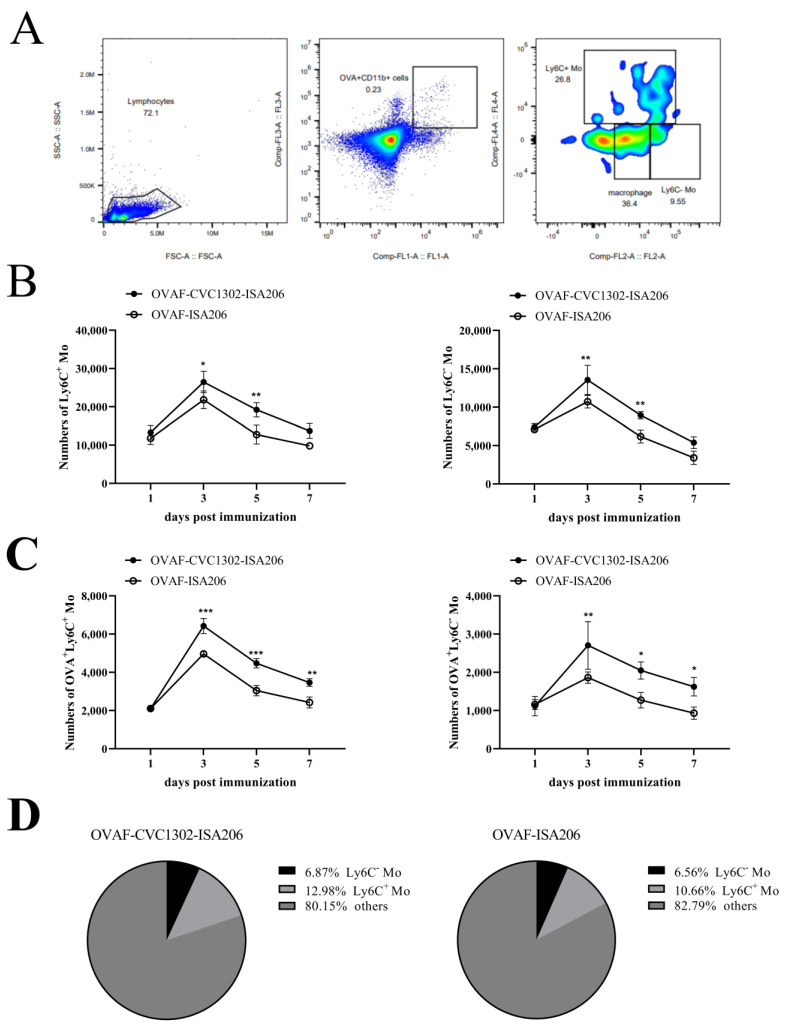 Figure 1
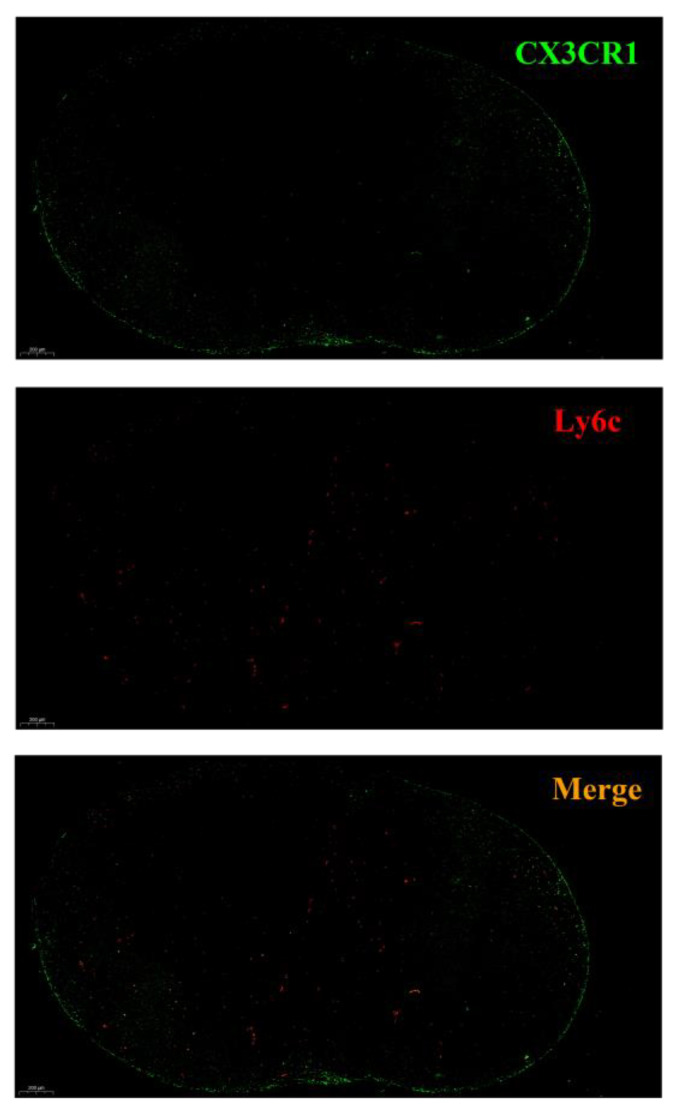 Figure 2
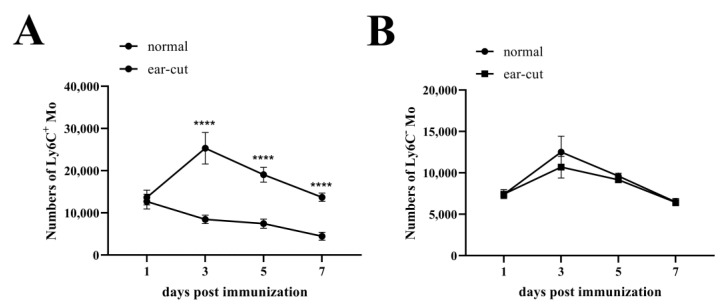 Figure 3
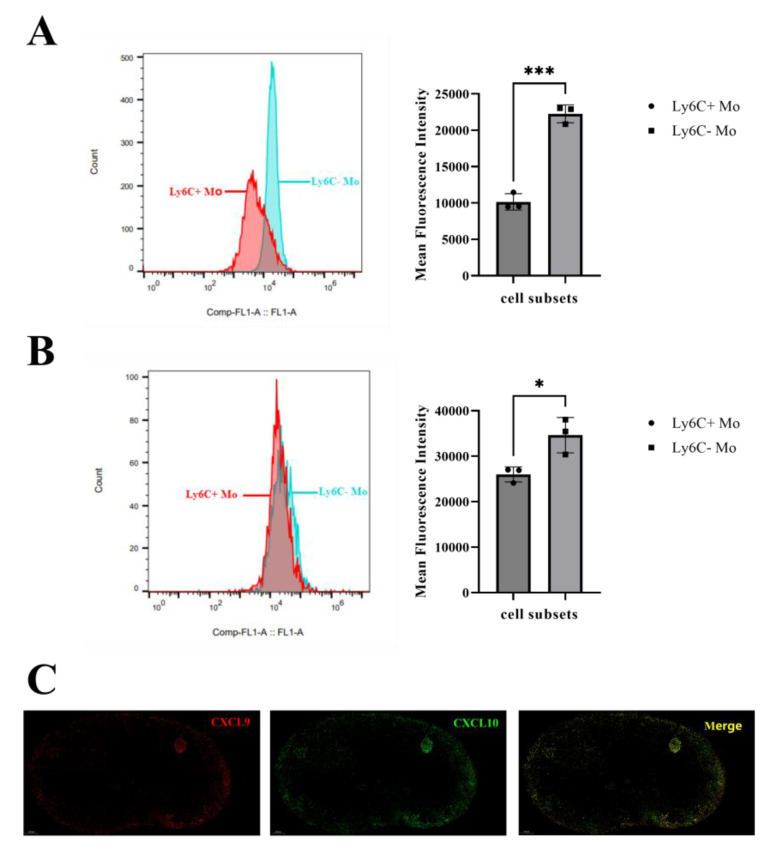 Figure 4
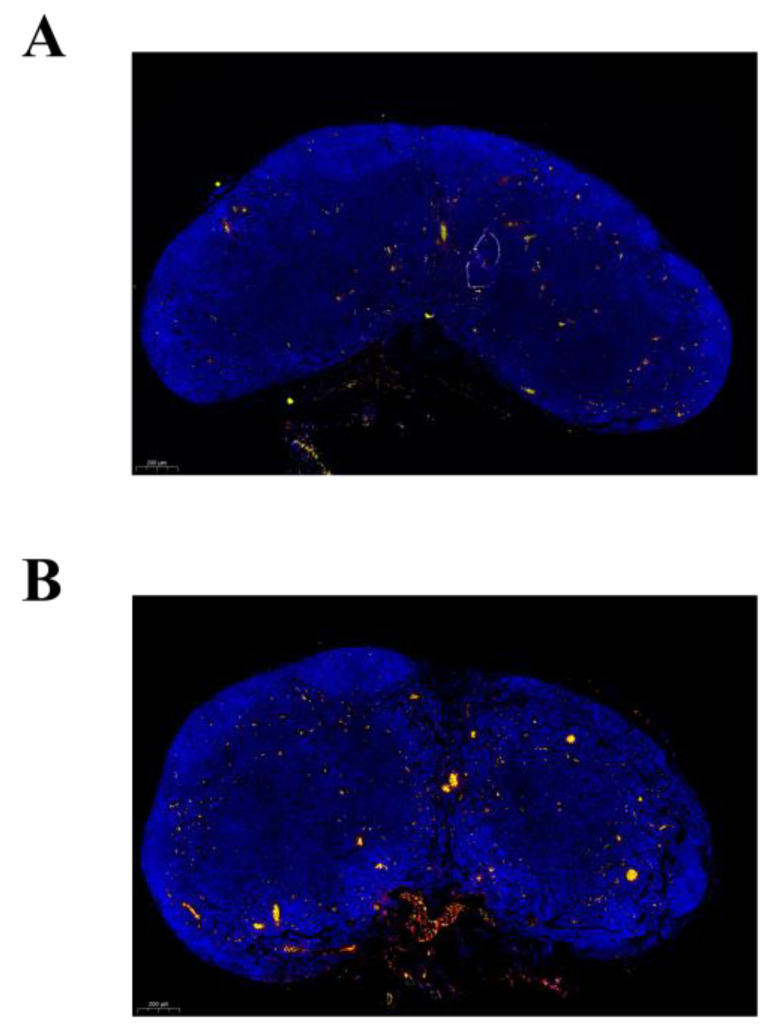 Figure 5
Peer Reviews
No public reviews on file for this paper yet. If you reviewed it on a platform where reviews are public (OpenReview, ICLR, NeurIPS, ICML), you can paste yours below so the community can read it here.
Videos
No videos yet. Explain this paper in a talk, walkthrough, or lecture? Add one.
Taxonomy
TopicsImmune cells in cancer · Immune Cell Function and Interaction · Phagocytosis and Immune Regulation