Biochemical, Biophysical, and Structural Analysis of an Unusual DyP from the Extremophile Deinococcus radiodurans
Kelly Frade, Célia M. Silveira, Bruno A. Salgueiro, Sónia Mendes, Lígia O. Martins, Carlos Frazão, Smilja Todorovic, Elin Moe

TL;DR
This paper studies a unique peroxidase enzyme from a radiation-resistant bacterium and explores its structural and biochemical properties.
Contribution
The study reveals structural insights into DrDyP's heme coordination and the role of a conserved Methionine residue in its pH-dependent activity.
Findings
DrDyP is inactive at physiological pH due to a six-coordinated-low-spin heme state.
Substituting Methionine with Glycine does not restore activity at high pH.
Crystal structures suggest a hydroxyl group and water molecule may block H2O2 binding.
Abstract
Dye-decolorizing peroxidases (DyPs) are heme proteins with distinct structural properties and substrate specificities compared to classical peroxidases. Here, we demonstrate that DyP from the extremely radiation-resistant bacterium Deinococcus radiodurans is, like some other homologues, inactive at physiological pH. Resonance Raman (RR) spectroscopy confirms that the heme is in a six-coordinated-low-spin (6cLS) state at pH 7.5 and is thus unable to bind hydrogen peroxide. At pH 4.0, the RR spectra of the enzyme reveal the co-existence of high-spin and low-spin heme states, which corroborates catalytic activity towards H2O2 detected at lower pH. A sequence alignment with other DyPs reveals that DrDyP possesses a Methionine residue in position five in the highly conserved GXXDG motif. To analyze whether the presence of the Methionine is responsible for the lack of activity at high pH,…
Genes, proteins, chemicals, diseases, species, mutations and cell lines named across the full text — each resolved to its canonical identifier and authoritative record.
Click any figure to enlarge with its caption.
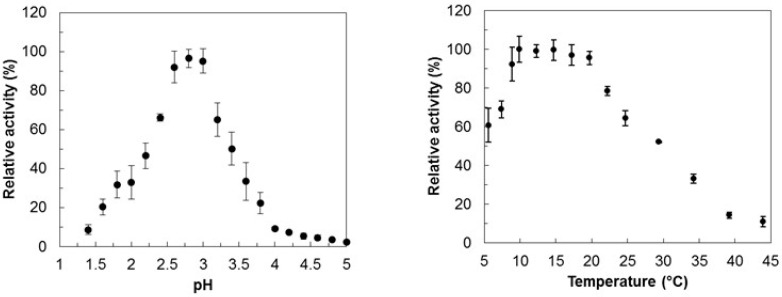 Figure 1
 Figure 2
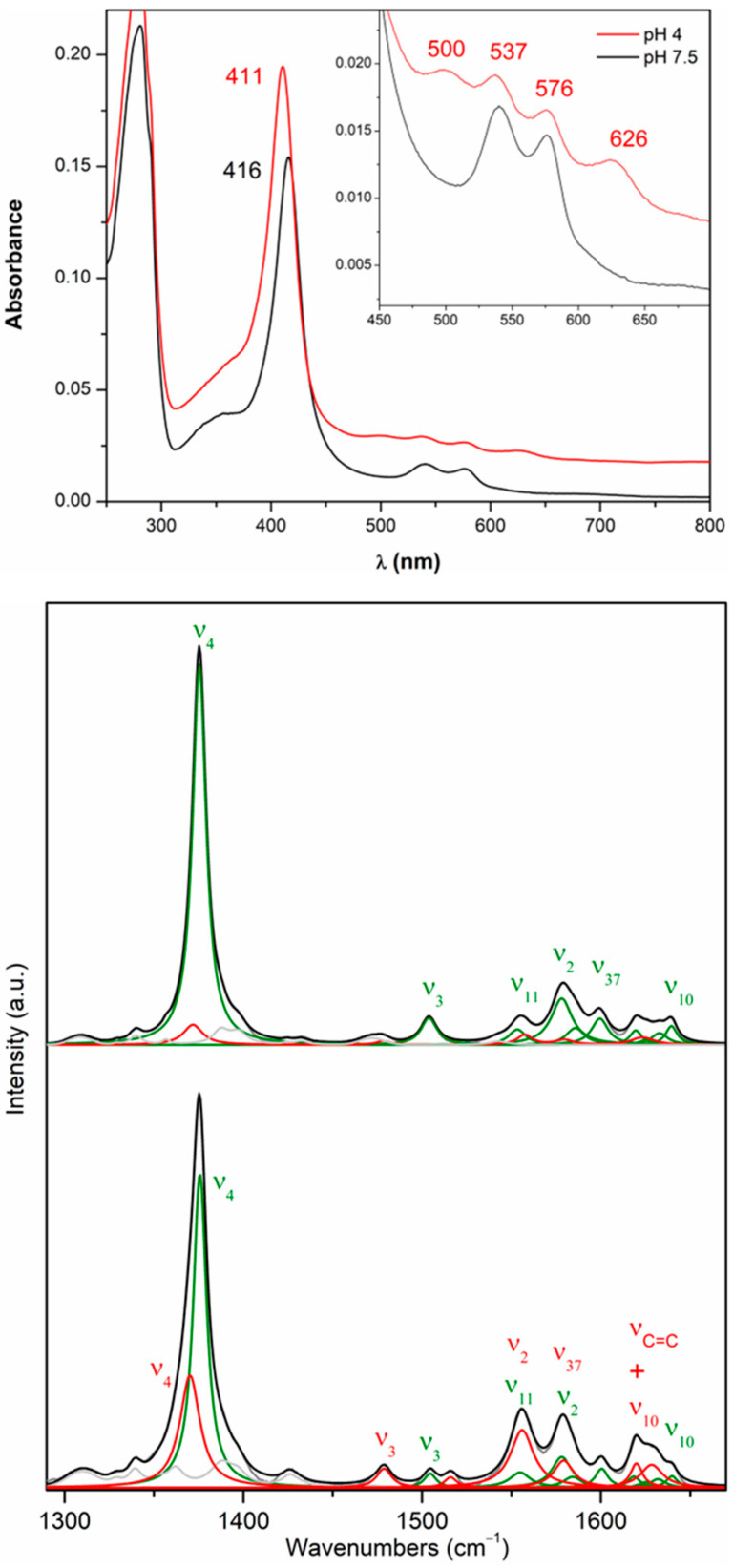 Figure 3
 Figure 4
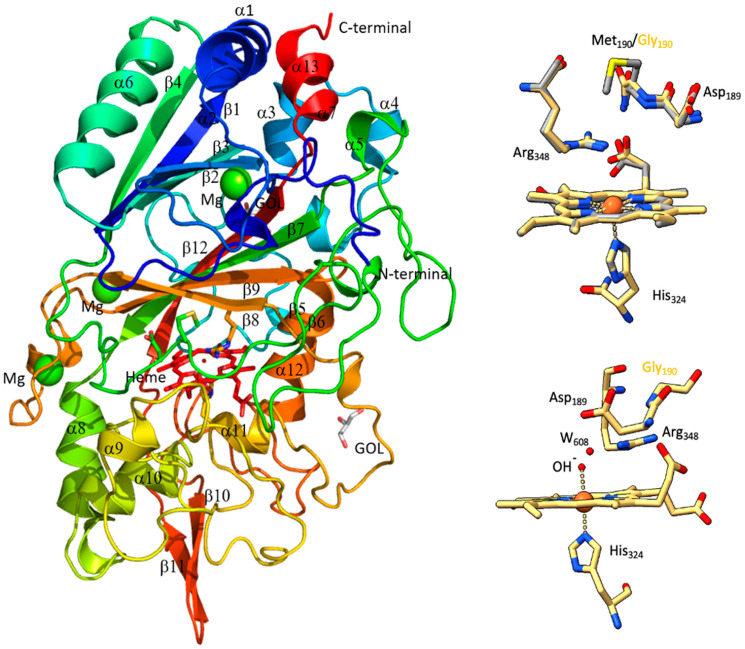 Figure 5
Peer Reviews
No public reviews on file for this paper yet. If you reviewed it on a platform where reviews are public (OpenReview, ICLR, NeurIPS, ICML), you can paste yours below so the community can read it here.
Videos
No videos yet. Explain this paper in a talk, walkthrough, or lecture? Add one.
Taxonomy
TopicsPorphyrin Metabolism and Disorders · Enzyme-mediated dye degradation · Amino Acid Enzymes and Metabolism