Dissolution of Metals (Cu, Fe, Pb, and Zn) from Different Metal-Bearing Species (Sulfides, Oxides, and Sulfates) Using Three Deep Eutectic Solvents Based on Choline Chloride
Carlos F. Aragón-Tobar, Diana Endara, Ernesto de la Torre

TL;DR
This paper explores using deep eutectic solvents to dissolve metals from different mineral forms, finding that sulfates dissolve much more effectively than oxides or sulfides.
Contribution
The study introduces three choline chloride-based deep eutectic solvents for metal dissolution from primary sources, highlighting their effectiveness on sulfates.
Findings
Metal dissolution from sulfates was two orders of magnitude higher than from oxides or sulfides.
Three DESs (reline, ethaline, glyceline) were tested for dissolving Cu, Fe, Pb, and Zn from various compounds.
Dissolution efficiency was strongly influenced by the metal-bearing species type.
Abstract
Nowadays, deep eutectic solvents (DESs) are seen as environmentally friendly alternatives with the potential to replace traditional solvents used in hydrometallurgical processes. Although DESs have been successfully applied in the recovery of metals from secondary sources, there is still innovative potential regarding DESs as green leaching agents applied in the recovery of metals from primary sources like polysulfide ores. This study aimed to evaluate the characteristics of DESs as solvents for some of the main metals present in typical polymetallic concentrates, like Cu, Fe, Pb, and Zn. Thus, three DESs based on choline chloride (ChCl) were prepared: 1:2 ChCl-urea (also known as reline), 1:2 ChCl-ethylene glycol (also known as ethaline), and 1:2 ChCl-glycerol (also known as glyceline). Then, dissolution tests at 30 °C were carried out with these DESs and different metal- (Cu, Fe, Pb,…
Genes, proteins, chemicals, diseases, species, mutations and cell lines named across the full text — each resolved to its canonical identifier and authoritative record.
Click any figure to enlarge with its caption.
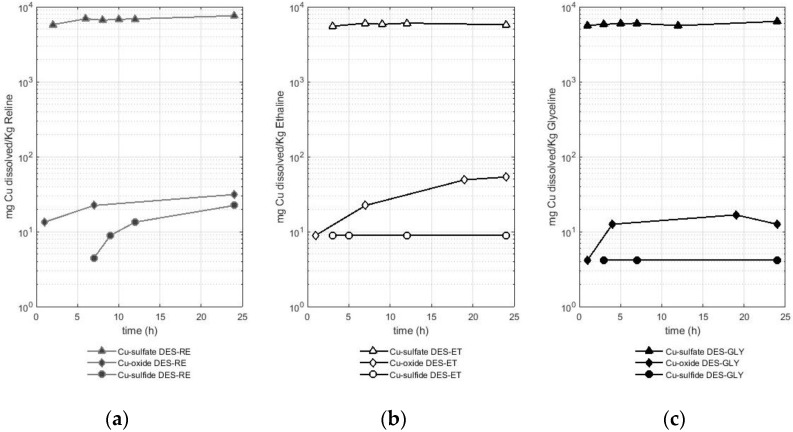 Figure 1
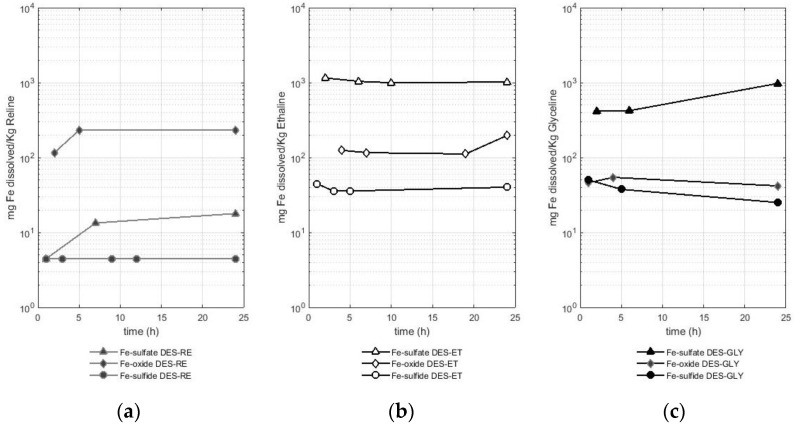 Figure 2
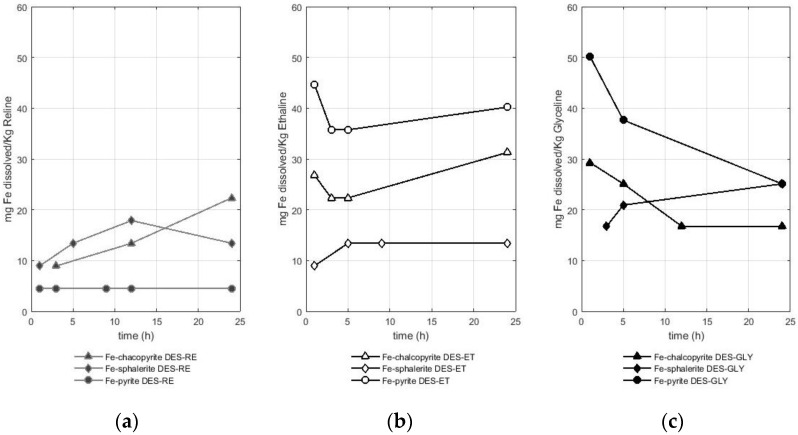 Figure 3
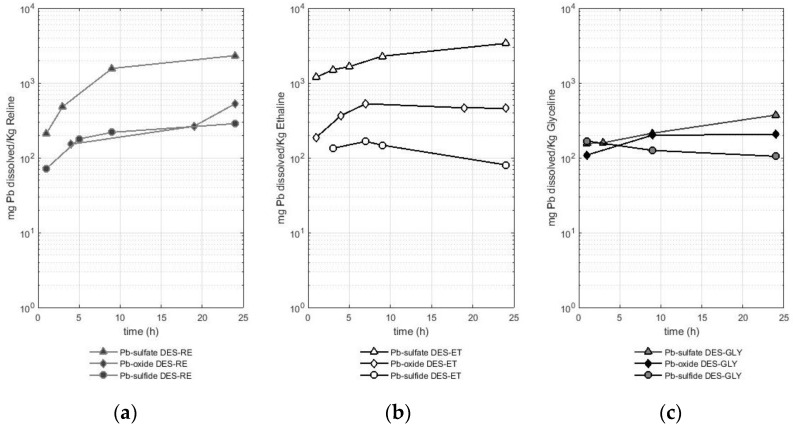 Figure 4
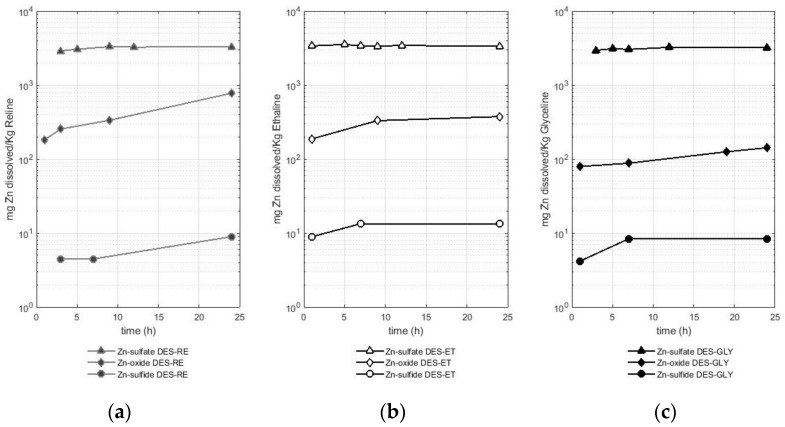 Figure 5
Peer Reviews
No public reviews on file for this paper yet. If you reviewed it on a platform where reviews are public (OpenReview, ICLR, NeurIPS, ICML), you can paste yours below so the community can read it here.
Videos
No videos yet. Explain this paper in a talk, walkthrough, or lecture? Add one.
Taxonomy
TopicsExtraction and Separation Processes · Ionic liquids properties and applications · Metal Extraction and Bioleaching