Integrated internal ion-gated organic electrochemical transistors for stand-alone conformable bioelectronics
Claudia Cea, Zifang Zhao, Duncan J. Wisniewski, George D. Spyropoulos, Anastasios Polyravas, Jennifer N. Gelinas, Dion Khodagholy

TL;DR
Researchers developed a fully organic, wireless, and flexible bioelectronic device that can process and transmit brain signals without relying on silicon-based technologies.
Contribution
A stand-alone, conformable, fully organic bioelectronic device with high-speed and integration capabilities is introduced.
Findings
The vIGT transistors enable megahertz-range operation in dense arrays without crosstalk.
The device demonstrated long-term stability in physiologic media and was used to create high-performance circuits.
The device was successfully implanted in rodents to acquire and transmit neurophysiologic signals wirelessly.
Abstract
Organic electronics can be biocompatible and conformable, enhancing the ability to interface with tissue. However, the limitations of speed and integration have, thus far, necessitated reliance on silicon-based technologies for advanced processing, data transmission and device powering. Here we create a stand-alone, conformable, fully organic bioelectronic device capable of realizing these functions. This device, vertical internal ion-gated organic electrochemical transistor (vIGT), is based on a transistor architecture that incorporates a vertical channel and a miniaturized hydration access conduit to enable megahertz-signal-range operation within densely packed integrated arrays in the absence of crosstalk. These transistors demonstrated long-term stability in physiologic media, and were used to generate high-performance integrated circuits. We leveraged the high-speed and low-voltage…
Genes, proteins, chemicals, diseases, species, mutations and cell lines named across the full text — each resolved to its canonical identifier and authoritative record.
Click any figure to enlarge with its caption.
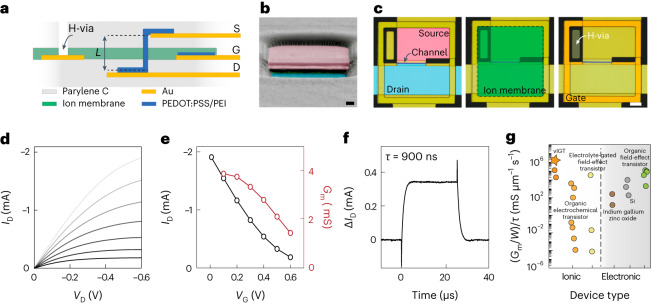 Figure 1
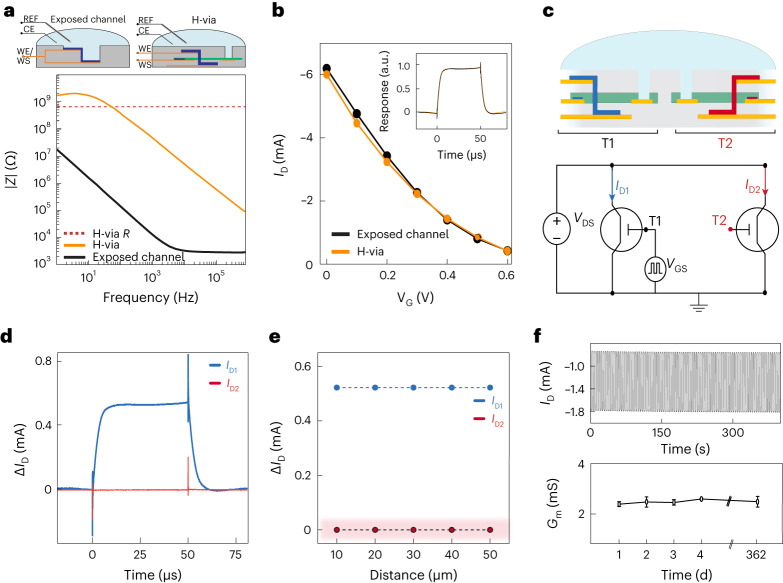 Figure 2
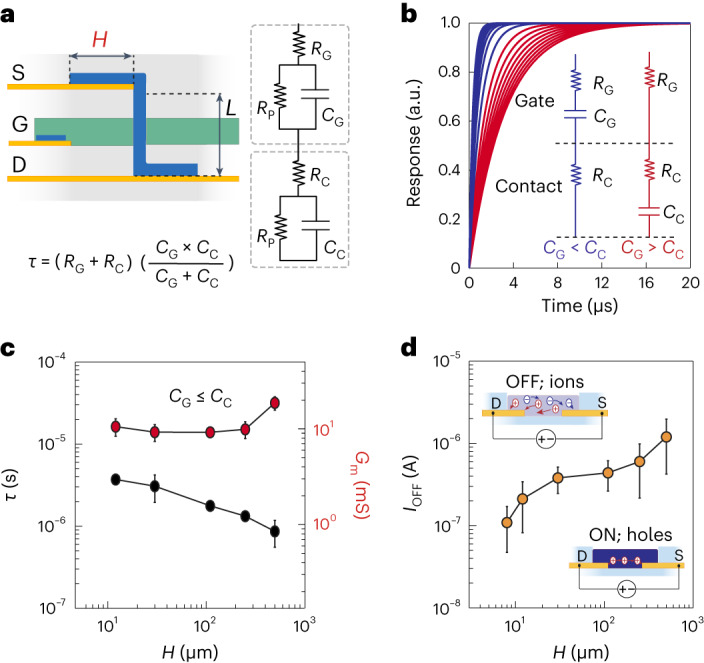 Figure 3
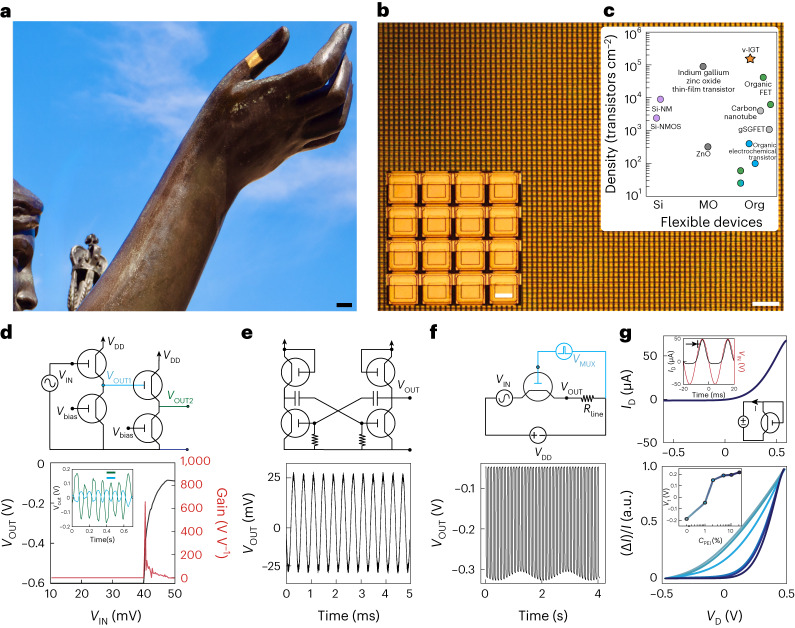 Figure 4
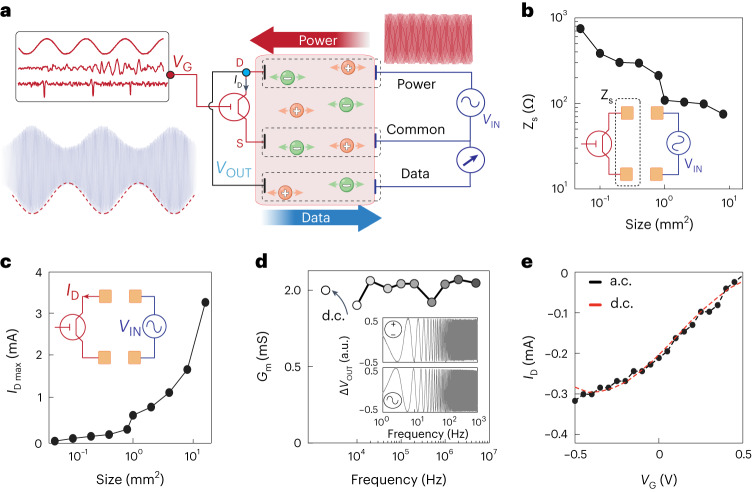 Figure 5
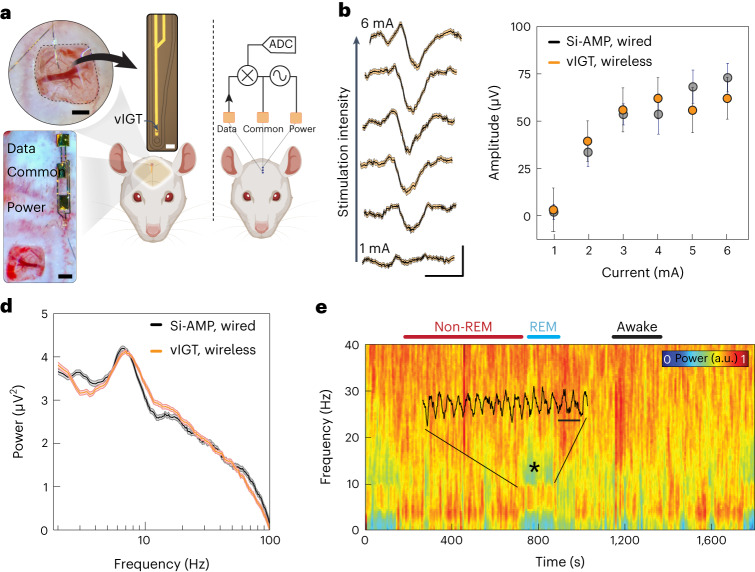 Figure 6
Peer Reviews
No public reviews on file for this paper yet. If you reviewed it on a platform where reviews are public (OpenReview, ICLR, NeurIPS, ICML), you can paste yours below so the community can read it here.
Videos
No videos yet. Explain this paper in a talk, walkthrough, or lecture? Add one.
Taxonomy
TopicsConducting polymers and applications · Neuroscience and Neural Engineering · Advanced Memory and Neural Computing