Economic Impacts of Climate Change in the United States: Integrating and Harmonizing Evidence from Recent Studies
Elizabeth Kopits, Daniel Kraynak, Bryan Parthum, Lisa Rennels, David Smith, Elizabeth Spink, Joseph Perla, and Nshan Burns

TL;DR
This paper synthesizes U.S.-focused climate change impact studies, harmonizing economic and climate data to refine estimates of future GDP losses and social costs of greenhouse gases, emphasizing the need for integrated research on market and nonmarket damages.
Contribution
It develops an apples-to-apples comparison of econometric studies and integrates nonmarket damages to refine estimates of climate change impacts and social costs in the U.S.
Findings
Harmonized models project narrower, lower GDP loss ranges by 2100.
Implied social cost of greenhouse gases exceeds current market-based estimates.
Integration of nonmarket damages increases the estimated social cost of GHGs.
Abstract
This paper synthesizes evidence on climate change impacts specific to U.S. populations. We develop an apples-to-apples comparison of econometric studies that empirically estimate the relationship between climate change and gross domestic product (GDP). We demonstrate that with harmonized probabilistic socioeconomic and climate inputs these papers project a narrower and lower range of 2100 GDP losses than what is reported across the published studies, yet the implied U.S.-specific social cost of greenhouse gases (SC-GHG) is still greater than the market-based damage estimates in current enumerative models. We then integrate evidence on nonmarket damages with the GDP impacts and recover a jointly-estimated SC-GHG. Our findings highlight the need for more research on both market and nonmarket climate impacts, including interaction and international spillover impacts. Further investigation…
Click any figure to enlarge with its caption.
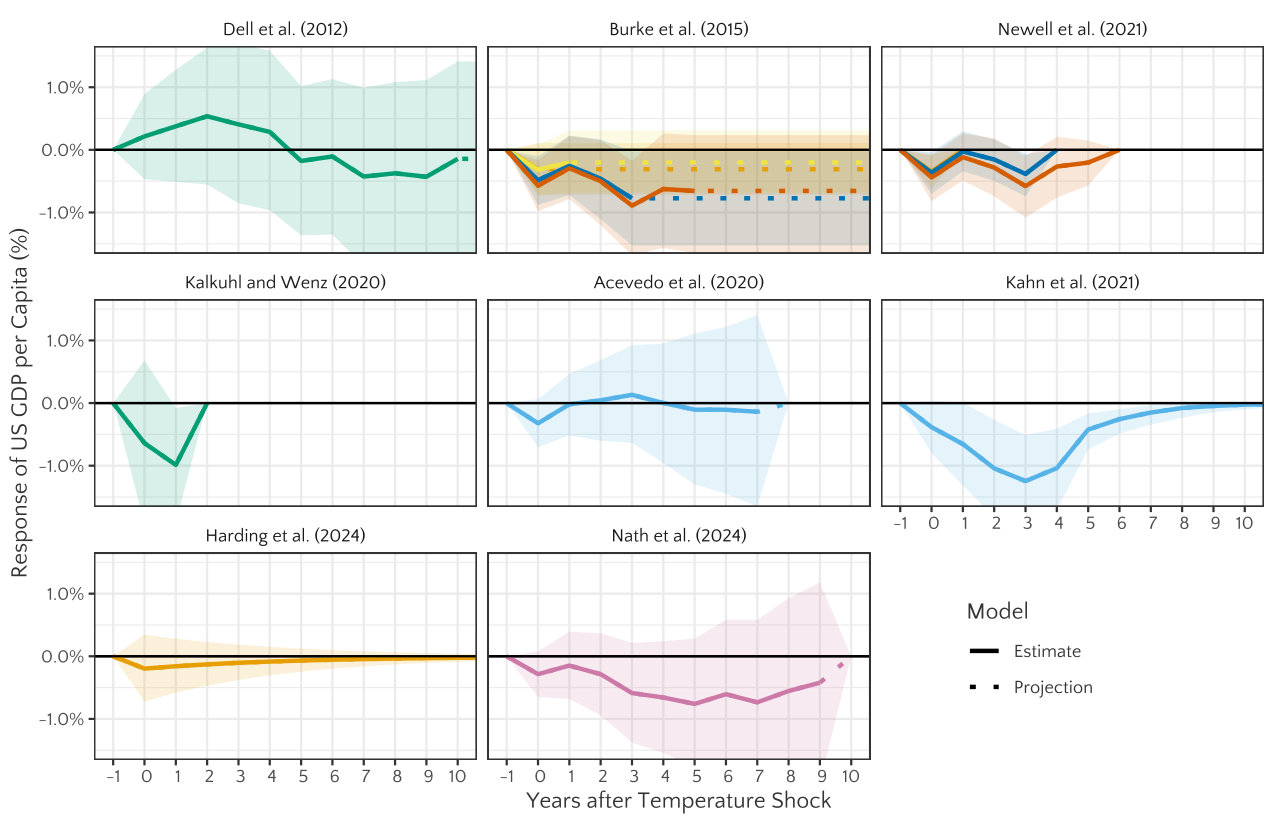 Figure 1
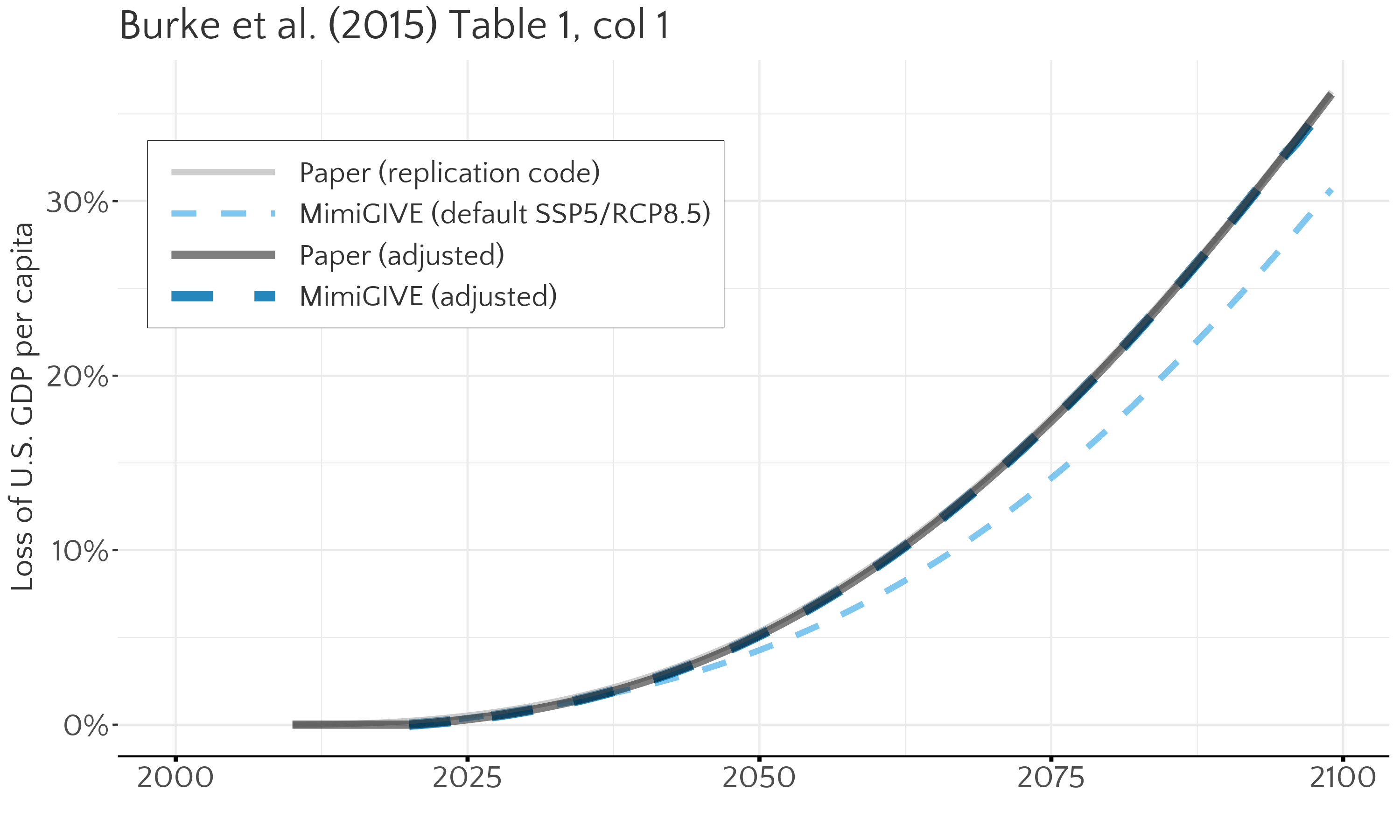 Figure 2
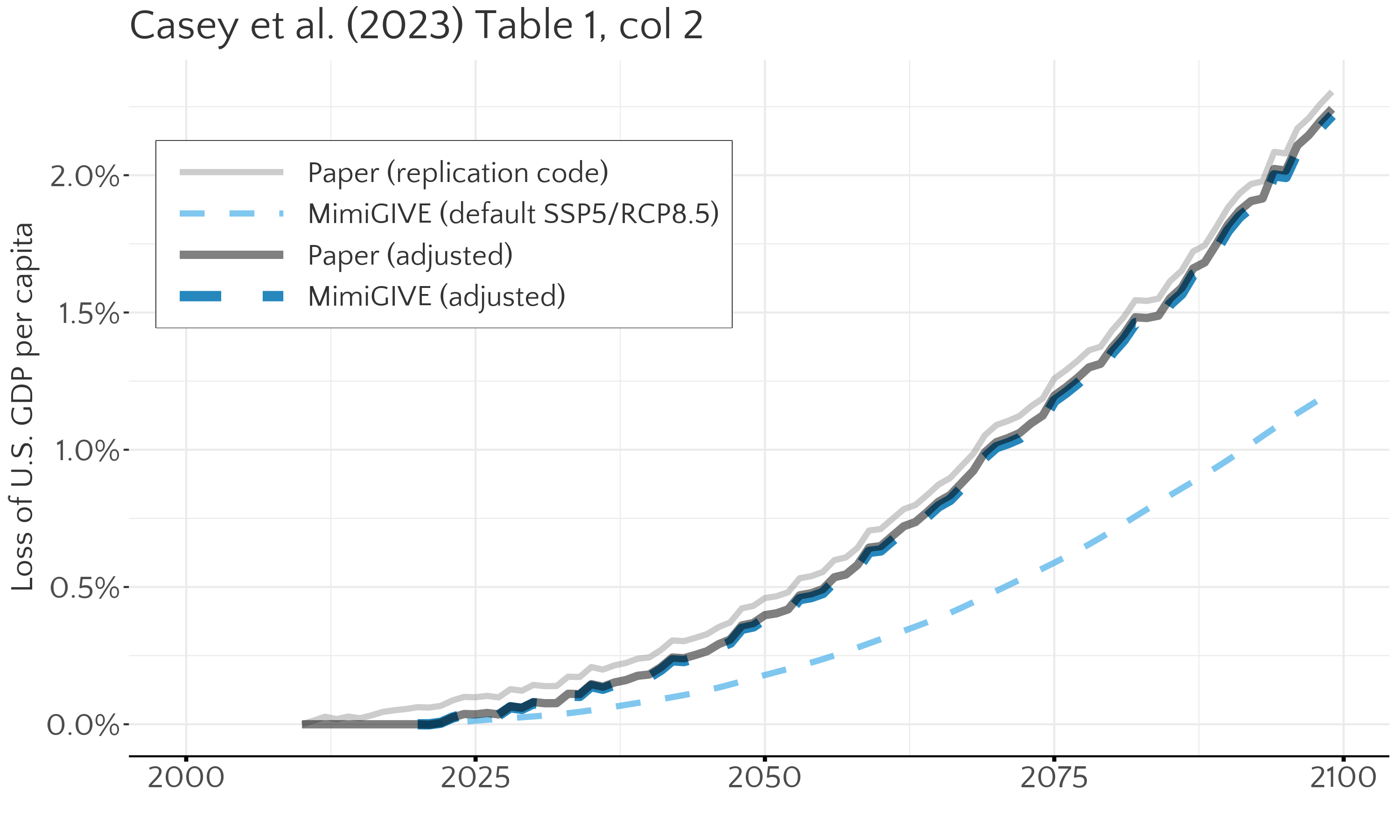 Figure 3
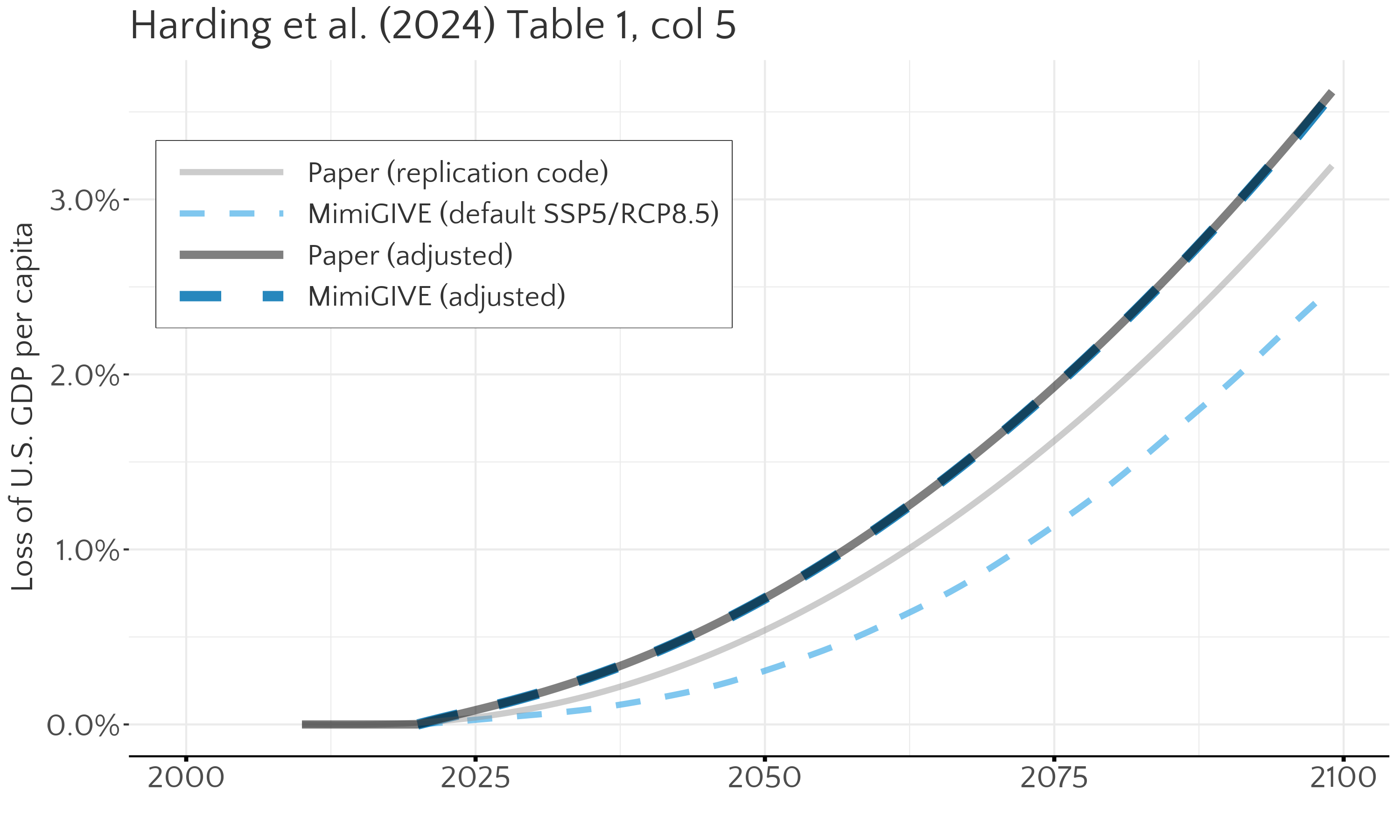 Figure 4
 Figure 5
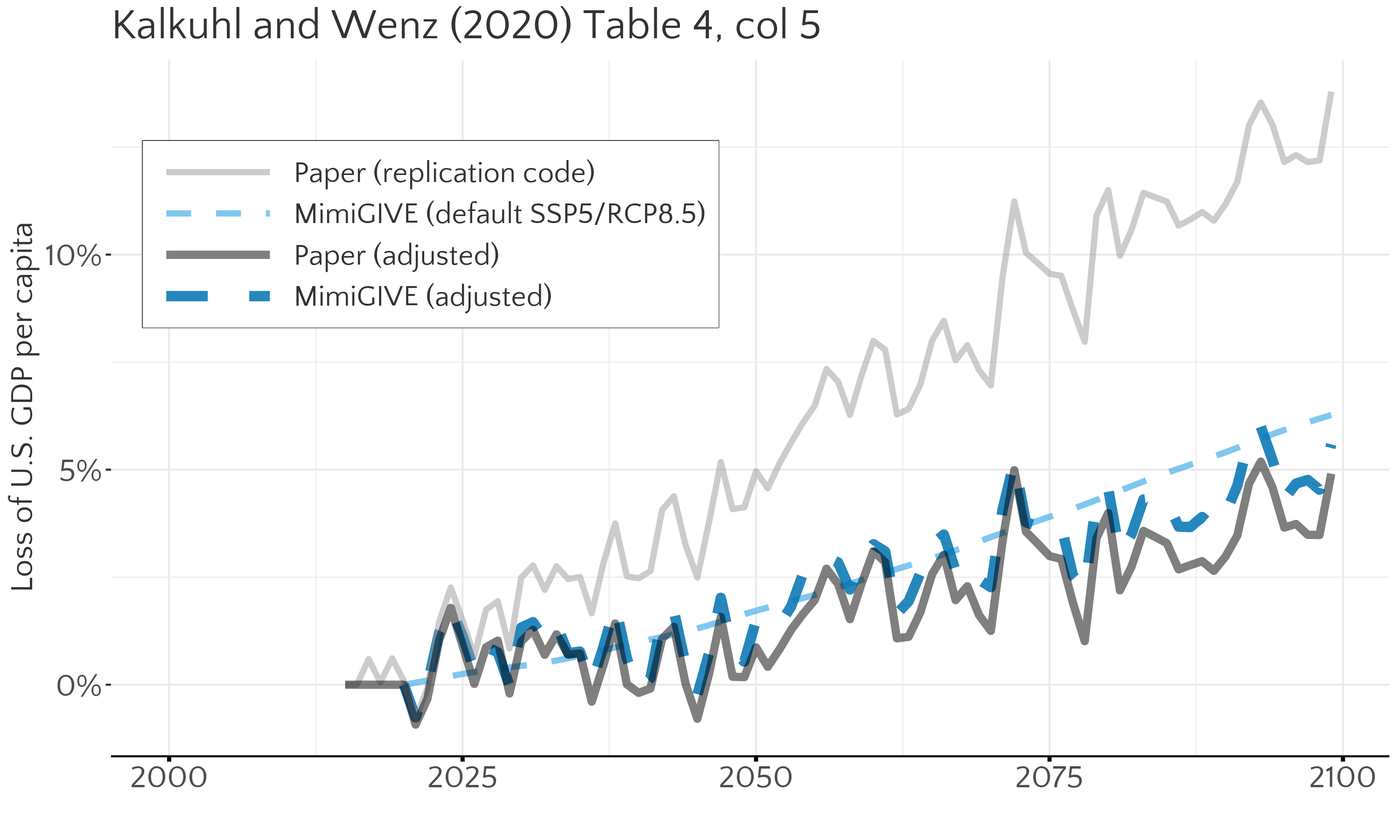 Figure 6
 Figure 6
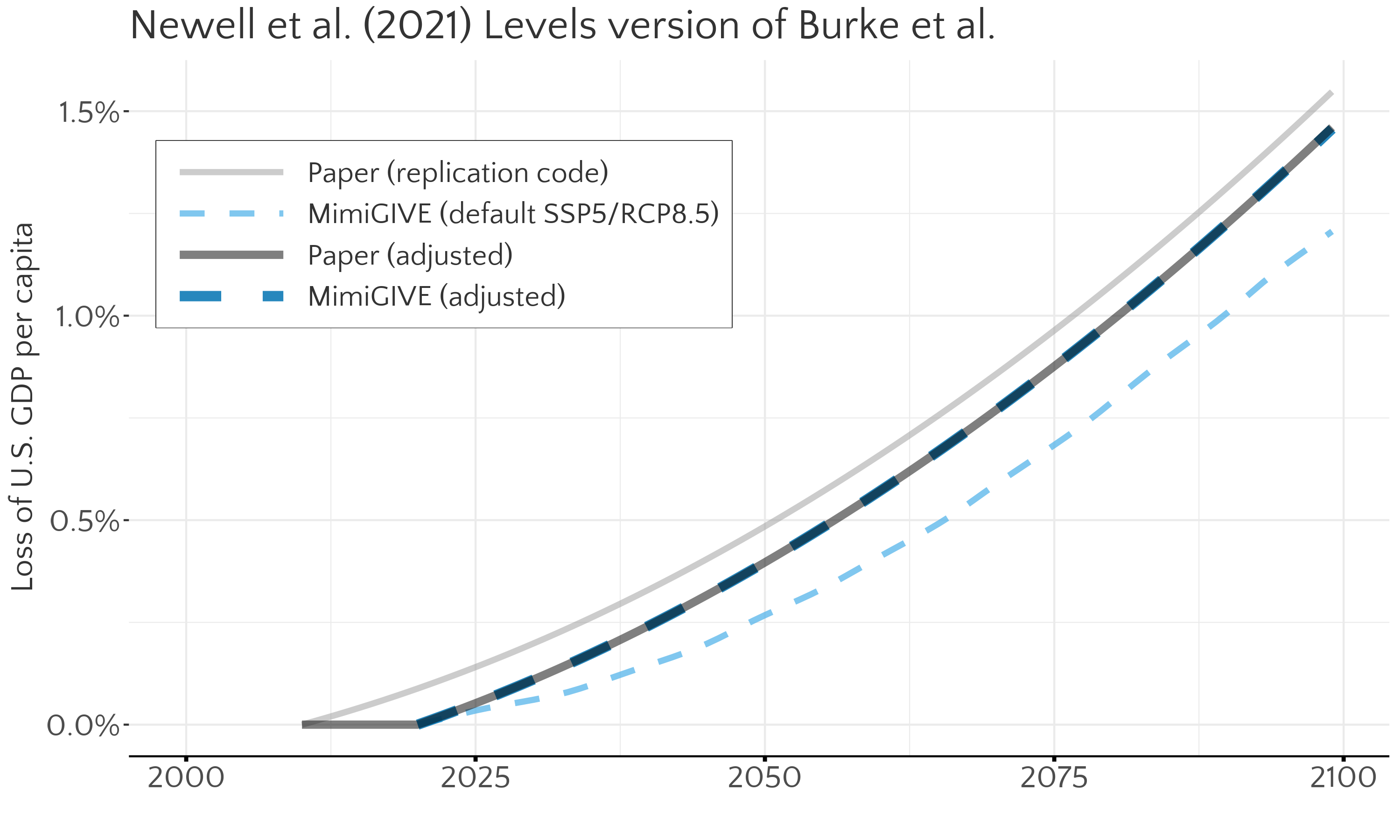 Figure 8
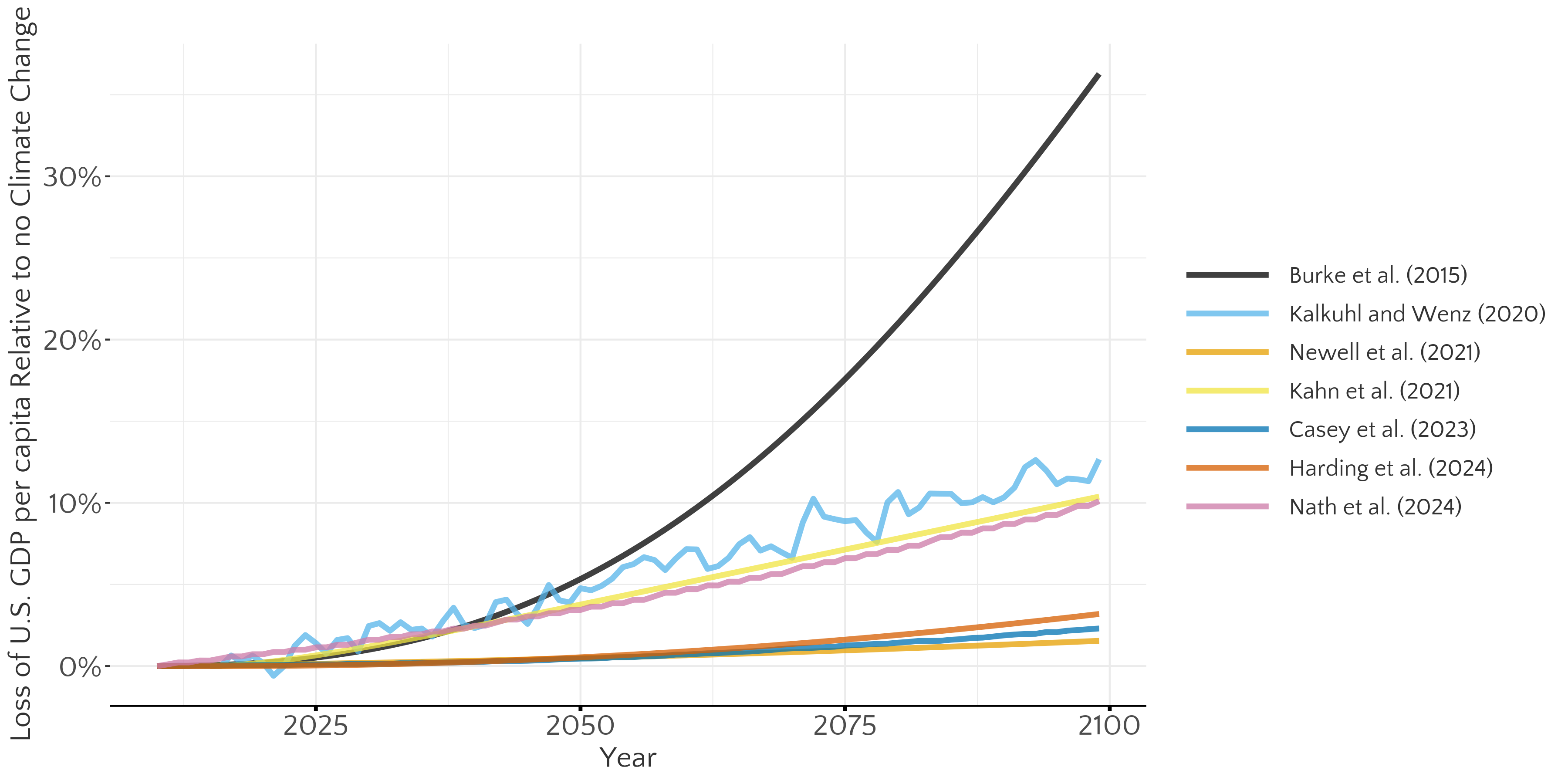 Figure 9
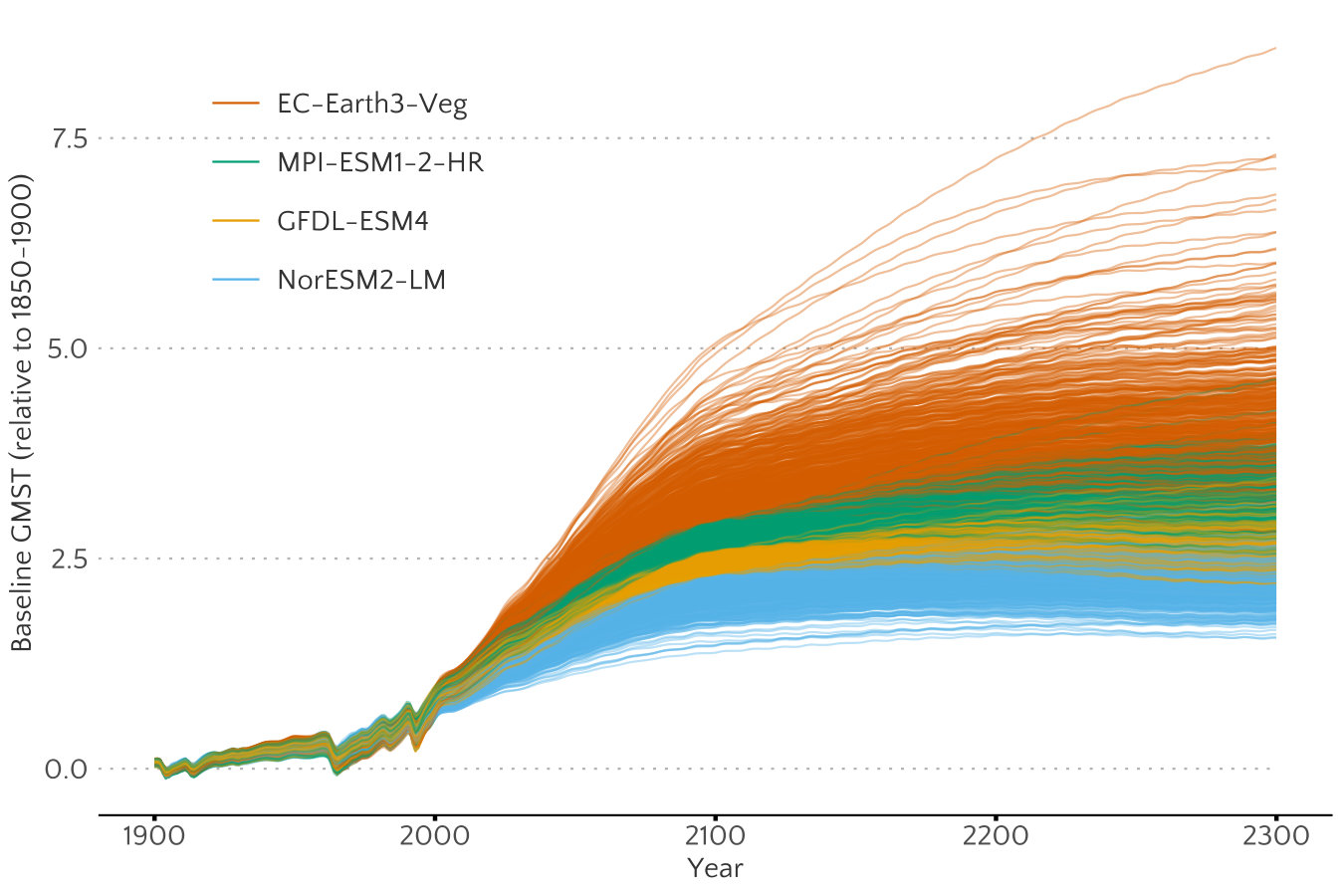 Figure 10
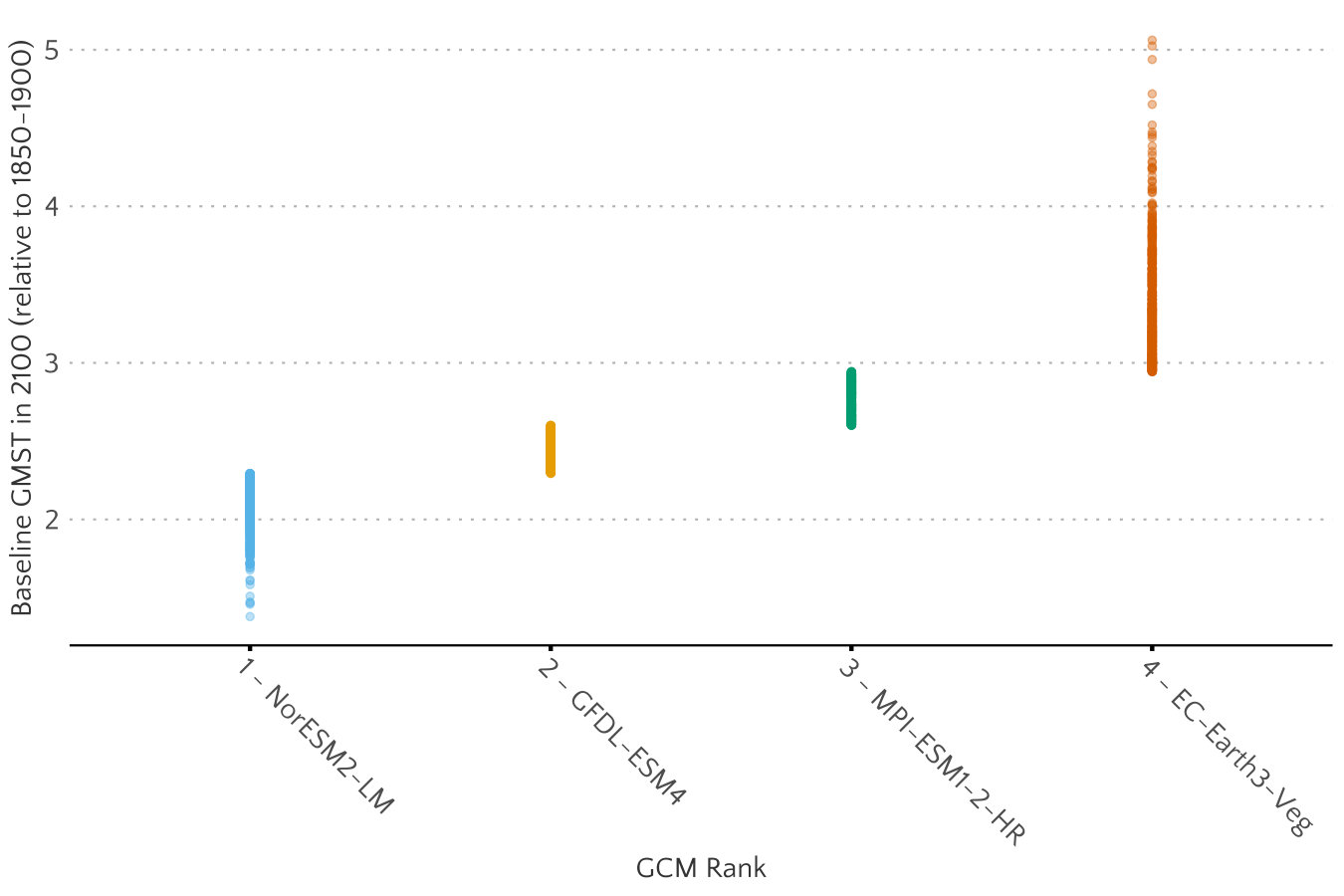 Figure 11
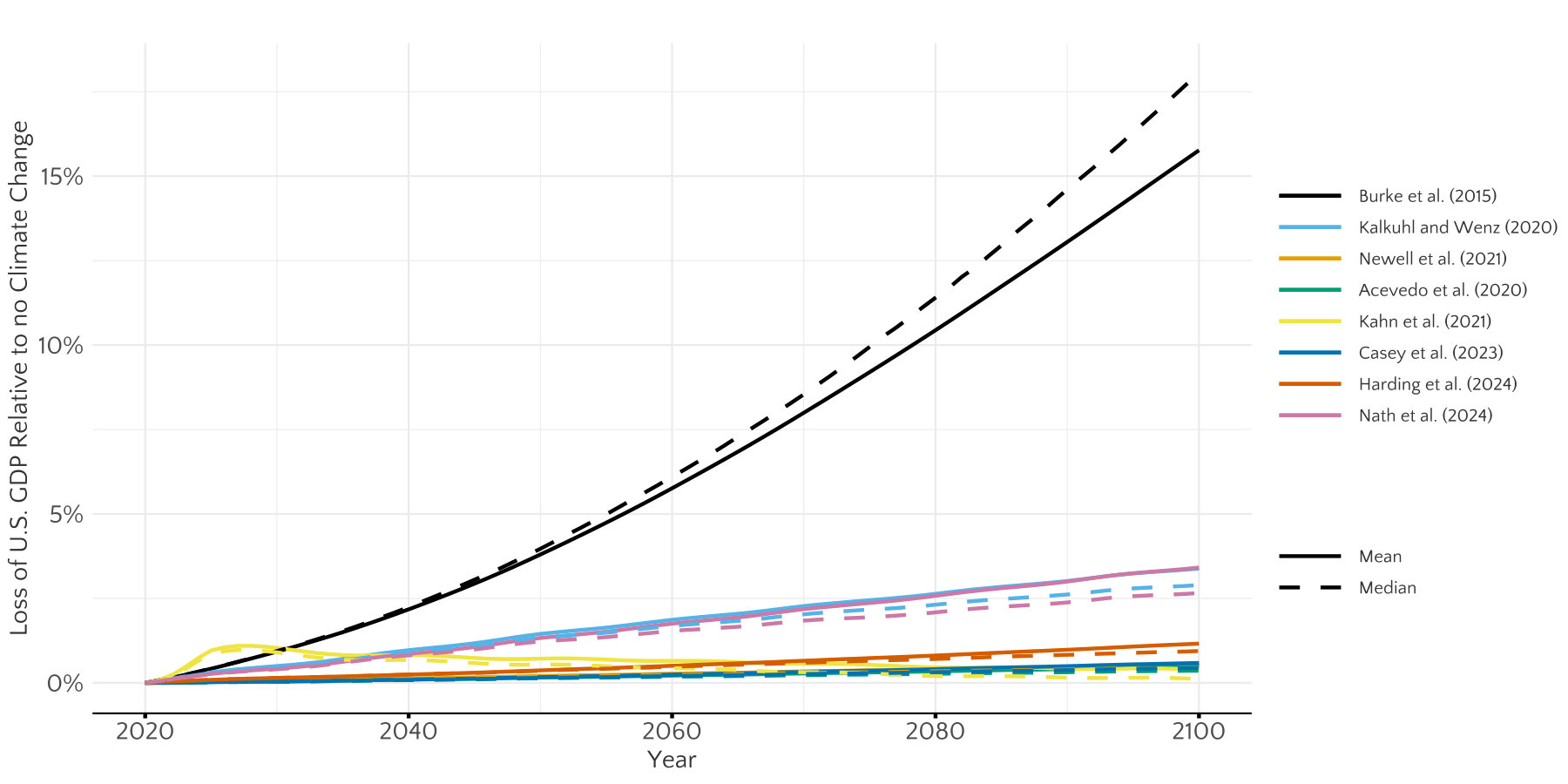 Figure 12
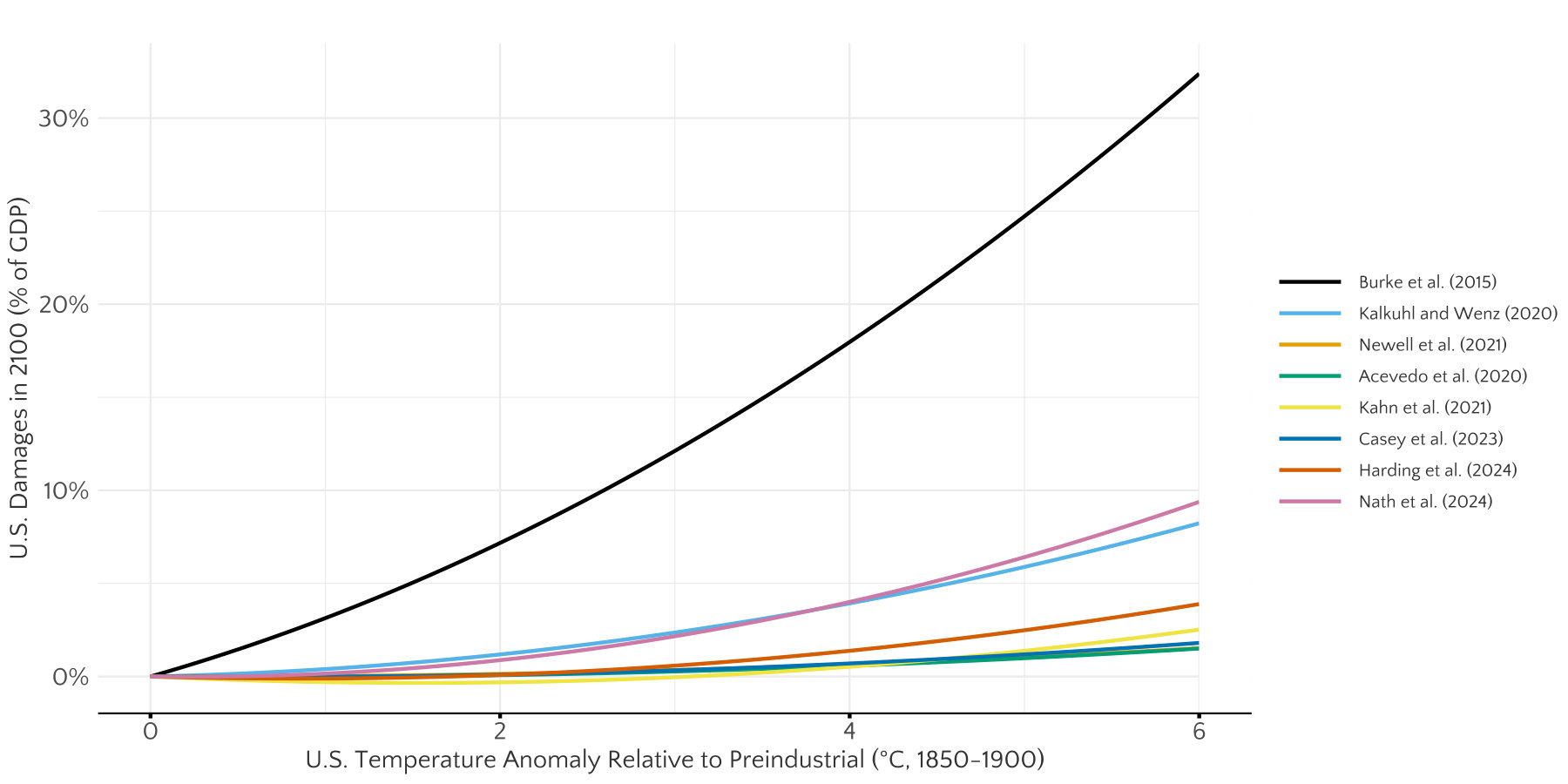 Figure 13
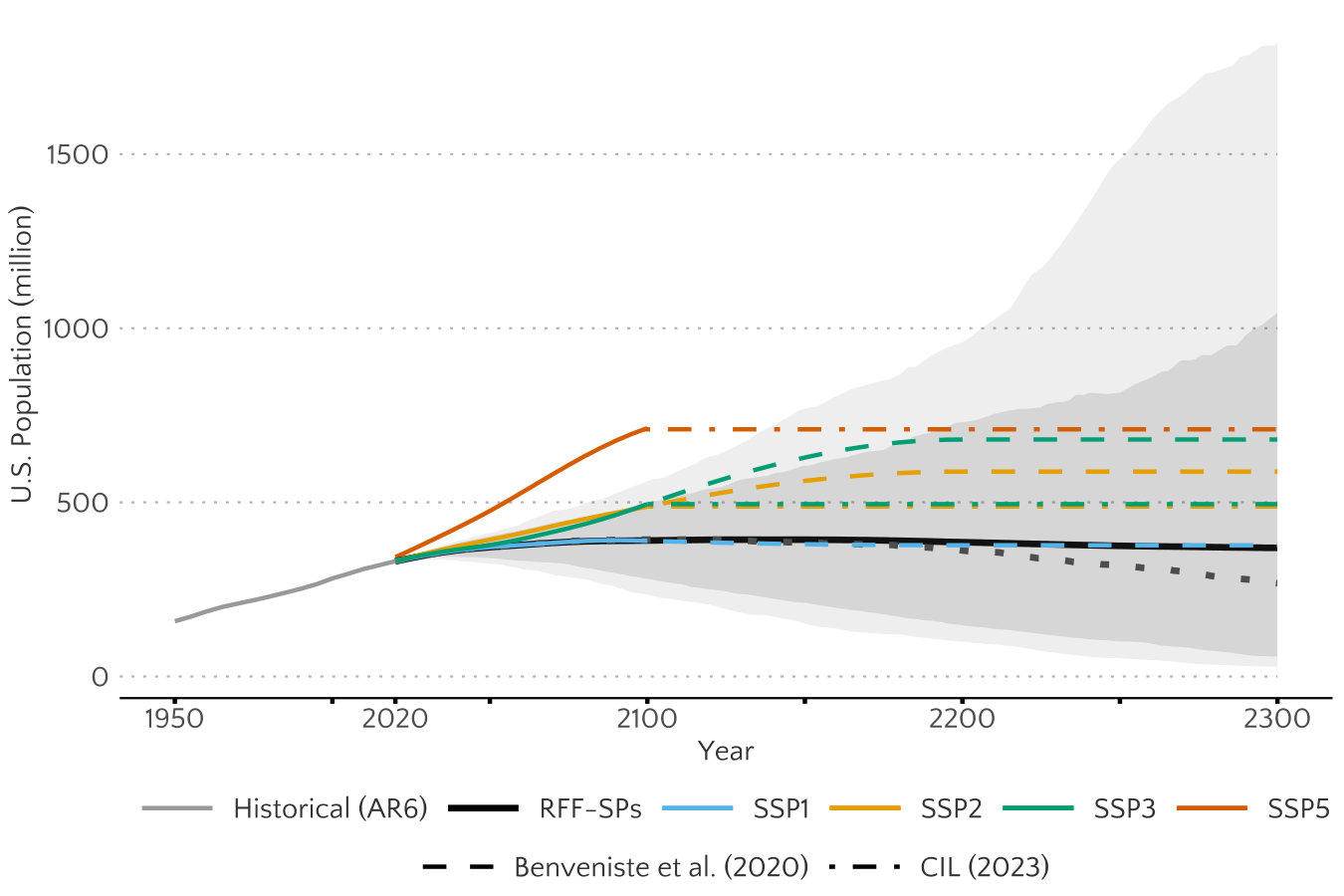 Figure 14
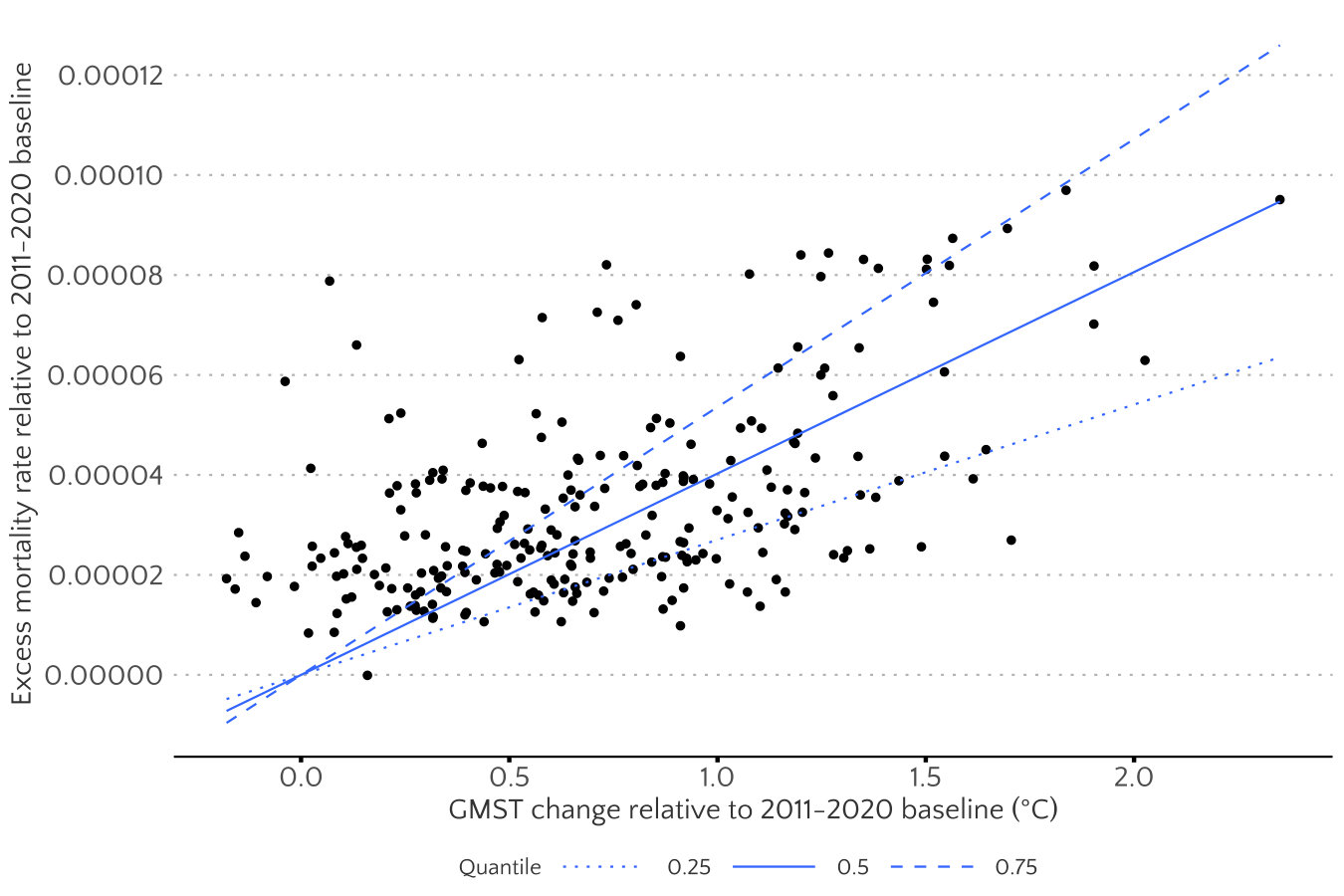 Figure 15
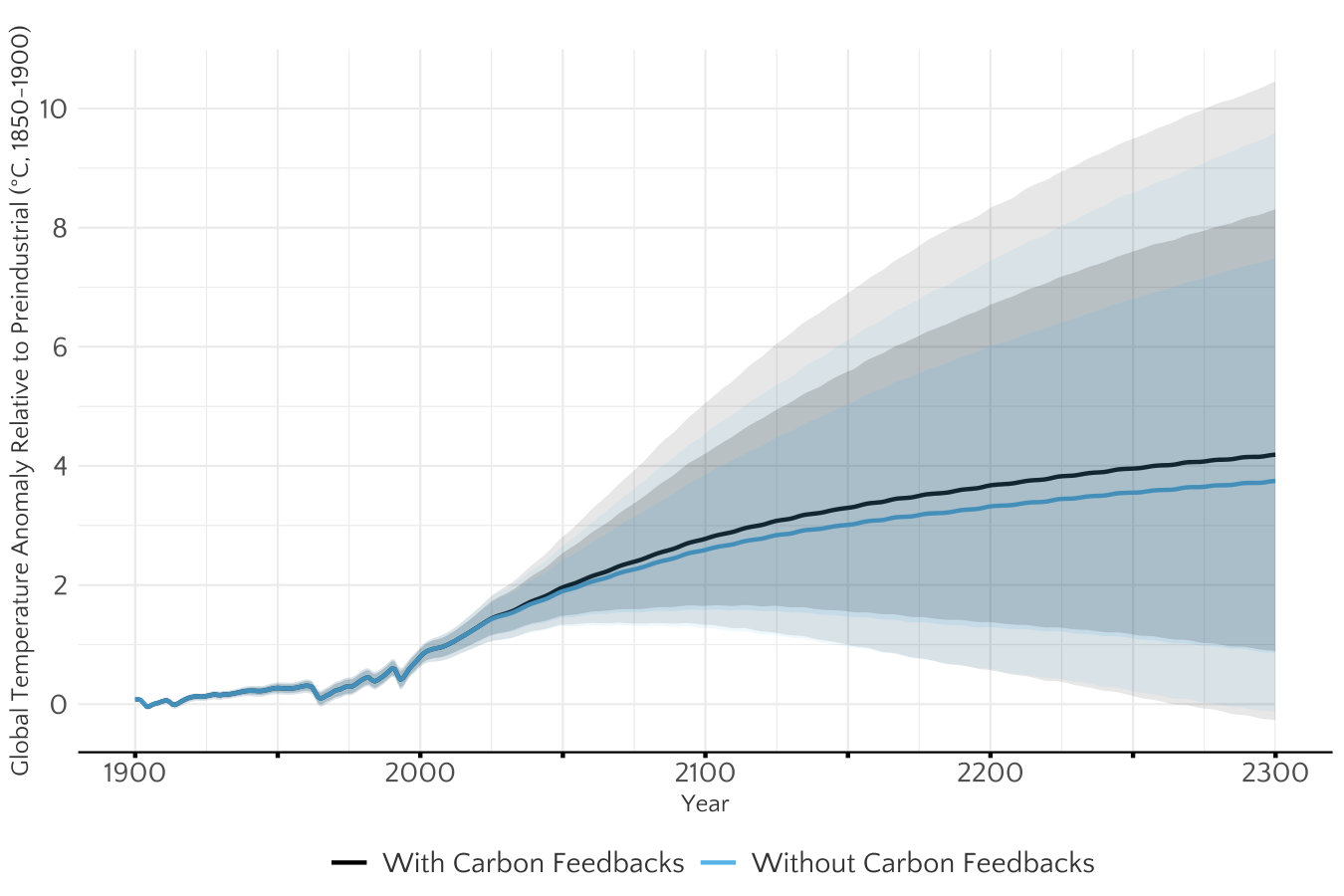 Figure 16
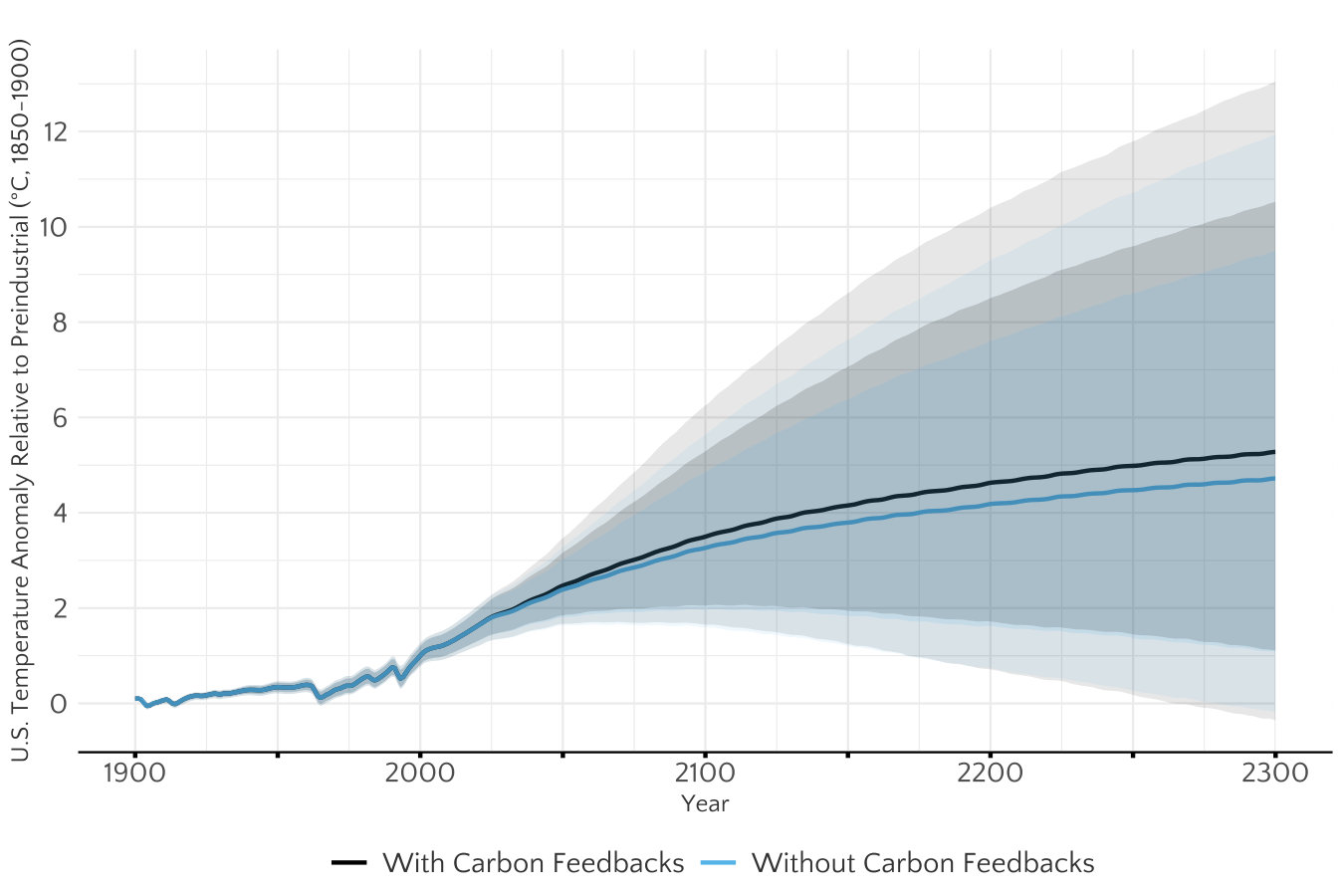 Figure 17
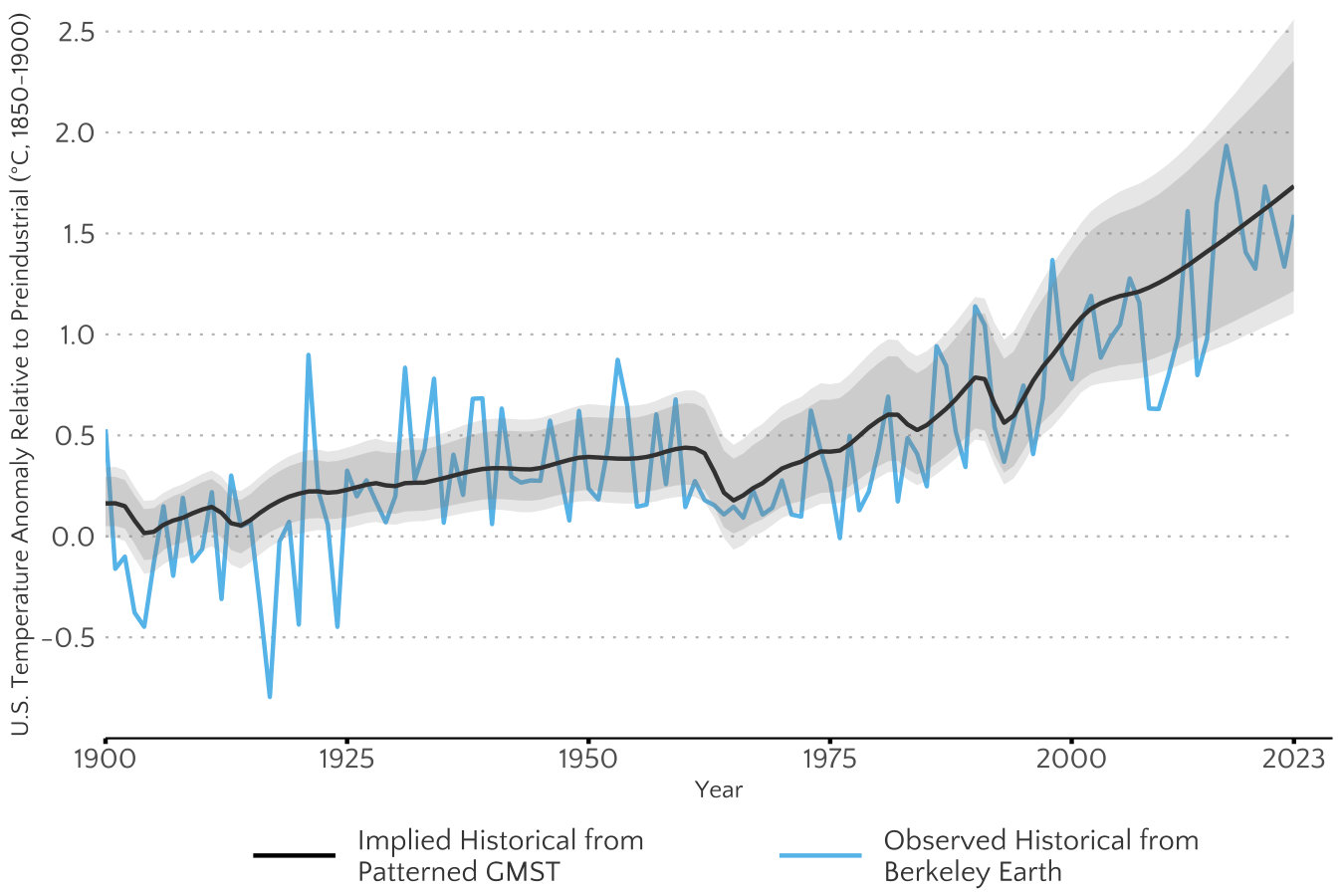 Figure 18
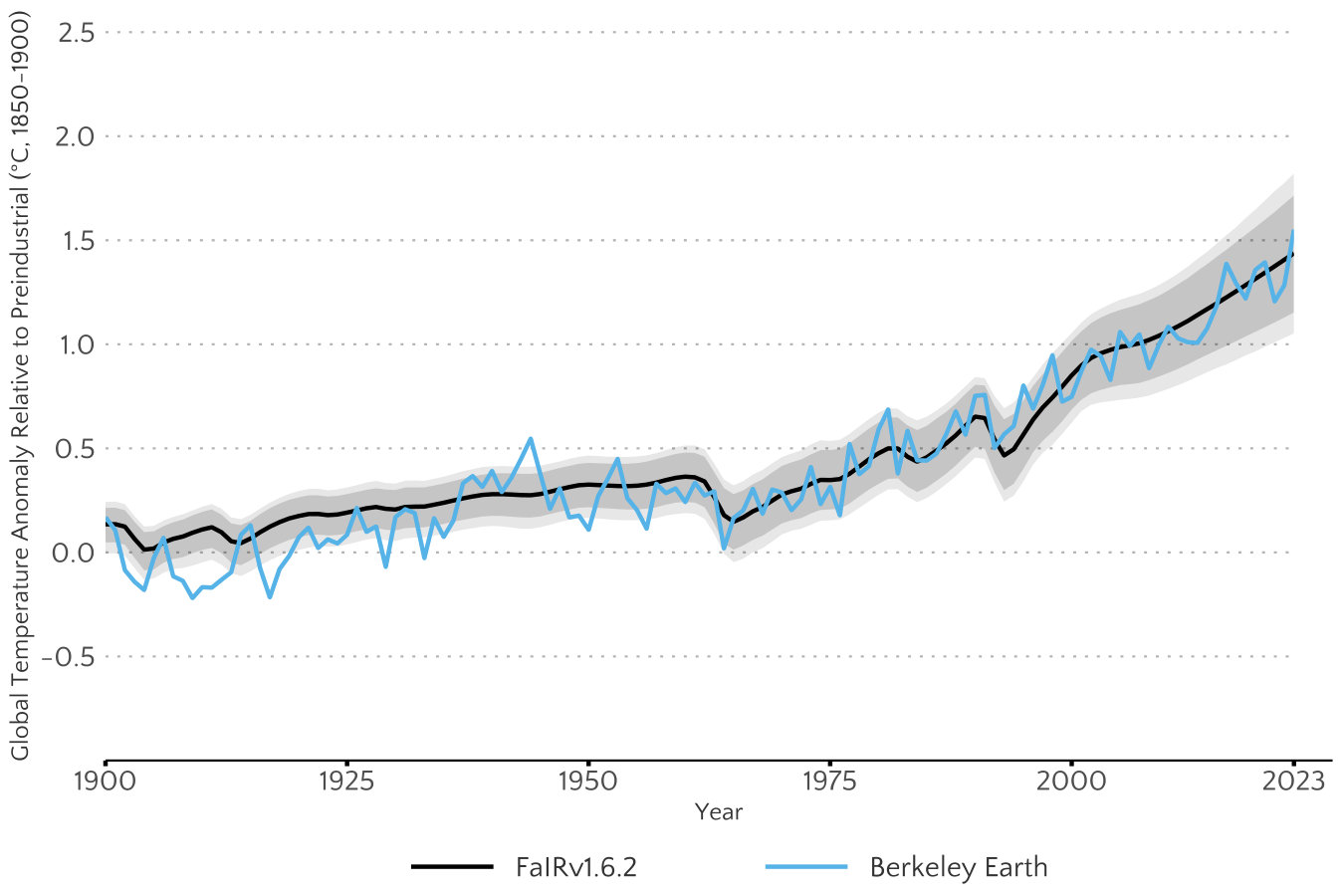 Figure 19
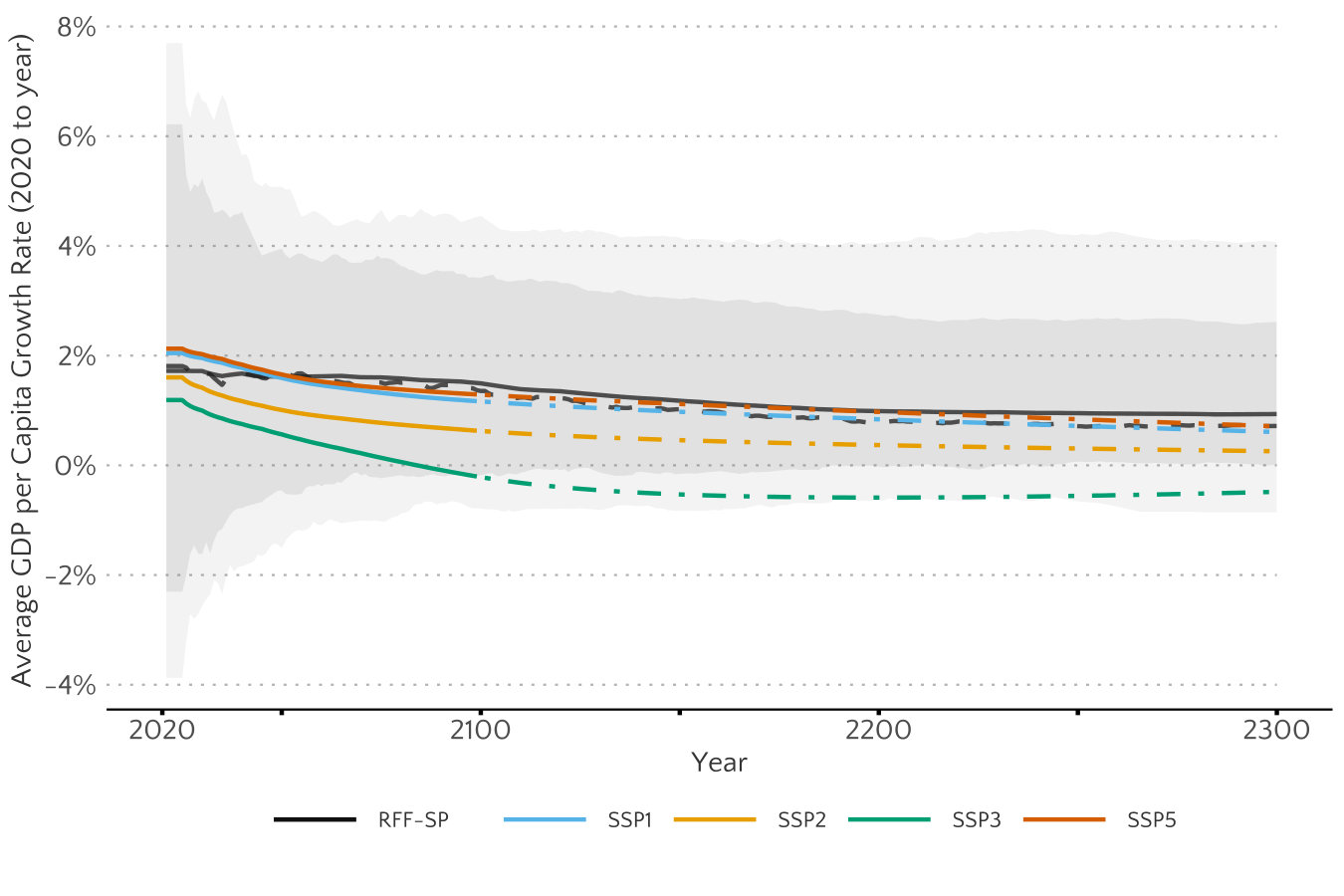 Figure 20
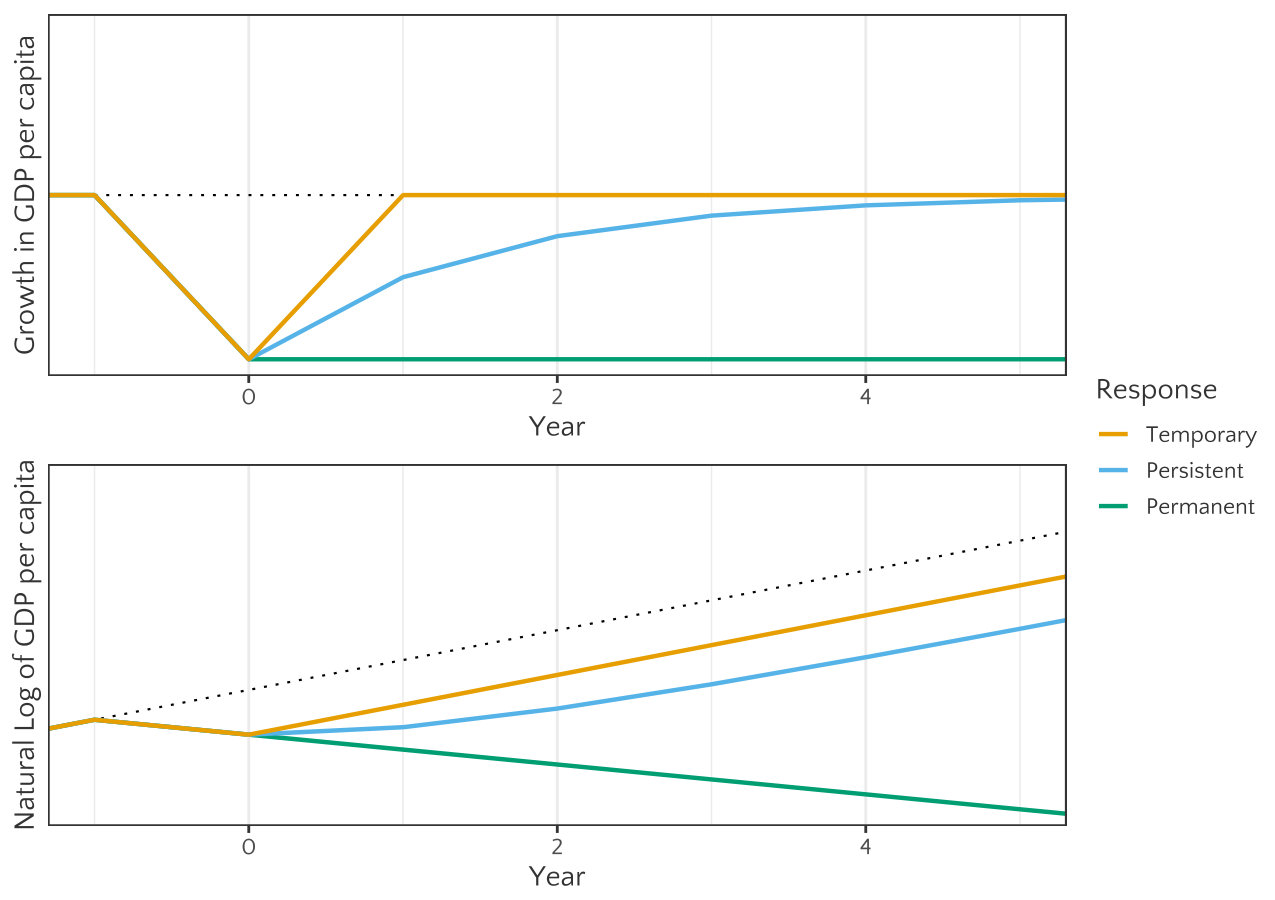 Figure 21
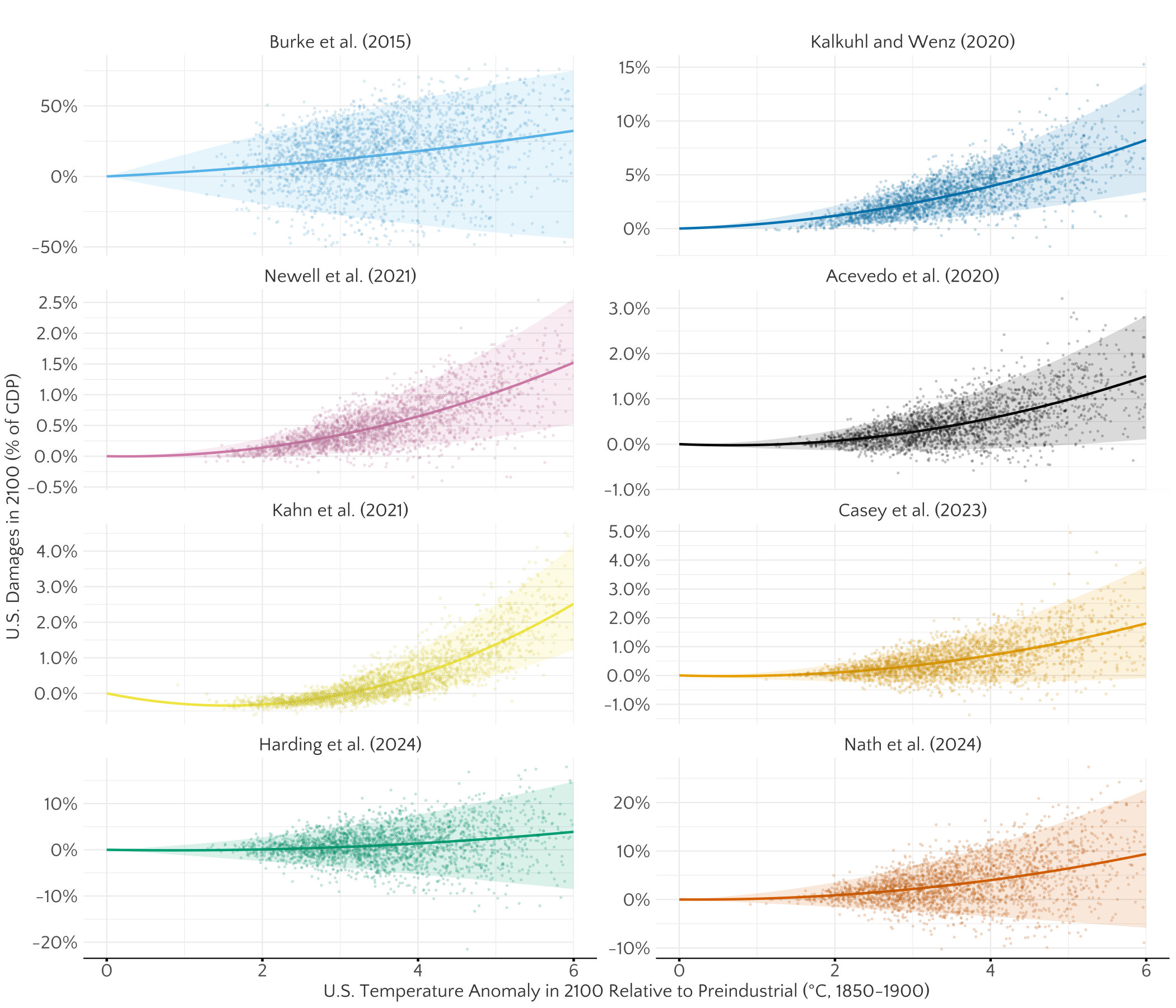 Figure 22
| Study | Econometric | Data | Weather | Weather | Lags | Projected Temperature |
|---|---|---|---|---|---|---|
| (Empirical Specification) | Model | Variables | Variables | Included | Impact on | |
| Specification | GDP Growth | |||||
| Dell et al. (2012) | DL | Country | Level | Linear | Weather | N/A |
| (Table 3, col 4) | (10 lags) | |||||
| Burke et al. (2015) | DL | Country | Level | Non-linear | None | Permanent |
| (Ext. Data Table 1, col 1, | (0 lags) | (quadratic) | ||||
| “base”/“main”) | ||||||
| Kalkuhl and Wenz (2020) | DL | Sub-national | Level, first | Non-linear | Weather | Temporary |
| (Table 4, col 5, | (1 lag) | difference | (level & difference | |||
| “preferred”) | interactions) | |||||
| Newell et al. (2021) | DL | Country | First | Non-linear | None | Temporary |
| (Levels version of | (0 lags) | difference | (quadratic) | |||
| Burke et al. (2015)) | ||||||
| Acevedo et al. (2020) | LP | Country | Level | Non-linear | Weather, | Temporary |
| (Table 1, col 5, | (0 horizons) | (quadratic) | GDP growth | |||
| “baseline”/ “main”) | ||||||
| Kahn et al. (2021) | ARDL | Country | Absolute deviation | Linear | Weather, | Persistent |
| (Table 2, Spec 2, | (4 lags) | from historical | GDP growth | |||
| m=30(b), “preferred”) | moving average | |||||
| Casey et al. (2023) | AR (1 lag) of | Country | First | Non-linear | TFP growth | Persistent |
| (Table 1, col 2) | TFP growth | difference | (quadratic) | |||
| Harding et al. (2023) | Convergence | Country | Level | Non-linear | Natural Log | Persistent |
| (Table 1, col 5, | equation | (quadratic) | of GDP | |||
| “central”) | ||||||
| Nath et al. (2024) | LP | Country | Shock and | Non-linear | Weather, weather | Persistent |
| (Full dynamics with | (9 horizons) | historical mean | (shock and mean | interacted with their | ||
| FE, Figure 6c) | interactions) | mean, GDP growth |
| Model | U.S.-specific SC-\ceCO2 | |
| ($/mt\ceCO2, 2020$) | ||
| DSCIM | $21 | |
| Heat- and cold-related mortality | 16 | |
| Energy | -0.3 | |
| Agriculture | 1 | |
| Coastal | 1 | |
| Labor | 2 | |
| GIVE | $24 | |
| Heat- and cold-related mortality | 22 | |
| Energy | 1 | |
| Agriculture | 1 | |
| Coastal | 0.4 | |
| FrEDI | $36 | |
| Additional Impacts | $16 | |
| Wildfire smoke-related mortality (Qiu et al., 2024) | 15 | |
| Nonuse value of biodiversity loss (Wingenroth et al., 2024) | 1 | |
Peer Reviews
No public reviews on file for this paper yet. If you reviewed it on a platform where reviews are public (OpenReview, ICLR, NeurIPS, ICML), you can paste yours below so the community can read it here.
Videos
No videos yet. Explain this paper in a talk, walkthrough, or lecture? Add one.
Economic Impacts of Climate Change in the United States:
Integrating and Harmonizing Evidence from Recent Studies††thanks: The views expressed in this paper are those of the author(s) and do not necessarily represent those of the United States Environmental Protection Agency (EPA). No official Agency endorsement should be inferred. We thank Charles Griffiths and Michael Howerton for contributions to prior work. All errors are our own. Declarations of interest: none.
Elizabeth Kopits†, Daniel Kraynak†, Bryan Parthum†, Lisa Rennels‡, David Smith†, Elizabeth Spink†, Joseph Perla†, and Nshan Burns††
†National Center for Environmental Economics, Environmental Protection Agency, USA ‡Doerr School of Sustainability, Stanford University ††Department of Agricultural and Resource Economics, University of California, Berkeley
(August 29, 2025)
Abstract
This paper synthesizes evidence on climate change impacts specific to U.S. populations. We develop an apples-to-apples comparison of econometric studies that empirically estimate the relationship between climate change and gross domestic product (GDP). We demonstrate that with harmonized probabilistic socioeconomic and climate inputs these papers project a narrower and lower range of 2100 GDP losses than what is reported across the published studies, yet the implied U.S.-specific social cost of greenhouse gases (SC-GHG) is still greater than the market-based damage estimates in current enumerative models. We then integrate evidence on nonmarket damages with the GDP impacts and recover a jointly-estimated SC-GHG. Our findings highlight the need for more research on both market and nonmarket climate impacts, including interaction and international spillover impacts. Further investigation of how results of macroeconomic and enumerative approaches can be integrated would enhance the usefulness of both strands of literature to climate policy analysis going forward.
JEL Codes: C60, D61, O44, Q54
Keywords: Integrated assessment models, benefit-cost analysis, economic damages, climate change
1 Introduction
Informed development of policies to address the global externality of climate change requires a way to assess the economic consequences of changes in anthropogenic greenhouse gas (GHG) emissions—the primary driver of climate change (\al@ipcc2021climate, USGCRP2023fifth; \al@ipcc2021climate, USGCRP2023fifth). Understanding both the aggregate net impact to current and future generations and how these consequences will be distributed across regions and populations is helpful for designing climate mitigation and adaptation policies and for conducting benefit-cost analysis of a wide range of policies affecting GHG emissions111See Kopits et al. (2025) for an overview of the use of social cost of greenhouse gas estimates in U.S. federal policy.. How the consequences of GHG emissions are likely to be experienced across particular regions and populations is especially challenging to estimate in the case of a global pollutant because it requires a mapping between physical effects and their ultimate economic incidence through both direct and indirect effects. For example, the impacts of GHG emissions not only have direct effects inside the borders of the United States (U.S.), but also indirect impacts from effects occurring outside of U.S. borders due to the interconnectedness of the global economy and populations (e.g., through supply chains, investments abroad, and national security).
Despite the daunting task of modeling such a broad scope of scientific issues across a complex global landscape, researchers continue to make progress in estimating various economic impacts of GHG emissions. Models that take an enumerative or endpoint-specific approach to estimating market and nonmarket damages of GHG emissions have incorporated methodological advances in recent years, and researchers continue to look for opportunities to integrate additional impact categories as empirical studies become available. Another line of research has focused on econometrically estimating the effect of temperature and other climate variables on aggregate measures of economic outcomes, such as national or regional gross domestic product (GDP). The focus on macroeconomic indicators is often viewed as a way to estimate many market effects without the need to fully enumerate and estimate them. As both strands of the literature evolve, so too must the syntheses of their findings. In particular, it is necessary to develop direct comparisons of the results across macroeconomic econometric studies using consistent inputs and modeling frameworks, and to integrate the results of these studies with evidence from enumerative damage approaches where appropriate.
This paper takes a step forward in synthesizing the existing evidence on the economic consequences of climate change specific to U.S. populations. First, we develop an apples-to-apples comparison of the implications of a set of macroeconomic econometric studies. We develop a damage module based on the relationship between U.S. GDP and temperature change from each study’s empirical results and projection methods. We show the implications for both projected end-of-century U.S. GDP loss from climate change and for U.S.-specific measures of the marginal damages from GHG emissions, i.e., the social cost of carbon, methane, and nitrous oxide, collectively known as the social cost of greenhouse gases (SC-GHG). We calculate U.S.-specific SC-GHG estimates under a harmonized set of U.S. socioeconomic and emissions projections, climate modeling (incorporating the latest advances in the representation of carbon feedback effects), and discounting methods, with explicit representation of key uncertainties in each of these inputs. Second, we integrate the findings of the macroeconomic studies with evidence from recent enumerative modeling of select nonmarket damages to illustrate the U.S.-specific SC-GHG estimates resulting from combining different lines of evidence within a consistent modeling framework.
Among the macroeconomic empirical studies, we find that significant progress has been made in estimating the dynamic effects of temperature change on economic growth. Studies are increasingly finding temperature changes to have some persistent but not permanent effects on U.S. economic growth. Yet it is not necessary to deviate far from the assumption of permanent growth effects for the GDP impact to decrease dramatically. Once evaluated using a consistent set of baseline temperature data and socioeconomic and climate inputs, which capture a range of uncertainties, the central specification of papers projecting some persistence in the effect of temperature on GDP yield end-of-century U.S. GDP loss projections ranging from 0.4 to 3.5 percent, a narrower and lower range than what is reported within the published studies. These results translate to U.S.-specific SC-\ceCO2 estimates ranging from 64 per metric ton \ceCO2 for 2030 emissions (under a 2 percent near-term Ramsey discount rate). The higher end of this range is derived from recent studies that use more flexible empirical methods that better allow for tracing out nonlinear dynamics in the temperature-GDP relationship and addressing serial correlation in temperature and GDP over time. These U.S.-specific SC-\ceCO2 estimates are also higher than the sum of U.S. market damage estimates based on existing enumerative models. Finally, we illustrate that integrating evidence on one category of nonmarket health damages (heat- and cold-related mortality) to the GDP-based market damage function from the macroeconomic studies increases the range of U.S.-specific SC-\ceCO2 estimates to 85 per metric ton of \ceCO2 for 2030 emissions.
There are still many categories of nonmarket impacts omitted from this analysis, such as mortality and morbidity effects from many climate-mediated extreme weather events and various nonmarket impacts associated with the loss of ecosystem services, among others. The U.S.-specific damages from some market impacts are also not yet reflected, even in estimates based on macroeconomic econometric studies, as they can only account for net climate impacts on macroeconomic outcomes that have, to some extent, been experienced in the historical record and are identified by annual country-level average temperature shocks. Our findings highlight the need for more research on both market and nonmarket climate damages to U.S. populations, including through interactions and international spillover impacts. Further investigation of how the results of macroeconomic and enumerative approaches can be compared and combined would also enhance the usefulness of both strands of literature in policy analysis going forward.
2 Review of Literature
The economic consequences of global changes driven by GHG emissions are most often examined using integrated assessment models (IAMs) of climate change, which incorporate climate processes and economic systems into a single unified modeling framework. Climate change IAMs vary in their complexity, structure, and geographic resolution, but those used in SC-GHG estimation are generally comprised of four modules: socioeconomic, climate, damages, and discounting (NASEM, ). The socioeconomic module consists of jointly estimated projections of economic growth, population, and GHG emissions, which feed into the climate module to project future earth system conditions such as global temperatures, ocean acidity, and sea level rise. The damage module translates changes in these climatic conditions into physical and monetized estimates of economic damages. These economic damages represent the amount of money those experiencing the changes would be willing to pay to avoid them and can be experienced through impacts to goods and services traded in markets (e.g., changes in agricultural productivity, energy expenditures, or property damage) or nonmarket goods and services (e.g., changes in mortality and morbidity risks or ecosystem services) (EPA, ). Lastly, the discounting module translates the stream of undiscounted economic damages from the damage module into the present value of net damages. This four-step procedure is modeled with both baseline emissions projections and with a small additional amount (a pulse) of GHG emissions in a particular year. The SC-GHG is the per-ton difference in present value of damages between the baseline and pulse models from the perspective of the year of the emissions pulse.
2.1 Modeling economic damages of climate change
This paper focuses on the evidence that can inform the damage module of an SC-GHG IAM. Two methods that have produced estimates of the effect of climate change on U.S.-specific outcomes include an enumerative approach to damage function development and a more aggregated approach to econometrically estimating impacts on economy-wide outcomes.222Other methods include expert elicitation methods or other survey techniques (e.g., Pindyck, 2019; Hulshof and Mulder, 2020; Moore et al., 2024). Economy-wide computable general equilibrium (CGE) models are often used to explore how market-based climate impacts propagate through the economy (e.g., Dellink et al., 2019; Takakura et al., 2019) but have not generally been used on their own to develop SC-GHG estimates. An enumerative damage module is often developed by calibrating to, or building up, disaggregated estimates of the damages resulting from various types of climate impacts. This approach to estimating damage functions typically involves spatially-explicit and sectoral- or category-specific modeling and aggregation of damages across sectors or impact categories. Three models that provide an enumerative approach to monetizing U.S.-specific climate damages are: the Greenhouse Gas Impact Value Estimator (GIVE) (Rennert et al., 2022a), the Data-driven Spatial Climate Impact Model (DSCIM) (CIL, ), and the EPA’s Framework for Evaluating Damages and Impacts (FrEDI) (EPA, ).333The GIVE damage module includes country-level representation of monetized damages from four climate impacts: changes in mean temperature-related mortality risk, agricultural yields for staple crops, energy related expenditures, and sea level rise induced mortality risk and physical capital loss in coastal areas (Rennert et al., 2022a, b). DSCIM contains a subnational-scale, sectoral damage module that estimates net damages resulting from similar health, energy, agriculture, and coastal impact endpoints as considered in GIVE Rode et al. (2021); Carleton et al. (2022); CIL, . In addition, DSCIM includes representation of net economic impacts from labor supply responses to changes in temperature, particularly in high-risk weather-exposed industries. The third model, FrEDI, is a U.S. focused model that includes representation of additional impact endpoints across categories including human health, infrastructure, labor, electricity supply and demand, agriculture, and ecosystems and recreation (EPA, ). See Tables Appendix A and Appendix A in Appendix A and discussion in EPA (EPA; EPA; EPA) for more information about each of these three models. While these models reflect recent advances in the scientific literature on several key endpoints such as temperature-related mortality, energy, agriculture, and coastal impacts, there are many categories of climate change impacts and associated damages that are not yet or only partially represented in enumerative IAMs (EPA, ). Continued progress in filling data gaps and estimating the magnitude of many of these omitted impacts includes a growing body of research providing evidence on a wide range of U.S.-specific outcomes, such as heat-related kidney disease and other morbidity outcomes (see, e.g., Bell et al., 2024; Yang et al., 2024), human capital impacts (Park et al., 2021), flooding impacts on mortality (Mueller et al., 2024; Lynch et al., 2025) and drinking water (Austin et al., 2024), forestry impacts (Baker et al., 2023), long-term impacts to coastal wetlands (Fant et al., 2022), net impacts on outdoor recreation (Parthum and Christensen, 2022; Willwerth et al., 2023), climate impacts on mental health (Obradovich and Minor, 2022), and the distortionary effects of fiscal impacts (Barrage, 2023), to name a few. The majority of this research has not yet been converted into damage functions of the kind needed for developing U.S.-specific SC-GHG estimates.444Several exceptions include emerging research on climate-driven wildfire-related health impacts (Qiu et al., 2024, 2025), monetized nonuse damages from biodiversity loss (Wingenroth et al., 2024), and research on climate-driven losses to outdoor winter recreation (Parthum and Christensen, 2022). Incorporating representation of the first two of these endpoints is already possible in the GIVE model and discussed further in Appendix D.
Another line of research has focused on econometrically estimating the effect of temperature and other climate variables on more aggregate measures of economic outcomes, such as U.S. GDP (e.g., Dell et al., 2012; Burke et al., 2015; Acevedo et al., 2020; Kalkuhl and Wenz, 2020; Kahn et al., 2021; Newell et al., 2021; Casey et al., 2023; Harding et al., 2023; Nath et al., 2024). The focus on readily available macroeconomic measures can be appealing given the still limited scope of damage functions based on enumerative modeling and the resource intensive research needed to model each damage pathway. These studies offer a reduced form approach to estimating the impact of changes in the climate on the combined set of market goods and services, thereby accounting for many sectors without the need to fully enumerate them. That is, measured climate-driven changes in GDP are thought to reflect the value of net impacts on goods and services traded in markets (e.g., changes in agricultural crop yields or energy use) that have an associated market price. Such measures do not reflect the value of nonmarket goods and services and thus cannot be used to provide a comprehensive accounting of net damages to U.S. citizens and residents from GHG emissions. The results of these studies have not been as widely used for recent damage module development in SC-GHG estimation. In fact, the National Academies (NASEM) highlighted both the lack of traceability to damage pathways and the lack of accounting for nonmarket damages as reasons for recommending against this damage function approach for SC-GHG estimation (NASEM, ). However, given the still limited scope of damage functions based on enumerative modeling and that GDP has been extensively studied as an indicator of the productivity of the economy as a whole, it is useful to conduct a closer review of the findings of this strand of the literature to inform the magnitude of market-based climate damages.
2.2 Macroeconomic econometric studies of GDP impacts
In our review of the recent macroeconomic econometric research on GDP impacts, we focus on studies whose results are in a form that can be combined with the other modules and components of an IAM modeling framework (e.g., country-level annual socioeconomics and mean temperature projections) to estimate U.S.-specific SC-GHGs.555Incorporating the results of studies that investigate the economic growth impacts of changes in other aspects of the temperature distribution, or weather variables measured at finer geographic and/or temporal scales, would require additional extensions to our modeling framework. This includes, for example, macroeconomic empirical studies that estimate the impact of temperature or precipitation on sectoral GDP (Conte et al., 2021), studies that use seasonal or daily temperature and precipitation data (Deryugina and Hsiang, 2017; Colacito et al., 2019; Kotz et al., 2021), and those that include measures of annual temperature variability or extremes (Kotz et al., 2021; Schwarz and Pretis, 2022; Kotz et al., 2024; Waidelich et al., 2024). Similarly, additional modeling is needed to incorporate the results of papers investigating the effects of climate-driven changes in tropical cyclones and other natural hazards on economic growth (e.g., Hsiang and Jina, 2014; Bakkensen and Barrage, 2018). Finally, we have also not included studies using time-series methods that make it more challenging to control for time-varying confounders, including a recent study by Bilal and Känzig (2024) that estimates the economic effects of global temperature fluctuations and finds large statistically significant impacts on GDP. Two prominent early papers using global panel datasets that serve as a foundation for subsequent literature looking to identify plausibly causal relationships between climate and economic growth (i.e., growth in GDP) are Dell et al. (2012) and Burke et al. (2015). The source of identification in these studies is fluctuations in annual mean temperature and precipitation, aggregated from gridded climate measurements to the country or region level to study its effects irrespective of other factors. Dell et al. (2012) estimate economic growth in a given year as a linear function of population-weighted temperature and precipitation including lagged weather variables and controlling for country-specific effects and time trends. They find a one-time increase in temperature to have statistically significant negative impacts for poor countries, but imprecise smaller impacts for rich countries.666In Dell et al. (2012), a country is categorized as “poor” if it has below median purchasing power parity-adjusted GDP per capita in the initial year of the data. Including multiple lags of temperature in a distributed lag (DL) model, the authors examine whether these growth impacts persist over time and find evidence of temperature changes affecting economic growth for at least 10 years.
Burke et al. (2015) extend this framework by considering a nonlinear relationship between a country’s economic growth and temperature. They estimate economic growth as a quadratic function of temperature and find a statistically significant inverted U-shaped relationship with GDP peaking at approximately , with the response in rich countries not statistically different from that in poor countries. They find suggestive, but statistically ambiguous, evidence for permanent growth effects. Finally, Burke et al. (2015) develop a climate projection approach that applies their econometric results to estimate future GDP losses from climate change under a key assumption: that the long-run impact of changes in climate will be the same as the effect of short-run impacts from changes in weather. The resulting damages are estimated to be large globally, and substantial even for many high-income countries.
Following the early findings of Dell et al. (2012) and Burke et al. (2015), researchers began to further investigate the extent to which temperature changes have temporary, persistent, or permanent effects on economic growth. Understanding these dynamics has emerged as a key focus in this literature due to the important implications for estimating future damages from climate change. Figure 1 illustrates what an impact on GDP growth implies for the impact on the level of GDP, and vice versa. If a permanent change in temperature leads to a reduction in economic growth in the initial year of the change only (i.e., a temporary growth effect), it will still lead to a permanent change in the level of GDP, but that level effect will remain constant over time, holding all else equal. However, if a permanent change in temperature causes a permanent impact on GDP growth, then the impact on the level of GDP continues to increase over time, leading to an indefinitely widening divergence between the level of GDP under climate change and without climate change. An impact on the growth rate of GDP with some persistence but eventual convergence back to the original growth rate represents an intermediate case.777The temporary and permanent responses illustrated in Figure 1 are often called “levels” and “growth” effects, respectively, in macroeconomic econometric studies of the relationship between temperature and GDP. However, there is inconsistency in terminology used across the literature.
Some studies have focused on examining the robustness of the Burke et al. (2015) results. For example, Newell et al. (2021) conduct a large cross-validation exercise in which they explore model uncertainty by estimating 800 plausible specifications of the relationship between temperature and GDP growth and test the out-of-sample performance of the models. They find that models estimating a relationship between temperature and economic growth exhibit significant model uncertainty leading to a wide range of forecasted climate impacts by the end of the century. They argue that their results do not support a statistically significant marginal effect of temperature on global GDP growth and emphasize that specifications estimating a relationship between temperature and GDP levels (i.e., a temporary effect on GDP growth) generally find a more robust and much narrower range of GDP losses by the end of the century.
Kalkuhl and Wenz (2020) also find evidence in support of temperature fluctuations only affecting the level of economic output using different sources of data. They measure economic activity using data from a variety of sources with increased resolution and detail of subnational regions, or gross regional product (GRP). In their preferred specification, a one-year distributed lag (DL) model, the authors find a strong nonlinear relationship between area-weighted annual temperature and GRP, but do not find the level of temperature to affect economic growth when the annual change in temperature is also included in the model. They interpret these findings to be consistent with permanent changes in temperature affecting the level of GDP but not the long-run growth rate of the economy. Aside from differences in the underlying data used, their projected damages are larger than those of Newell et al. (2021) in part because their results imply a lower optimal temperature, above which climate damages accrue.
Several recent papers have further advanced the examination of the extent of GDP effects using more flexible empirical methods and/or different measures of temperature variation that can better address common econometric challenges that arise in the analysis of temperature-GDP relationships. For example, Acevedo et al. (2020) examine the effects of weather on a large set of outcome variables using the local projections (LP) method (Jordà, 2005) to trace the impulse response function of GDP per capita to a change in population-weighted temperature and precipitation. The LP method is more flexible than a DL model because it imposes fewer restrictions on the dynamic process by directly estimating the cumulative impact of a current shock in each future horizon period.888By estimating a collection of projections local to each forecast horizon, the authors can interpret the estimated effects in the 0-horizon regression as the contemporaneous impact and the estimated effects in subsequent regressions as reflecting the impact years after the shock. The LP method produces less biased (but higher variance) forecasts at intermediate and long horizons than vector autoregression methods because it does not constrain the shape of the impulse response functions and is thus less sensitive to misspecification (Li et al., 2024). In their main specification, Acevedo et al. (2020) estimate both the contemporaneous and medium term (7-year) change in per capita GDP as a quadratic function of temperature and precipitation, controlling for a one-year lag of the dependent and weather variables and country and time fixed effects. The inclusion of the lagged variables importantly helps to address serial correlation in temperature and GDP growth over time that could lead to biased estimates. They find statistically significant negative effects of temperature on per capita output and that these effects continue for at least 7 years. However, they do not interpret these findings as evidence of permanent growth effects because they are unable to reject that the contemporaneous and medium-term effects on output are identical.999Using the same methodology, Acevedo et al. (2020) also estimate the impact of temperature on channels of impacts and find the largest impacts on crop production and the agricultural sector. They also find impacts on manufacturing but find no impacts on the services sector. The paper also estimates the impact of temperature increases on some of the basic determinants of GDP. The authors find that temperature reduces labor productivity in heat exposed industries but find no impact on labor productivity in non-heat exposed industries. Temperature also appears to have persistent impacts on investment. Acevedo et al. (2020) further find that temperature increases led to persistent increases in infant mortality and decreases in the Human Development Index.
Kahn et al. (2021) use a panel autoregressive distributed lag (ARDL) model101010An ARDL model is a type of a DL model that includes lags of the dependent variable (autoregressive) and lags of an explanatory variable (distributed lag). with four lags. They attempt to address the econometric challenges with trended variables by focusing on a country’s deviation in temperature relative to a moving historical average, rather than levels or squares of temperature. The authors argue that this measure allows for a more explicit modeling of changes in the distribution of weather patterns and an implicit model of adaptation. The length of time over which their moving average is calculated is the assumed amount of time economies need to adapt to changes in climate (either 20, 30, or 40 years), and thus the authors view the GDP impacts of the deviation from this moving average as the relevant temperature shock after accounting for assumed adaptation. The authors derive climate projections that incorporate the full long-run implications of their ARDL estimates under parametric assumptions on the distribution of future deviations of temperature from its historical norm.
Casey et al. (2023) further advance the examination of the extent of GDP growth effects using macroeconomic growth theory and exploring the mechanisms through which climate impacts on GDP growth could occur. The authors focus on the effect of climate variables on total factor productivity (TFP) to help distinguish between temporary and persistent impacts of climate change on economic output. More precisely, they argue that even a one-time effect of a change in temperature on the level of GDP is likely to manifest over several time periods due to an endogenous capital response, while climate change effects on TFP ought to be more easily distinguishable as temporary or persistent. Under certain assumptions, growth theory implies that temporary effects on TFP lead to persistent but relatively short-lived effects on GDP, while persistent effects on TFP lead to longer-term growth impacts on GDP because TFP is the key driver of the long-run growth rate of output. Guided by this reasoning, the paper empirically investigates how temperature shocks affect TFP. In regressions allowing for potential impacts both on the level and growth rate of TFP, Casey et al. (2023) find temperature has a persistent effect on the level of TFP, but not its rate of growth. This result implies that the impact of a change in temperature on GDP growth may still persist for several years (through temperature impacts on TFP and TFP’s impact on investment and capital accumulation) but will not lead to permanent long-run growth impacts. Model-based climate change impacts on economic output are derived from reduced-form projections of country-level TFP using their empirically estimated coefficients.
Harding et al. (2023) use a reduced-form approach to align their empirical analysis more closely with theoretical models and methods used in the broader empirical macroeconomic growth literature by accounting for growth convergence when estimating the relationship between temperature and country-level economic growth. Similar to Casey et al. (2023), they argue that under neoclassical macroeconomic growth theory, the only way for climate change to have permanent effects on economic growth is if it permanently affects the determinants of long-run economic growth, such as the rate of innovation. By contrast, non-permanent climate-induced changes in productivity can only have a temporary effect on economic output because the economy will eventually converge back to the steady-state long-run growth rate. They empirically estimate this speed of convergence by regressing GDP growth on one lag of GDP in addition to the weather variables, including the same controls for time trends and country fixed effects as in Burke et al. (2015) and Newell et al. (2021). In their central specification, the authors find significant support for short-run effects on economic growth, but no statistically significant evidence of permanent long-term growth impacts. The authors emphasize that while including the convergence term has little impact on the estimated effects of weather variables on GDP growth, accounting for the convergence effect is important when projecting long-run damages from climate change; otherwise, any estimated effects of climate on growth, by construction, will be permanent.
Nath et al. (2024) also take models of economic growth as a starting point and argue that temperature can have persistent but not permanent growth effects because fundamental drivers of growth, specifically technological change, link countries’ growth rates together. They present a range of evidence to support that international technology spillovers prevent countries from differing entirely in growth as global temperatures change. They then use country-level panel data to empirically estimate the dynamic effects of temperature on GDP. Like other recent macroeconomic econometric papers discussed above, Nath et al. (2024) control for lagged GDP growth, but they also address econometric difficulties in estimating a dynamic causal relationship between GDP and temperature in additional ways. First, they emphasize that because temperature itself is serially correlated, it is important to include lags of both temperature and GDP. Second, they examine the impact of a temperature shock111111Nath et al. (2024) define the shock to temperature as the innovation in a nonlinear auto-regressive model of country temperature, a common practice in analysis of macroeconomic data which isolates current shocks from their relationship to past shocks in the presence of serial correlation. Specifically, they construct the temperature shock as the residual from a regression of temperature on lagged values of temperature and lagged temperature interacted with mean temperature., rather than temperature itself, and explore an alternative specification to capture nonlinearities in the way that the temperature shock affects GDP, relative to the quadratic terms typical in many previous studies. Finding that a state-dependent model outperforms a quadratic function of temperature variables, in their main specification, Nath et al. (2024) interact the temperature shock variable with mean temperature to investigate whether a shock to temperature has different effects on GDP depending on the country’s mean historical temperature. Finally, the authors estimate a flexible impulse response function of GDP to temperature shocks using the LP approach, similar to Acevedo et al. (2020), while putting additional emphasis on the importance of accounting for the persistence in temperature when using their empirical results to project the effects of future increases in temperature on GDP. For instance, for a moderate temperature country (), the paper finds persistent effects of temperature shocks on GDP. The persistence in the effect of temperature shocks on GDP is partly driven by persistence in temperature (see Nath et al., 2024, Figure 6b). For such a moderate temperature country, Nath et al. (2024) find 9 percent of a temperature shock persists 9 years later. Nath et al. (2024) account for this persistence in temperature by using a cumulative response ratio of GDP to temperature, defined as the ratio of the cumulative response of GDP to the cumulative response of temperature to a temperature shock, which accounts for the dynamic impact of the initial shock and the continuing impacts driven by its persistence.
Table 2.2 presents a summary of the empirical methods used in the main specification of the econometric papers discussed above. While each of these papers provides results of many alternative specifications and robustness checks, Table 2.2 focuses on the authors’ stated “preferred”, “main”, or “central” specification, or the specification that is used for climate damage projections in the paper if no preferred specification is stated. The last column of Table 2.2 qualitatively classifies what each paper projects about the impact of temperature on U.S. GDP growth. The papers employing DL models to estimate long-run impacts project either permanent or temporary impacts on GDP growth. By contrast, the papers using more flexible estimation approaches and incorporating lagged dependent variables project some amount of persistence in the impact on GDP growth.
The reference list from the paper itself. Each links out to its DOI / PubMed record.
- 1Acemoglu (2008) Acemoglu, Daron. 2008. Introduction to modern economic growth . Princeton university press.
- 2Acevedo et al. (2020) Acevedo, Sebastian, Mico Mrkaic, Natalija Novta, Evgenia Pugacheva, and Petia Topalova. 2020. The effects of weather shocks on economic activity: What are the channels of impact? Journal of Macroeconomics 65: 103207.
- 3Achakulwisut et al. (2019) Achakulwisut, Pattanun, Susan C. Anenberg, James E. Neumann, Stefani L. Penn, Natalie Weiss, Allison Crimmins, Neal Fann, et al. 2019. Effects of increasing aridity on ambient dust and public health in the u.s. southwest under climate change. Geo Health 3 (5): 127–144.
- 4Anthoff et al. (2024) Anthoff, D, R Plevin, C Kingdon, and L Rennels. 2024. Mimi: an integrated assessment modeling framework.
- 5Anthoff and Tol (2014) Anthoff, David, and Richard SJ Tol. 2014. The climate framework for uncertainty, negotiation and distribution (FUND): Technical description, version 3.6 .
- 6Arrow et al. (2013) Arrow, K., M. Cropper, C. Gollier, B. Groom, G. Heal, R. Newell, W. Nordhaus, et al. 2013. Determining benefits and costs for future generations. Science 341 (6144): 349–350.
- 7Ashfaq et al. (2022) Ashfaq, Moetasim, Deeksha Rastogi, Joy Kitson, Muhammad Adnan Abid, and Shih-Chieh Kao. 2022. Evaluation of cmip 6 gcms over the conus for downscaling studies. Journal of Geophysical Research: Atmospheres 127 (21): e 2022 JD 036659. E 2022 JD 036659 2022 JD 036659.
- 8Austin et al. (2024) Austin, Wes, Siyu Pan, and Bryan Parthum. 2024. When it rains, it pours: Severe weather events, flooding, and drinking water quality. Working Paper 24-12, National Center for Environmental Economics.