The Nature of Post-Starburst Galaxies: Real Deal or Masquerading Impostors?
Elia Cenci, Robert Feldmann, Sarah Wellons, Jindra Gensior, Luigi Bassini, Mauro Bernardini, Rachel Bezanson, Jorge Moreno, David J. Setton, Lucas Tortora

TL;DR
This study uses cosmological simulations to investigate the nature of post-starburst galaxies, revealing that most are impostors with ongoing star formation, and that true PSBs likely result from black hole feedback.
Contribution
It provides the first detailed simulation-based analysis distinguishing true PSBs from impostors and links true PSBs to black hole feedback mechanisms.
Findings
Only ~10% of simulated PSBs are true PSBs with quenched star formation.
Most PSBs in simulations are impostors with ongoing star formation.
Over 70% of true PSBs are predicted to originate from black hole feedback.
Abstract
Post-starburst galaxies (PSBs) are a population of rapidly quenched galaxies that have experienced a recent starburst. Several aspects of the origin and nature of PSBs are currently debated. For example, some PSBs unexpectedly host substantial molecular gas despite their low star-formation activity. Furthermore, the relative role of galaxy mergers, interaction, and stellar or black hole feedback in the formation of PSBs remains unclear. We investigate the nature of PSBs at z=0.7 and z=1 selected via rest-frame optical photometric properties, using the FIREbox cosmological simulation. The fraction of PSBs in FIREbox is in reasonable agreement with observational estimates. However, only ~10% of PSBs in FIREbox are `true' PSBs with temporarily quenched star-formation activity. Most galaxies selected as PSBs in FIREbox are impostors, having star-formation rates and gas masses that are…
Click any figure to enlarge with its caption.
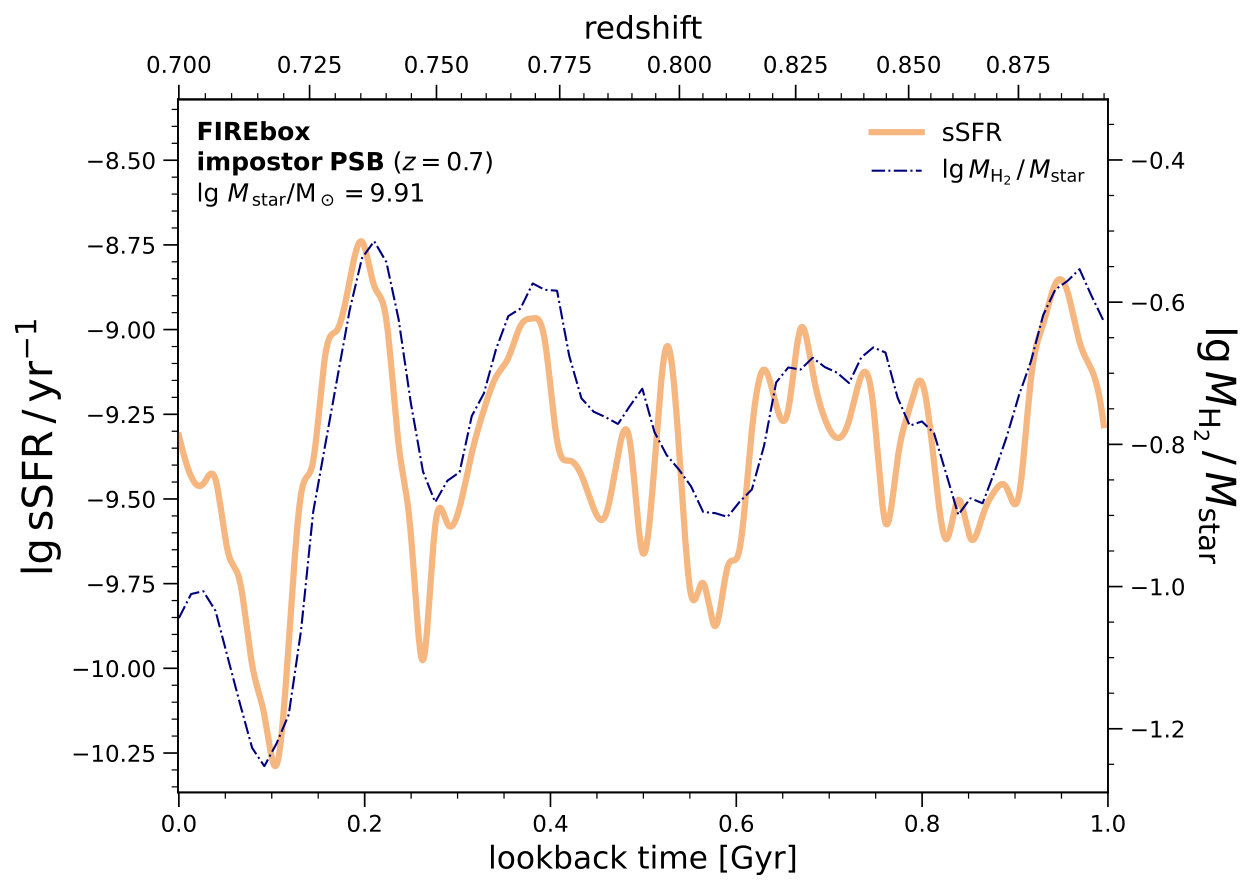 Figure 1
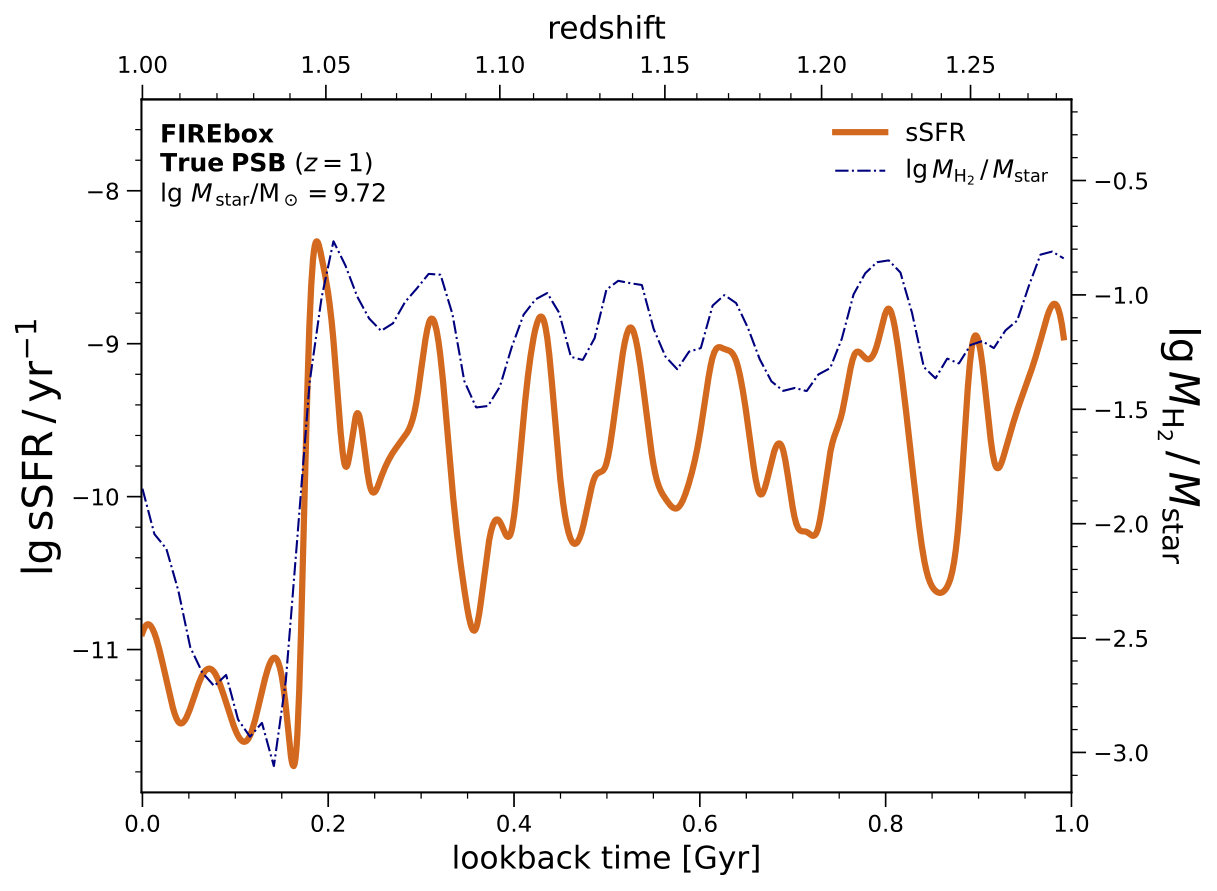 Figure 2
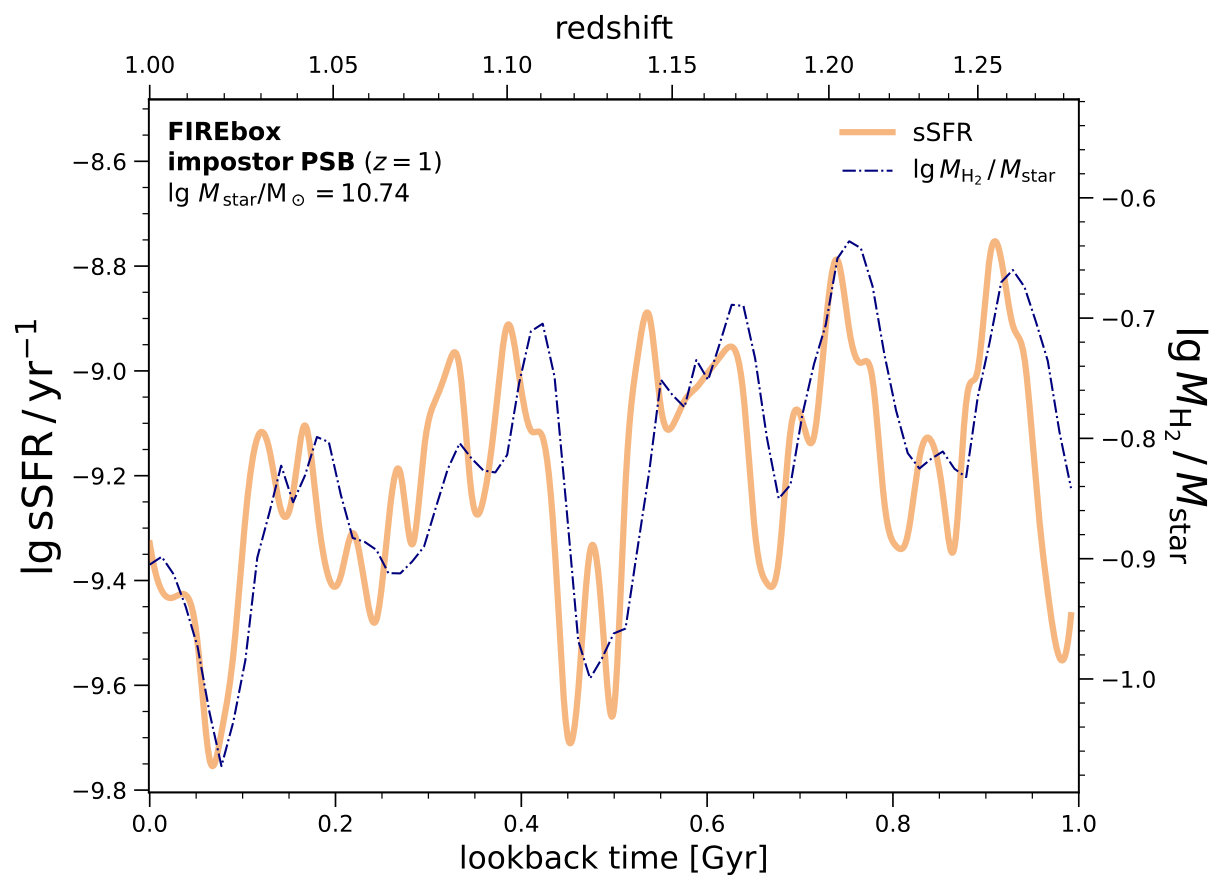 Figure 3
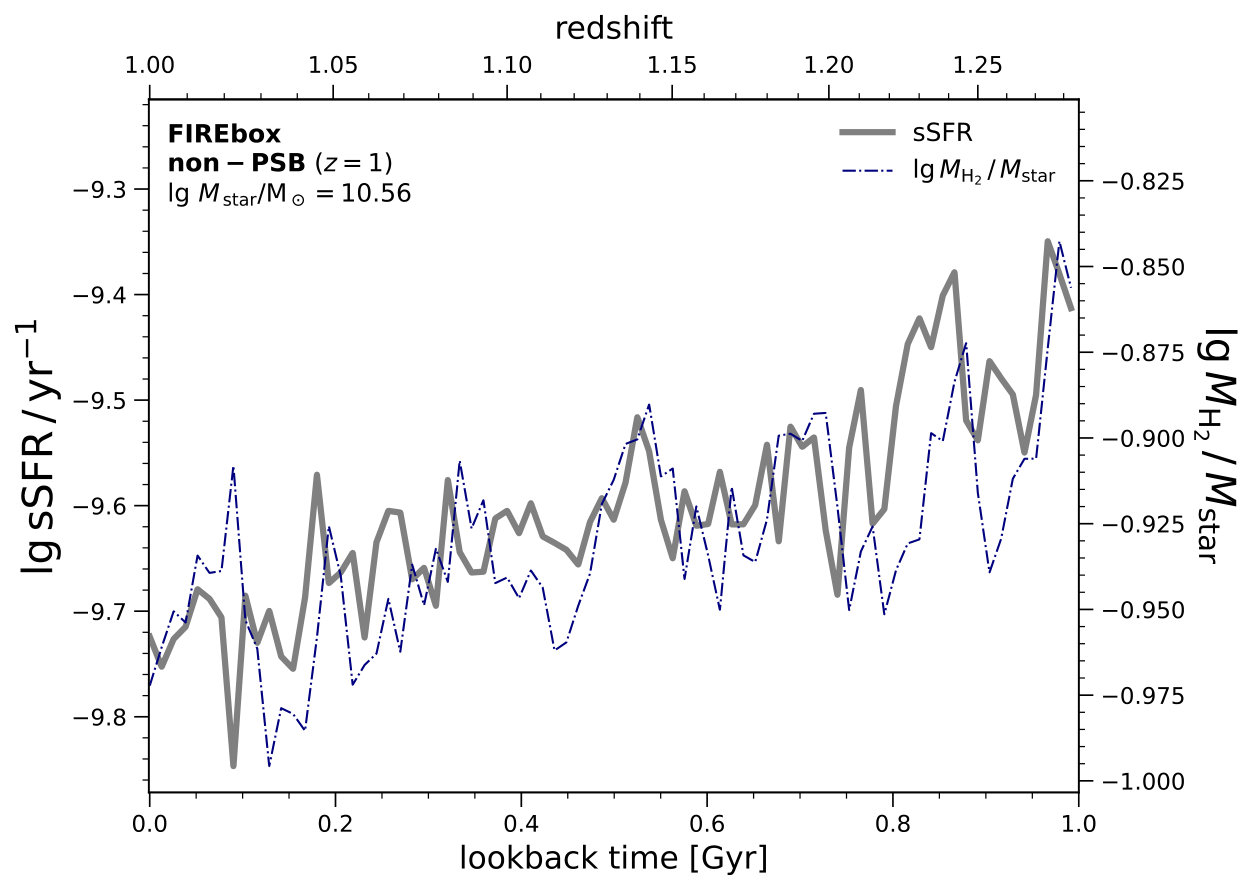 Figure 4
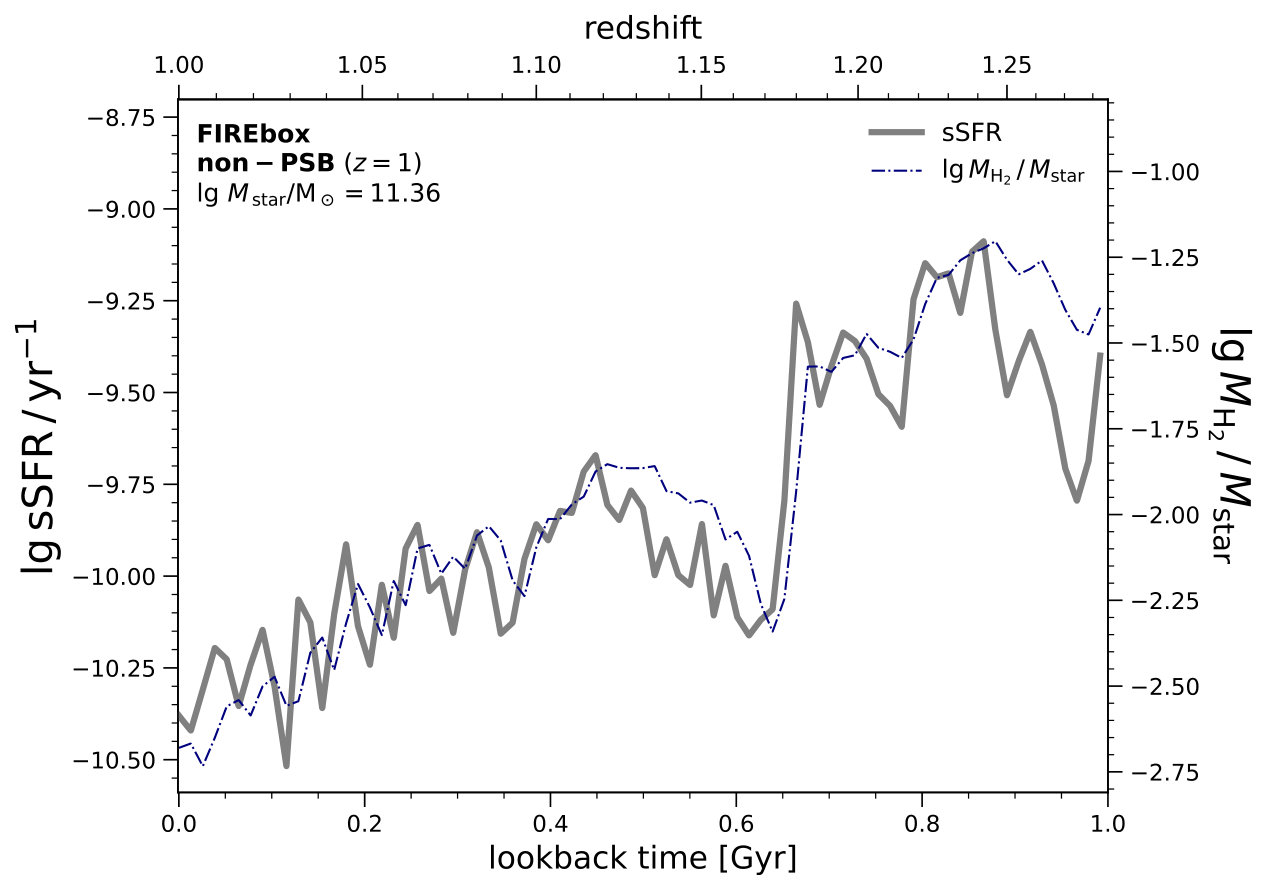 Figure 5
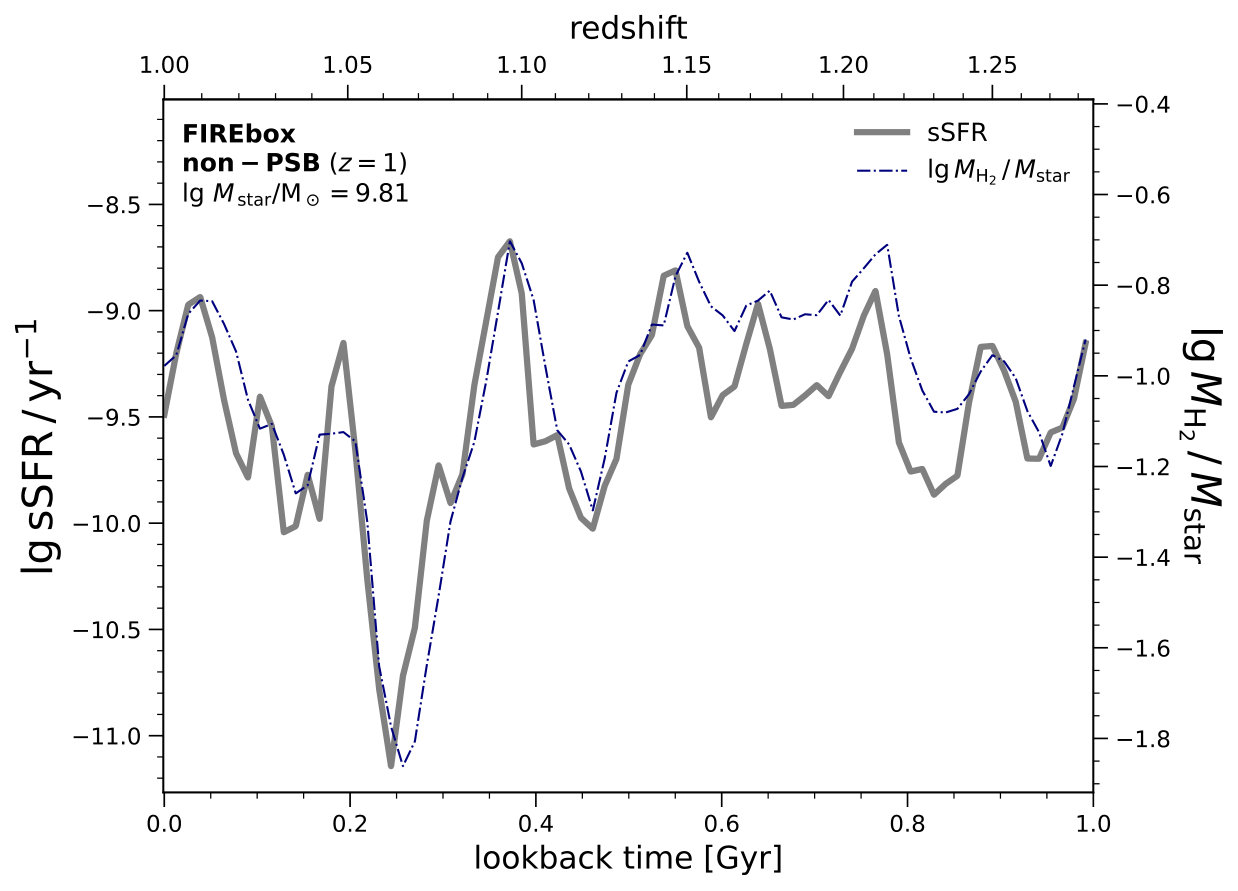 Figure 6
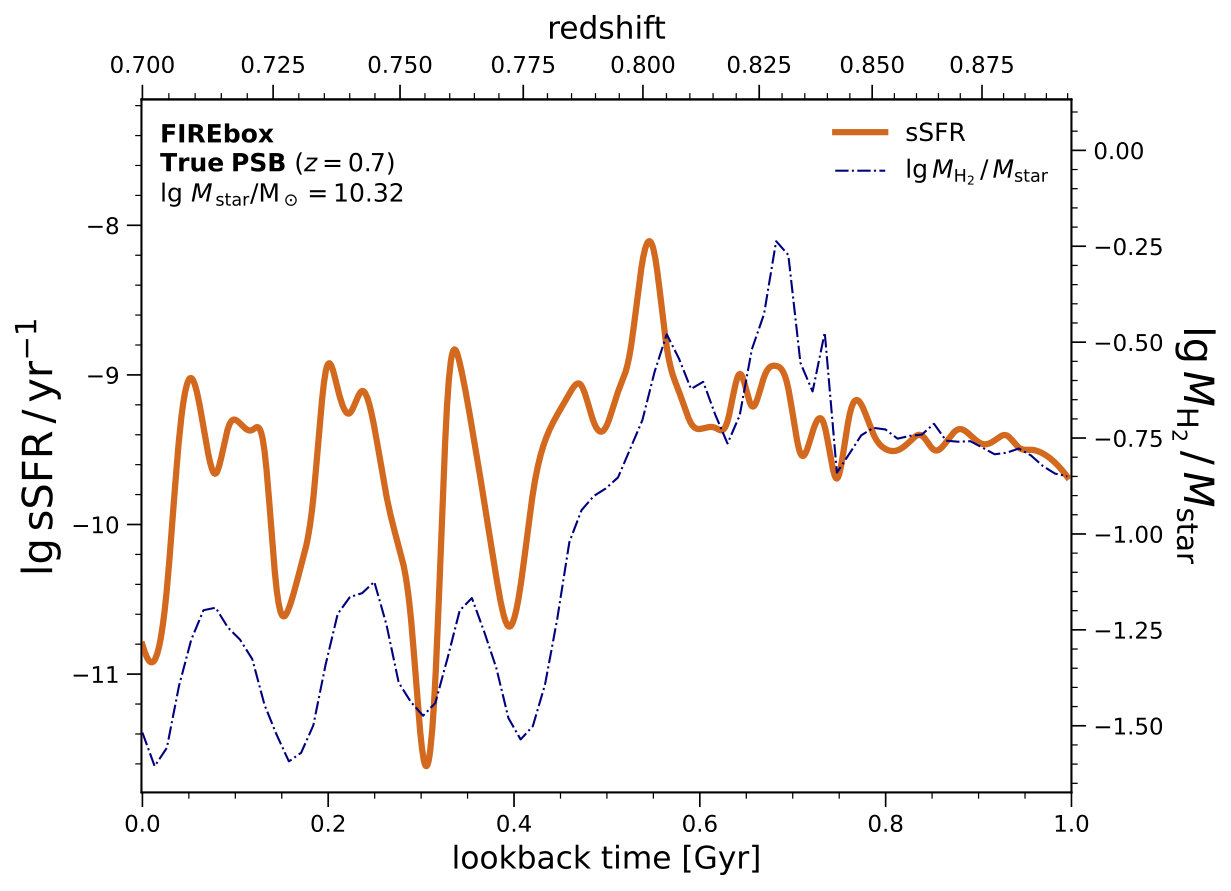 Figure 7
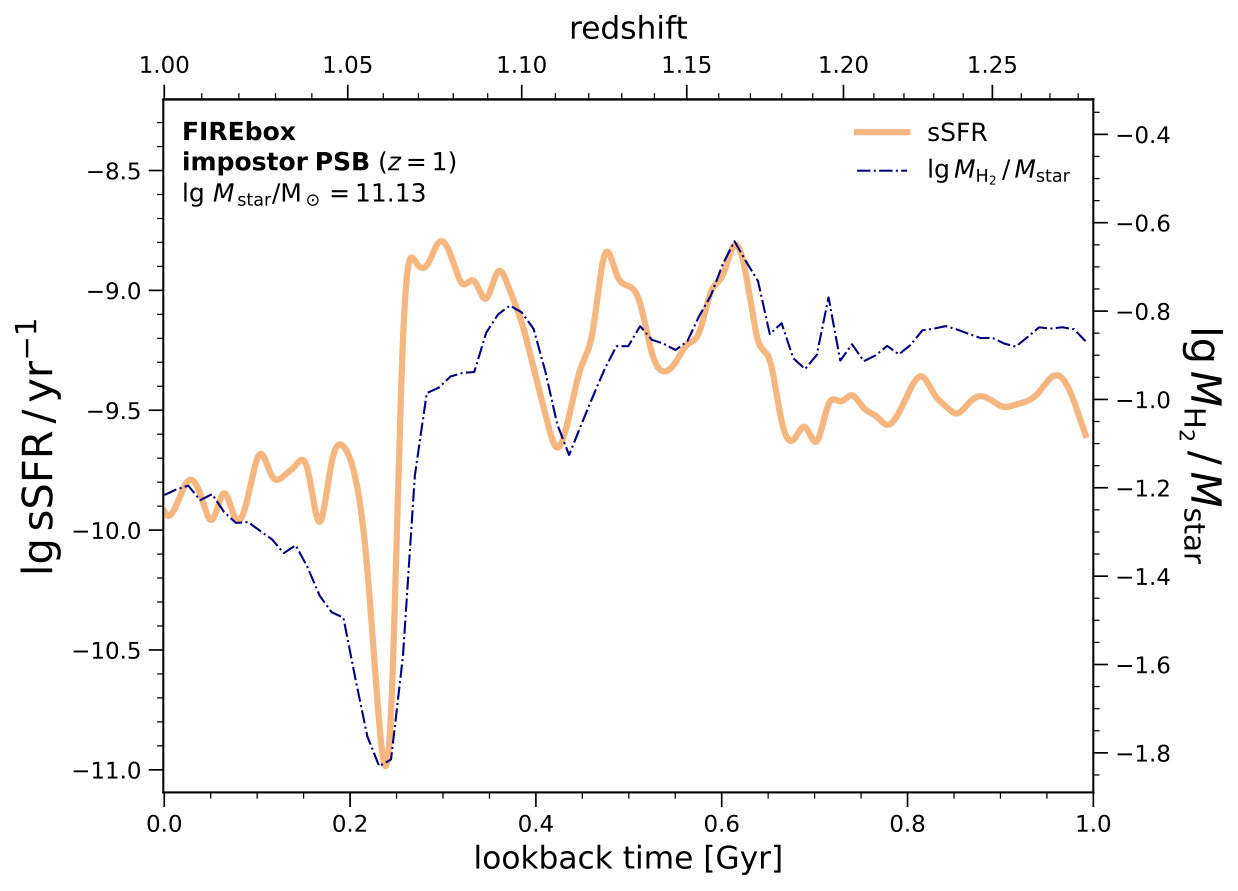 Figure 8
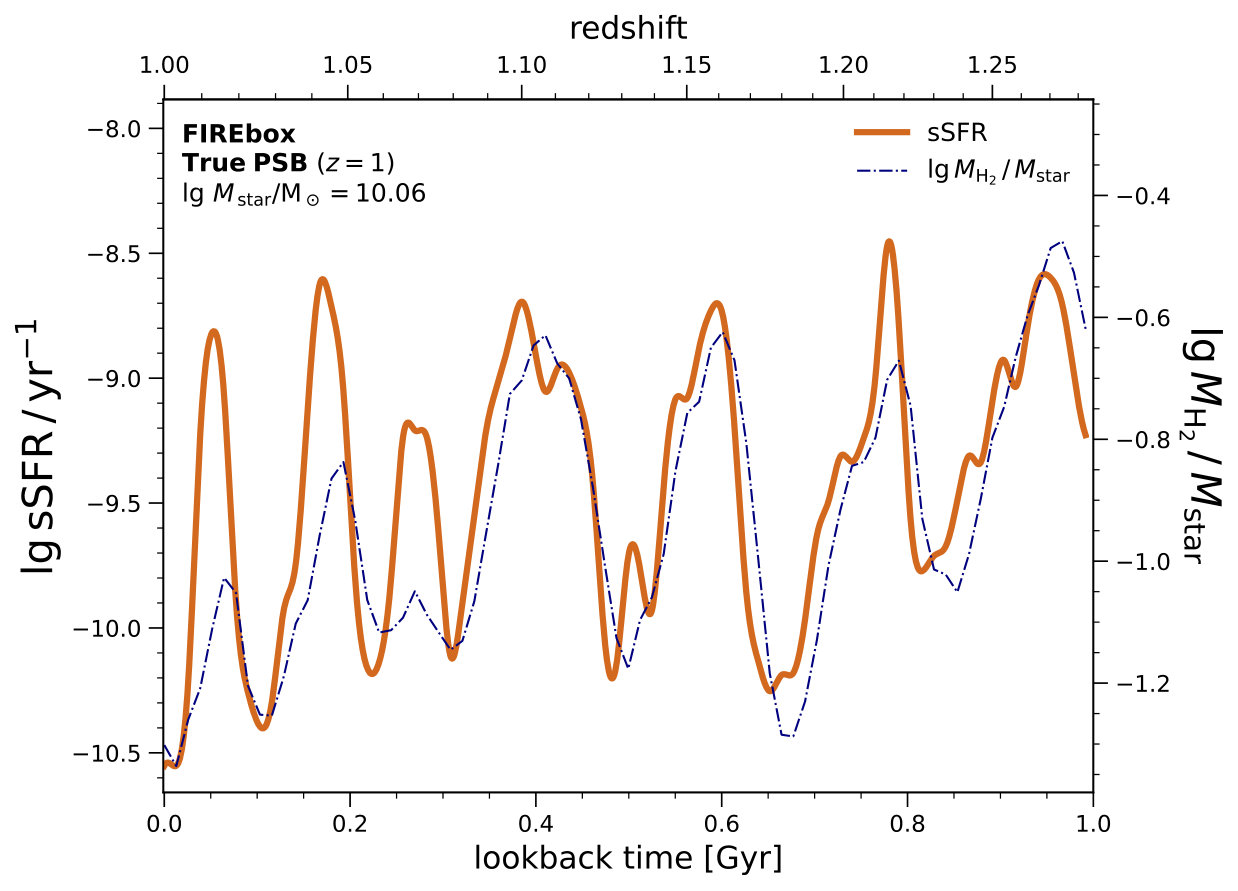 Figure 9
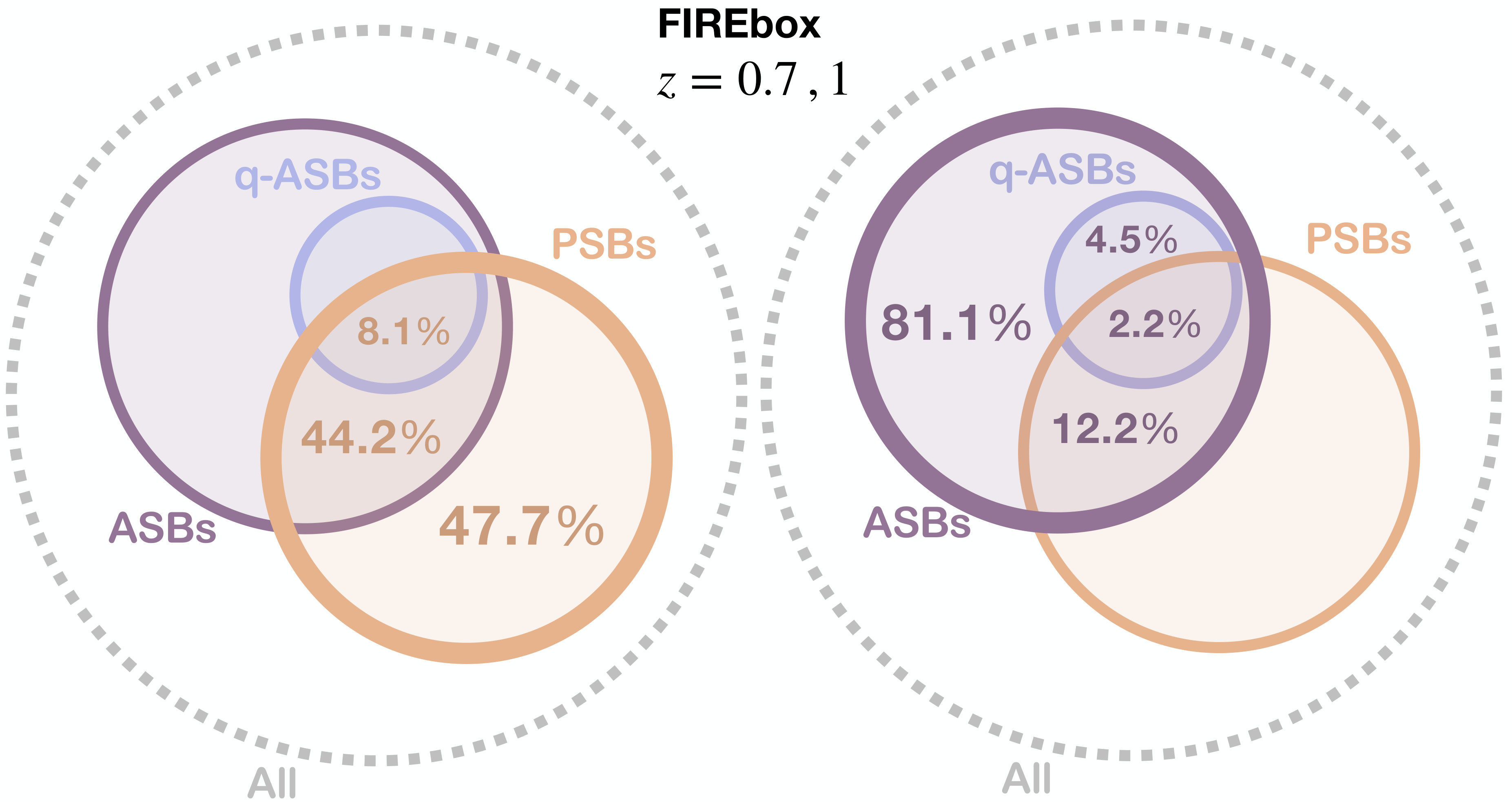 Figure 10
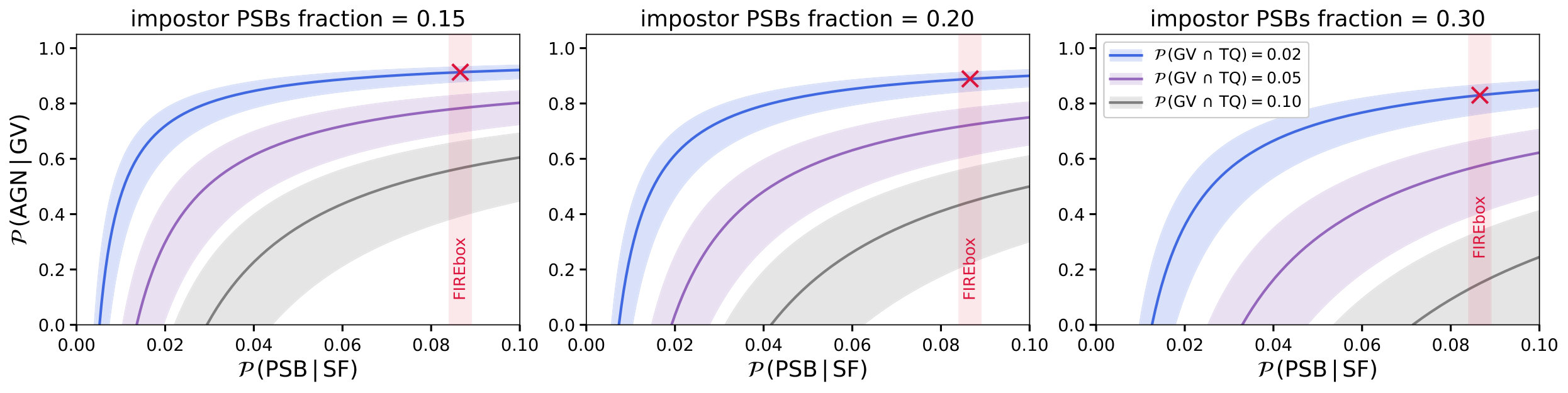 Figure 11
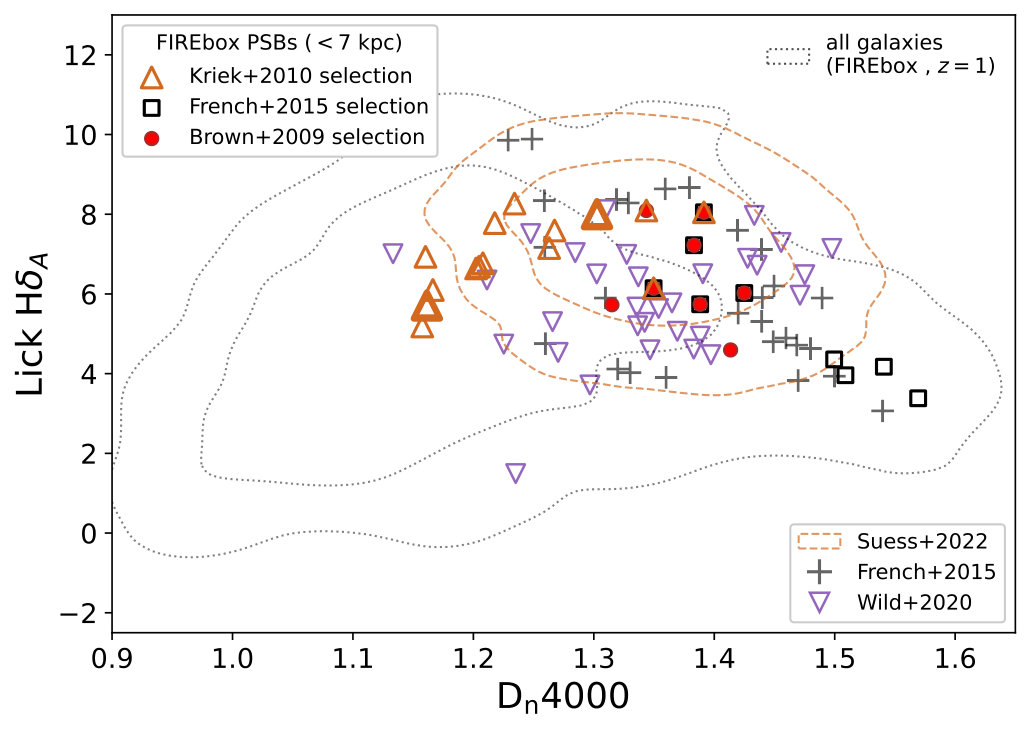 Figure 12
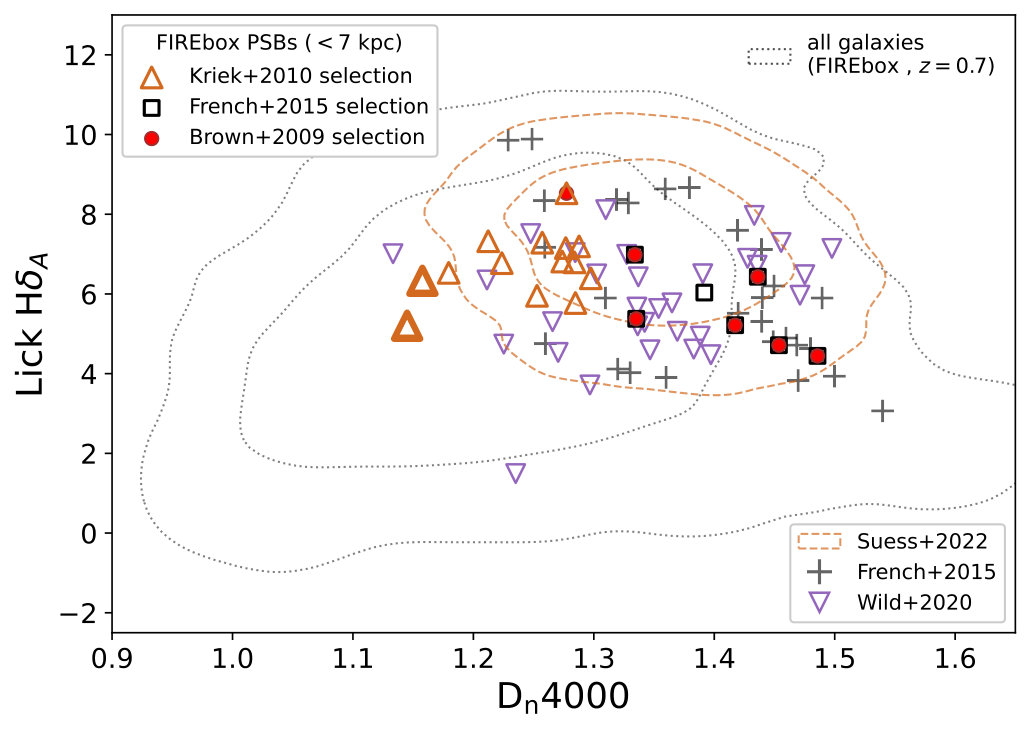 Figure 13
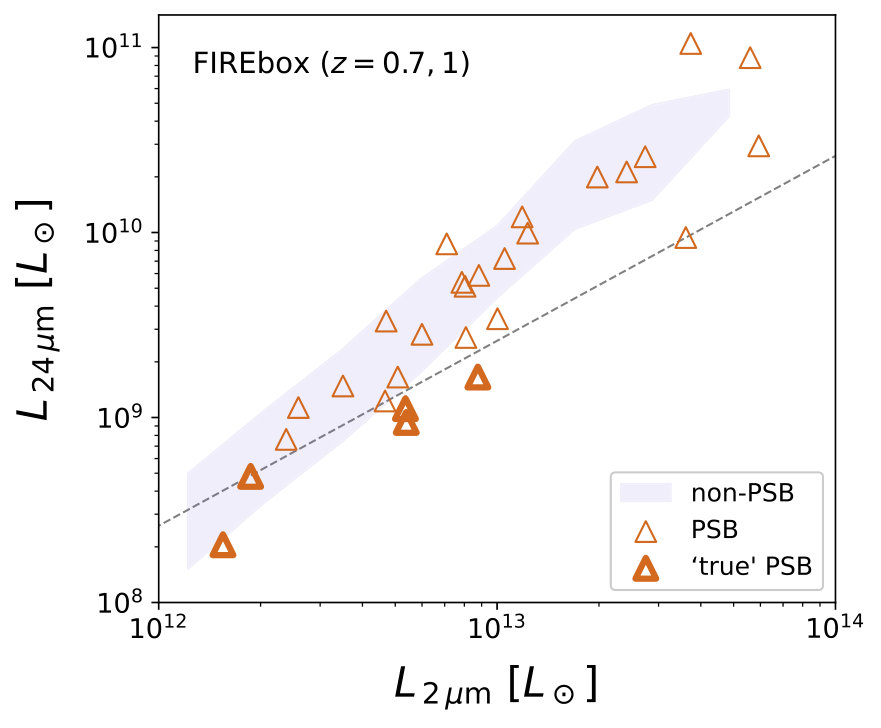 Figure 14
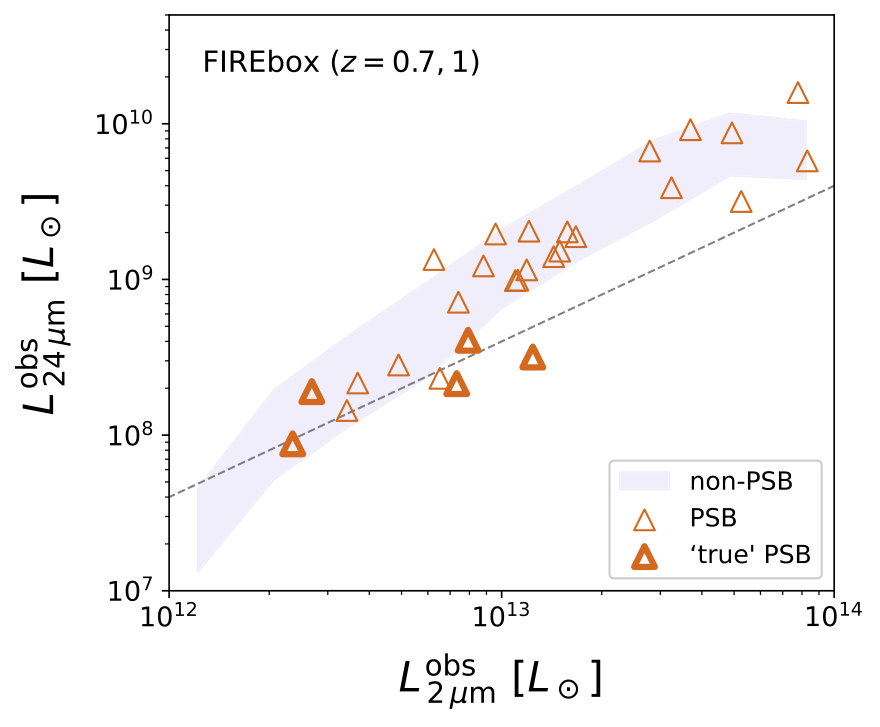 Figure 15
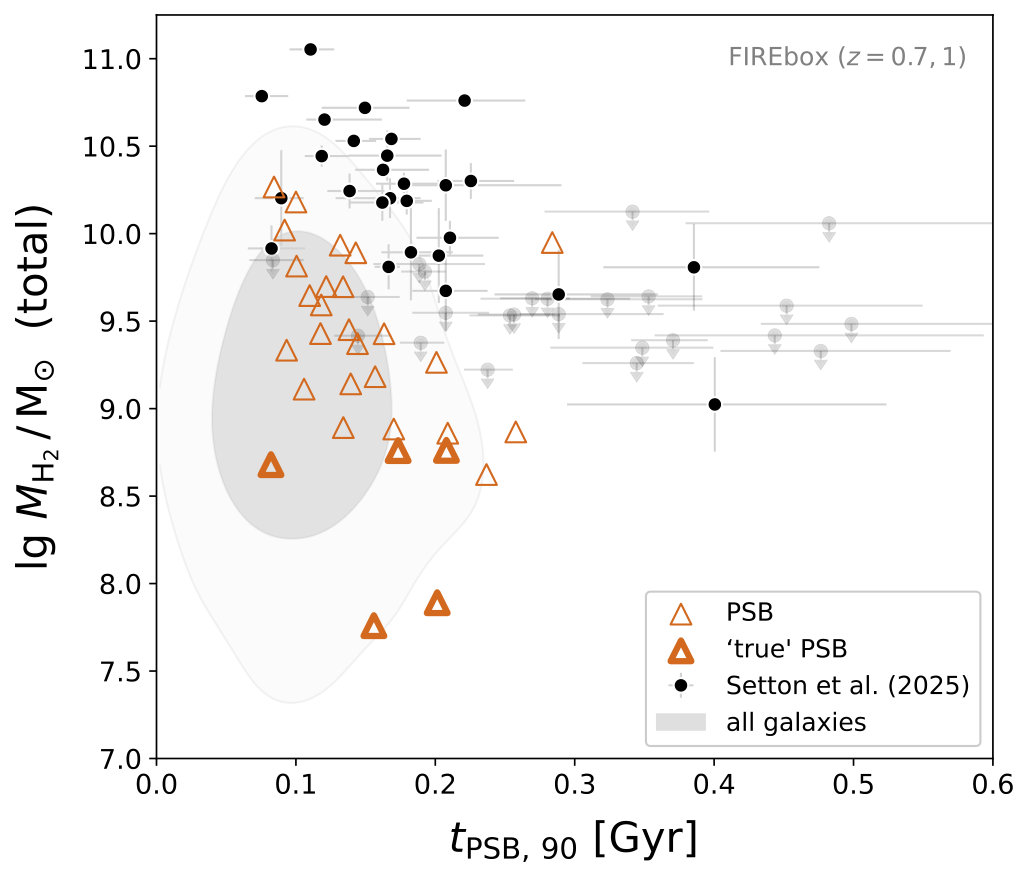 Figure 16
 Figure 17
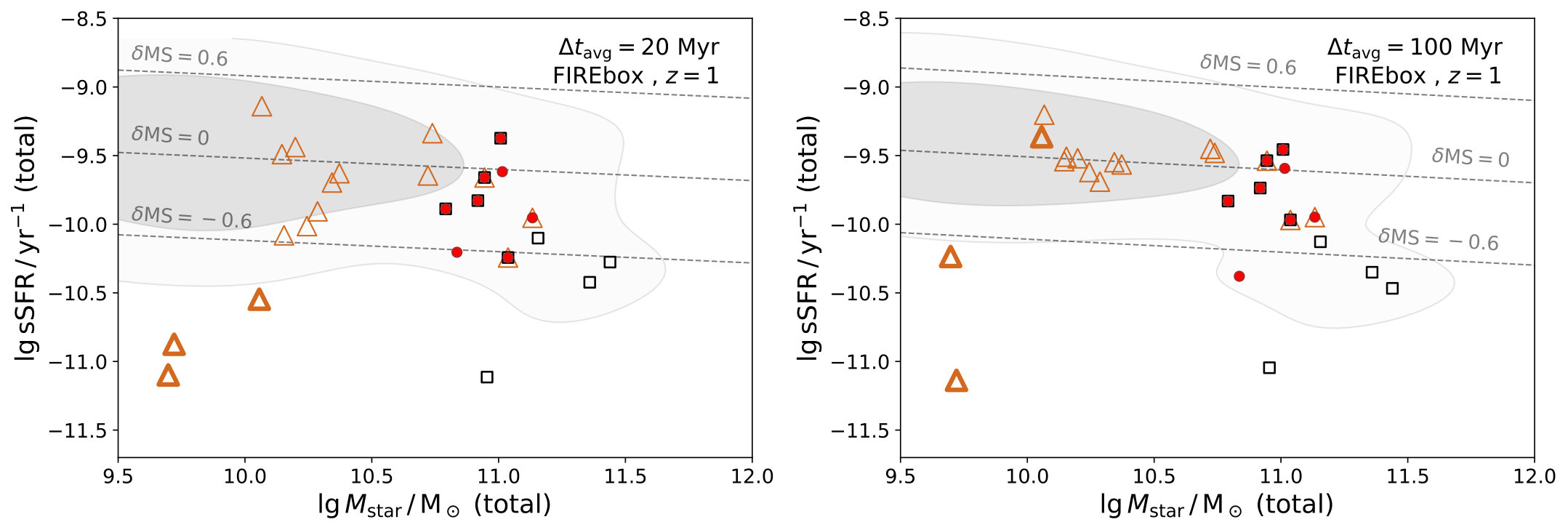 Figure 18
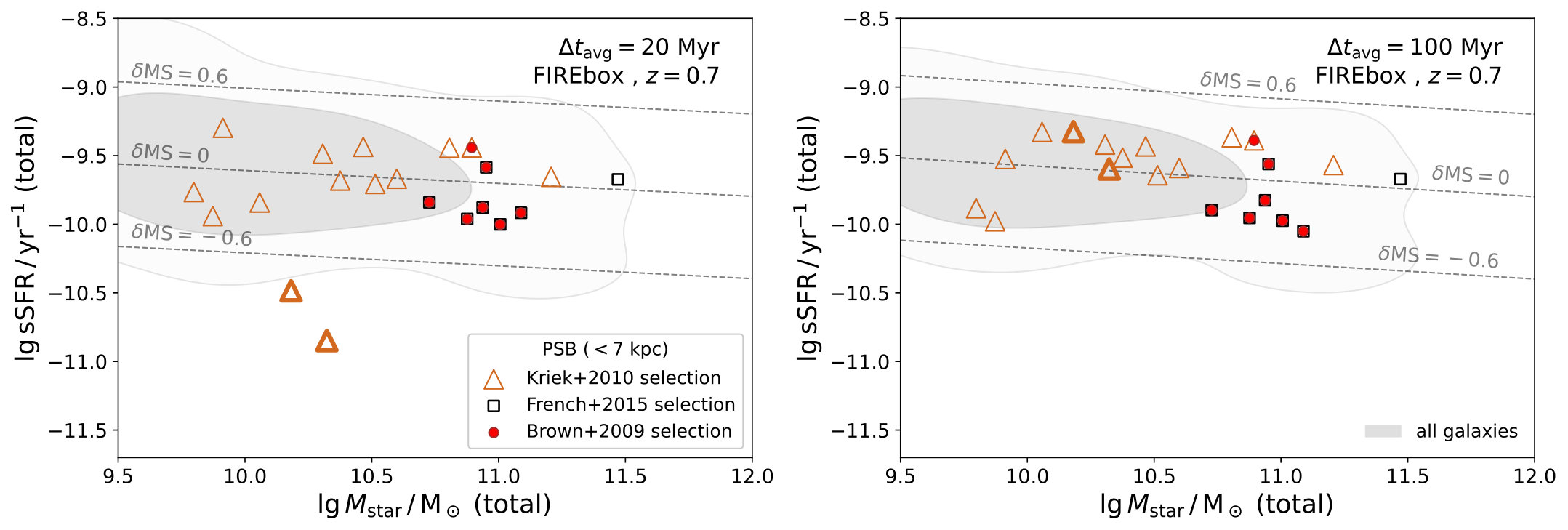 Figure 19
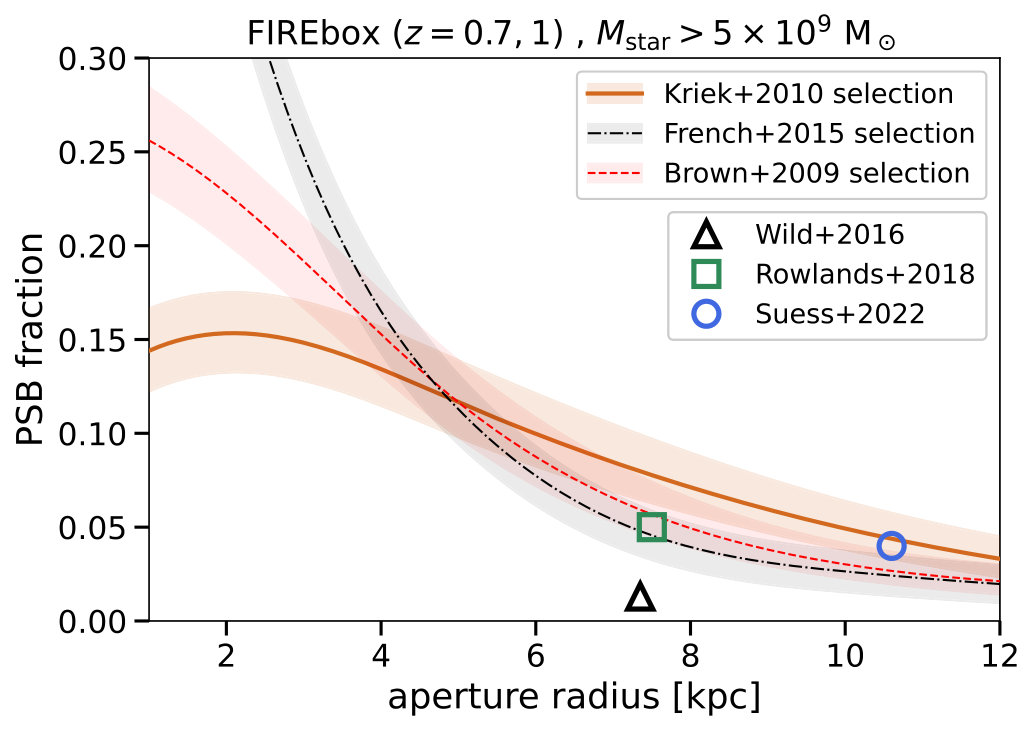 Figure 20
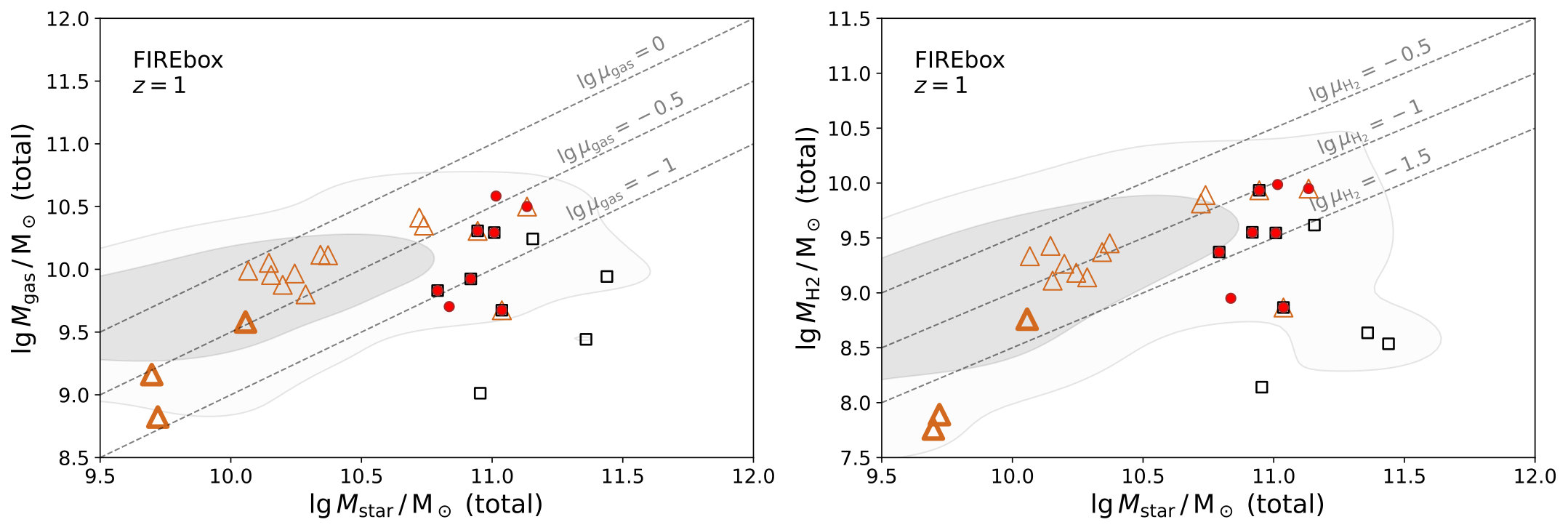 Figure 21
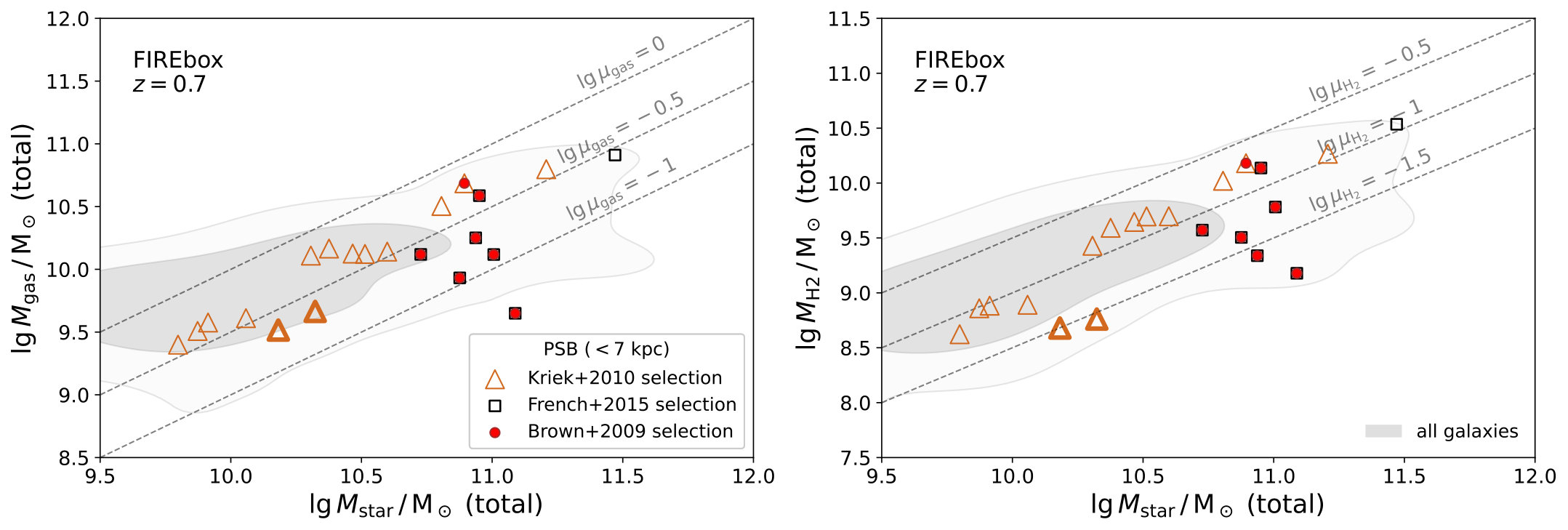 Figure 22
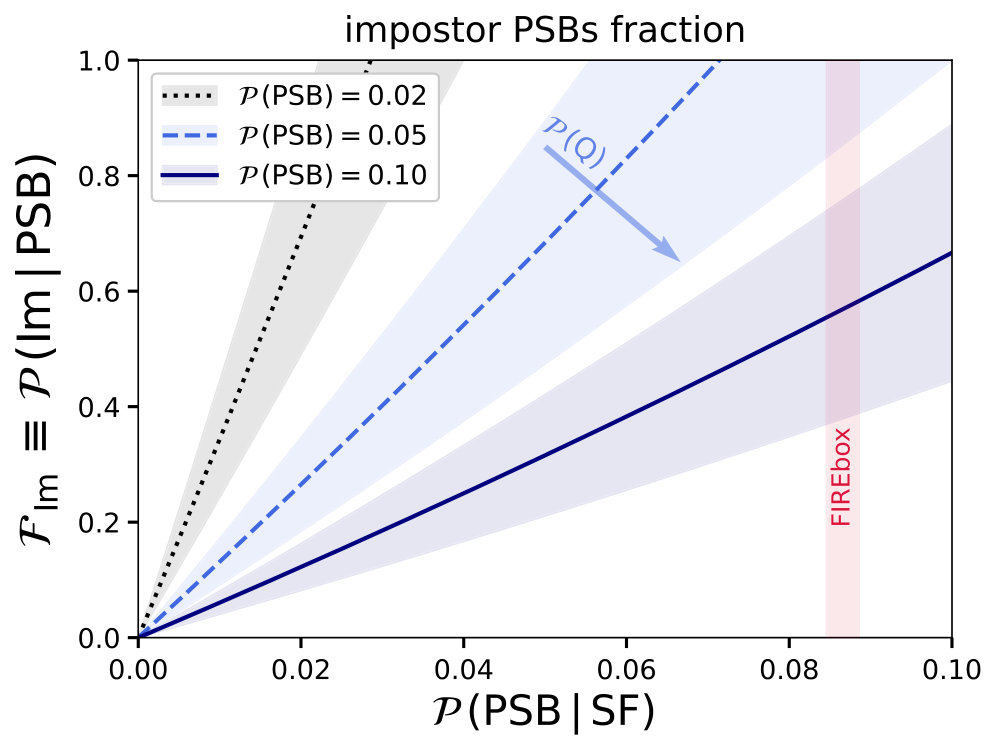 Figure 23
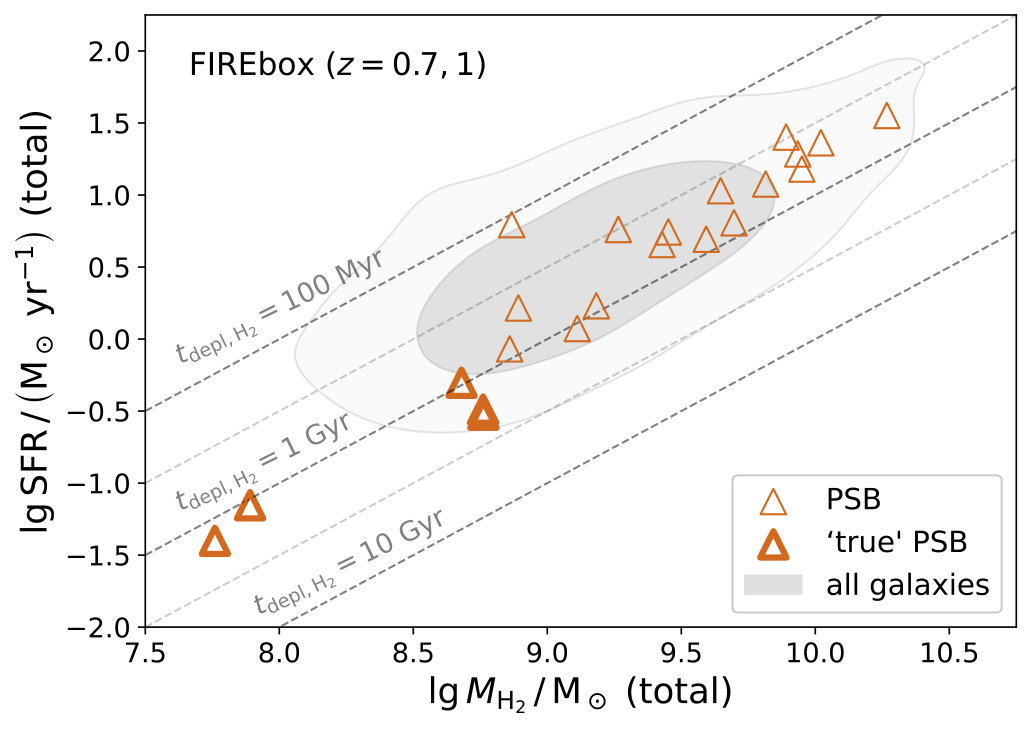 Figure 24
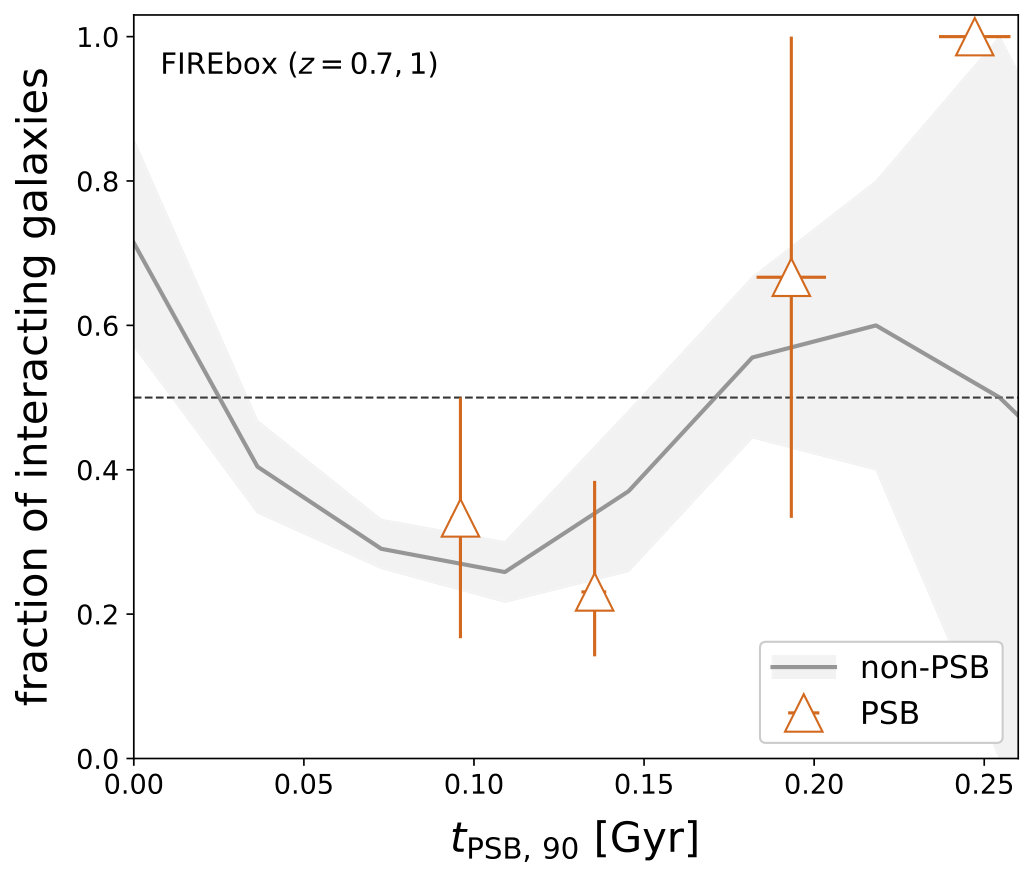 Figure 25
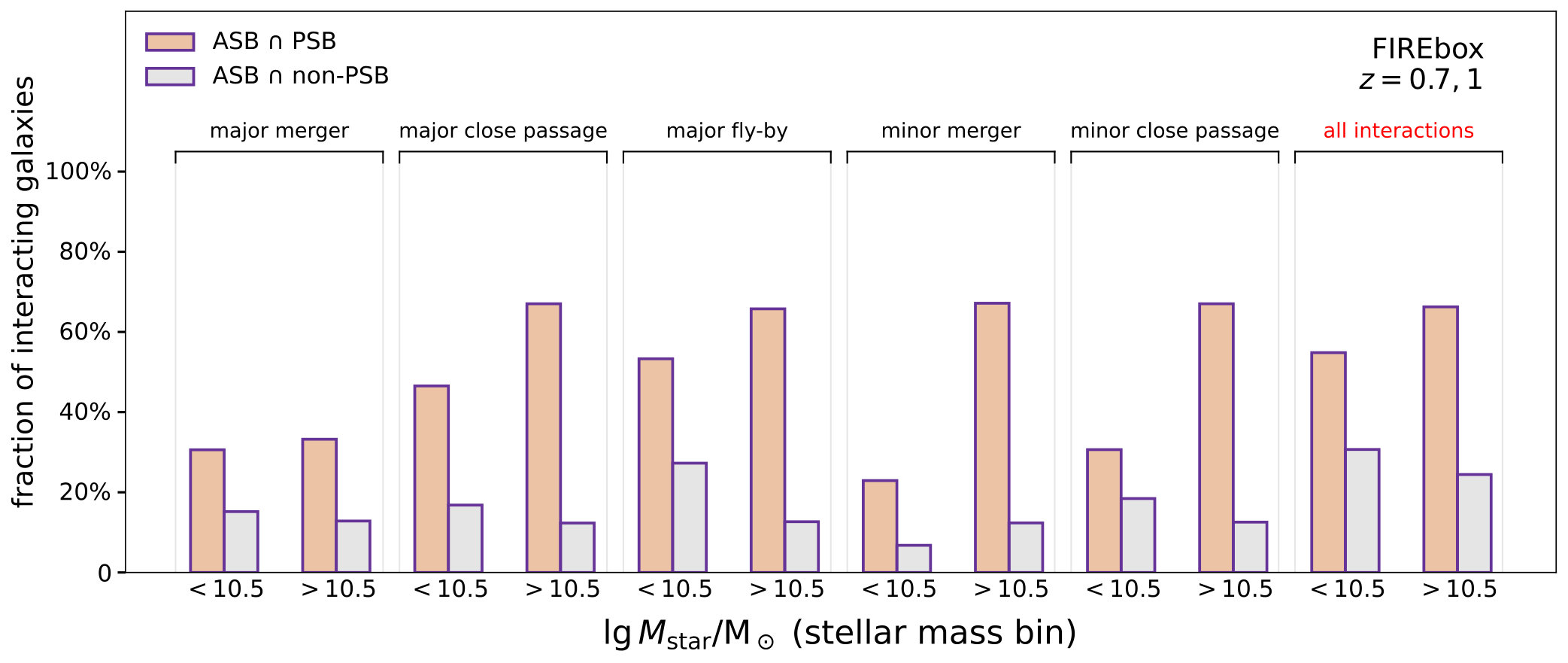 Figure 26
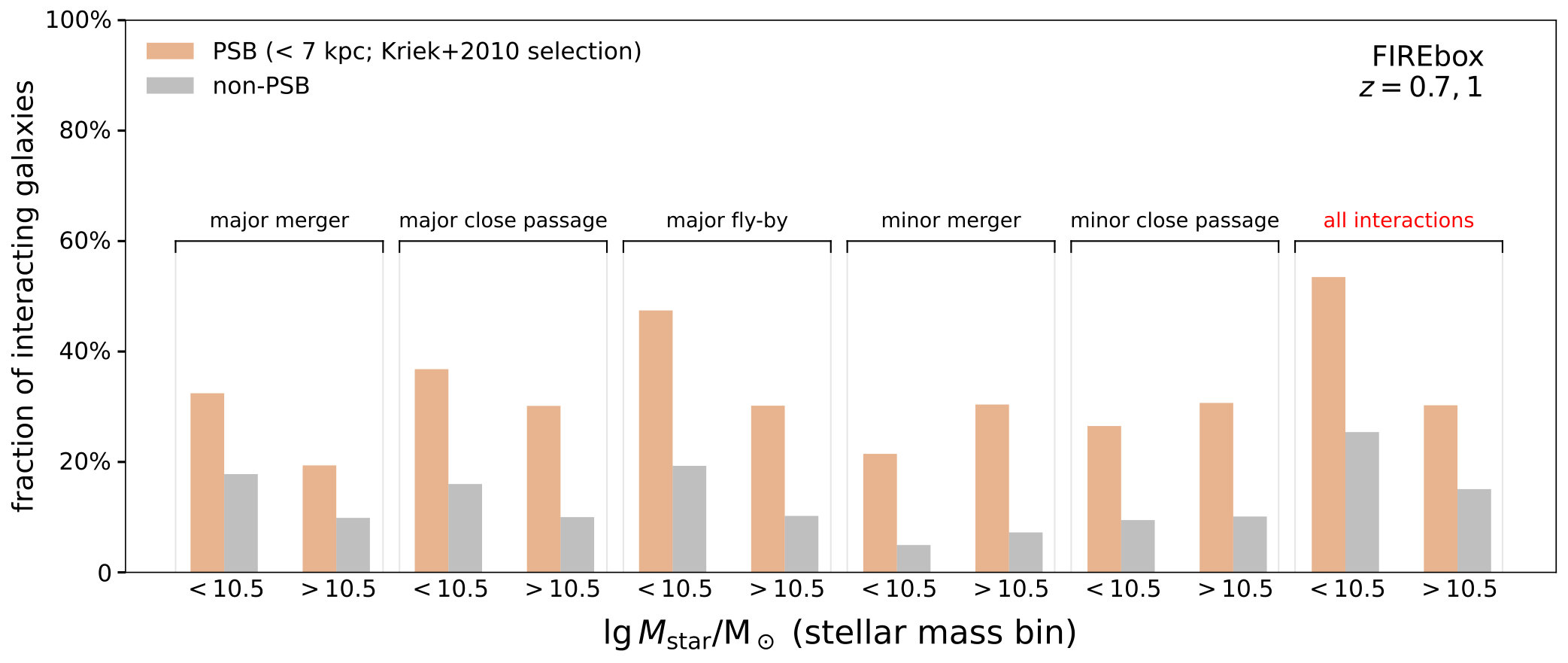 Figure 27
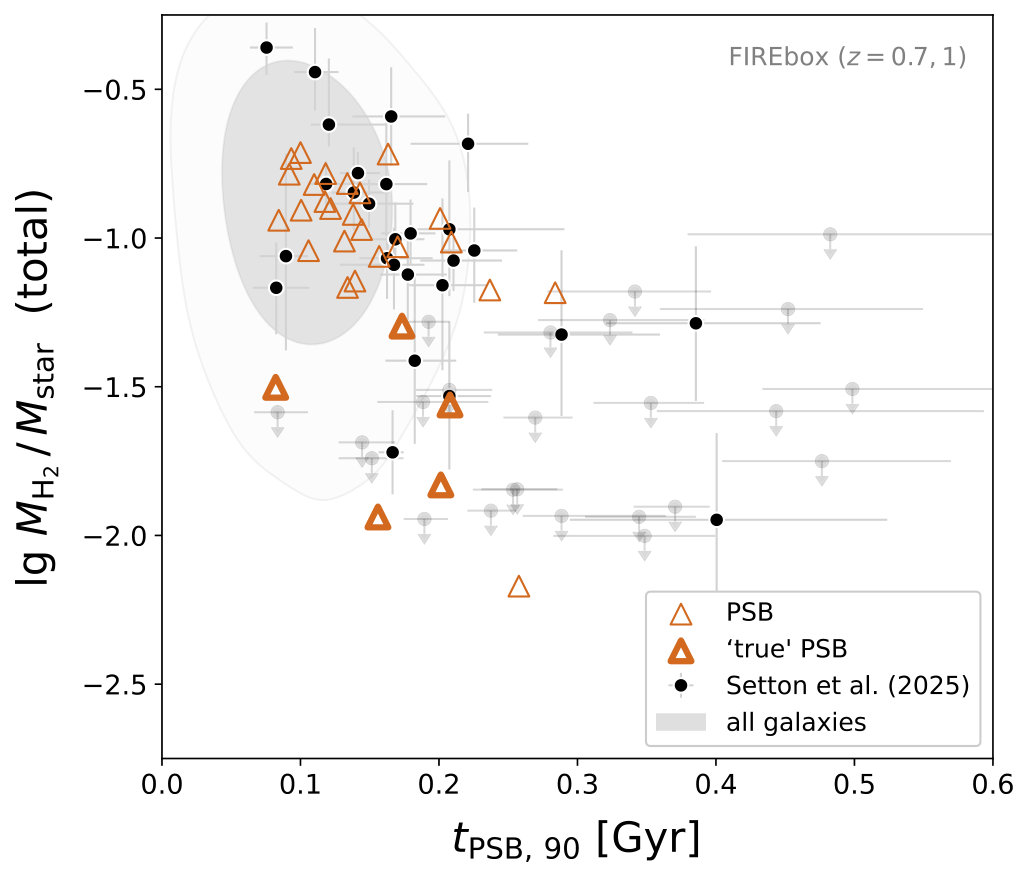 Figure 28
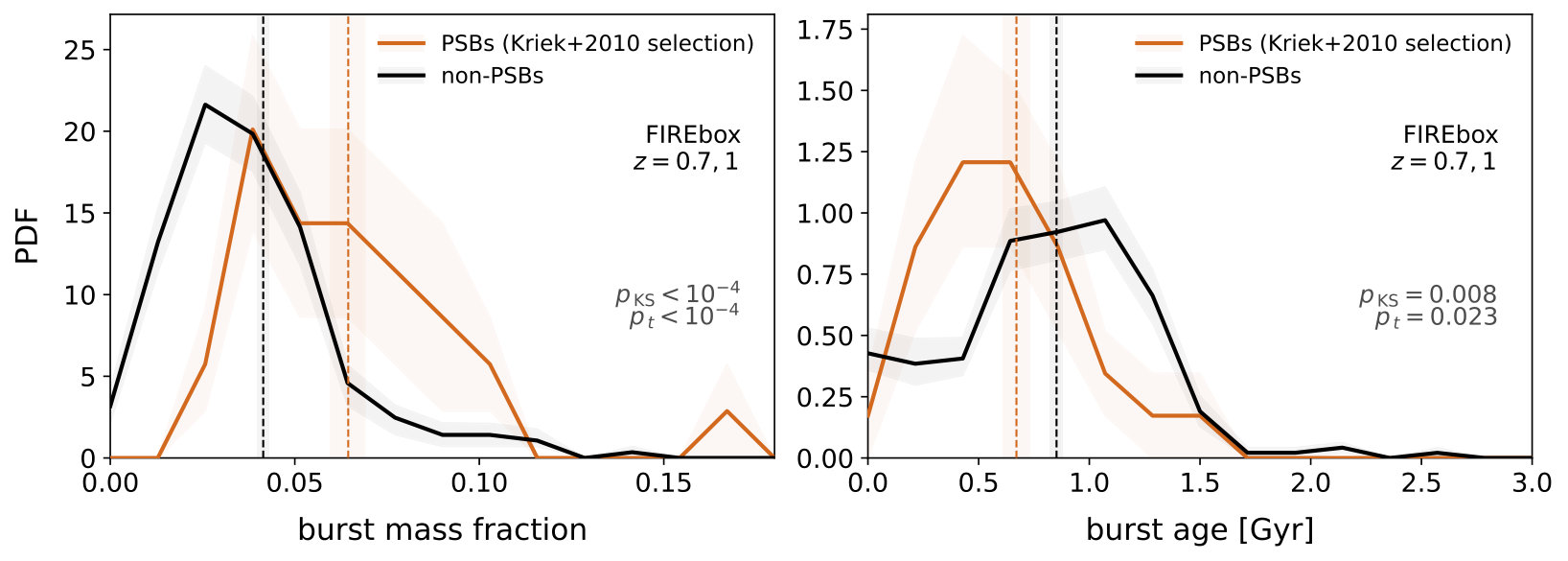 Figure 29
Peer Reviews
No public reviews on file for this paper yet. If you reviewed it on a platform where reviews are public (OpenReview, ICLR, NeurIPS, ICML), you can paste yours below so the community can read it here.
Videos
No videos yet. Explain this paper in a talk, walkthrough, or lecture? Add one.