Non-existence of co-spectral simple connected graphs with small number of edges
O. Boyko, D. Kaliuzhnyi-Verbovetskyi, V.Pivovarchik

TL;DR
This paper proves that for simple connected graphs with at most 7 edges, the eigenvalues of the Dirichlet problem uniquely determine the graph's shape, highlighting spectral uniqueness in small graphs.
Contribution
It establishes the non-existence of co-spectral non-isomorphic graphs with up to 7 edges, advancing understanding of spectral graph theory.
Findings
Eigenvalues uniquely determine graph shape for graphs with ≤7 edges
No co-spectral non-isomorphic graphs exist with small number of edges
Spectral data is sufficient for graph identification in small graphs
Abstract
We prove that if the number of edges does not exceed 7 then the asymptotics of eigenvalues of the Dirichlet problem uniquely determine the shape of the graph.
Click any figure to enlarge with its caption.
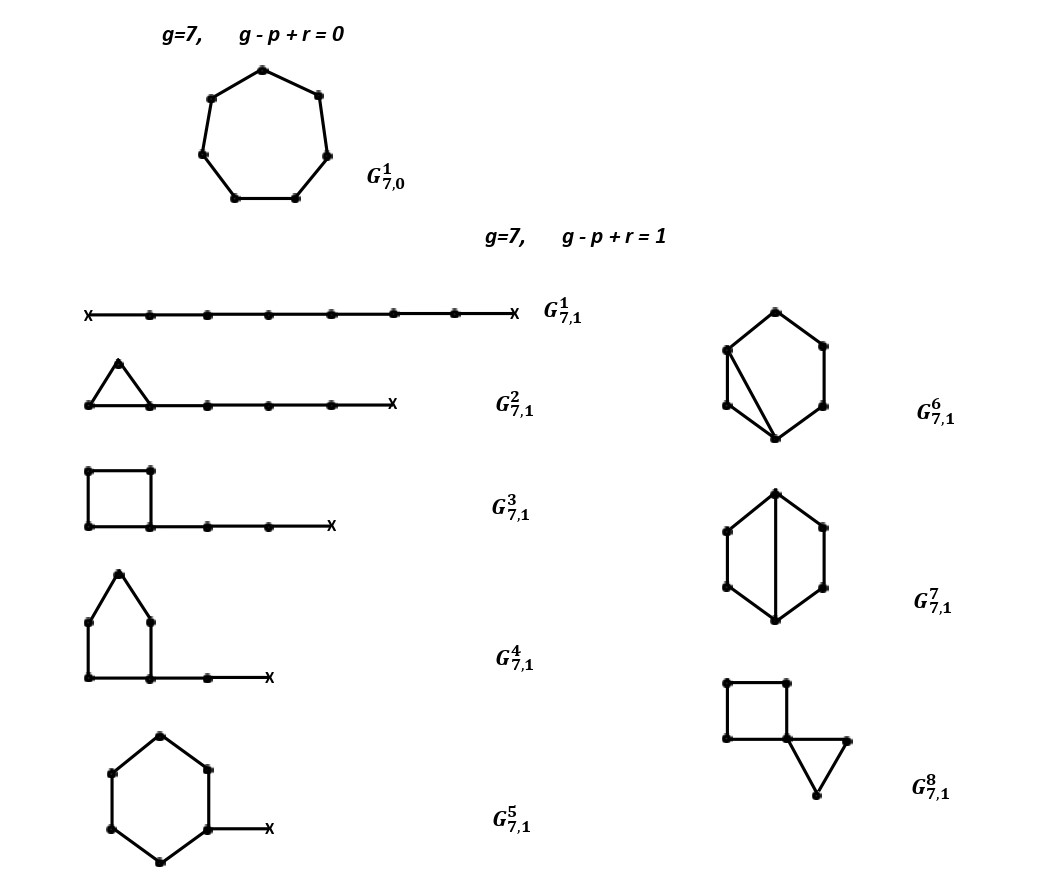 Figure 24
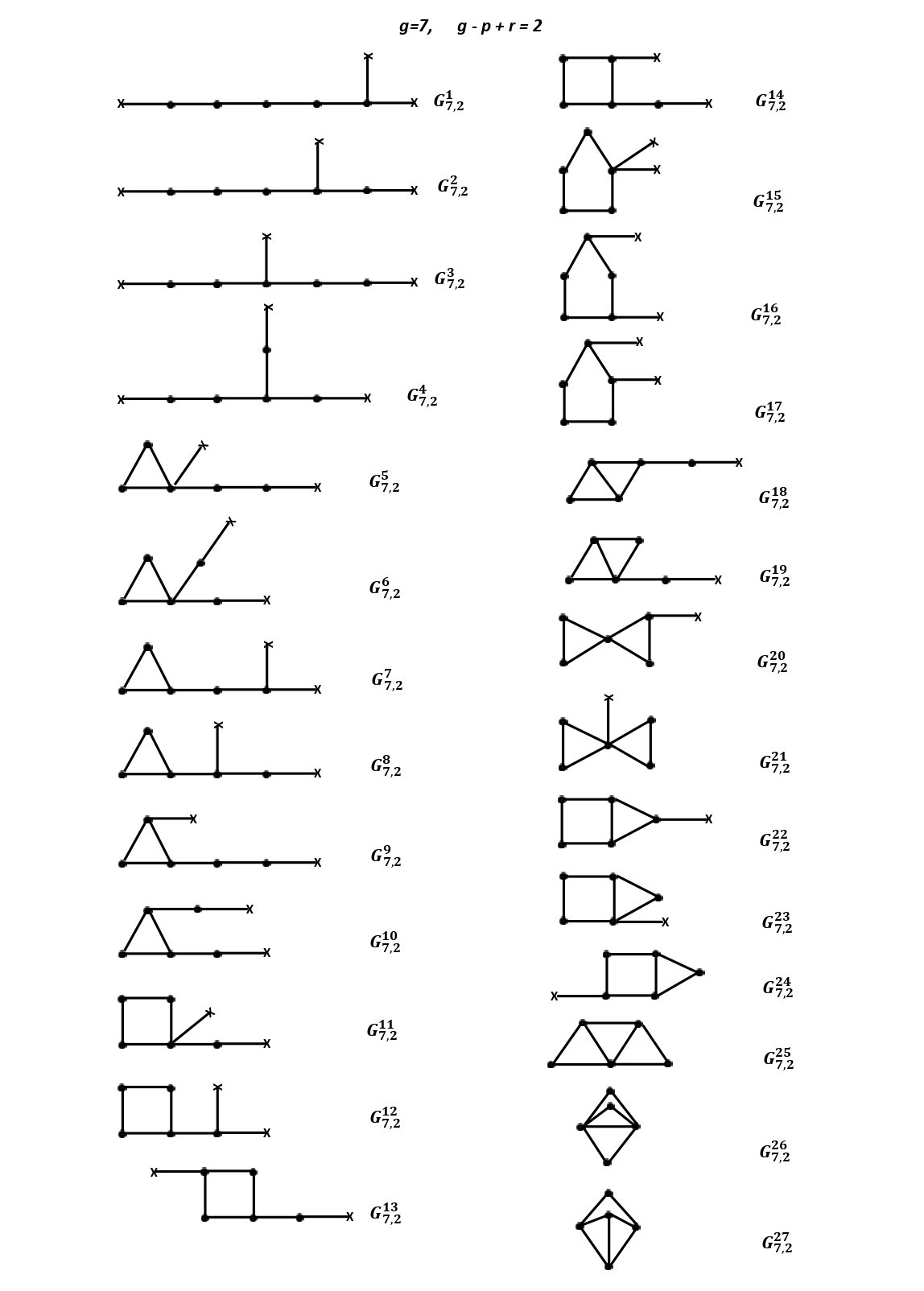 Figure 24
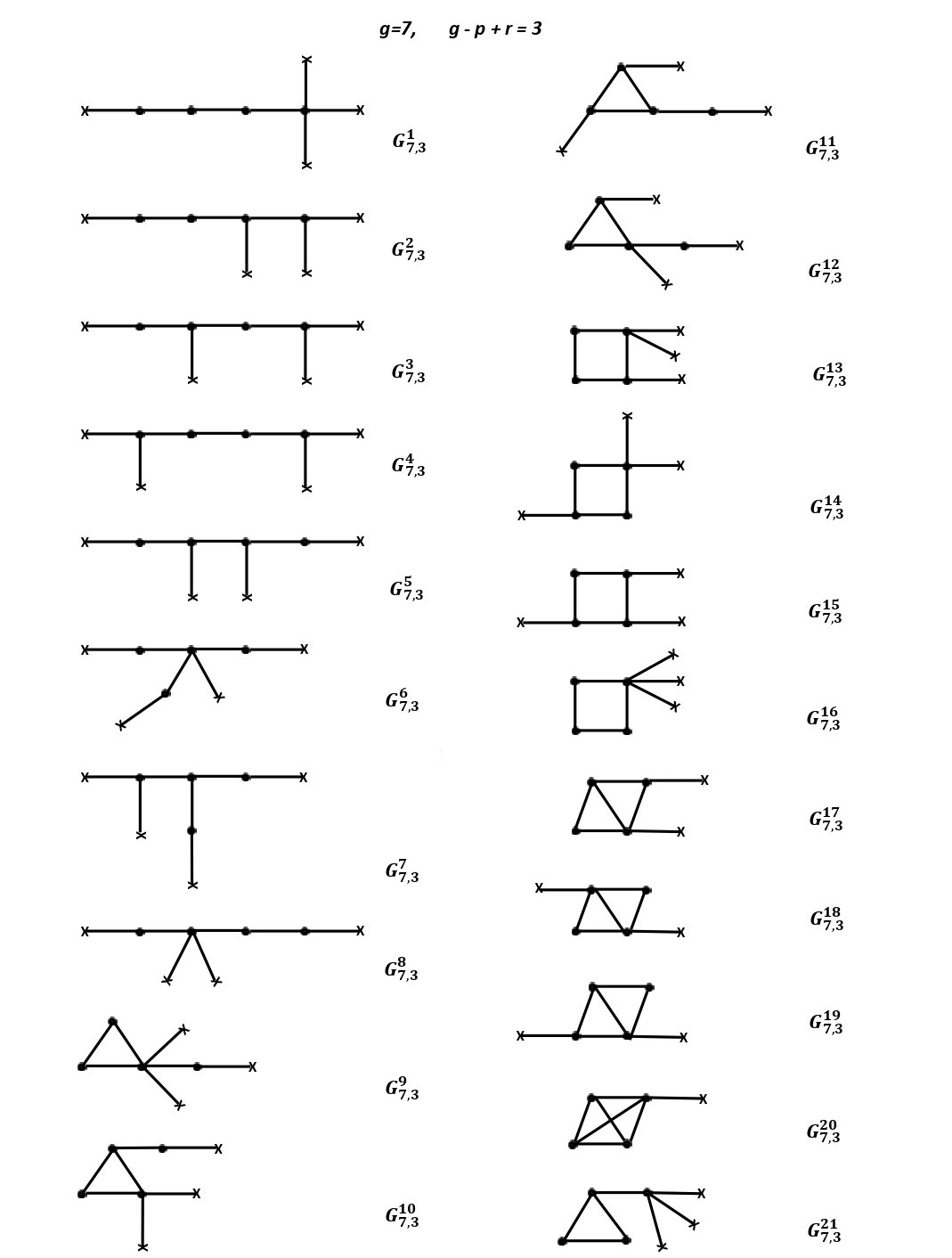 Figure 24
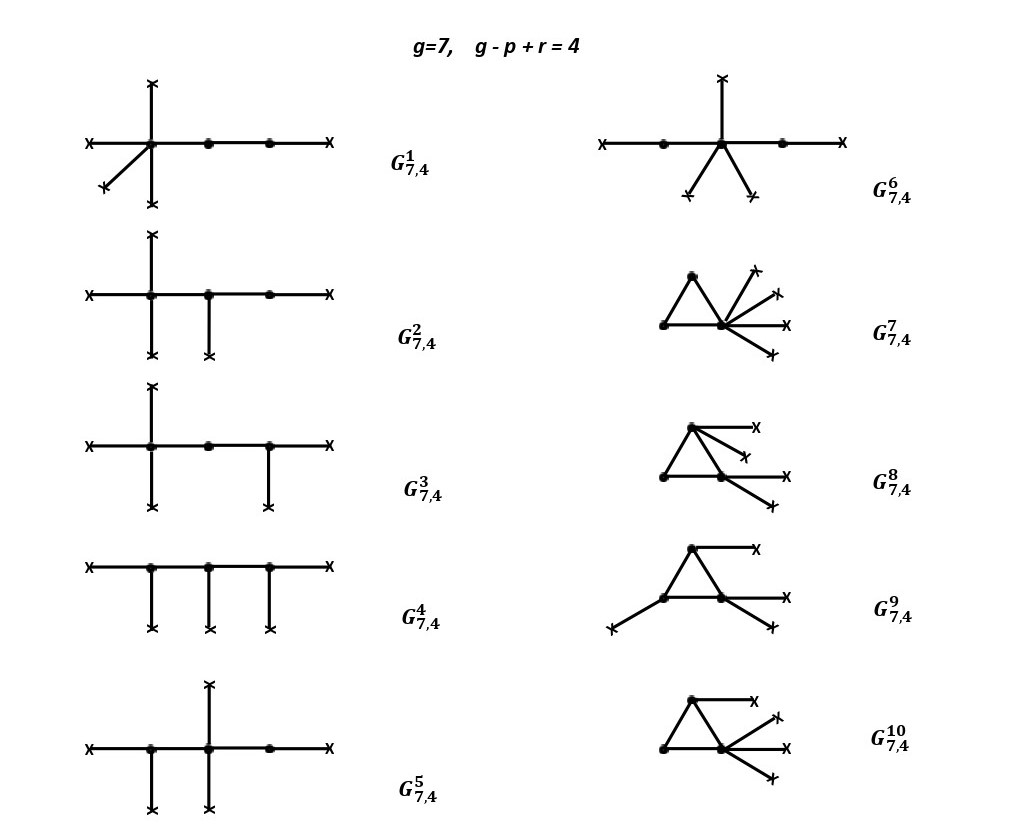 Figure 24
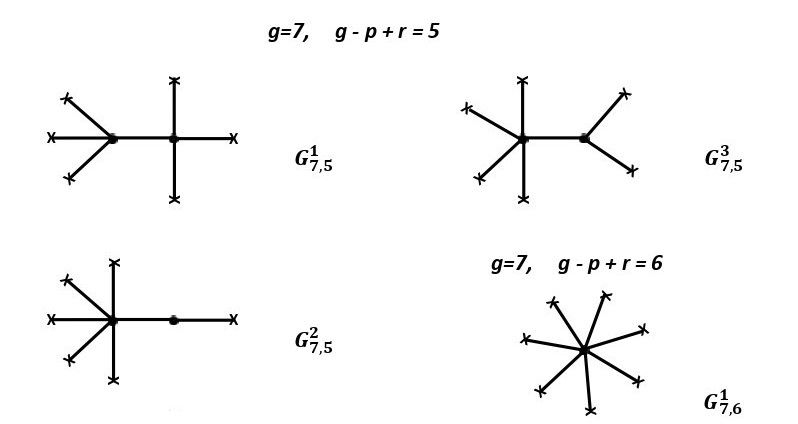 Figure 24
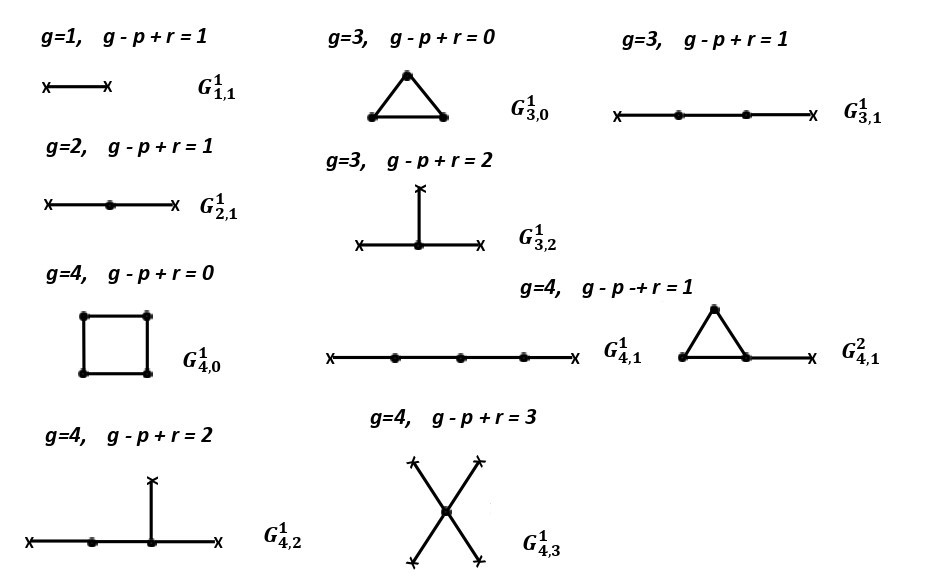 Figure 24
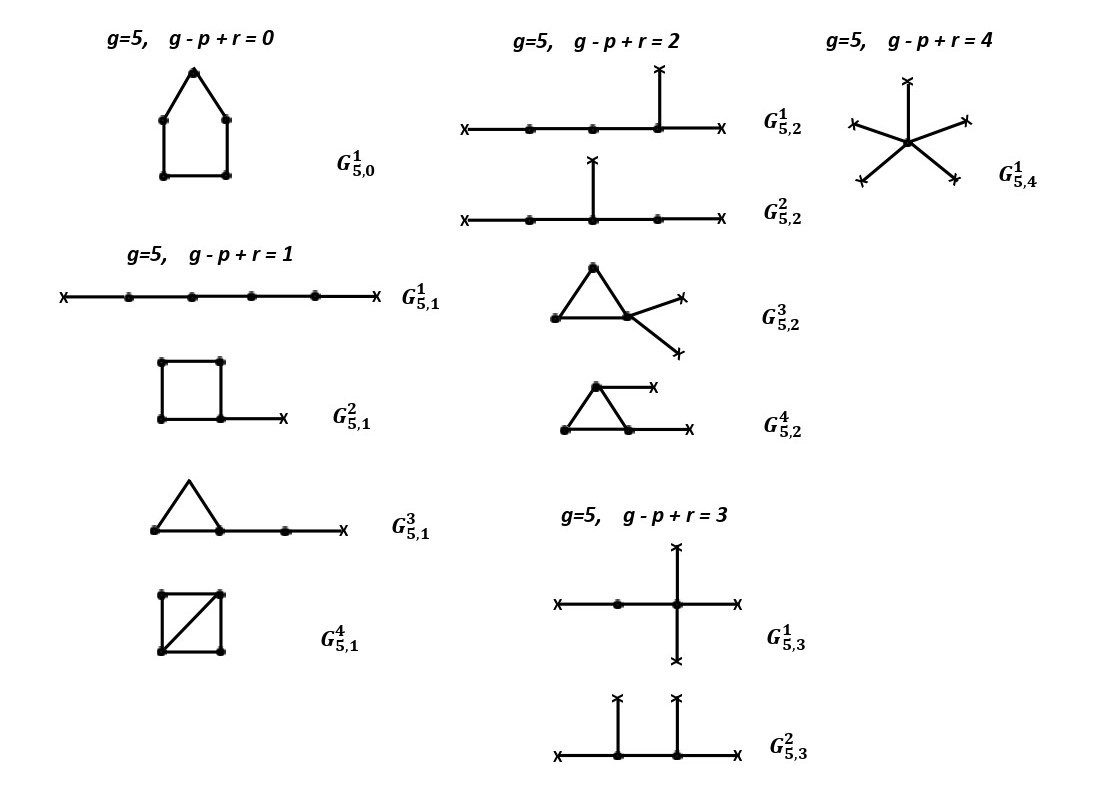 Figure 24
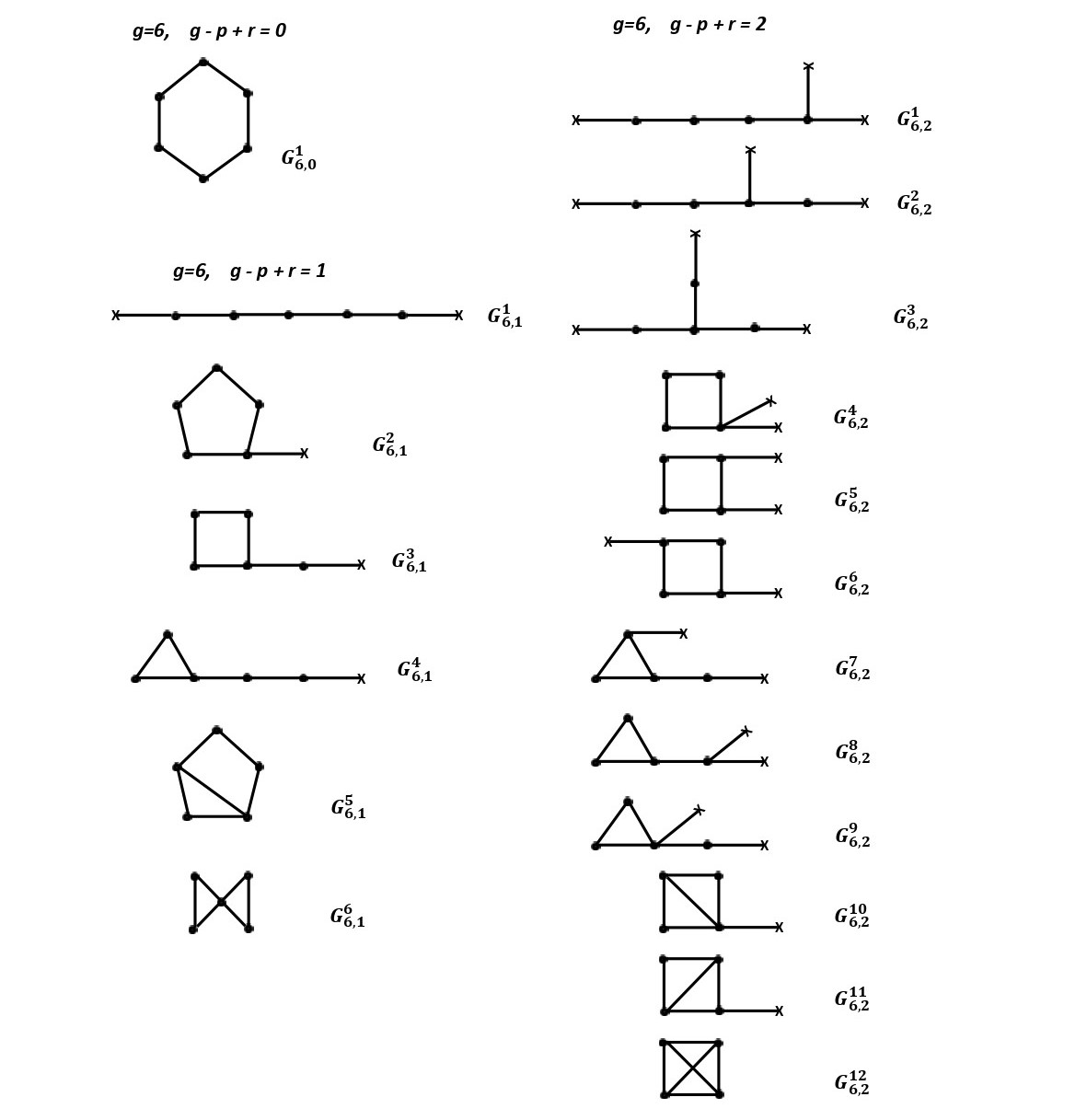 Figure 24
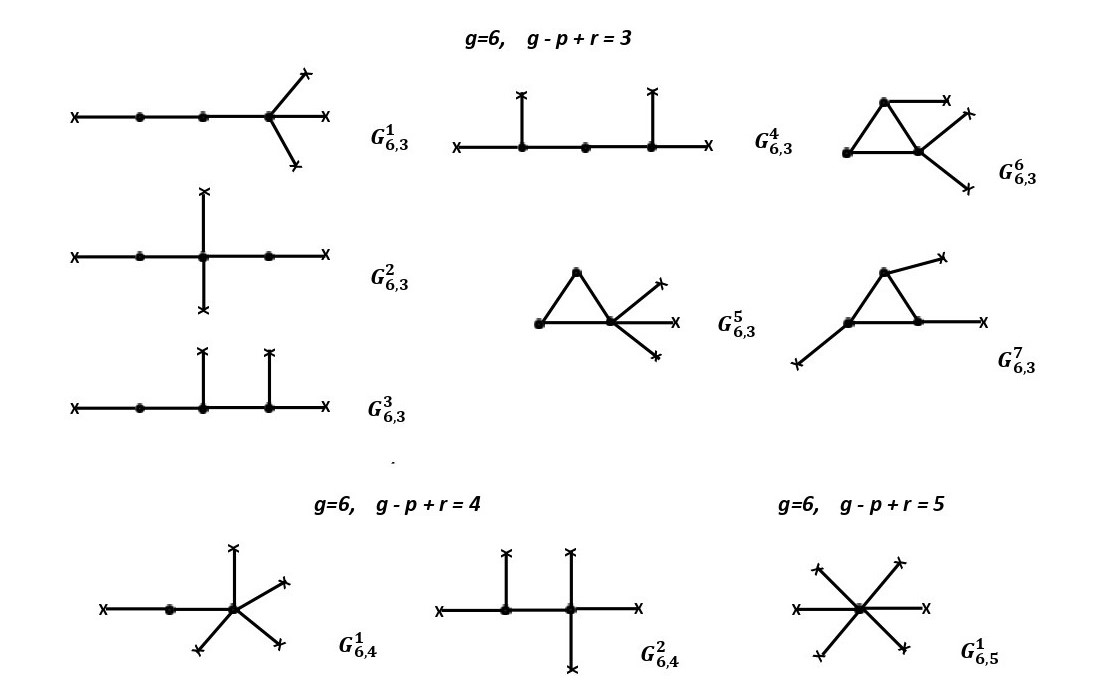 Figure 24
Peer Reviews
No public reviews on file for this paper yet. If you reviewed it on a platform where reviews are public (OpenReview, ICLR, NeurIPS, ICML), you can paste yours below so the community can read it here.
Videos
No videos yet. Explain this paper in a talk, walkthrough, or lecture? Add one.
11institutetext: 1,2South Ukrainian National Pedagogical Univeristy, Staroportofrankovskaya str. 26, Odesa
3South Ukrainian National Pedagogical Univeristy, Staroportofrankovskaya str. 26, Odesa and Univeristy of Vaasa, Vaasa, Finland
\enabstract
Author1 A.A., Author2 B.B.Title of the article in English We consider the Sturm-Liouville spectral problems on simple connected equilateral graphs. We prove that if the number of edges does not exceed 7 then the asymptotics of eigenvalues of the Dirichlet problem uniquely determine the shape of the graph. Graph, edge, vertex, eigenvalue, potential, non-isomorphic, adjacency matrix, characteristic function \uaabstract . , . - , . - ’ -˳ ’ . , , 7, ij . , , , , , , , ††thanks: The authors are grateful to the Ministry of Education and Science of Ukraine for the support in completing the work ’Inverse problems of finding the shape of a graph by spectral data’ State registration number 0124U000818. The present research was supported by the Academy of Finland (project no. 358155). The third author is grateful to the University of Vaasa for hospitality. The first and the third authors express their gratitude to NSF US for support IMPRESS-U: Spectral and geometric methods for damped wave equations with applications to fiber lasers. \UDC?????
Non-existence of co-spectral simple connected graphs with small number of edges
Boyko O1
,
Kaliuzhnyi-Verbovetskyi D2
and
Pivovarchik V3
1 [email protected], 2 [email protected], [email protected]
(04,,???.02.2021)
1991 Mathematics Subject Classification:
34B45, 34B240, 34L20
Introduction
In quantum graph theory, the problem of recovering the shape of a graph was stated in [1] and [9]. It was shown in [9] that if the lengths of the edges are non-commensurate then the spectrum of the spectral Sturm-Liouville problem on a graph with the standard conditions at its vertices (the Neumann conditions at the pendant vertices and the continuity conditions + Kirchhoff’s conditions at the interior vertices) uniquely determines the shape of this graph. In [1], it was shown that in the case of commensurate lengths of the edges there exist co-spectral quantum graphs. In [10], [3] it was shown that the spectrum of the Neumann problem with zero potential on uniquely determines the shape of the graph. In [6], it was shown that if the graph is simple connected equilateral with the number of vertices less than or equal 5 and the potentials on the edges are real functions, then the spectrum of the Sturm-Liouville problem with the standard conditions at the vertices uniquely determines the shape of the graph. For trees, the minimal number of vertices in a co-spectral pair is 9 (see [15], [7], [4]). In the case of the standard conditions at all the vertices, the asymptotics of the spectrum shows whether the graph is a tree. If the number of vertices doesn’t exceed 8 then to find the shape of a tree we need just to find in [6] the characteristic polynomial corresponding to the given spectrum.
For the case of the Dirichlet conditions at the pendant vertices, it was shown in [4] that there are no cospectral trees with the number of vertices . However, in case of the Dirichlet conditions at the pendant vertices, the asymptotics of the spectrum do not show whether the graph is a tree. The possibility of coincidence between the spectrum of a tree and the spectrum of a nontree graph (or between the spectra of two graphs with different cyclomatic numbers) is not excluded a’priori in the case of the Dirichlet conditions at the pendant vertices. Such possibility is excluded in the case of the Neumann conditions at the pendant vertices.
It should be mentioned that an attempt to use two spectra to find the shape of a tree has been done in [16] where expantion to a branched continued fractions of certain polynomials related to the Neumann and the Dirichlet problems was used. For branched continued fractions see [8].
In the present paper, we prove that if the number of edges then there are no co-spectral simple connected equilateral graphs and we conclude that the asymptotics of the spectrum uniquely determine the shape of the graph. Examples of co-spectral graphs with the Dirichlet conditions at the pendant vertices with are given in [15] (see Fig 1).
In Section 2, we describe the Sturm-Liouville problem on a simple connected equilateral graph with the Dirichlet conditions at each pendant vertex and the standard conditions at all the interior vertices.
We expose the known theorem relating the characteristic function (the function whose set of zeros coincides with the spectrum) of the above described Sturm-Liouville problem with the determinant of the normalized Laplacian of the corresponding combinatorial graph.
In Section 3, we show all the simple connected equilateral graphs on 7 or less edges and calculate the corresponding characteristic functions. We compare them and find that there are no co-spectral pairs.
1. Statement of the problem
Let be an equilateral simple connected graph with vertices and edges each of the length .
We direct the edges incident with the pendant vertices away from these vertices. Orientation of the rest of the vertices is arbitrary. Let us describe the spectral problem on . We consider the Sturm-Liouville equations on the edges
[TABLE]
where are real.
At the beginning of each edge incident with a pendant vertex, we impose the Dirichlet condition
[TABLE]
At each interior vertex, we impose the standard conditions, i.e. the continuity conditions
[TABLE]
for the incoming into edges and for all outgoing from , and the Kirchhoff’s conditions
[TABLE]
where the sum in the right-hand side is taken over all edges outgoing from and the sum in the left-hand side is taken over all edges incoming to .
We call the above conditions (the continuity + Kirchhoff’s or Neumann’s) standard.
In the sequel, if the potentials are the same on all the edges we omit the index in and .
In order to find the characteristic function of our Sturm–Liouville problems, we look for coefficients such that the solution of (1) can be expressed in the form
[TABLE]
Substituting this into the continuity conditions; as well as into Kirchhoff’s condition at each interior vertex and into the Dirichlet conditions at all pendant vertices, we obtain a system of linear algebraic equations with unknowns . Denote the matrix of this system by , we call it the characteristic matrix of our problem. Observe that it involves the values , , , . Then the equation
[TABLE]
completely determines the spectrum of problem (1)–(4).
Let be the adjacency matrix of , and
[TABLE]
the degree matrix. Here is the degree of the vertex . Denote by the submatrix of obtained by deleting the rows and the columns corresponding to those pendant vertices (where the Dirichlet conditions are imposed).
The following theorem was proved in [13] (Theorem 6.4.2).
Theorem 1.1**.**
Let be a simple connected graph with . Assume that all edges have the same length and the same real potential symmetric with respect to the midpoint of an edge (). Then the spectrum of problem (1)–(4) coincides with the set of zeros of the characteristic function
[TABLE]
where is the number of pendant vertices, is the solution of (1) which satisfies the conditions and is the solution of (1) which satisfies the conditions and
[TABLE]
It is clear that, in case of identically zero potential,
[TABLE]
Corollary 1.2**.**
Let be a simple connected graph with . Assume that the edges have the same length and the potentials on the edges are real. Then the characteristic function of problem (1)–(4) satisfies
[TABLE]
Proof 1.3**.**
We use the following asymptotics [14]:
[TABLE]
[TABLE]
Suppose first that all the potentials on the edges are the same and symmetric with respect to the midpoint of an edge. Then using (5) and (8) we obtain (7).
Now let the potentials be diffirent and not symmetric but real -functions. Then we apply Theorem 5.4 from [5] and obtain (7). This means that if two graphs are cospectral then they must have not only the same but also the same . Thus, we need to investigate .
2. Cospectrality
The spectrum of problem (1)– (4) consists of normal (isolated Fredholm) eigenvalues of finite multiplicity. The corresponding operator is selfadjoint, therefore these eigenvalues are real. For the main term of the asymptotics we have
[TABLE]
(see [11], [2], [12] or [1] Corollary 1). In this paper, by co-spectral we mean simple connected equilateral (with the same length of the edges) graphs with the same spectrum of problem (1)–(4).
According to (9), co-spectral graphs must have the same number of edges, .
Equations (6) and (7) imply that co-spectral graphs must have the same value of . Let us explain it. The following theorem was proved in [4].
Theorem 2.1**.**
Let be an equilateral tree. The eigenvalues of problem (1)–(4) can be presented as the union of subsequences with the following asymptotics:
[TABLE]
[TABLE]
Here are the zeros of the polynomial , and is the number of pendant vertices.
Here the subsequences (11) correspond to the factor in (6) while the subsequences (10) correspond to the factor . Of course, the polynomial may contain a factor and, consequently, may contain . However, this factor gives a subsequence
[TABLE]
which starts with and therefore differs from (11). Similar arguments lead to the assertion that to check cospectrality it is sufficient to compare only graphs with the same and the same .
Theorem 2.2**.**
There are no co-spectral graphs among simple connected equilateral graphs of seven or less edges in case of the Dirichlet conditions at the pendant vertices and standard conditions at the interior vertices.
Proof 2.3**.**
All simple connected graphs of 1, 2, 3 and 4 edges are presented at Fig. 1. We denote the graphs by where the upper index enumerate the graphs with the same and same given as the lower indices.
Among these graphs there are only two and with the same and . However, the corresponding characteristic polynomials are
[TABLE]
The sets of zeros of these polynomials are different. Thus there are no co-spectral graphs among the graphs of Fig. 1.
Now let us consider the graphs of 5 edges. All simple connected graphs of 5 edges are presented at Fig 2.
Among these graphs there are four graphs , , , and with the same and . However, the corresponding characteristic polynomials are
[TABLE]
[TABLE]
It is clear that these polynomials have different sets of zeros.
There are four graphs , , , and with the same and . Their polynomials are
[TABLE]
[TABLE]
The sets of zeros of these polynomials are different.
There are two graphs and shown in Fig. 2 with and . Their characteristic polynomials
[TABLE]
have different sets of zeros.
There are 29 simple connected graphs with 6 edges. They are shown in Fig. 3 and Fig. 4.
We see that there are six simple connected graphs , , , . , with and . Their characteristic polynomials are
[TABLE]
[TABLE]
[TABLE]
We see that there are no polynomials with the same set of zeros among these.
There are 12 graphs , , , . , , , , , . , with and . The corresponding polynomials are
[TABLE]
[TABLE]
[TABLE]
[TABLE]
[TABLE]
[TABLE]
We see that the sets of zeros of these polynomials are different.
There are seven graphs with and (see Fig. 4.). The corresponding polynomials are
[TABLE]
[TABLE]
[TABLE]
[TABLE]
They have different sets of zeros.
Two graphs of and are shown in Fig. 4. Their polynomials and have different sets of zeros:
[TABLE]
Thus, we conclude that there are no co-spectral graphs of 6 or less edges.
Now we consider graphs with . We look for co-spectral among simple connected graphs. The graph ( the cycle of seven vertices) has and . There are no other simple connected graphs with such parameters and consequently has no co-spectral partner.
Now let and . There are 8 simple connected graphs with and . These graphs are given at Fig. 5.
The corresponding characteristic polynomials are:
[TABLE]
[TABLE]
[TABLE]
[TABLE]
We see that there are no polynomials with the same set of zeros among them.
Let and . There are 27 simple connected graphs corresponding to and . These graphs are shown at Fig. 6. The corresponding characteristic polynomials are
[TABLE]
[TABLE]
[TABLE]
[TABLE]
[TABLE]
[TABLE]
[TABLE]
[TABLE]
[TABLE]
[TABLE]
[TABLE]
[TABLE]
[TABLE]
[TABLE]
We see that there are no plynomials with the same set of zeros among them.
We have 21 graphs corresponding to and . These graphs are shown at Fig. 7.
The corresponding characteristic polynomials are
[TABLE]
[TABLE]
[TABLE]
[TABLE]
[TABLE]
[TABLE]
[TABLE]
[TABLE]
[TABLE]
[TABLE]
[TABLE]
We see that there are no polynomials with the same set of zeros among them.
We have 10 graphs corresponding to , . These graphs are shown at Fig. 8.
The corresponding characteristic polynomials are
[TABLE]
[TABLE]
[TABLE]
[TABLE]
[TABLE]
We see that there are no polynomials with the same set of zeros among them.
There are 3 graphs with and . They are shown in Fig. 9.
The corresponding polynomials are
[TABLE]
[TABLE]
We see that the sets of zeros are different.
**Acknowledgements
**The authors are grateful to the Ministry of Education and Science of Ukraine for the support in completing the work ’Inverse problems of finding the shape of a graph by spectral data’ State registration number 0124U000818.
The present research was supported by the Academy of Finland (project no. 358155). The third author is grateful to the University of Vaasa for hospitality.
The first and the third authors express their gratitude to NSF US for support IMPRESS-U: Spectral and geometric methods for damped wave equations with applications to fiber lasers.
The reference list from the paper itself. Each links out to its DOI / PubMed record.
- 1[1] J. von Below. Can one hear the shape of a network? In F. Ali Mehmeti, J. von Below, and S. Nicaise, editors, Partial Differential Equations on Multistructures (Proc. Luminy 1999) , volume 219 of Lect. Notes Pure Appl. Math. , pages 19–36, New York, 2001. Marcel Dekker. DOI:10.1201/9780203902196.ch 2
- 2[2] J. von Below. A characteristic equation associated with an eigenvalue problem on c 2 c^{2} -networks. Lin. Algebra Appl. (1985) 71:309–325. https://doi.org/10.1016/0024-3795(85)90258-7
- 3[3] J. Boman, P. Kurasov, R. Suhr. Schrödinger operators on graphs and geometry II. Spectral estimates for L 1 L_{1} -potentials and Ambartsumian’s theorem . Integr. Eq. Oper. Theory 90 (2018): 40 https: // doi.org/ 10.107/ s 00020-018 2467-1. DOI: 10.1007/s 00020-018-2467-1.
- 4[4] O. Boyko, O. Martynyuk, V. Pivovarchik. On recovering the shape of a quantum tree from the spectrum of the Dirichlet boundary problem Matematychni Studii. 60. iss., 2. (2023), 162-172. DOI:10.30970/ms.60.2.162-172
- 5[5] R. Carlson, V. Pivovarchik. Spectral asymptotics for quantum graphs with equal edge lengths J. Phys. A: Math. Theor., 41 (2008) 145202, 16 pp. DOI:10.1088/1751-8113/41/14/145202
- 6[6] A. Chernyshenko, V. Pivovarchik. Recovering the shape of a quantum graph. Integr. Equ. Oper. Theory (2020) 92:23. DOI:10.1007/s 00020-020-02581-w
- 7[7] A. Chernyshenko, V. Pivovarchik. Cospecral quantum graphs with Dirichlet conditions at pendant vertices. Ukrainian Mathematical Journal, 75 , No. 3, August, 2023 , 439–455 (Ukrainian Original Vol. 75, No. 3, March, 2023) DOI 10.1007/s 11253-023-02209-3
- 8[8] R. Dmytryshyn, I.-A. Lustiv, M. Dmytryshyn. On the analytic extention of the Horn’s hypergeometric function H 4 H_{4} . Carpatian Math. Publ. 16 (1) (2024), 32-39. DOI:10.15330/cmp.16.1.32-39