TL;DR
This paper enhances conversational recommender systems by using large language models to generate detailed dialogue summaries and item recommendations, employing direct preference optimization to improve realism and effectiveness in dialogue-based recommendations.
Contribution
It introduces a novel method combining LLM-generated dialogue summaries with direct preference optimization to produce more natural and effective conversational recommendations.
Findings
Improved recommendation relevance in dialogue settings
Enhanced naturalness of conversational interactions
Validated on two public datasets
Abstract
Conversational Recommender Systems (CRSs) aim to elicit user preferences via natural dialogue to provide suitable item recommendations. However, current CRSs often deviate from realistic human interactions by rapidly recommending items in brief sessions. This work addresses this gap by leveraging Large Language Models (LLMs) to generate dialogue summaries from dialogue history and item recommendation information from item description. This approach enables the extraction of both explicit user statements and implicit preferences inferred from the dialogue context. We introduce a method using Direct Preference Optimization (DPO) to ensure dialogue summary and item recommendation information are rich in information crucial for effective recommendations. Experiments on two public datasets validate our method's effectiveness in fostering more natural and realistic conversational…
Click any figure to enlarge with its caption.
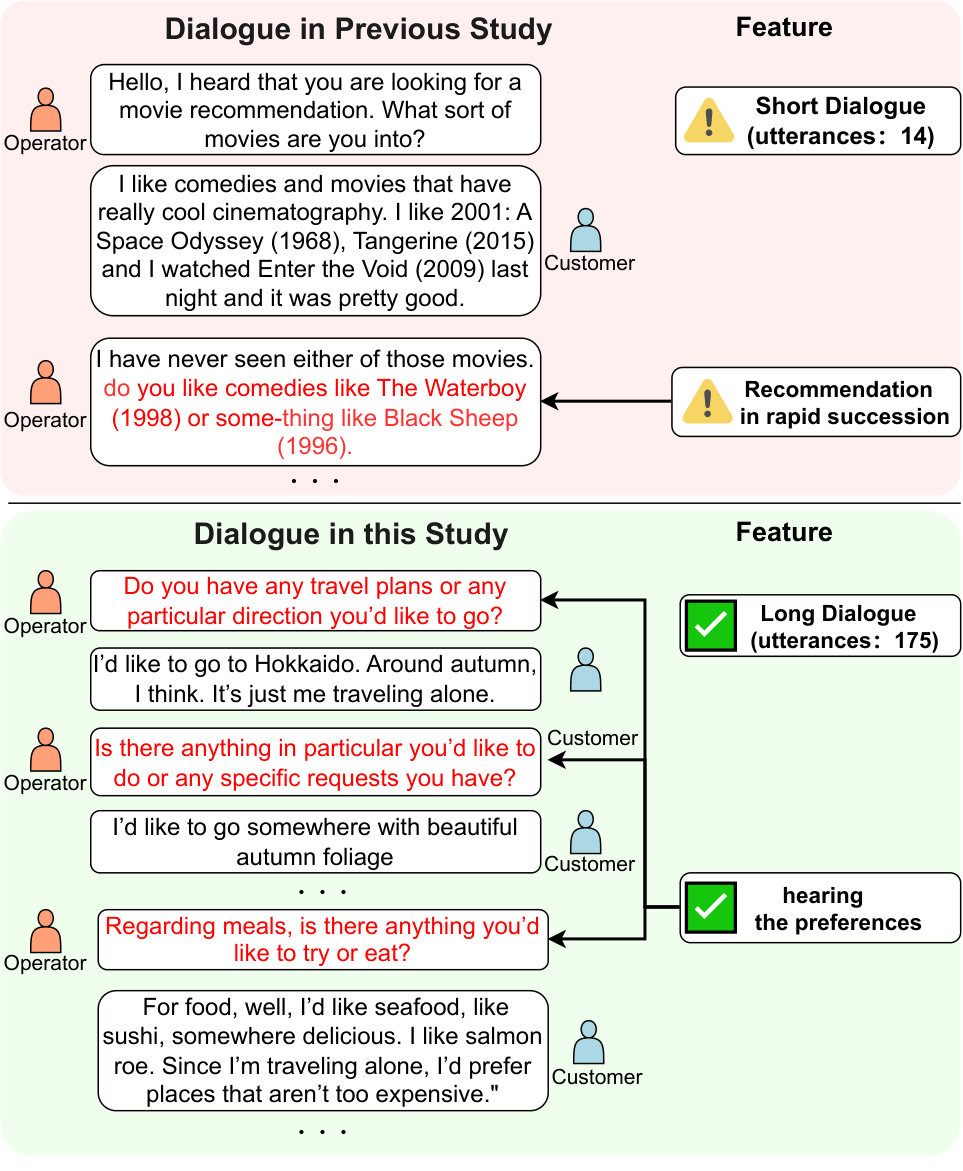 Figure 1
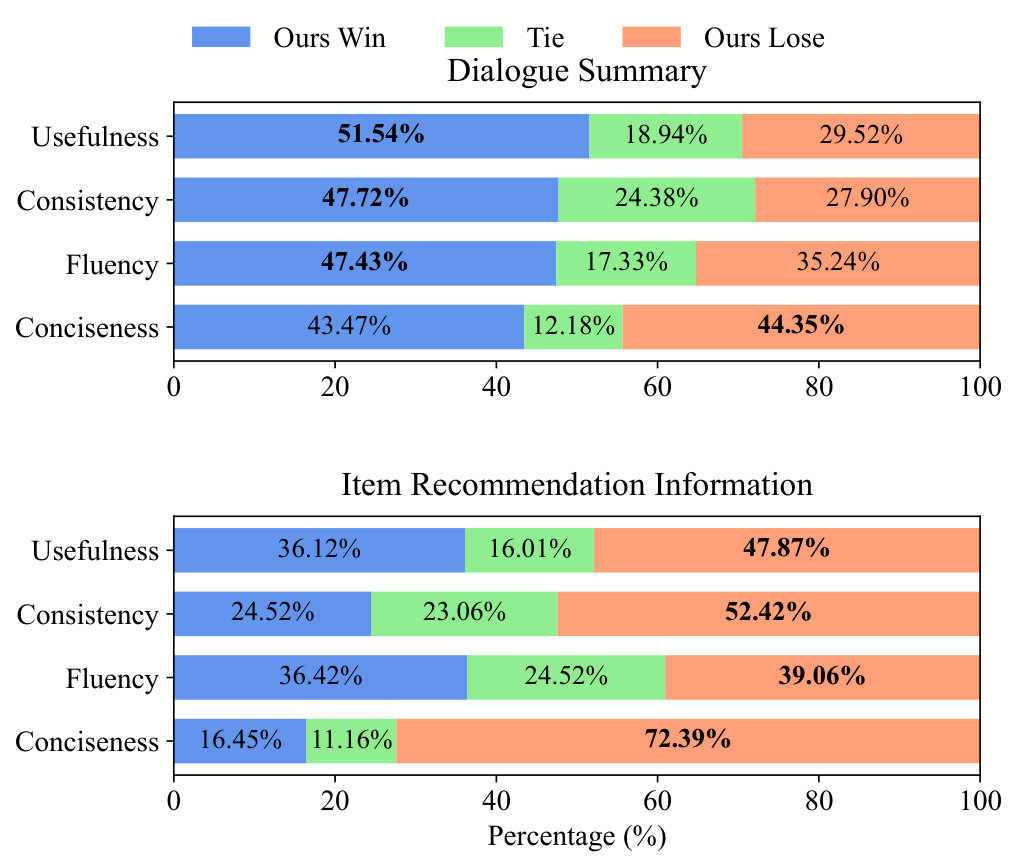 Figure 2
 Figure 3
 Figure 4
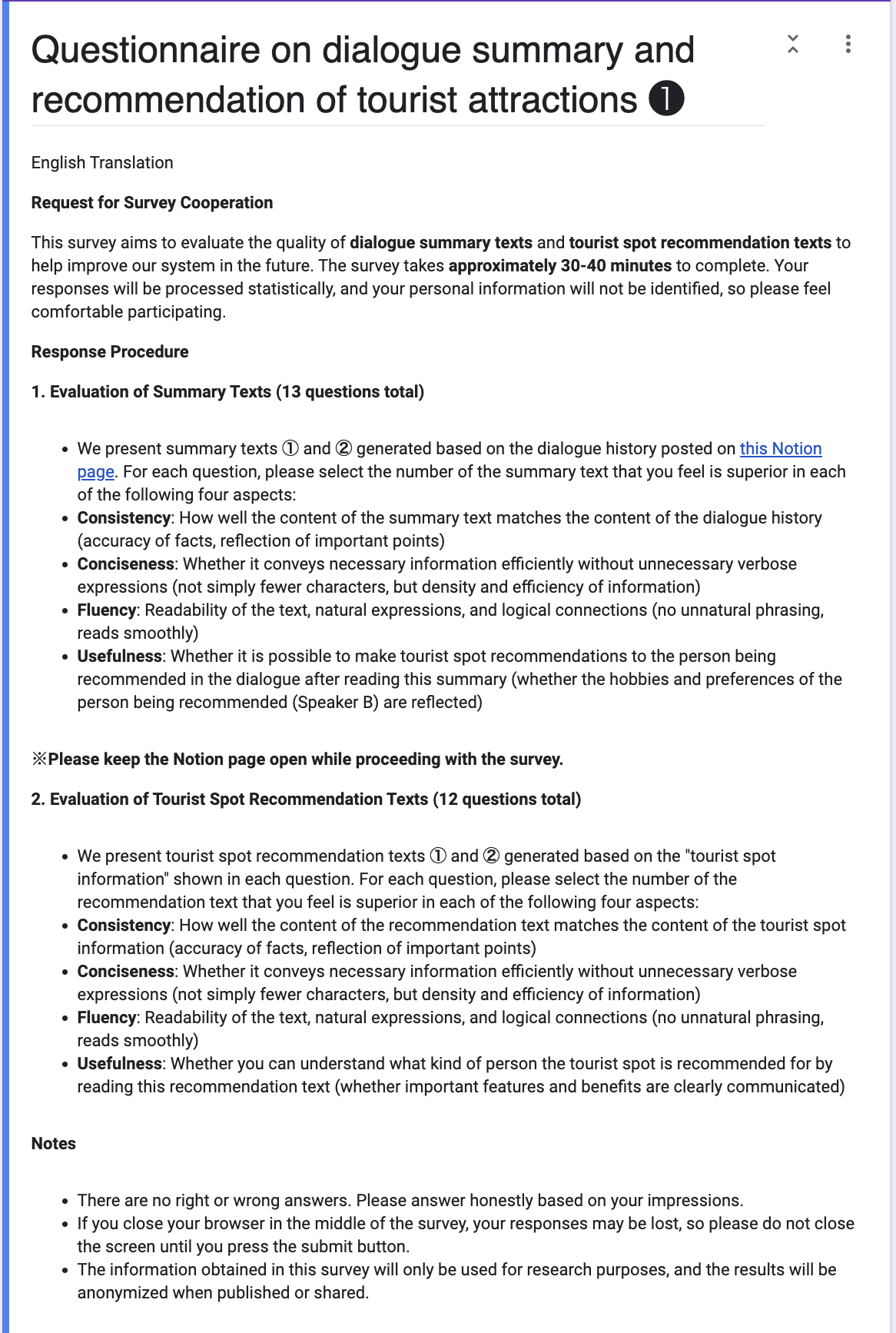 Figure 5
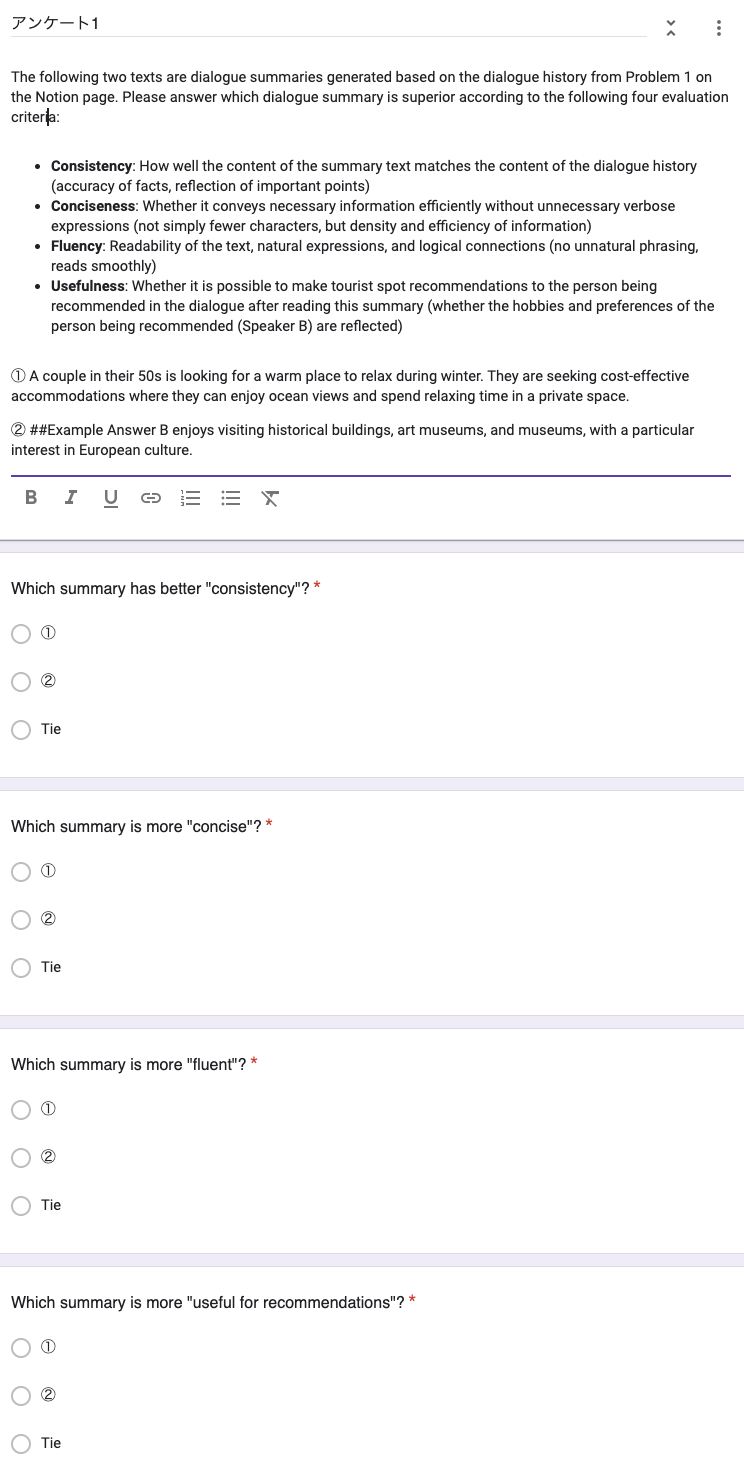 Figure 6
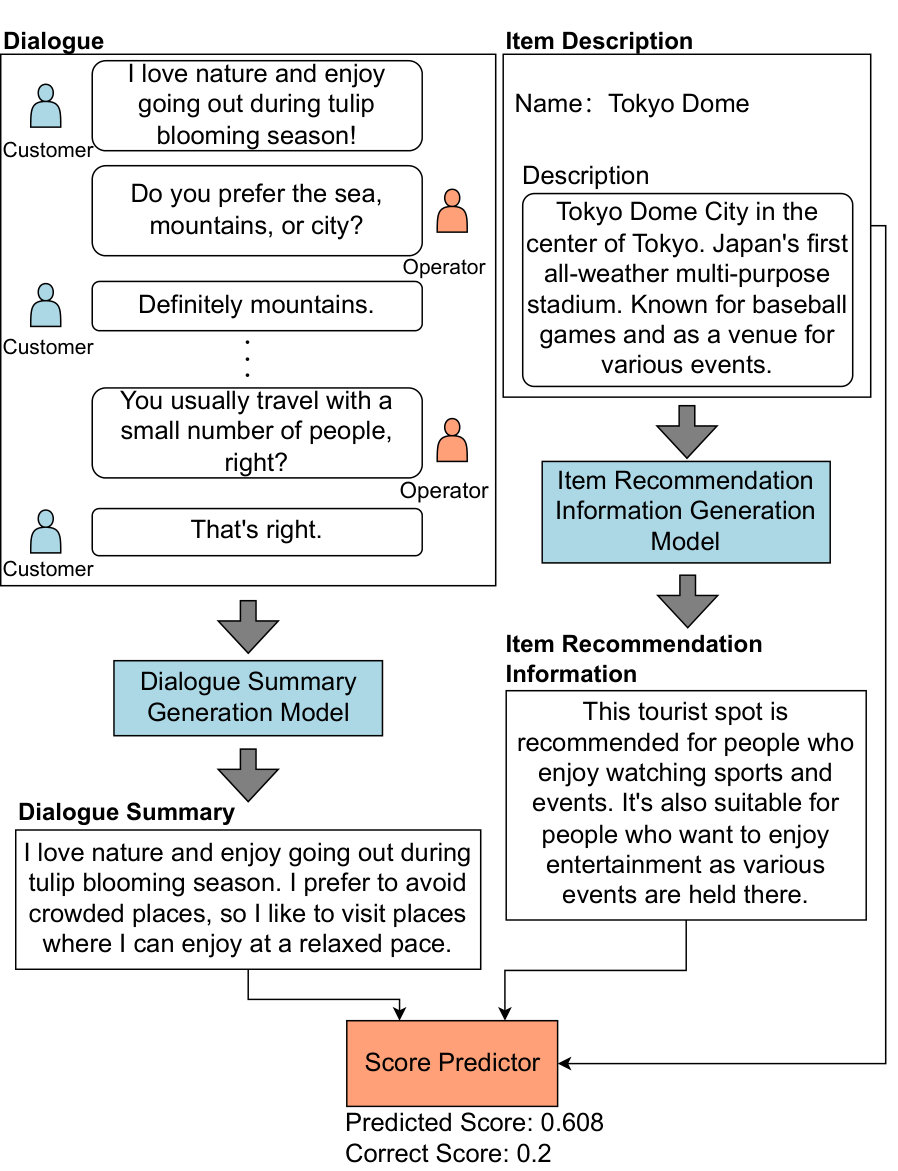 Figure 7
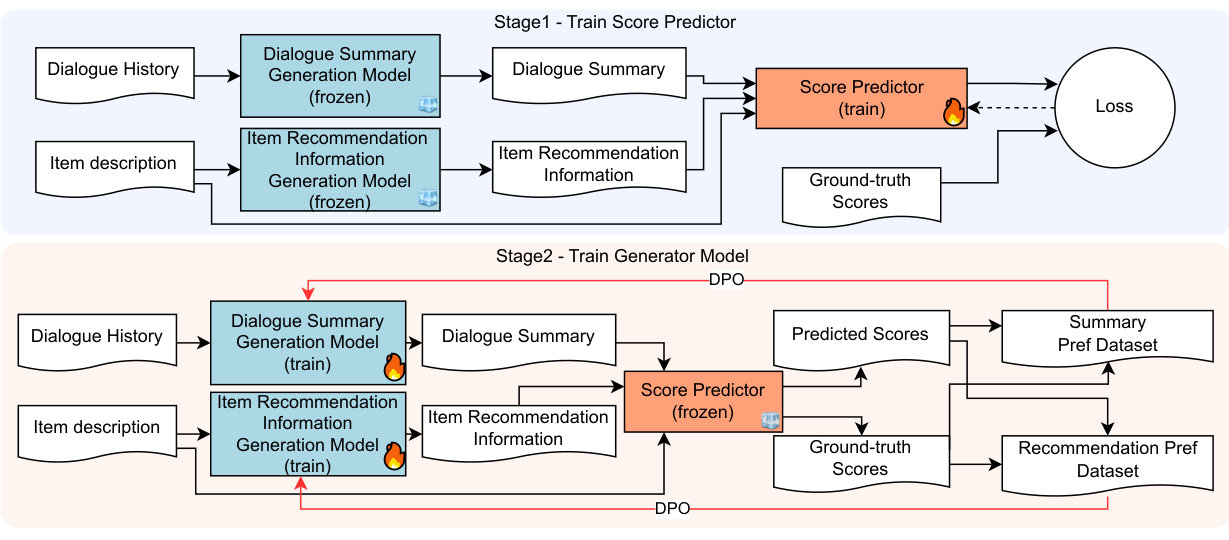 Figure 8
Peer Reviews
No public reviews on file for this paper yet. If you reviewed it on a platform where reviews are public (OpenReview, ICLR, NeurIPS, ICML), you can paste yours below so the community can read it here.
Videos
