How to distinguish an actual astrophysical magnetized black hole mimicker from a true (theoretical) black hole
A. Mitra, C. Corda, H. J. Mosquera Cuesta

TL;DR
This paper discusses how to distinguish true black holes from mimickers by analyzing gravitational wave features, shadow sizes, and magnetic field patterns, highlighting that magnetic field structure and gravitational redshift can reveal the true nature of compact objects.
Contribution
It introduces the idea that magnetic field patterns and gravitational redshift near compact objects can differentiate black holes from mimickers, providing new observational strategies.
Findings
Photon sphere tremors explain ring down features in GWs.
Magnetic field patterns near compact objects differ significantly from simple dipoles.
Surface gravitational redshift influences magnetic field asymmetry in black hole mimickers.
Abstract
We remind that the ring down features observed in the LIGO GWs resulted from trembling of photon spheres (Rp=3M) of newly formed compact objects and not from the trembling of their event horizons (R=2M). Further, the tentative evidences for late time echoes in GWs might be signatures of horizonless compact objects rather than vacuum black holes (BHs). Similarly, even for an ideal BH, the radius of its shadow is R_shad = \sqrt{3}Rp is actually the gravitationally lensed shadow of its photon sphere. Accordingly any compact object having R \geq R = 3M would generate similar shadow. Thus, no observation has ever detected any event horizon or any exact BH. Also note that the magnetic field embedded in the accreting plasma close to the compact object is expected to have a radial pattern of B \sim 1/r while the stronger BHM dipole magnetic field should fall off as B \sim 1/r3. Accordingly it…
Click any figure to enlarge with its caption.
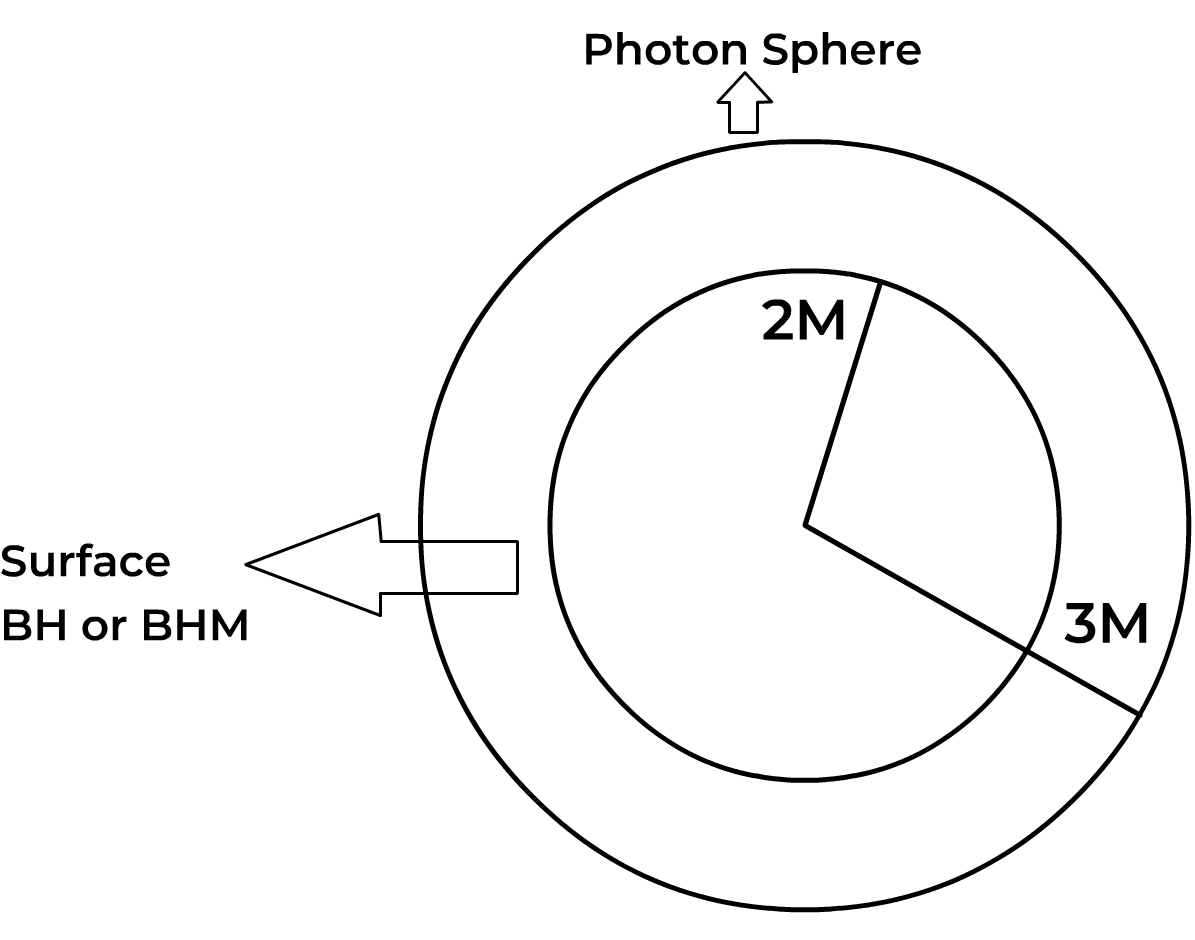 Figure 1
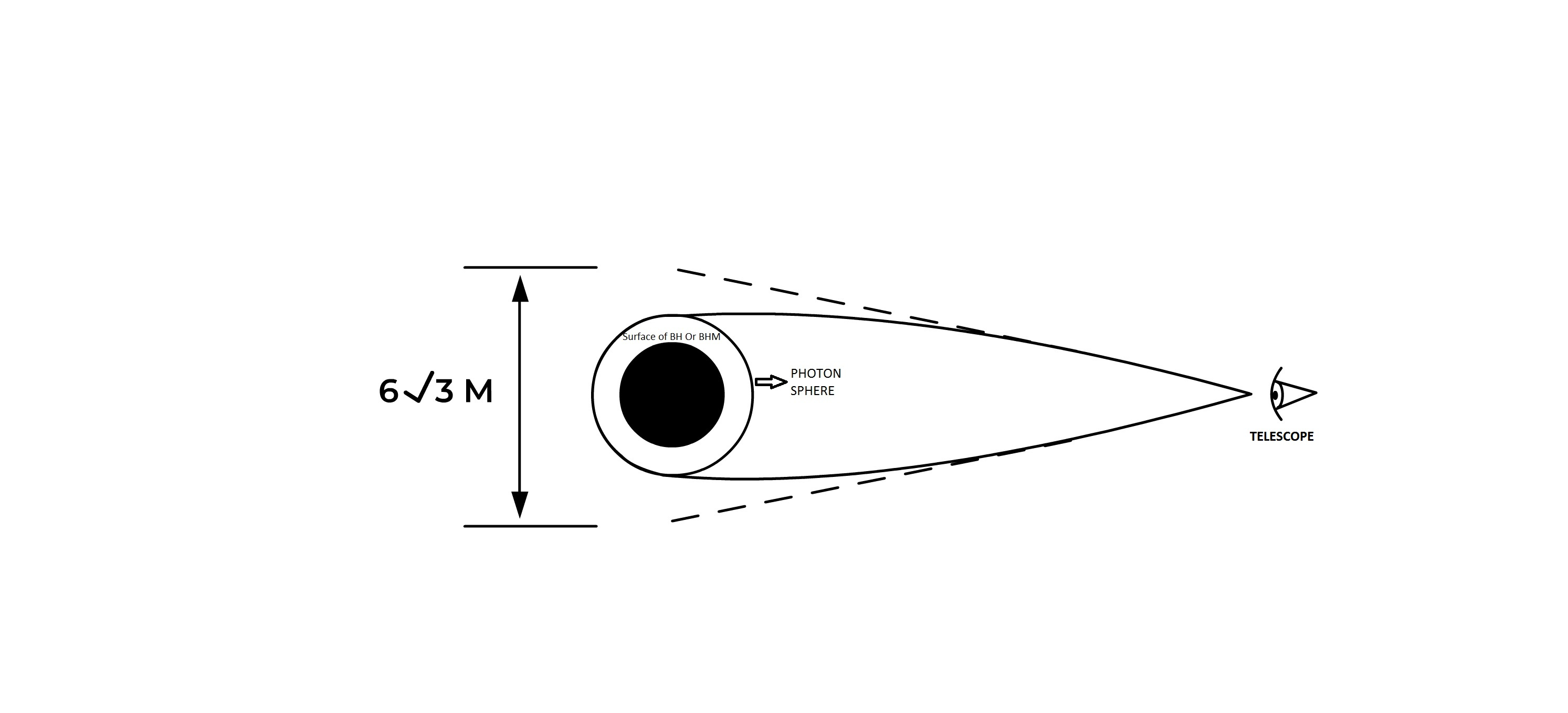 Figure 2
Peer Reviews
No public reviews on file for this paper yet. If you reviewed it on a platform where reviews are public (OpenReview, ICLR, NeurIPS, ICML), you can paste yours below so the community can read it here.
Videos
No videos yet. Explain this paper in a talk, walkthrough, or lecture? Add one.
How to distinguish an actual astrophysical magnetized black
hole mimicker from a true (theoretical) black hole
Abstract
We remind that the “ring down” features observed in the LIGO gravitational waves (GW) resulted from trembling of “photon spheres” () of newly formed compact objects and not from the trembling of their event horizons (EH) [1]. Further, the tentative evidence for late time “echoes” in GWs might be signatures of horizonless compact objects rather than vacuum black holes (BHs) possessing EHs. In general, in the past, many authors have considered the possibility that the so-called BHs might be only BH mimickers (BHMs) having physical surfaces (). Similarly, even for an ideal BH, the radius of its shadow, which is is actually the gravitationally lensed shadow of its photon sphere. Accordingly, any compact object having would generate similar shadow. Thus, no observation has ever detected any EH (any exact BH). Also, by definition, it is fundamentally impossible to directly detect any EH [2]. One notes that all astrophysical compact objects, except exact (chargeless) BHs, possess intrinsic magnetic moment that is dominated by the dipole component. Even rapidly spinning neutron stars (NS) are treated as spinning magnetic dipoles by ignoring the weak additional multipole moments. Hence, since an exact BH has no magnetic moment, a collapsing massive star must radiate away its multipole magnetic moments one by one and left with mostly the dipole moment immediately before becoming a BH [3]. One also notes that the magnetic field embedded in the accreting plasma close to the compact object is expected to have a radial pattern of while the stronger BHM dipole magnetic field should fall off as . Accordingly, it has been suggested that one may try to infer the true nature of the so-called astrophysical BHs by studying the radial pattern of the magnetic field in their vicinity [4]. But here we highlight that, close to the surface of BHMs, the magnetic field pattern differs significantly from the same for non-relativistic dipoles. In particular, we point out that, for ultra-compact BHMs, the polar field is weaker than the equatorial field by an extremely large factor of , where is the surface gravitational redshift. We suggest that, by studying the radial variation as well as significant angular asymmetry of magnetic field structure near the compact object, future observations might differentiate a theoretical BH from a astrophysical BHM. This study also shows that even if some BHMs would be hypothesized to possess magnetic fields even stronger than that of magnetars, in certain cases, they may effectively behave as atoll type neutron stars possessing extremely low magnetic fields.
1Abhas Mitra, 2Christian Corda and 3Herman J. Mosquera Cuesta
1Homi Bhabha National Institute, Anushaktinagar Mumbai 400094, India, e-mail: [email protected]
2International Institute for Applicable Mathematics and Information Sciences, B. M. Birla Science Centre, Adarshnagar, Hyderabad 500063 (India) and Istituto Livi - Via Antonio Marini, 9, I-59100 Prato, (Italy); e-mail: [email protected]
3Visiting Scientist of COLCIENCIAS, Programa Nacional de Ciencias Basicas, Ciencia Espacial, Avenida Calle 26 No. 57 - 83, Torre 8: Pisos 2-6, Cadigo postal: 111321 Bogotᅵ, Colombia, e-mail: [email protected]
Keywords: X-ray Binaries; Active Galactic Nuclei; Magnetic Field; Black Hole Mimickers; Relativistic Astrophysics.
PACS numbers: 04.40.Dg, 97.80.Jp, 97.60.Gb, 95.86.Nv.
1 Introduction
While most of the astronomers believe that the astrophysical BH candidates (BHCs) found in innumerable X-ray binaries and Active Galactic Nuclei (AGN) are true mathematical BHs possessing EHs and singularities, from time to time, in order to avoid many puzzles and paradoxes with BH singularities and event horizons, many general relativists and astrophysicists have suggested that such objects could be BHMs, which are almost as compact as BHs () but non-singular and without exact EHs. The radius of a BHM may be expressed as
[TABLE]
whereas, for an exact BH, one has and . Here and represent the (areal) radius of the compact object and the Schwarzschild radius respectively (units with ). Technically, one basic difference between a true BH and a BHM can be expressed through the concept of gravitational redshift around the compact objects:
[TABLE]
and on the surface of the compact object:
[TABLE]
For a BHM, one finds
[TABLE]
For a mathematical true BH, one must have while for a BHM, though is finite, it can be arbitrarily high: .
It is important here to take note of a crucial aspect which is common to both a true BH and its mimicker. Both of them reside within another mathematical surface known as the photon sphere, see Figure 1.1, that is situated at , and .
In contrast, for a typical NS, one has , and as if the surface gravity of the photon sphere is 5 times stronger than that of a NS. The surface gravity of the photon sphere is already so strong that, on the photon sphere, photons can move in unstable closed circular orbits [5]. In contrast, the circular orbits of finite rest mass particles around a BH or a BHM end at , and this defines the Innermost Stable Circular Orbit (ISCO). Within the ISCO, for a non-magnetic BH or BHM, material particles tend to accrete in radial directions and in near free fall.
Within the photon sphere, not only material particles, but even photons tend to preferentially move inward, as the angle of the escape cone shrinks rapidly. In order to escape from the interior of the photon sphere, a photon must ejected in a perfectly radially outward direction. And the probability of escape diminishes rapidly as while as [5]. It is for this reason that the photon sphere acts as a “virtual EH” for the BH and its mimicker. Thus, the compact object looks almost “black” to a far away astronomer.
At the beginning, we shall emphasize the fact that it is not possible to detect any EH directly, verbatim from [2]:
“Recently, several ways of verifying the existence of black hole horizons have been proposed. We show here that most of these suggestions are irrelevant to the problem of the horizon, at best they can rule out the presence of conventional baryonic matter in the outer layers of black hole candidates. More generally, we argue that it is fundamentally impossible to detect in electromagnetic radiation direct evidence for the presence of a black hole horizon. This applies also to future observations, which would trace very accurately the details of the space-time metric of a body suspected of being a black hole. Specific solutions of Einsteins’s equations lack an event horizon, and yet are indistinguishable in their electromagnetic signature from Schwarzschild black holes.”
In the following Section, we shall dwell on this issue in detail. Next, we shall point out that studies carried out right from the era of Ginzburg [3] have suggested that the so-called BH candidates might be ultra-magnetized BH candidates instead of exact BHs possessing no magnetic fields. We shall also discuss that there are indeed evidences that the astrophysical BH candidates may be possessing strong magnetic fields. Then, we shall point out that there are many indirect and observational evidences that the so-called astrophysical BHMs might be magnetized BHMs.
In high-energy astrophysics, two kinds of X-ray binaries are of special importance:
Neutron Star X-ray Binaries (NSXBs); 2. 2.
Black Hole Candidate X-ray Binaries (BHCXBs).
For understanding many astrophysical phenomena, such as launching of relativistic jets from close to the compact objects, one requires that the compact object must have reasonably strong intrinsic magnetic field. Indeed, it is much easier to under the phenomenon of relativistic jets from NSXBs like Cir X-1 [7], Sw J0243 [8], Aql X-1 [9], Her X-1 [10] and others [11, 12] containing spinning magnetized stars. Thus, for explaining the same phenomenon from BHMXBs and AGN, supposed to be powered by supermassive BHs, astrophysicists are compelled to assume that, in the presence of exterior disk magnetic field, also spinning BHs should behave as spinning conductors and develop induced electromagnetism. They justify such an expectation on the plea that the exterior magnetic field lines “thread” the central BH [13].
However, also a spinning insulator sphere will be threaded by surrounding magnetic field lines, and this does not mean that spinning insulating sphere can ever behave as a spinning conducting sphere. We shall explain why the magnetic field around accreting BHs could be only due to what is embedded in the accreting plasma, and which may have a spatial pattern of [4]. In contrast, the dominant dipole magnetic field of a BHM is expected to a spatial variation of over and above the weaker magnetic field embedded in the accreting plasma. Accordingly, Lobanov [4] has suggested that magnetized BHMs may be observationally differentiated from true BHs by studing the pattern of radial variation of the magnetic field around supposed astrophysical BHs. Here we shall highlight the fact that, spatial variation apart, the angular pattern of the magnetic field in close vicinity of the BH candidates could help in unravelling their true nature.
2 Have Exact BHs Been Already Detected?
Recently, two research fields of gravitation made important developments: (i) GW detection from the formation of supposed BHs coalescence of two compact objects [14]; (ii) Imaging of the supposed supermassive BH in the AGN M87 [15]. Following these two astronomical milestones, it is widely believed that astronomical observations have finally pinned down on exact EHs, which, in turn, would prove the existence of true mathematical BHs. For instance, the detection of a final “ring down” phase from the maiden GW event GW150914 was interpreted as the signature of trembling of a new formed deformed EH, resulting from the merger of two massive compact objects [14]. But it was soon pointed out that the ringdown signal was the signature of the trembling deformed photon sphere (or photon ring for spinning axially symmetric compact objects) of the newly formed compact object, rather than trembling of any true EH [1].
In comparison, the image/shadow of the supposed BH in the AGN M87, detected by the Event Horizon Telescope (EHT) in 2019 [15], is considered the ultimate direct evidence of existence of EHs. But an honest introspection will show that the released fuzzy image and its central dark region is no evidence for any EH. There are two reasons behind this assertion:
As already mentioned, no external observer can peer beneath the photon sphere where light can move in closed circular orbits. Therefore, to a distant astronomer the photon sphere appears as almost "black" because hardly any radiation can pierce out of the clutch of its strong gravity. Thus, at first sight, one may think that the central dark patch in the image of a BH has a radius of instead of [5]. 2. 2.
But even this is not true. Any light or radiation (say from the accretion disk) coming from behind the photon sphere gets strongly gravitationally lensed by the photon sphere. Then, in the ideal case, the shadow gets inflated by a factor of .
Thus, for an idealized Schwarzschild BH or its mimicker, the radius of the shadow is (see Figure 1.2) [5, 16]:
[TABLE]
Since it is the shadow of the photon sphere () that the astronomer can detect, even a fat BHM having a radius just smaller than the photon sphere, say will yield an exterior shadow of the same size . In view of this rather unexpected fact, no telescope can distinguish between: (i) a true BH () or (ii) an ideal BHM (), (iii) even a crude fat BHM (). The shadow size would be different from these class of objects only when the radius of the compact object would be larger than its photon sphere () and , for instance, for a NS [16], one will have
[TABLE]
Thus, the shadow/image of a NS having a radius of and will appear as a circle of radius . In contrast, for a white dwarf having , there will hardly be any enhancement in the size of the shadow/image.
2.1 Tentative Evidence Against Exact Black Holes
GWs generated from the trembling of the new born unsteady photon sphere travel both outward and inward. The outward moving GWs may exhibit as ring down waveform. If the underlying new born compact object would be a true vacuum BH, it would gulp down all inward moving GWs. In such a case, external telescopes would not detect any subsequent GW emission for the given event. But, in that case, the underlying compact object is a EH less BHM. The inward travelling GWs will initially remain trapped between its surface and the photon sphere. However, part of the trapped GWs would diffuse out later following repeated reflections from the physical surface of the BHM. In such a case, there might be subsequent GW echoes. There have been some weak evidences for GW echoes associated with three cases of GW detection: GW150914, GW151226, and LVT151012 [17]. In comparison, there has been stronger evidence for GW echoes for the binary neutron star merger event GW170817 [18]. Thus, tentative detection of GW late echoes might suggest that the compact objects formed by the coalescence of either so-called BHs or even NS might be BHMs having physical surfaces and not vacuum BHs possessing EHs [19].
One notes that the Sun is a magnetized ball of plasma and vulnerable to unpredictable eruptions driven by locallized turbulence of magnetized plasma, like flares and Coronal Mass Ejections (CME), which may also be nicknamed as “blurps” or “blasts”. In contrast, nothing can escape a true BH, and neither can be strong magnetospheric instability around magnetic fieldless BHs. Though there could be eruptions from the accretion disk, the strength of eruptions are expected to be modest as magnetic energy density in the far away disk would be much smaller than say what is present in a magnetized NS. And such disk eruptions should be evident for both NSXBs as well as BHCXBs. Thus, one would expect magnetic field driven eruptions to be much stronger for NSXBs whose disk and magnetosphere are dominated to be magnetic fields, than the same for BHCXBs. But, in reality, astrophysicists find the BHCXBs to be much more volatile and much more transient than NSXBs. In fact, there are often news items of “belching” and “burping” from astrophysical BHs. Such belchings must be sudden nassive outflows of plasma from close to the BHs. A recent case of discovery of such “burps” was from the AGN SDSS J1354+1327 [20]. Such outbursts, though not understood, are conjectured to resulting from episodes of extremely high rate of accretions whose origin is unknown. If we scale down to stellar mass compact objects, there should be “burps” from NSXBs and which should be stronger than outbursts from BHCXBs. This is so because, in the absence of any magnetic resistance, accretion onto BHs should be rather monotonous effect in contrast to the same for magnetized NSs. But, in reality, BHCXBs are found to be much more turbulent giving rise to transient events in comparison to NSXBs. Such an apparent contradiction would be removed if BHs were magnetized compact objects having magnetic field structures much more complicated than typical (simple dipole) NS magnetic fields.
As mentioned above, X-ray flares from BHs are very commonplace, and surprisingly BHXBs are much more violent than their NS counterparts. Here we recall one particular X-ray flare detected in September 2014 by NASA’s Explorer missions Swift, and the Nuclear Spectroscopic Telescope Array, or NuSTAR [21]. For the first time, it was found that the X-ray flare was triggered by a burst of corona from close to the BHC weighing about two hundred million solar masses in the AGN Markarian 335. It is difficult to understand how there could be emergence of corona from the vicinity of a mathematical BH which has no magnetic field, no matter and from which nothing can escape.
3 More Direct Evidence Against Magnetic Fieldless Black Holes
Since astrophysical plasma is overall neutral, astrophysical (true) BHs should be chargeless and devoid of any intrinsic magnetic field. However, astrophysical BHs are expected to be surrounded by accretion disks that possess magnetic fields, and, in turn, can generate some magnetic fields in the vicinity of the BHs. This problem was studied in detail by Shakura and Sunyaev long ago [22]. They arrived at two important conclusions:
(i) The magnetic fields around astrophysical BHs should be negligible and not compared to the value which may dynamically dominate the plasma. This is the reason that
The radius of the inner accretion disk is determined by purely general relativistic reasons at the ISCO , and not by any magnetic field effect.
Within the ISCO, the accretion flow around BHs is quasi-spherical and eventually becomes perfectly spherical near the EH.
In contrast, for a strongly magnetized NS, the inner radius of the accretion disk is determined by equating two opposing effects [23, 24]. At the inner accretion disk it is:
Outward Pressure Due To NS Intrinsic Magnetic Field () = Inward Ram Pressure of Inflowing Material
Thus, by definition, the region interior to the accretion disk of a strongly magnetized NS (even a white dwarf) is dynamically dominated by the intrinsic magnetic field, and the accretion plasma usually gets guided by the dipole magnetic field lines of the NS towards its polar regions which forms the X-ray hotspots.
On the other hand, for weakly magnetized recycled millisecond pulsars possessing magnetic fields as low as , the accretion flow, in view of the ram pressure, may accrete in a quasi-spherical manner, smeared all over the surface. Even in this case, the ambient magnetic field may be dominated by the NS magnetic field.
(ii) Another conclusion of Shakura and Sunaev [22] was that, verbatim, “Hence, within the disk, the field is most likely to be chaotic and of small scale”.
One notes here that the launching and subsequent propagation of ultra-relativistic jets, often associated with a BH, require the existence of fairly organized and large scale magnetic fields, that is difficult to explain by invoking the weak, chaotic and small scale magnetic field of the disks. Shakura and Sunayev [22] found that, for an event of highest rate mass accretion (), at the inner edge of the accretion disk (), for a BH of , one should have As increases with the BH mass, and the ram pressure decreases at larger , one might tentatively expect the inner disk magnetic field to fall of as . Then, any magnetic field of accretion origin must decrease with low mass accretion rate ().
However, in 2003, from polarimetric observations of the X-ray binary Cygnus X-1, that apparently contains a BH of mass , it was found that is [25]. In fact, in 2009, Karitskaya et al. concluded that, verbatim, “the so-called BH in Cygnus X-1 has a dipole magnetic moment of ”, and accordingly, they called it “Magnetic Extremely Compact Object (MECO)” rather than true BH [26].
There have been great strides in direct determination of magnetic fields around astrophysical BHs, and, in 2013, a dynamically strong magnetic field was discovered close to Sgr A*∗*, the supposed supermassive BH at our galactic centre (GC) [27].
In the following year, it was found that the jet-launching regions of 76 radio-loud active galaxies are threaded by dynamically important fields [28].
In 2015, by studying the interferometric observations at millimeter wavelength that spatially resolve the linearly polarized emission from the GC supermassive BH, Sagittarius A*∗*, Johnson et al. [29] found evidence for partially ordered magnetic field near the EH, on scales of Schwarzschild radii.
In the same year 2015, by studying polarization of millimeter radio waves caused by Faraday rotation, Atacama Large Millimeter/submillimeter Array (ALMA) detected the presence of organized magnetic field in the AGN PKS 1830-21, having strength of a few Gauss (or even higher) at a distance of around from the supposed BH [30]. This is a clear indication of very high magnetic fields at the jet base of the compact object [30].
All such evidence of unexpectedly high and organized magnetic fields around supposed BHs may be best explained if the pertinent compact objects possess sufficiently strong organized large scale dipole intrinsic magnetic fields.
4 Can Magnetic Fieldless Spinning Black Holes Act As Strongly Magnetized
Pulsars?
It is well known that, when any conductor moves in an external magnetic field, it develops an induced electromagnetism. If the conducting sphere itself is magnetized, it can develop an induced electric field even in the absence of any exterior magnetic field. This is the reason that spinning magnetized NSs act as electromagnetic pulsars [31]. The energy radiated by pulsars originate from their immense rotational kinetic energies. By taking this cue, in order to explain the source of energy of ultra-relativistic jets associated with astrophysical BHs, it was assumed that spinning BHs too may act like spinning NSs or pulsars [13]. The Authors of [13] built on this hypothesis by attendant mathematics. In particular, Blandford and Znajek stressed that, verbatim, [13]: “When a rotating black hole is threaded by magnetic field lines supported by external currents flowing in an equatorial disc, an electric potential difference will be induced.”
Let us introspect here the physical meaning of the term "threaded by magnetic fields". If any object moves in an exterior magnetic field , by ignoring the effect of bound molecules, the exterior magnetic field lines thread the object. Then, by simple application of Special Theory of Relativity (STR), a magnetically induced electric field crops up within its interior (by restoring standard units):
[TABLE]
if the velocity of the moving object
[TABLE]
Such a magnetically induced electric field would be generated in the interior of all moving insulator too, and say within a spinning mica ball.
Thus, from a purely mathematical point of view, the mica ball too is threaded by the exterior magnetic field and it develops an induced electric field too. In other words, the mical ball develops induced electromagnetism by virtue of its motion in an exterior magnetic field. But is this conclusion physically correct? The answer is obviously "NO". An insulator cannot indeed develop any induced electromagnetism (by neglecting effects of bound molecules like diamagnetism).
In order to understand this obvious fact, we need to understand the fundamental reason for induced electromagnetism in materials is the action of magnetic part of the Lorentz Force:
[TABLE]
on the free electrons inside the material. One notes that the electrons and ions bound to atoms and molecules do not feel this induced Lorentz force despite the mathematical presence of magnetic and frame transferred electric fields. A good conductor like Copper has a free electron density of electrons and a resistivity of only . In contrast, the insulator mica has a and a huge resistivity of around . Further, for a perfect insulator, one has , and accordingly, conductivity and resistivity .
Then, for a perfect insulator, the induced current density reads
[TABLE]
In contrast, for a perfect conductor, free electrons promptly *redistribute themselves to set up an opposing electric field *
[TABLE]
so that
[TABLE]
As a result, the net Lorentz force on the free electrons of the perfect conductor vanishes:
[TABLE]
In contrast, for an ideal insulator, one has free electron density and resistivity . Thus, no back reaction electric field is set up in the absence of motion of free electrons
[TABLE]
But, despite this mathematical frame transformed electric field, there is no flow of current within an insulator moving in an exterior magnetic field:
[TABLE]
Hence,though exterior magnetic field lines thread both a conductor and an insulator, it is only the former which gets organically connected to the exterior magnetic field and develops induced electromagnetism. Therefore, it is important to appreciate the fact that it is not mere threading of exterior magnetic field lines in a material, but, on the other hand, the presence or absence of super dense free electrons which determines whether the material will develop induced electromagnetism or not.
Further, though insulators possess tiny but negligible free electron density, a perfect vacuum, by definition, has and .
Nonetheless, an ultra-strong exterior magnetic field of the order of may generate induced electromagnetic properties by virtue of Quantum Electrodynamics (QED) effects [32], where
[TABLE]
Here and are the mass and charge of an electron. Thus, barring such a QED scenario, if we imagine a certain region of vacuum, say a glass box with interior vacuum, to be moving in an exterior magnetic field, the vacuum cannot develop even the negligible induced electromagnetism that an insulator might generate.
Let us be cautious here about a related fact. We know that electromagnetic waves can propagate unimpeded in a vacuum having an impedance of
[TABLE]
where and are the electric and magnetic field strengths of the propagating electromagnetic field, and is the magnetic permeability of the vacuum. But we must not confuse this vacuum impedance with any finite resistivity or conductivity of the vacuum. If vacuum possessed any conductivity, we would always get strong electric shock from a current carrying conductor even without touching it ever.
Incidentally, BHs too have the same impedance , that only reiterates that mathematical BHs are vacuum solutions without any matter except for their central singularities [33]. Therefore, from the viewpoint of basic physics, it is rather meaningless to assume vacuum BHs, having zero free electrons and from whose singularity neither light nor electric current can flow outward, can behave as pulsars that are almost perfect conductors and possess strong magnetic fields.
One also notes that, for a non-vacuum medium, one has
[TABLE]
where is the magnetization density vector that encompasses the effects like polarization of matter due to external magnetic fields. But
[TABLE]
and . The fact that, for both the vacuum and the BH, one has the same impenance , reconfirms that classical vacuum has no magnetic property, even though magnetic field lines may thread it.
Looking back to Goldreich and Julian model of pulsar electrodynamics [31], in the exterior of the pulsar having an angular speed of , the charge density is obtained as
[TABLE]
where is the exterior magnetic field. One notes that the foregoing equation does not involve any conductivity parameter. Then, by drawing inspiration from this equation and by assuming favourable boundary conditions and attendant mathematics, one might be tempted to predict that there will be a similar charge density in the exterior of an insulating sphere, embedded in an exterior magnetic field, too. But, obviously, such a result would be completely erroneous despite all nice mathematics. Why? Because, in the first place, such a result would be based on tacit replacement of an insulator by a conductor. How? For a conducting pulsar teeming with free electrons, the strong induced electric field rips off electrons abundantly from its body, and this makes the exterior too a perfect conductor (). Accordingly, net Lorentz force both in the interior and exterior of the spinning conductor could be assumed to be zero:
[TABLE]
Such a relationship becomes completely invalid for a case where and . Certainly, it becomes meaningless for a vacuum BH with . Thus, from the viewpoint of fundamental physics, the assumption that an uncharged mathematical vacuum BH can act as a NS amounts to transforming [math] into (with respect to conductivity) by means of mathematics based backed by favourable assumptions and boundary conditions. Also, motion of rotation can be physically defined for matter and not for pure vacuum. The mathematical rotating BH solution may be meaningful for rotating of the central ring singularity, but, for the rest of the vacuum Kerr BH, rotation may be defined the way one can define rotation of a NS, a white dwarf or any matter. However, one may imagine the motion of rotation of a region of vacuum confined within a material boundary, say an insulating glass shell. But BHs are not confined by any material boundary, and even for an imagined spinning vacuum confined within a glass shell, no induced electric current can be set up in the absence of free electrons. Further, the rotational kinetic energy of a spinning BH must reside with the spinning ring singularity. In order to extract its kinetic energy, there must be an electrical circuit connecting the ring singularity with a "load" outside the BH. But, even assuming that induced currents are somehow set up within the vacuum BH, the kinetic energy of the spinning ring singularity cannot be transported away sinc nothing, not even light, escapes the event horizon let alone the central singularity [34]. However, even if we would ignore such basic physics, and, in turn, accept the usual assumption that, in the presence of the ambient magnetic field of the surrounding accretion disk, a vacuum BH behaves like a NS, we must note that the ambient magnetic field of arising due to the disk is negligible compared to what is required for being dynamically dominant, because even at the inner edge of the disk, the magnetic field is expected to be insignificant compared to corresponding dynamic values. This is also so because, within the ISCO, accreting matter is expected to experience near free fall, and, further, within the photon sphere, the same must be under perfect radial free fall without any turbulence and without any conversion of kinetic energy into turbulent magnetic energy.
Therefore, the issue of launching of ultra-relativistic jets from supposed non-magnetic BHs suffers from twin unsolved problems:
(i) The source of energy of the jets, as in many cases, assumed reversal of accretion kinetic energy is insufficient to foot the power budget.
(ii) The requirement for organized large scale twisted magnetic field lines that can confine and accelerate the jets.
Clearly, a strongly magnetized spinning BHM whose large scale magnetic field gets twisted is much better suited to explain the origin of relativistic jets from astrophysical BHs. Relativistic jets have been observed from several NS binaries too; for instance Swift J0243.6+6124, 4U 0614+091, Aql X-1, Sco X-1, Her X-1, Cir X-1.
5 Ideas About Magnetized Black Hole Mimickers
In 1963, Hoyle and Fowler proposed that the centre of the quasars contain Radiation Pressure Supported Supermassive Stars and that the luminosity of the quasars may be ascribed to the huge luminosity of such supermassive stars radiating at their Eddington limit [35, 36]. They however ignored the likely magnetized nature of such compact supermassive stars. Also, the supermassive stars conceived by Hoyle and Fowler were quasi-Newtonian with modest value of gravitational compactness ().
But in 1964, Ginzburg came close to conceiving of general relativistic compact objects supported by radiation and magnetic pressures (), as he pointed out that the collapsing massive star having frozen in magnetic field should develop strong dipole magnetic field immediately before becoming a BH, and in fact it may end up an ultra-magnetized “superstar” [3].
In the following year 1965, Thorne showed that pure magnetic energy would not collapse into a BH state [37]. Essentially, he highlighted the fact that the ultra-strong magnetic field generated preceding BH formation, as conceived by Ginzburg, may itself inhibit the formation of exact BHs.
Nonetheless, the supermassive star hypothesis soon gave way to the idea of accretion onto exact supermassive BHs as the powerhouse of quasars. One of the reason behind this transition was that the supermassive stars of Hoyle and Fowler were supposed to be powered by nuclear fusion at their cores just like ordinary stars. In fact, Hoyle and Fowler ignored the fact that even extremely show gravitational contraction of supermassive stars might generate their luminosity despite the absence of any central nuclear burning.
In 1969, Goldreich and Julian developed the theory of pulsars as spinning strongly magnetized NSs where the source of energy is the rotational kinetic energy of the NS, and neither any accretion process nor surface luminosity of any star [31]. Following this, in the same year, Morrison published a paper [38] assuming that quasars are powered by giant pulsars, which are spinning magnetized supermassive stars conceived by Hoyle and Fowler. Since then, despite the dominance of the BH hypothesis, many authors extended the idea that quasars may contain magnetized supermassive stars instead of BHs having no magnetic field at all [39–54]. In particular, in 1977, Ginzburg and Ozernoi [43] coined a term “Magnetoids” to describe such spinning magnetized supermassive stars, supported by radiation pressure, magnetic field and centrifugal repulsion. Some authors instead chose a term "spinar" to describe such non-singular BH candidates. In 2008, Lipunov and Gorbovskoy defined [51]:
“A spinar is a collapsing object with quasi-equilibrium. Its equilibrium is maintained by the balance of centrifugal and gravitational forces and its evolution is determined by its magnetic field.”
However, all such studies are, at the best, sketches and no comprehensive general relativistic study was ever made. In particular, such studies did not address the crucial questions such as:
(i) How massive stars or supermassive gas clouds, during their continued gravitational collapse, end up as non-singular compact objects when it is commonly believed that continued gravitational collapse must lead to formation of exact BHs?
(ii) What is the source of central energy generation of such massive compact objects? Central nuclear burning or something else? It seems that the Referees or Editors behind such papers published in prestigious journals did not raise such issues either.
This theoretical vacuum was largely filled in 2000-10, and a much more solid framework was realized for existence of quasi-static ultra-magnetic compact objects, the so-called Magnetospheric Eternally Collapsing Objects (MECOs), see [6] and [55–61]. It turned out that MECOs are essentially extremely general relativistic versions of Radiation Pressure Supported Stars whose concept was originally given by Hoyle and Fowler [35, 36]. Radiation Pressure Supported stars are so hot that they are radiating at their Eddington Limit where, by definition, the outward radiation pressure balances the inward gravitational pull.
The concept of a MECO relies on the fact that, during continued collapse, once the massive star contracts below its photon sphere which is a quasi-event horizon, the heat and radiation generated by the collapse process get trapped by self-gravity. One notes that, while the photon sphere has , the EH should have . Thus, the journey from the photon sphere upto the supposed EH should be an infinite trek in terms of traversing through strength of gravity.
It can be seen that the outward force due to trapped radiation increases much faster, that is , than the relevant Eddington luminosity . Consequently, at some appropriately high , there should a quasi-equilibrium upon attainment of Eddington luminosity by the collapsing object, see [6] and [57–61].
While the idea of MECO eliminates the formation of exact BHs on the strength of inevitable generation of Eddington limited radiation pressure supported stars, it may be relevant to note that nonlinear electrodynamics [62] too might prevent formation of exact BHs.
6 Astrophysical Evidences For MECOs
For NSXBs, as mentioned earlier, the location of the inner accretion disk depends on the NS magnetic field and mass accretion rate . Since is fixed, varies only with mass accretion rate , while can keep varying for NSXBs [23, 24]. In contrast, for magnetic fieldless BHCXBs, one has a fixed value of . In both the cases, the radiation pressure of the X-rays emanating from the central compact object may exert some pressure on the accretion disk when , which is the Eddington luminosity. While for a NSXB, one may tentatively account for modification of due to inclusion of [63]:
[TABLE]
where . It was found that starts expanding only if , where is the Eddington mass, and the effect is negligible for well below . Thus, we may neglect the radiation pressure effect on when .
It is known that, for some NSXBs, may suddenly increase by a factor of thousands for a few days. It is understood that such sudden transient behavior, or state, changes due to variations of the value of because of changing . On the other hand, since remains fixed for BHCXBs (except when ), one does not expect them to undergo state changes though can vary with . But, surprisingly, most of the BHCXBs too are transient and that is difficult to understand. Thus, Robertson and Leiter attempted to explain the changes of spectral states of both NSXBs and BHCXBs occurring over periods of several years on a common platform by assuming the BHCXBs to contain MECOs instead of BHs [64, 65].
Also, many NSXRBs and BHCXBs emit radio waves apart from X-rays. In addition, there is a certain relationship between the radio and X-ray luminosities of the two apparently distinct classes of binaries. Yet, surprisingly, this relationship is practically the same for both the cases. This suggests the existence of some intrinsic similarity between the physical nature of variable NSXBs and BHCXBs. Robertson and Leiter also explained this almost common relationship between the radio and X-ray luminosities of BHCXBs and NSXBs by proposing that the former contains magnetized compact objects (MECOs) like the latter (NS) [66]. They also pointed out that the quiescent weak X-ray flux from several LMXBs, containing weakly magnetized spinning neutron stars, can be explained ascribing the quiescent emission to the spin down luminosities [64].
We have already emphasized that the NSXBs always suffering from tug of war between outward magnetic pressure and inward ram pressure of the accreting plasma are expected to be BHCXBs containing magnetic fieldless dead BHs from which nothing can escape. However, it transpires that the BHCXBs are much more transient, much more violent than the NSXBs. Such an apparent contradiction may be resolved by considering that the so-called astrophysical BHs are MECOs, ultra-compact balls of magnetized plasma, which are vulnerable to unpredictable “flares” and “Coronal Mass Ejections”. It is likely that the outbursts from the accretion disks too are triggered as they are hit by MECO flares. There is, of course, no direct evidence for such proposals, but, nonetheless, such a scenario looks much more reasonable than one in which magnetic fieldless vacuum BHs can trigger “burps” and “flares”. We have already mentioned that one major X-ray flare detected from the AGN Markarian-33 might be better understood in terms of a burst of corona from close to the BH candidate weighing . It is tempting to assume that this was a case of CME from the MECO of this AGN [21].
In 2006, astrophysicists discovered “Fermi bubbles”, that are two colossal elliptical gamma ray emitting blobs extending around 10 kpc above and below the GC [67]. The blobs are filled with very hot magnetized plasma. Even 14 years post their discovery, “the formation mechanism of the bubbles is still elusivis” [68], though there are several conjectures [68]. Yet, the mirror-like symmetry of the bubbles around the GC suggests that they resulted from some super gigantic explosion at the GC which injected an energy may be as large as some to ago. It is tempting to assume that it was an explosion of the MECO Sgr A*∗*. Such an historic explosion may not be any Coronal Mass Ejection, but may have been triggered by additional instability generated by the accretion of a massive star or a small star cluster onto the MECO.
6.1 More Direct Evidences For MECOs
In 2006, Schild, Leiter and Robertson presented evidence that the inner edge of the accretion disk of the quasar QSO 0957+561, appearing as a bright luminous ring, is located at , when, for an unmagnetized BH, one expects . Accordingly, they concluded that QSO 0957+561 contains a MECO in lieu of a BH. They also inferred the existence of “hourglass shaped” outflow of plasma from around the central compact object, and interpreted this outflow to be guided by large scale organized dipole magnetic fields of the MECO [69].
Later, a similar inner structure was found in another quasar Q2237 [70]. Further, studies of 55 more quasars too indicated the presence of inner magnetic field controlled structures, similar to the one found in QSO 0957 [71]. Such studies suggest that all quasars might be containing MECOs in lieu of BHs. The detailed physics of emission of X-ray and radio emission from Sag A*∗, the BH candidate at the centre of our galaxy, the Milky Way, may too be well understood in the MECO paradigm [72]. In Section 3, we have discussed that there is direct evidence for presence of unexpectedly high large scale partially organized magnetic fields around the compact objects of innumerable AGNs as well as for Sgr A∗*, the supposed supermassive BH in our GC [27–30]. Further, there is evidence for a superstrong magnetic field at the inner accretion disk of the compact object in Cygnus X-1 [25]. In fact, the so- compact object in Cygnus-1 may have a dipole magnetic moment of , which led to the idea that it is a MECO rather than a true BH [26]. Unfortunately, the authors of the last paper invented a new term, using the terms Magnetic Extremely Compact Object instead of using the term “Magnetospheric Eternally Collapsing Object”, that has been used in literature since 2003.
7 Nature of the Magnetic Field Structure of MECO
All astrophysical bodies, except Kerr and Schwarzschild BHs, possess some intrinsic magnetic field. This magnetic field has predominantly dipole nature. However, deviation from perfect spherical symmetry may give rise to some quadrupole, or even higher order moments of mass distribution. Similarly, all astrophysical bodies do possess some quadrupole and even higher order magnetic moments too. Yet, for analytical studies, such higher order magnetic moments are ignored because of two reasons:
(i) Overall magnetic field is predominantly due to the dipole component.
(ii) Difficulty in handling weak higher order moments in analytical studies.
For instance, even a rapidly spinning pulsar is treated as a spinning magnetic dipole. This issue, in general, leads to a reasonably accurate physical picture [31]. Similarly, almost all analytical studies of gravitational collapse ignore the presence of higher order moments with respect to mass distribution or magnetic field structure [74–76]. Two of the early models of continued gravitational collapse had concluded that that all magnetic moments should die down for the eventual BH [76, 77].
Finally, we know that, by the "No Hair Theorem", at the final stages of (uncharged) BH formation all higher order magnetic moments must vanish, and therefore, at the penultimate stage, only dipole moment should survive. Accordingly to Ginzburg [3] and following him, various other authors have considered only magnetic dipole moment for the “magnetoids” or “spinars” [40–55]. Therefore, the dominant magnetic field of MECO too should be given by the dipole component, that we shall consider below. But, if in the future some other author would consider higher order magnetic moments, however weaker, that will be welcome.
For a non-relativistic NS, the polar and radial components of the dipole field are
[TABLE]
and
[TABLE]
where is the magnetic dipole moment (as seen by a distant observer) and denotes invariant area of symmetric 2-spheres. Here, and are the components of the magnetic field in local tetrad and . Thus, the magnetic field strength at the pole
[TABLE]
is twice the strength at the equatorial field
[TABLE]
Given such an asymmetry at the non-relativistic level, one might expect that, for a general relativistic compact object, should be larger than by a factor larger than . However, here we point to a previously unnoticed general relativistic effect: for a sufficiently relativistic compact object, the polar magnetic field becomes weaker than the equatorial field in direct contrast to their corresponding Newtonian behaviour.
Yet eventually BHMs may even behave like low magnetic field millisecond pulsars or atoll type neutron stars in X-ray binaries.
8 General Relativistic Dipole Magnetic Field
The general relativistic modification of assumed dipole magnetic fields are known for many decades [3, 72]. The components of field in local tetrads are:
[TABLE]
[TABLE]
where , and
[TABLE]
[TABLE]
One easily sees that
[TABLE]
and, for , we have
[TABLE]
Then, one sees from equations (29) and (30) that, in this limit, one gets
[TABLE]
[TABLE]
One also notes that since
[TABLE]
the RHS of equation (33) is dominated by the term, while the same for equation (34) is dominated by the term if one would consider a range of . While such a large value of could be surprising, one recalls that for a true BH and that any finite number is infinitely smaller than ! Thus, for such extremely relativistic BHMs, in the immediate vicinity, one has
[TABLE]
[TABLE]
Such analytical estimates have been verified by means of simple numerical evaluations too:
[TABLE]
Consequently, the magnetic fields at the equator and pole of the BHM are respectively:
[TABLE]
and
[TABLE]
Thus,
[TABLE]
Accordingly, for a BHM with , one should expect
[TABLE]
Hence, even if one hypothesizes that the equatorial field of a stellar mass BHM is stronger than that of magnetars, say , the polar field could be very weaker: . Here, one may note that, for , both and the dipole field approaches the non-relativistic form
[TABLE]
[TABLE]
In any case, there will be an ambiguity about the evaluation of the local magnetic moment at the surface of the BHM. To some extent, such an ambiguity exists even for the non-relativistic case too.
Now, let us study the behaviour of the expected magnetic moments by neglecting the trigonometric factors:
[TABLE]
[TABLE]
For a moment, let us consider a BHC having and (). For a perfect axisymmetric case, the observed magnetic moment may be determined by Thus, by using Eq. (45), for such a case the local value will be Therefore, by considering the magnetic moment becomes or even much lower. However, for a non-aligned rotator it will play its role and one could also have . But it is important here to note that magnetospheric emission takes place from the boundary of the extended magnetosphere and not from the surface of the pulsar. Tentatively, such a boundary may lie at the corresponding light cylinders, that are expected to be beyond or . Since at , or , it is and , then one finds . Therefore, the non-relativistic treatments made by Robertson and Leiter [65, 66] remain approximately valid even though the basic situation is an example of extreme general relativity. In other words, the magnetic fields near the spinning down MECOs may very well behave like weakly magnetized NSs away from their surfaces.
One may wonder why the “local magnetic fields” present in cosmic locations matter for astronomers carrying out observations almost infinitely far away. This is so because astronomers do not measure the distant magnetic field by doing any local laboratory experiment. On the other hand, they infer or measure the distant magnetic fields as manifest in cosmic laboratories. For instance, let astronomers detect a certain cyclotron line is a local lab. They correct the frequency of the line by accounting for the cosmological redshifts (when due) of the zone of generation of the line. Having done this correction, they use the formula connecting cyclotron line frequency with the ambient magnetic field. By this way, they measure the magnetic field in the distant cosmic location by sitting in their own lab. In short, astronomers do measure the local cosmic magnetic fields and not their redshifted lab values [30].
9 Discussions
The massive compact objects found at the centre of most of the galaxies and in many X-ray binaries are certainly not NSs. In fact, NSs cannot be more massive than three solar masses. Such compact objects are believed to be BHCs. Despite this, in the past two decades many authors have suggested various alternatives to true BHs and which may generically be termed as BHMs having radii . Also, despite the widespread popular belief, astronomers have never detected, either indirectly or directly any EH or any exact BH. As to the detection of the shadow of the supposed BH in M87, it must be borne in the mind that even for an isolated BH or BHM, what the EHT or any other telescope can see is, at the most, the gravitationally lensed inflated shadow of the photon sphere (): . It is interesting to note that, not only a true BH () or an ideal BHM (), but any compact object whose radius is would generate a shadow of the same size. Thus, the so-called image of the supposed BHC must be due to emission from the surrounding plasma beyond the photon sphere/photon ring.
One stresses that many astrophysical phenomena are difficult to understand in terms of vacuum BHs that have no magnetic field and from which nothing can escape. For instance emergence of relativistic jets from astrophysical jets often require that BHs somehow act like magnetized neutrons stars which can, not only launch jets from close to their magnetized surfaces, but also keep on guiding and accelerate the jet by its large scale magnetic fields twisted by their anchored magnetic fields. Indeed, it is more easier to understand the emergence of relativistic jets from magnetized NSs than from unmagnetized vacuum BHs. Accordingly, astrophysicists are compelled to picture BHs as some sort of magnetized NS on the plea that the exterior magnetic field lines can thread a BH. But exterior magnetic field lines can thread an insulator too, that does not metamorphose a moving or spinning insulator sphere into a conducting sphere.
In fact, seen from the purely mathematical angle of the STR, there should be an induced electric field within any moving material including an insolaror if . This induced electric field becomes fructuous only in the presence of dense free electrons when a corresponding magnetic part of Lorentz Force is set up: if . Since for insulators the free electron density is about , for the issue of electromagnetic induction, moving insulators cannot behave like moving conductors even though exterior magnetic field lines can thread both. In the same vein, a region of moving vacuum, whatever it may mean physically, or a moving BH having cannot behave as moving conductors or neutron stars.
For BH accretion, the disk magnetic field at seems too expected to be insignificant compared to the dynamical value in order that the accretion flow in the disk is reasonably smooth (near Keplerian) and not disrupted. In particular, for Cygnus X-1, one would expect a value of [22].
In fact in 2013, Broderick and Loeb admitted that, verbatim [78]
“More embarrassing to astrophysicists is our lack of understanding of black hole jets - phenomena in which the forces near a supermassive black hole somehow conspire to spew out material at ultra-relativistic speeds (up to 99.98 percent of light speed)”.
Such a fundamental difficulty can be eliminated by realising that the so-called astrophysical BHs could be MECO that can launch and accelerate relativistic jets the way many NSXBs such as Cir X-1, Aql X-1 do. There are many indirect as well as direct evidences for existence of strong magnetic fields around so-called astrophysical BHs and that are most naturally explained by realising that astrophysical BHs could be MECOs.
For a NS or a MECO, the region interior to the accretion disk , by definition is dynamically dominated by the magnetic field of the central compact object. In contrast, for accretion around unmagnetized BHs, the ambient magnetic field around the BH must be negligible because already is dynamically negligible and near spherical free fall of plasma cannot generate additional magnetic field.
In NSXBs, the location of the inner accretion disk around a magnetized NS is determined by its surface magnetic field and the mass accretion rate is:
[TABLE]
For a NS spinning with an angular speed of , one can also define a “corotation radius” where the Keplerian angular speed of the accreting plasma equals to the spin angular momentum of the NS [23, 24]:
[TABLE]
In the NS magnetosphere, plasma can corotate with the NS only up to , and it transpires that steady accretion is possible only for
[TABLE]
a state which happens for high mass accretion rates (). But the plasma at cannot corotate with the NS and the accreting material get ejected or “propelled” out for
[TABLE]
which is a state which happens for very low mass accretion rates ().
State transitions in NSXBs are usually explained in terms of the above scheme, with significant variation of the mass accretion rate. But, in contrast, for BH accretion there is no magnetosphere, no concept of any “corotating radius”, and a fixed value of . Thus, it is difficult to explain the origin of state transitions in BHCXBs. It is here that Robertson and Leiter could explain the observed state transitions in BHCXBs by invoking magnetized MECOs in lieu of unmagnetized BHs [65, 66]. Similarly, they could explain the origin of almost similar Radio - X-ray correlations in both NSXBs and BHCXBs by invoking magnetized compact objects in both the cases. Such exercises suggest that the so-called astrophysical BHs may be MECOs [66].
Schild, Leiter and Robertson found that the inner edge of the accretion disk of the quasar QSO 0957+561, appearing as a bright luminous ring, is located at , when for an unmagnetized BH, one expects [69]. This observation provided more direct evidence that the so-called BHs may be MECOs. The hourglass shaped outflow from the central region of this quasar gets naturally explained by the large scale organized dipole magnetic field of the MECO [69]. Similar hourglass shaped outflow has been detected from many more quasars suggesting that, in general, quasars contain MECO [70, 71].
As to direct evidence, it was found that, for this source, there is a strong magnetic field at the inner accretion disk of Cygnus X-1 [25], when the same is expected to be [22]. Thus, Cygnus-1, which apparently confirmed the existence of astrophysical BHs in the 1970s, may be a MECO in lieu of a BH [26].
In recent years, it has also been found evidence for the existence of unusually strong large scapartially organized magnetic fields around the supposed supermassive BH in our galaxy as well as in many AGNs [27–30].
In addition, it has been recently suggested that one should use the magnetic field pattern around accreting compact objects to test whether they are true BHs or not. While uncharged BHs possessing EHs do not possess any magnetic field, the plasma accreting onto them can possess magnetic fields and which may vary as [8]. In contrast, even uncharged BHMs may possess their own magnetic fields, and in particular, MECOs should possess strong intrinsic magnetic fields. At first sight, the magnetic field around a magnetized BHM should be dominated by the intrinsic dipole field falling off as because the magnetic field in the plasma () is expected to be much weaker to the intrinsic field of the BHM [8].
Here we highlight the fact that, in the immediate vicinity of the BHM, the field pattern should be much more complex than the one of a NS: . This is because while the radial field is , the polar field is . Thus, on the surface of the BHM, the magnetic field at the pole () is weaker than the same at equator () by an extremely large factor of . Therefore, even an ultra magnetized BHM may behave as a NS whose magnetic field could be weaker than the same of young NSs by a factor of order .
10 Concluding Remarks
Astronomers have not detected any EH, and, by definition, it is fundamentally impossible to directly detect the same [2]. There is no proper explanation for innumerable indirect or direct evidence for unexpected strong magnetic fields around astrophysical BHs. In particular, the issue of detection of an unusually strong magnetic field in the vicinity of the Sgr A*∗*, the supposed supermassive BH at the galactic centre, has recently been scrutinized by Peng, Liu and Chou [79]. They concluded that:
“the observed ultra-strong radial magnetic field near the GC can not be generated by the generalized -turbulence type dynamo mechanism since preliminary qualitative estimate in terms of this mechanism gives a magnetic field strength six orders of magnitude smaller than the observed field strength at pc”. Such a conclusion is in perfect agreement with the conclusion of Shakura and Sunayev almost half a century ago [22]. In order to resolve this problem, these authors proposed that Sgr A*∗* is a super-massive star with magnetic monopoles. However, such a suggestion has hardly any physical basis as there are no magnetic monopoles. On the other hand, recent theoretical research on general relativistic astrophysics has shown that once a massive star or a supermassive gas cloud will dip below its “photon sphere” () during their continued collapse, sooner or later (), the luminosity of the radiation trapped by their own gravity must attain the Eddington Limit when the collapsing star or the gas cloud would turn into a quasi-static ultra-hot ball of plasma whose energy density is dominated by radiation. In the absence of any EH (), the quasi-static radiation ball must keep on ECO towards the exact BH state, see [6] and [56–62]. The magnetic field frozen in astrophysical plasma increases as and further there will be general relativistic enhancement at high , a phenomenon which was stressed by Ginzburg way back in 1964 [3]. Thus, ECOs must have a strong local magnetic field and a surrounding magnetosphere. Hence, ECOs must be Magnetospheric ECOs (MECOs). To a good approximation, the magnetic field of all astrophysical objects is dominated by the dipole component. Then, since all higher order magnetic fields must be radiated away one by one before formation of exact (uncharged) BHs, MECOs could be almost perfect magnetic dipoles as first envisaged by Ginzburg in 1964 [3]. Therefore, evidence for the existence of unexplained strong partially organized magnetic fields can be best explained by the realisation that the so-called astrophysical BHs may be MECOs. Furthermore, in view of the claim of the presence of GW echoes in the LIGO signals, the question of differentiating a true BH with a BHM becomes very pertinent. One tool to distinguish a true accreting astrophysical BH from an ultra-magnetized BHM could be through study of the magnetic field structure around the relevant compact object. For a true BH, one may expect the frozen in plasma magnetic field to fall off as . On the other hand, for a magnetized BHM, while far away from the surface , in the immediate vicinity, the field pattern is dramatically asymmetric and complex: the radial field and the polar field . In fact, radial field pattern apart, any inference about the dramatic asymmetry of the equator field and polar field components may suggest existence of magnetized BHMs or magnetoids conceived by Ginzburg [3], or giant pulsars conceived by Morrison [38], or MECOs, or any other magnetized BHMs.
Higher magnetic fields, if present, must be extremely weaker in comparison to the dominant dipole component. All studies of general relativistic gravitational collapse of a magnetized star consider only the dipole magnetic moment. But it would be welcome if in future, some studies would consider higher order magnetic moments in this context. Irrespective of such details, in the ultimate analysis, the so- called astrophysical black holes cannot be true black holes for the following reason. The BH paradigm presumes that mathematical BHs necessarily have and the event horizon (earlier known as Schwarzschild Singularity) must be a sphere. But way back in 1969, Bel showed that the event horizon actually behaves as a point singularity [80] implying that the latter corresponds to M = 0 and not M > 0 Bel (1969).
The same result has been independently obtained from vari- ous other analyses too [81, 82]. Hence it is indeed highly likely that the astrophysical BH candidates are only BH mimickers and possess strong intrinsic magnetic fields unlike mathematical BHs.
11 Acknowledgements
The Authors are thankful to the anonymous referee for his/her constructive critique and seeking clarification of many issues. We accordingly almost rewrote the manuscript and we believe this present version has much more scientific value than the original one.
The reference list from the paper itself. Each links out to its DOI / PubMed record.
- 1[1] V. Cardoso, E. Franzin, and P. Pani, Phys. Rev. Lett. 116 , 171101 (2016).
- 2[2] M. A. Abramowicz, W. Kluzniak W., J. P. Lasota, Astron. Astrophys. 396 , L 31 (2002).
- 3[3] V. L. Ginzburg, Soviet Phys. 9 , 329 (1964).
- 4[4] A. Lobanov, Nature Astron. 1 , 0069 (2017).
- 5[5] K. S. Virbhadra, G. F. R. Ellis, Phys. Rev. D. 62(8) , 084003 (2000).
- 6[6] A. Mitra, MNRAS Lett. 367 , L 66 (2006).
- 7[7] R. Fender et al. Nature, 427(6971) , 222 (2004).
- 8[8] J. van den Eijnden et al., Nature 562 , 233 (2018).