In defense of OSVOS
Yu Liu, Yutong Dai, Anh-Dzung Doan, Lingqiao Liu, Ian Reid

TL;DR
This paper enhances one-shot video object segmentation (OSVOS) by introducing a video loss module that improves training, leading to better segmentation accuracy and generalization to other vision tasks.
Contribution
The paper proposes a novel video loss module with various constraints to improve the training process of OSVOS, addressing its limitations in emphasizing instance cues.
Findings
Significant performance improvements over original OSVOS.
The video loss module generalizes to other fine-tuning methods.
Enhanced segmentation accuracy across different network backbones.
Abstract
As a milestone for video object segmentation, one-shot video object segmentation (OSVOS) has achieved a large margin compared to the conventional optical-flow based methods regarding to the segmentation accuracy. Its excellent performance mainly benefit from the three-step training mechanism, that are: (1) acquiring object features on the base dataset (i.e. ImageNet), (2) training the parent network on the training set of the target dataset (i.e. DAVIS-2016) to be capable of differentiating the object of interest from the background. (3) online fine-tuning the interested object on the first frame of the target test set to overfit its appearance, then the model can be utilized to segment the same object in the rest frames of that video. In this paper, we argue that for the step (2), OSVOS has the limitation to 'overemphasize' the generic semantic object information while 'dilute' the…
Click any figure to enlarge with its caption.
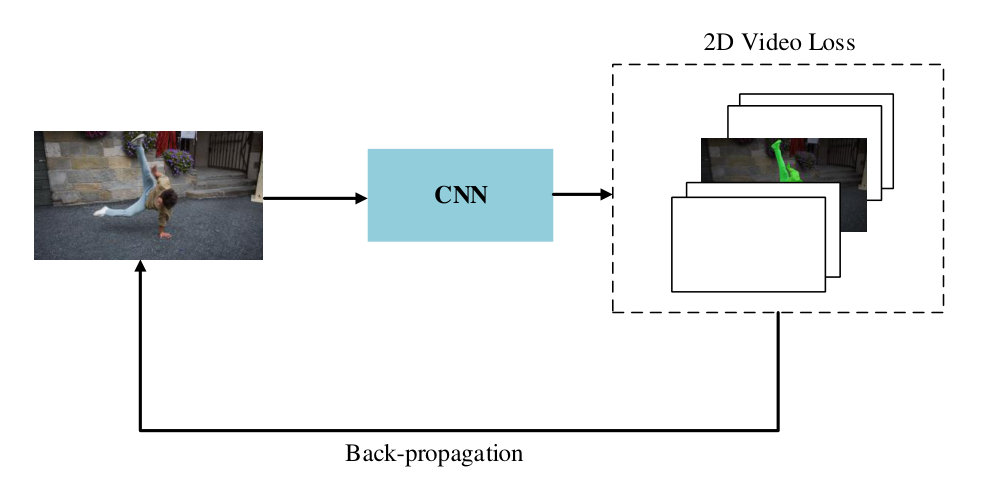 Figure 1
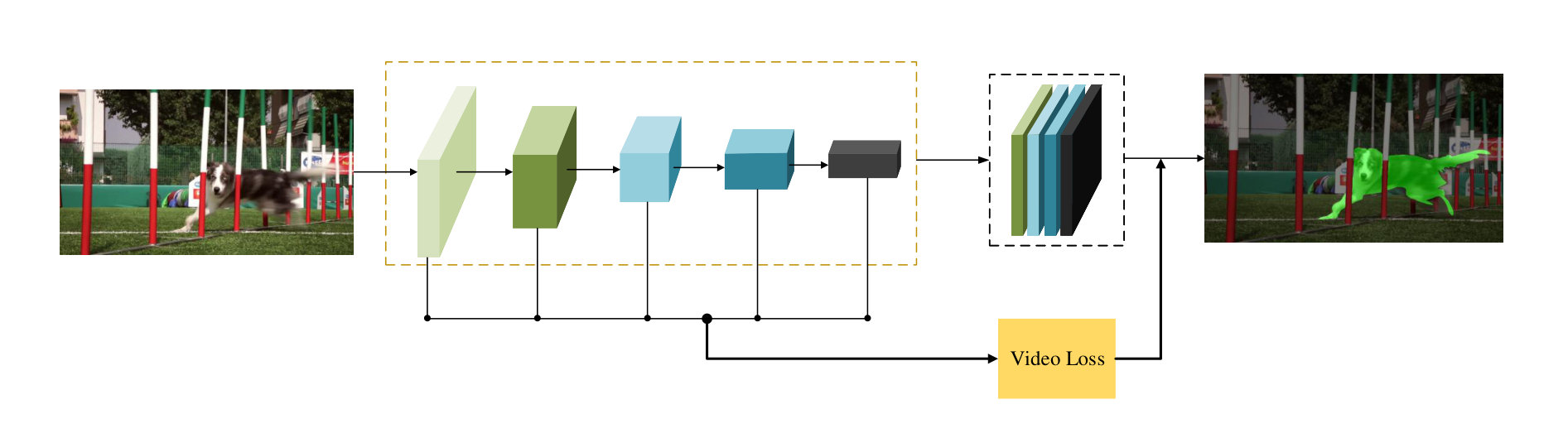 Figure 2
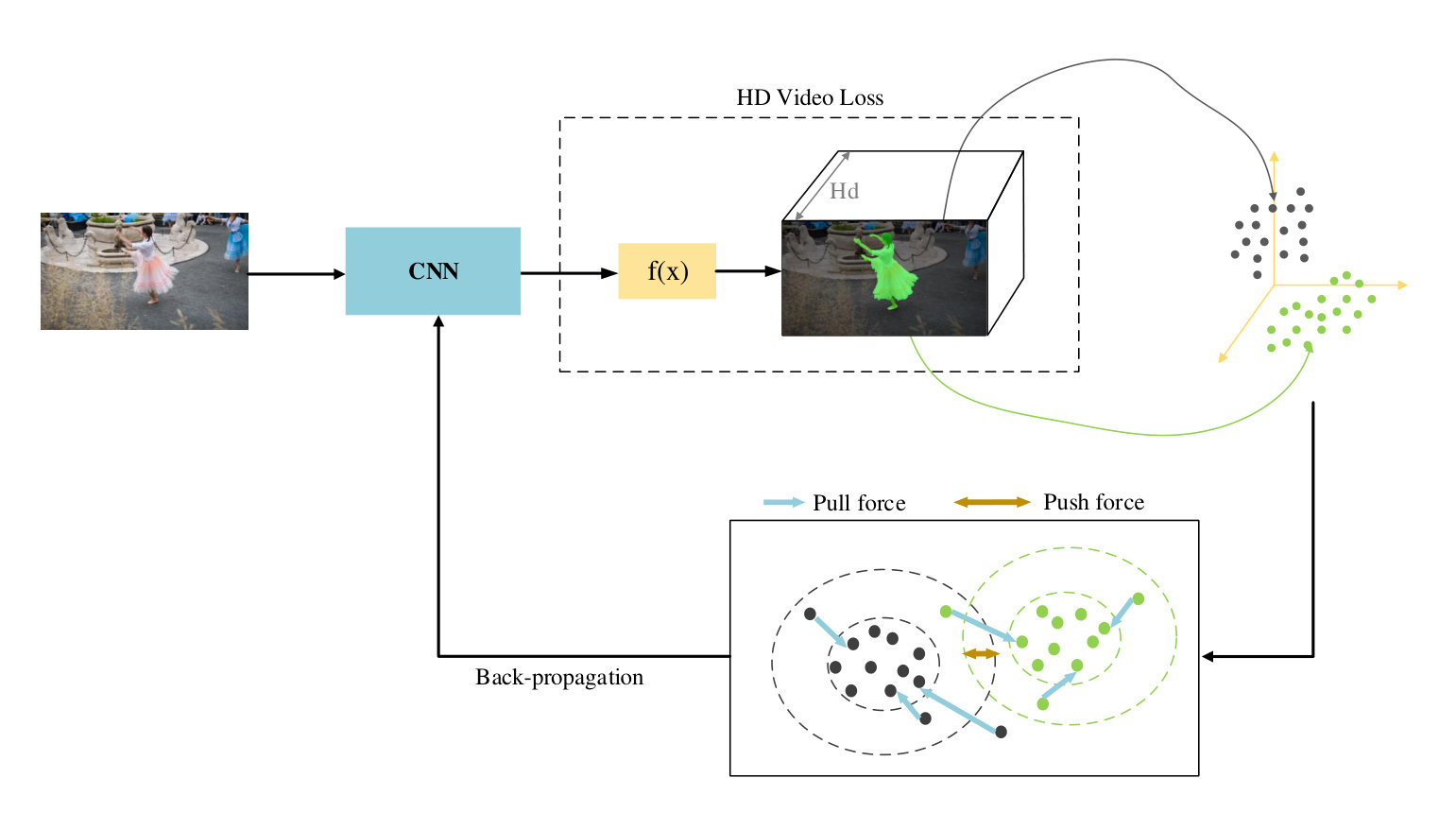 Figure 3
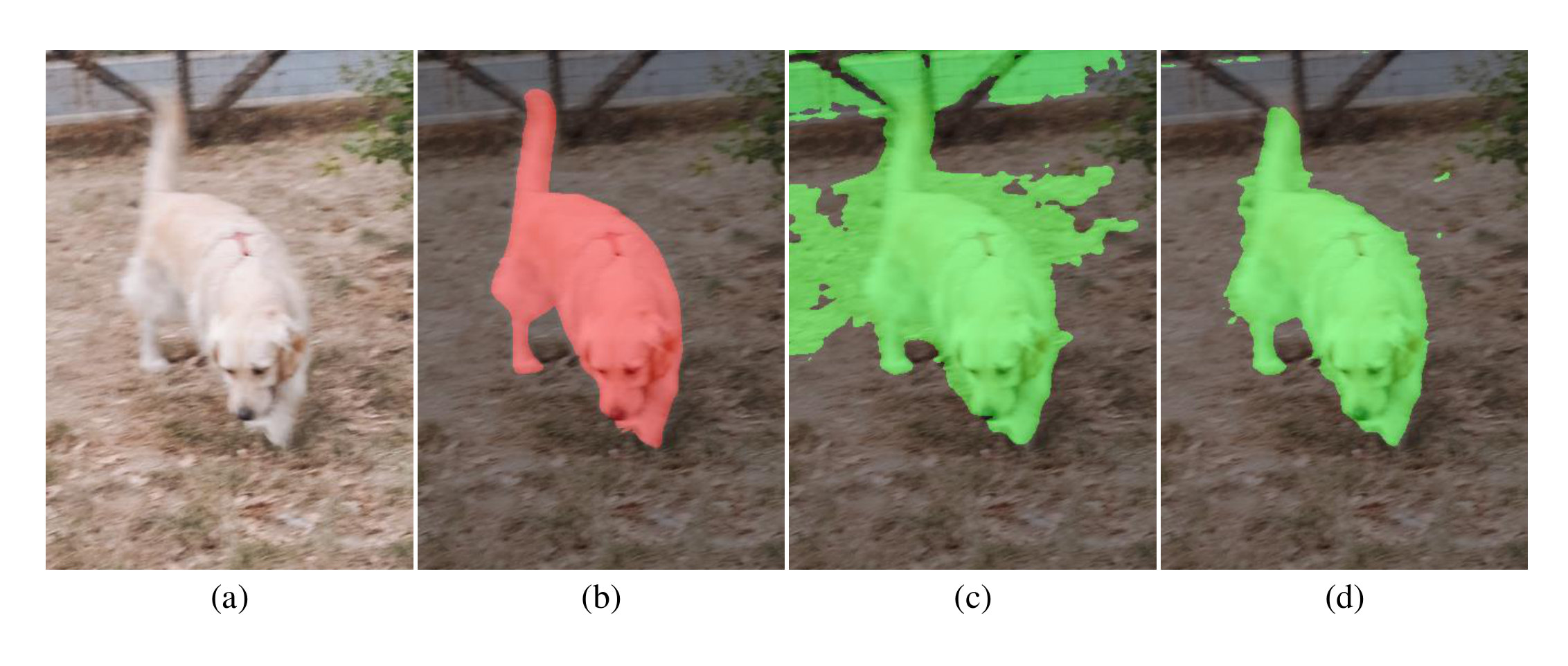 Figure 4
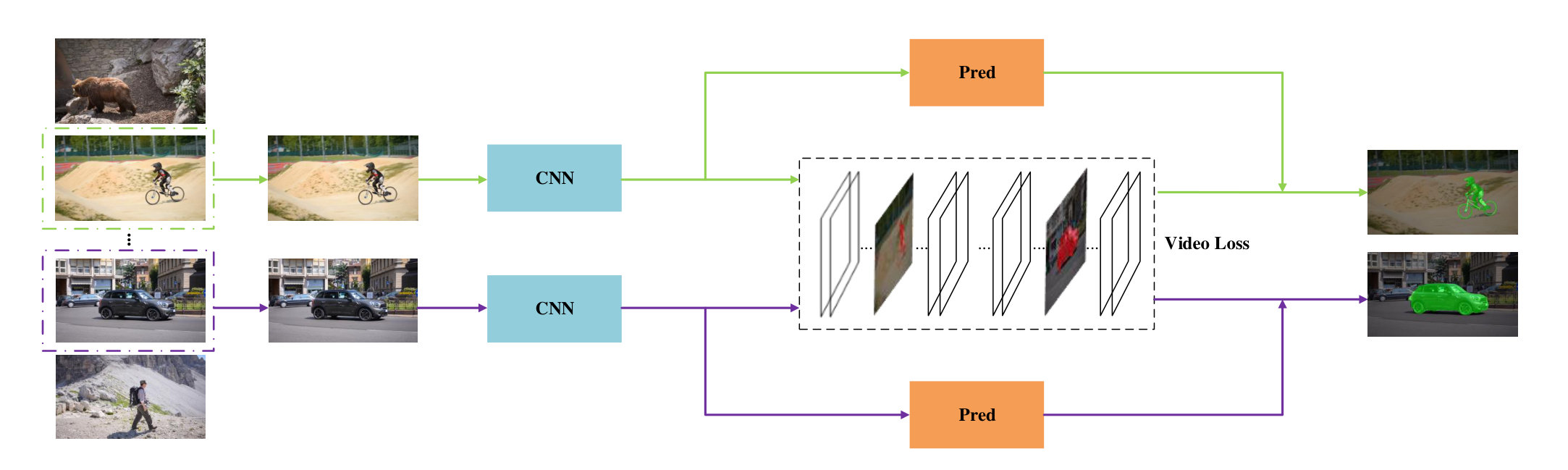 Figure 5
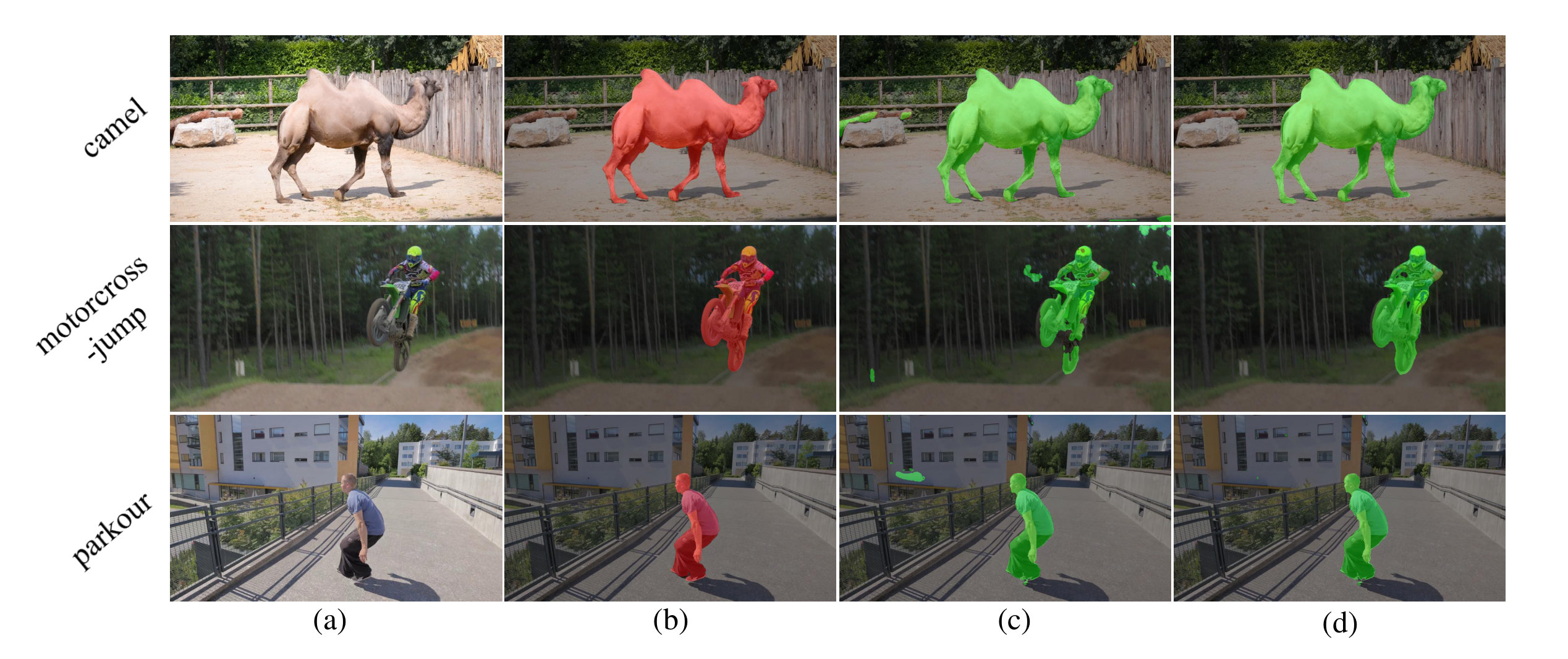 Figure 6
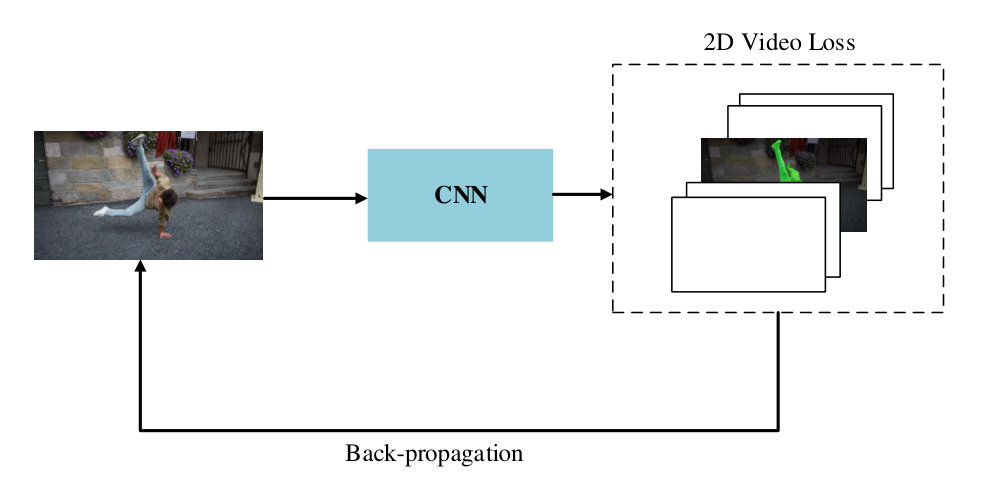 Figure 7
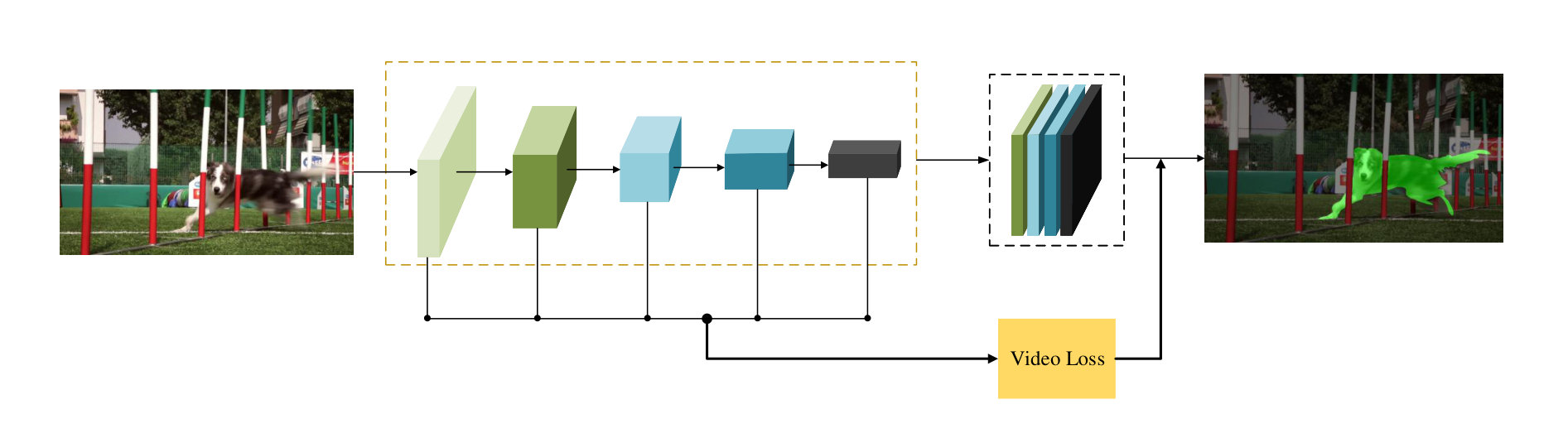 Figure 8
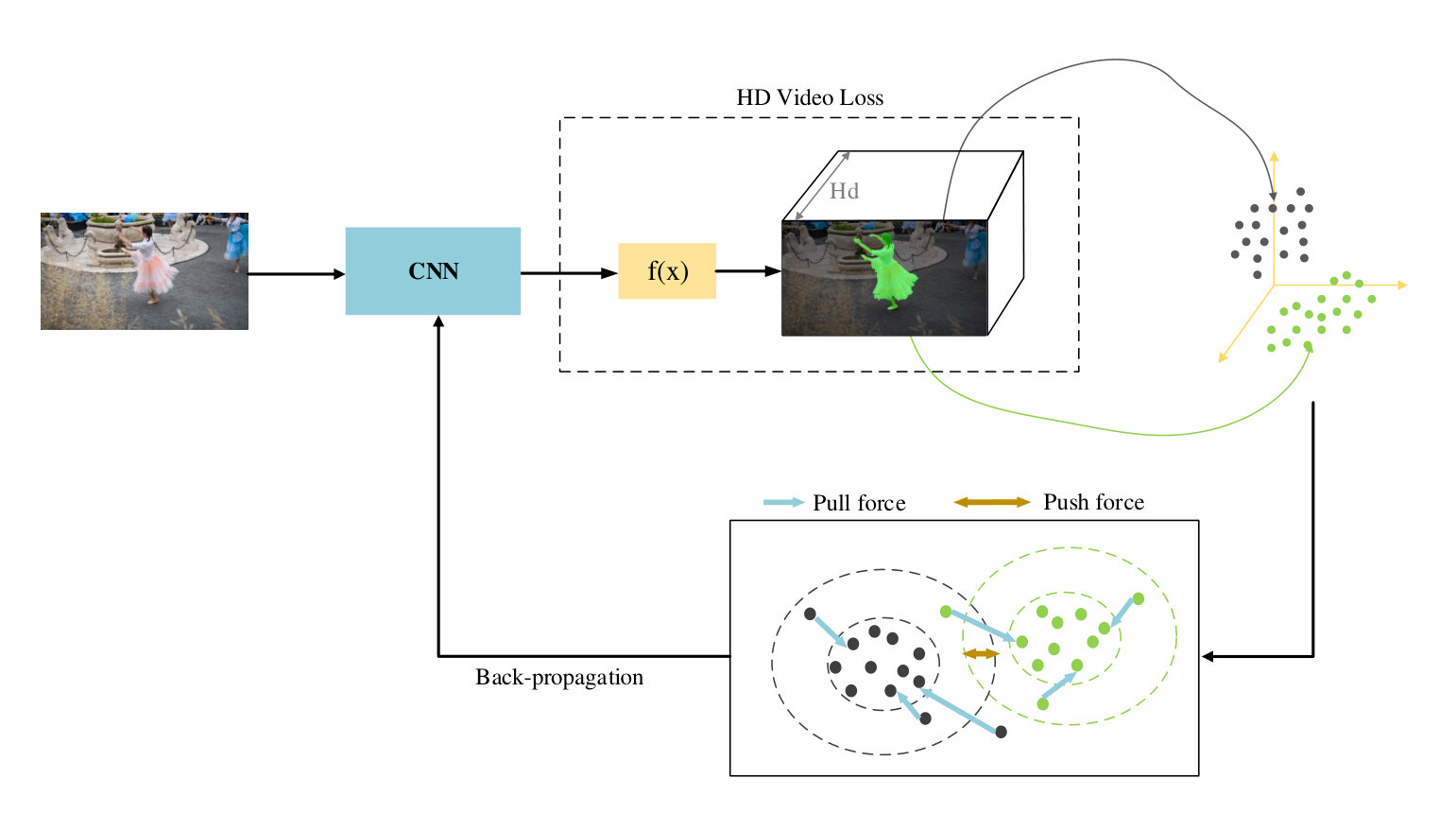 Figure 9
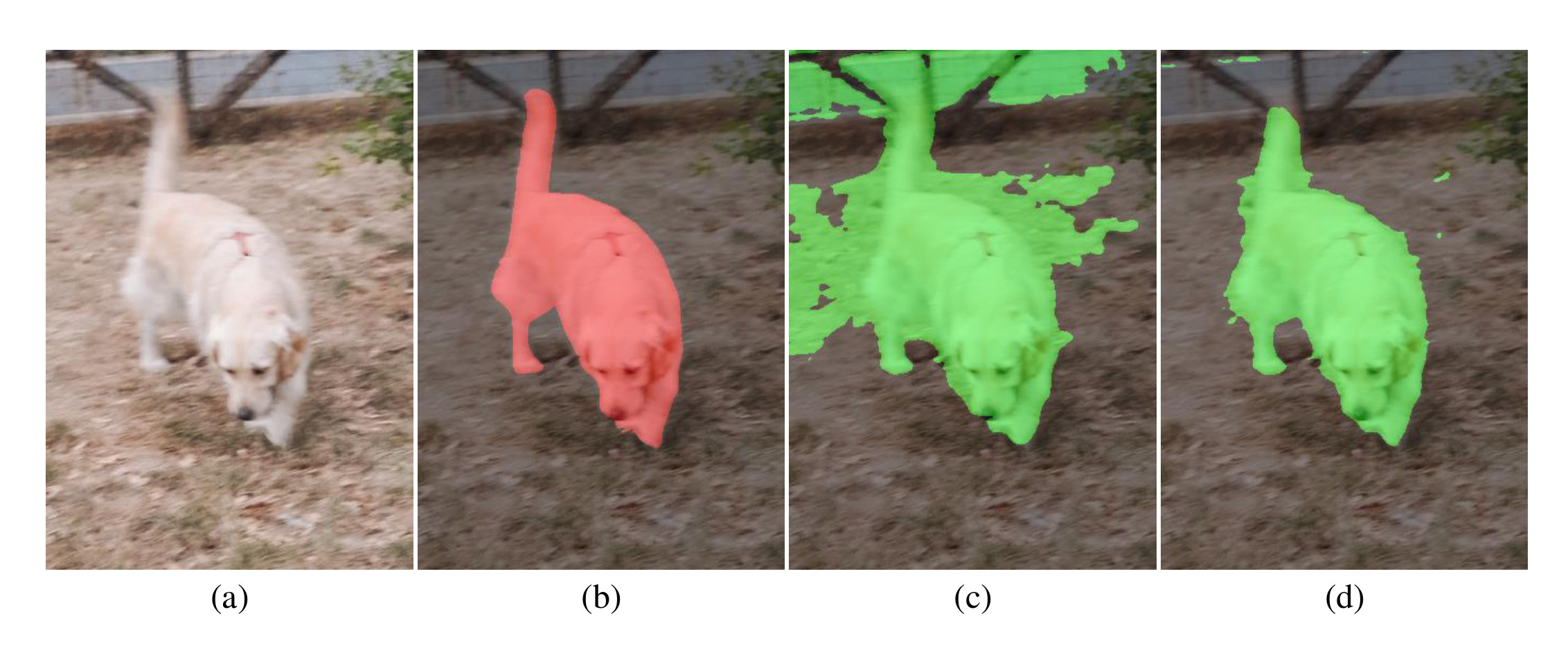 Figure 10
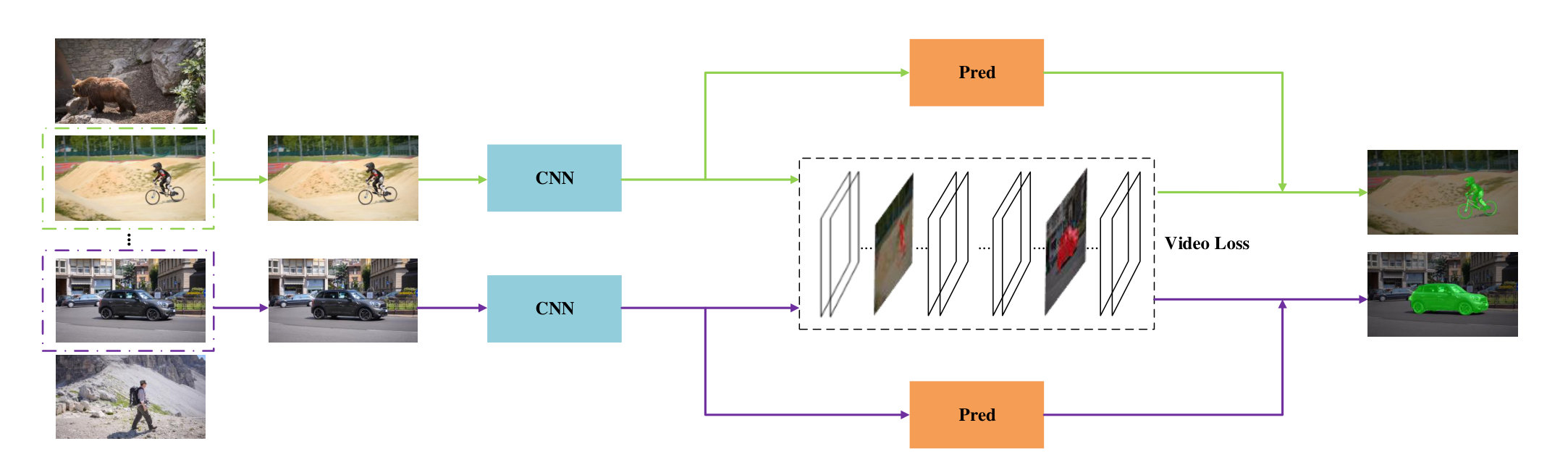 Figure 11
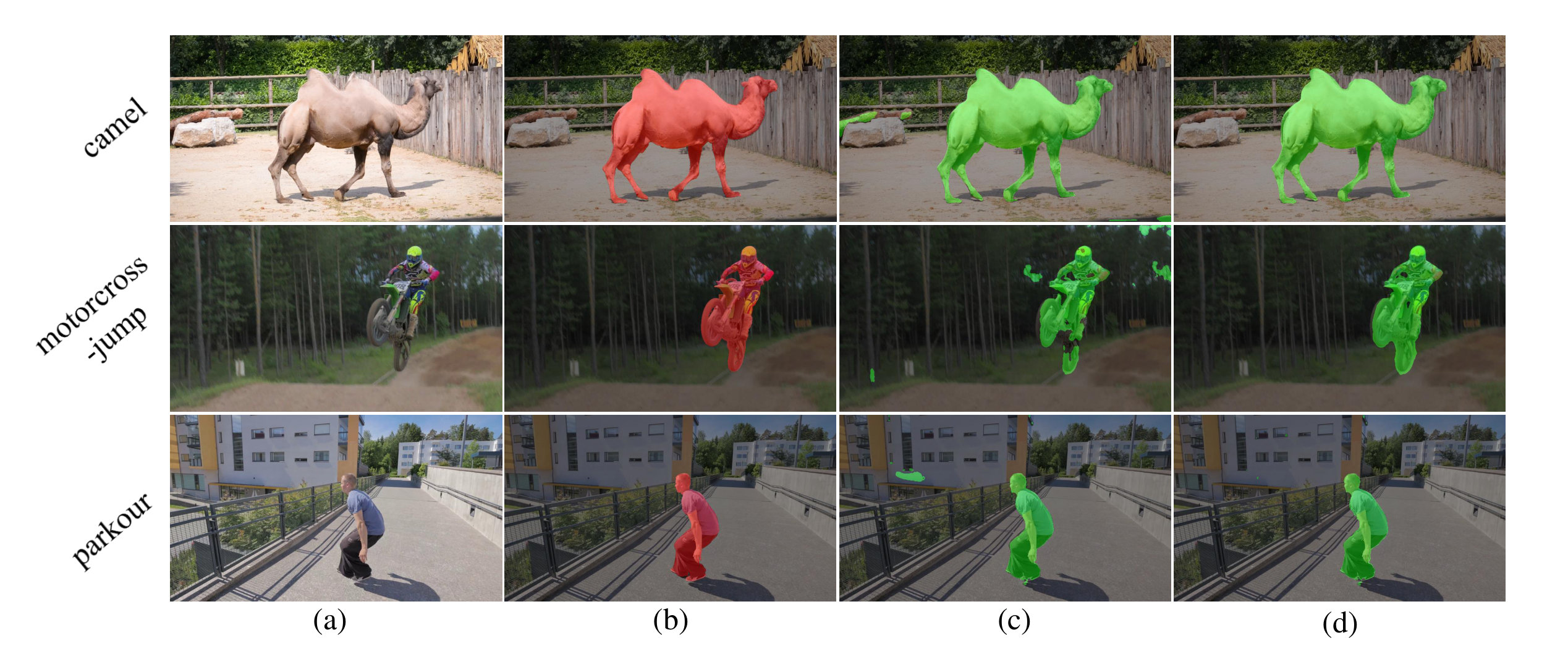 Figure 12
| Method | Parent Network | Finetuning | Backbone |
|---|---|---|---|
| OSVOS | 52.5 | 75.0 | VGG16 |
| OSVOS-V2d | 50.8 | 76.2 | VGG16 |
| OSVOS | 53.1 | 65.7 | MobileNet |
| OSVOS-V2d | 54.1 | 66.2 | MobileNet |
| Method | Parent Network | Finetuning |
|---|---|---|
| OSVOS | 53.1 | 65.7 |
| OSVOS-V2d | 54.1 | 66.2 |
| OSVOS-Vhd | 53.7 | 66.9 |
| OSVOS-Vmixed | 58.6 | 67.5 |
| Sequence | VGG+OSVOS | VGG+OSVOS-V2d | MN+OSVOS | MN+OSVOS-V2d |
|---|---|---|---|---|
| Blackswan | 94.1 | 93.6 | 93.3 | 94.0 |
| bmx-trees | 52.8 | 58.5 | 42.0 | 42.8 |
| breakdance | 67.6 | 67.7 | 75.1 | 70.0 |
| camel | 83.7 | 85.8 | 70.2 | 75.1 |
| car-roundabout | 88.3 | 75.6 | 83.0 | 74.2 |
| car-shadow | 88.6 | 83.5 | 74.3 | 74.2 |
| cows | 95.2 | 94.9 | 90.7 | 87.9 |
| dance-twirl | 60.7 | 64.9 | 63.4 | 66.2 |
| dog | 72.6 | 88.3 | 88.7 | 90.8 |
| drift-chicane | 61.3 | 73.9 | 26.9 | 36.0 |
| drift-straight | 56.4 | 61.8 | 35.5 | 35.7 |
| goat | 88.1 | 87.9 | 82.0 | 85.5 |
| horsejump-high | 84.5 | 81.5 | 69.8 | 69.1 |
| kite-surf | 75.3 | 73.9 | 54.9 | 55.3 |
| libby | 75.4 | 77.2 | 69.4 | 68.3 |
| motocross-jump | 60.2 | 67.3 | 49.6 | 52.7 |
| paragliding-launch | 63.9 | 64.0 | 56.3 | 58.5 |
| parkour | 89.0 | 89.2 | 81.5 | 73.6 |
| scooter-black | 58.2 | 35.4 | 57.6 | 62.3 |
| soapbox | 84.3 | 86.1 | 49.5 | 46.3 |
Peer Reviews
No public reviews on file for this paper yet. If you reviewed it on a platform where reviews are public (OpenReview, ICLR, NeurIPS, ICML), you can paste yours below so the community can read it here.
Videos
No videos yet. Explain this paper in a talk, walkthrough, or lecture? Add one.
Taxonomy
TopicsVisual Attention and Saliency Detection · Advanced Neural Network Applications · Adversarial Robustness in Machine Learning
\addauthor
Yu Liu [email protected] \addauthorYutong Dai [email protected] \addauthorAnh-Dzung [email protected] \addauthorLingqiao [email protected] \addauthorIan [email protected] \addinstitutionSchool of Computer Science,
The University of Adelaide, AU
In Defense of OSVOS
In defense of OSVOS
Abstract
As a milestone for video object segmentation, one-shot video object segmentation (OSVOS) has achieved a large margin compared to the conventional optical-flow based methods regarding to the segmentation accuracy. Its excellent performance mainly benefit from the three-step training mechanism, that are: (1) acquiring object features on the base dataset (i.e. ImageNet), (2) training the parent network on the training set of the target dataset (i.e. DAVIS-2016) to be capable of differentiating the object of interest from the background. (3) online fine-tuning the interested object on the first frame of the target test set to overfit its appearance, then the model can be utilized to segment the same object in the rest frames of that video. In this paper, we argue that for the step (2), OSVOS has the limitation to ‘overemphasize’ the generic semantic object information while ‘dilute’ the instance cues of the object(s), which largely block the whole training process. Through adding a common module, video loss, which we formulate with various forms of constraints (including weighted BCE loss, high-dimensional triplet loss, as well as a novel mixed instance-aware video loss), to train the parent network in the step (2), the network is then better prepared for the step (3), i.e. online fine-tuning on the target instance. Through extensive experiments using different network structures as the backbone, we show that the proposed video loss module can improve the segmentation performance significantly, compared to that of OSVOS. Meanwhile, since video loss is a common module, it can be generalized to other fine-tuning based methods and similar vision tasks such as depth estimation and saliency detection.
1 Introduction
With the popularity of all kinds of mobile device and sensors, countless video clips are uploaded and shared through the social media platforms and video websites every day. Smartly analysing these video clips are very useful yet quite challenging. The revival of deep learning boosts the performance of many recognition tasks on static images to a level that can be matched with human beings, including object classification [Liu et al.(2019)Liu, Liu, Rezatofighi, Do, Shi, and Reid, Girshick(2015), Redmon and Farhadi(2018)], semantic segmentation [Chen et al.(2018a)Chen, Papandreou, Kokkinos, Murphy, and Yuille, Liu et al.(2018)Liu, Qi, Qin, Shi, and Jia, Long et al.(2015)Long, Shelhamer, and Darrell] and object tracking [Wang et al.(2018)Wang, Zhang, Bertinetto, Hu, and Torr, Cao et al.(2018)Cao, Hidalgo, Simon, Wei, and Sheikh]. Compared to static images, video clips contain much more rich information, and the temporal correlations among inter-frame, if being used appropriately, it can significantly improve the performance of the corresponding tasks on static images. As one of the most active fields in computer vision community, video object segmentation aims to distinguish the foreground objects(s) from the background in pixel level. In 2017, one-shot video object segmentation (OSVOS) is proposed by Caelles et al [Caelles et al.(2017)Caelles, Maninis, Pont-Tuset, Leal-Taixé, Cremers, and Van Gool], as a milestone in this research field, which achieves over 10 % improvements compared to the previous conventional methods regarding the segmentation accuracy.
Motivation and principle of OSVOS
The design of OSVOS is inspired by the perception process of human beings. Specifically, when we recognize an object, the first thing come into our view are the image features such as corners and textures of the scene, then we can distinguish the object(s) from background through shape and edge cues, which also named objectness. Finally, based on the rough localization from the above two steps, we will pay attention on the details of the target instance.
In particular, OSVOS utilizes a fully-convolutional neural network (FCN) [Long et al.(2015)Long, Shelhamer, and Darrell] to conduct video object segmentation, and the three phases are:
- •
Acquire object features: to acquire the generic semantic features from ImageNet.
- •
Train parent network: to train a network on DAVIS-2016 training set, which is capable of distinguishing the foreground object(s) from the background.
- •
Online fine-tuning: based on the * parent network*, to train the network which is overfitting the appearance of the target instance on the first frame.
The Pros and Cons of OSVOS
- •
Pros: The online fine-tuning process of OSVOS wishes to fully acquire the appearance of the target object in the first frame. Hence, it is capable of handling the fast moving, abrupt rotation as well as heavy occlusion, which are the limitations of the conventional optical flow based methods.
- •
Cons:
i) when similar (noisy) objects appear in the subsequent frames of the video sequence, they will be wrongly segmented as foreground objects. ii) when the appearance of the target object changes dramatically in the later phase of the video sequence, the algorithm fails to segment the new appearance parts.
The motivation of video loss
We propose the video loss in defense of OSVOS based on two observations:
- •
For CNN, the low-level layers have relatively large spatial resolutions, and carry more details about the object instance, while the high-level layers have more stronger abstract and generalization ability, leading to carry more category information. Especially, in the second phase of OSVOS, i.e. training the parent network, it actually tries to fine-tune the network to acquire the ability of distinguishing the objects from the background. However, it dilutes the ‘instance’ information. And quickly adapts to the specific (target) instance, which is exactly the need of third phase (i.e. online finetuning). Video loss can effectively ‘rectify’ the training process of parent network, and make it be better prepared for the online fine-tuning.
- •
Each video is supposed to maintain an average object, and through mapping, we expect that the objects from a same video are close to each other in the embedding space, while the objects from different videos are far away from each other. By this way, video loss can help the network to maintain an average object for each video squence.
2 Related Works
For the task of semi-supervised video object segmentation, the annotations of first frame is given, and the algorithm is expected to infer the object(s) of interest in the rest frames of the video. According to design principle, the existing algorithms which achieve the state-of-the-art performance on DAVIS benchmark [Perazzi et al.(2016)Perazzi, Pont-Tuset, McWilliams, Van Gool, Gross, and Sorkine-Hornung] for semi-supervised video object segmentation can be roughly classified into three categories:
2.1 Tracking based Methods
In this category, one stream of methods employ the optical flow to track the mask from the previous frame to the current frame, including MSK [Perazzi et al.(2017)Perazzi, Khoreva, Benenson, Schiele, and Sorkine-Hornung], MPNVOS [Sun et al.(2018)Sun, Yu, Li, and Wang] etc, one limitation of those methods is that they can not handle heavy occlusion and fast moving. Most recently, there are an emergence of methods which use the ReID technique to conduct the video object segmentation, including PReMVOS [Luiten et al.(2018)Luiten, Voigtlaender, and Leibe] and FAVOS [Cheng et al.(2018)Cheng, Tsai, Hung, Wang, and Yang]. Specifically, FAVOS using ReID to tackle the part-based detection box first, and through merging the (box) region based segments to form the final segmentation. PReMVOS firstly generate instance segmentation proposals in each frame, and then take use of the ReID technique to do data association to pick the correct segments in temporal domain, which can largely reduce the background noises brought by other nearby or overlapped object(s).
2.2 Adaptation based Methods
For this category of methods, the core idea is utilizing the mask priors acquired from the previous frame(s) to be the guidance, to supervise the prediction in the current frame. Specifically, Segflow [Cheng et al.(2017)Cheng, Tsai, Wang, and Yang] takes use of a parallel two-branch network to predict the segmentation as well as optical flow, through the bidirectional propagation between two frames, calculating optical flow and segmentation together and expecting them to benefit from each other. RGMP [Wug Oh et al.(2018)Wug Oh, Lee, Sunkavalli, and Joo Kim] takes both annotations of the first frame and predicted mask of the previous frame as guidance, employs a Siamese encoder-decoder to conduct the mask propagation as well as detection, and with synthetic data to further boost the segmentation performance. OSMN [Yang et al.(2018)Yang, Wang, Xiong, Yang, and Katsaggelos] shares the similar design principle with RGMP, while the difference is that it uses an modulator to quickly adapt the first annotation to the previous frame, which can then be used by the segmentation network as the spatial prior.
2.3 Fine-tuning based Methods
Besides the aforementioned two categories of methods, there are some fine-tuning based methods which achieve the top performance in video object segmentation benchmark are OSVOS-S [Maninis et al.(2017)Maninis, Caelles, Chen, Pont-Tuset, Leal-Taixé, Cremers, and Van Gool], OnVOS [Voigtlaender and Leibe(2017)], CINM [Bao et al.(2018)Bao, Wu, and Liu] etc, and all of them are derived from OSVOS [Caelles et al.(2017)Caelles, Maninis, Pont-Tuset, Leal-Taixé, Cremers, and Van Gool]. Specifically, OSVOS-S [Maninis et al.(2017)Maninis, Caelles, Chen, Pont-Tuset, Leal-Taixé, Cremers, and Van Gool] aims to solve the problem of removing noisy object(s) with the help of instance segmentation. While OnAVOS [Voigtlaender and Leibe(2017)] tries to enhance the network’s ability for recognizing the new appearance of the target object(s) as well as suppressing the similar appearance carried by the noisy object(s). CINM [Bao et al.(2018)Bao, Wu, and Liu] is also initialized with the fine-tuning model, and employ a CNN to infer the markov random field (MRF) in spatial domain, and with optical flow to track the segmented object(s) in temporal domain.
2.4 Video Loss
In this paper, targeting to improve the fine-tuning methods, with OSVOS as an entry, we deliver a tiny head video loss. As aforementioned, our observation is based on the ‘delayed’ learning process for target instance(s) between the parent network and online fine-tuning. Through incorporating a basic component, i.e. video loss, we achieve better performance regarding to segmentation accuracy compared to OSVOS using exactly same backbone network structure(s). Furthermore, considering that it may not always be easy to distinguish the object(s) from background in 2D image coordinate, we further utilize metric learning and the proposed mixed instance-aware video loss to enforce the pixels, after mapping through a FCN in high-dimensional space, which belong to target object(s) or background are supposed to be closed with each other, while any two pixels with one belong to the target object(s) and the other belong to background are supposed to has a relatively far distance with each other. Through employing the proposed video losses, the performance has been significantly improved regarding to the segmentation accuracy, and some noisy objects have been effectively removed. Moreover, since video loss is a common building block, it can be generalized to all kinds of fine-tuning based methods including, but not limit to OnVOS [Voigtlaender and Leibe(2017)], OSVOS-S [Maninis et al.(2017)Maninis, Caelles, Chen, Pont-Tuset, Leal-Taixé, Cremers, and Van Gool], CINM [Bao et al.(2018)Bao, Wu, and Liu] etc.
3 Methodology
The motivation, design and key implementation of video loss will be illustrated in detail.
3.1 Overview
The assumption for video loss is that, different objects are linear separable in high-dimentional space, i.e. the feature space. Meanwhile, the euclidean distances of the features of the same object are supposed to be smaller than that of different objects. The workflow of OSVOS-VL is shown in Figure 2. As can be seen, video loss just like a light-weight head being parallel with the prediction part, thus the extra time cost is insignificant. Once the better features are obtained after training of parent network, it would ease the learning processing of online fine-tuning stage and is much prone to achieve accurate segmentation results compared to that of OSVOS. This design can be viewed as maintaining an average target object for each video, and expecting the objects from different videos are much more far away than that of from the same video, which effectively prevents the background noise from other objects (of no interest). We deliver three types of video loss (VL) in this paper. The first one is the two dimensional video loss (2D-VL), which make the parent network to push away different objects in image coordinates. The second and third are the high-dimensional video loss (HD-VL). Established on 2D-VL, the HD-VL further maps 2D features to high dimensional space, and clusters pixels which belong to the same instance together, and utilize object centers in HD-space as constraints.
3.2 Two Dimensional Video Loss
In OSVOS [Caelles et al.(2017)Caelles, Maninis, Pont-Tuset, Leal-Taixé, Cremers, and Van Gool], considering the sample imbalance between the target object(s) and the background, weight cross entropy loss is employed to conduct the pixel-wise segmentation task. The expression of weighted cross entropy loss as follows:
[TABLE]
Where is the input image, is the pixelwise binary label of , and and are the positive and negative labeled pixels. is obtained by applying a sigmoid to the activation of the final layer. is employed for the purpose of training the imbalanced binary task as in [Xie and Tu(2015)].
OSVOS [Caelles et al.(2017)Caelles, Maninis, Pont-Tuset, Leal-Taixé, Cremers, and Van Gool] only rely on weighted cross entropy loss to fine-tune parent network, but we argue that it will mix up all of the objectness features in DAVIS dataset, without classifying which kind of objects the foreground belongs to. It may make the online fine-tuning process more harder to recognize which instance the object is. Therefore, we propose 2D-VL to force the network to learn features of different instances during the training of parent network.
For this purpose, we add the identity of each video () into the training process as input. After recognizing the of the training (image) data, the network can update each specific (video) category through back propagation. Please note, 2D-VL share the same expression with Equation 1, but different from the prediction branch, our 2D-VL only updates corresponding (video) category directly, as illustrated in Figure 3.
3.3 High Dimensional Video Loss
With the observation that objects in 2D dimension usually have similar appearances or shapes, which brings too much confusion to the network to distinguish an object accurately, we propose to map the prediction to a high-dimensional space firstly, and expecting that after mapping, the distance among different objects is enlarged. The mapping process in high dimensional space is shown in Fig. 4. In HD space, we look forward to clustering embeddings from different objects into different groups.
In PML [Chen et al.(2018b)Chen, Pont-Tuset, Montes, and Van Gool], a modified triplet loss is utlized to pull samples with same identity close to each other, and only constrain the smallest negative points and smallest positive points. Inspried but different from that, we randomly sample 256 points in both foreground parts and background parts, pulling points from the same part together and push points from different parts away. The triplet loss is defined as
[TABLE]
where when point , belong to a same cluster (foreground or background) and when point , belong to different clusters.
3.4 Mixed Instance-aware Video Loss
Contrastive Center Loss Inspired by the work [De Brabandere et al.(2017)De Brabandere, Neven, and Van Gool], we define a contrastive center loss for the purpose of pulling embeddings with the same label close to each other while pushing embeddings with different labels far away from each other. To restrict the entire foreground area and background area, we first calculate the center point of each part. Then we use the contrastive center loss function to penalize the distance between these two center points. The motivation behind this is to restrict distribution of foreground embeddings and reduce the amount of computation.
[TABLE]
where represents the center point of foreground cluster, and represents the center point of background cluster, both in high-dimensional space.
Mixed Loss Contrastive center loss is a loss restricting the overall distribution of examples, while triplet loss considers the constraints in pixel level. In order to combine two types of constraints, here we define a mixed loss as
[TABLE]
Where and are the coefficients for balancing two loss terms.
3.5 Training
In order to form a fair comparison with OSVOS [Caelles et al.(2017)Caelles, Maninis, Pont-Tuset, Leal-Taixé, Cremers, and Van Gool], we adopt the same settings for the training of parent network and online fine-tuning except the training epochs. Specifically, SGD solver with momentum 0.9 is used, learning rate is 1e-8, the weight decay is 5e-4. Batch size is 1 for VGG16 based experiments and is 2 for MobileNet [Howard et al.(2017)Howard, Zhu, Chen, Kalenichenko, Wang, Weyand, Andreetto, and Adam] based experiments, respectively. For training the parent network, fine-tuning of 240 epochs is conducted based on the initialization of ImageNet [Deng et al.(2009)Deng, Dong, Socher, Li, Li, and Fei-Fei] features. For online fine-tuning, 10k iterations of fine-tuning is applied for all of the experiments for the fair comparison.
4 Experimental Results
4.1 Dataset
DAVIS-2016 [Perazzi et al.(2016)Perazzi, Pont-Tuset, McWilliams, Van Gool, Gross, and Sorkine-Hornung] is the most widely used dataset for video object segmentation, which is composed of 50 videos with pixel-wise annotations for single-object. Among them, 30 video sequences are chosen as training set, and the other 20 video sequences are utilized as test set.
4.2 Quantitative Results
In Table 1, J Mean for both parent network and online fine-tuning with different structures as backbones are listed out. As can be seen, for both of the experiments which based on VGG16 and MobileNet, OSVOS+ video loss achieve the better performance during onlie fine-tuning phase, while with comparable performance with OSVOS during parent network training phase, which proves our assumption that video loss, as a common module, is effective in helping the (FCN) network to recognize the target instance. In Table 2, compared to OSVOS with video loss utilized in 2D (OSVOS-V2d), OSVOS with high-dimensional loss (OSVOS-Vhd, OSVOS-Vmixed) performs better, which is matched with our observation that sometimes it is much more easier for similar features to be distinguished in high-dimensional space than that of in two-dimensional space. Please note, all of our experiments trained with 10k iterations and without any post-processing for the purpose of fair comparison and saving training time, which is slightly different from [Caelles et al.(2017)Caelles, Maninis, Pont-Tuset, Leal-Taixé, Cremers, and Van Gool], and the preliminary experiments we tested show that as the training iterations increasing (around 20k iterations), which can replicate the numbers that the paper [Caelles et al.(2017)Caelles, Maninis, Pont-Tuset, Leal-Taixé, Cremers, and Van Gool] report.
4.3 Qualitative Results
We also provide some visualized comparisons in Figure 5 between OSVOS and OSVOS-V2d, as can be seen, among the results acquired by OSVOS, wrong segments are accompanied in the sourrondings of the target object, we suspect that is because only rely on prediction loss in OSVOS can not distinguish instance information between the target object and background (noisy) objects. In contrast, OSVOS-VL effectively remove the noisy parts compard to that of OSVOS.
4.4 Performance on per sequence
In order to have a better understanding of the work principle of the proposed video loss block, we illustrate performance comparsion of OSVOS and OSVOS-V2d on per sequence, as shown in Table 3, for both VGG16 and MobileNet based experiments, in 12 out of 20 sequences, OSVOS-V2d achieve better performance than OSVOS, in some sequences such as bmx-trees, camel, dance-twirl, dog, drift-chicane, drift-straight, motocross-jump, paragliding-launch, OSVOS-V2d achieves consistent improvements on both backbones, and these sequences usually contain abrupt motions or noisy objects which share the similar appearance with the target object.
5 Conclusion
In this paper, we deliver a common module, video loss, for video object segmentation, which is tailored to overcome the limitation of fine-tuning methods, during the phase of training parent network, dilute the instance information, hence delay the overall training process. Considering in CNN, the shallow layers usually contain much rich details of object(s) which are the key cues to specify different instances, while the deeper layers have more stronger generalization ability to recognize generic objects. Various video losses are proposed as the constraints to supervise the training process of parent network, which is effective in removing the noisy objects. Once the training process is finished, the parent network is well prepared to adapt to the instance quickly during online fine-tuning. One of our future interests will be extending the video loss into other fine-tuning methods such OSVOS-S, OnVOS. Another one will be with the help of the network search technique to automatically decide the training epochs and learning rate.
The reference list from the paper itself. Each links out to its DOI / PubMed record.
- 1[Bao et al.(2018)Bao, Wu, and Liu] Linchao Bao, Baoyuan Wu, and Wei Liu. Cnn in mrf: Video object segmentation via inference in a cnn-based higher-order spatio-temporal mrf. In Proceedings of the IEEE Conference on Computer Vision and Pattern Recognition , pages 5977–5986, 2018.
- 2[Caelles et al.(2017)Caelles, Maninis, Pont-Tuset, Leal-Taixé, Cremers, and Van Gool] Sergi Caelles, Kevis-Kokitsi Maninis, Jordi Pont-Tuset, Laura Leal-Taixé, Daniel Cremers, and Luc Van Gool. One-shot video object segmentation. In Proceedings of the IEEE conference on computer vision and pattern recognition , pages 221–230, 2017.
- 3[Cao et al.(2018)Cao, Hidalgo, Simon, Wei, and Sheikh] Zhe Cao, Gines Hidalgo, Tomas Simon, Shih-En Wei, and Yaser Sheikh. Openpose: realtime multi-person 2d pose estimation using part affinity fields. ar Xiv preprint ar Xiv:1812.08008 , 2018.
- 4[Chen et al.(2018 a)Chen, Papandreou, Kokkinos, Murphy, and Yuille] Liang-Chieh Chen, George Papandreou, Iasonas Kokkinos, Kevin Murphy, and Alan L Yuille. Deeplab: Semantic image segmentation with deep convolutional nets, atrous convolution, and fully connected crfs. IEEE transactions on pattern analysis and machine intelligence , 40(4):834–848, 2018 a.
- 5[Chen et al.(2018 b)Chen, Pont-Tuset, Montes, and Van Gool] Yuhua Chen, Jordi Pont-Tuset, Alberto Montes, and Luc Van Gool. Blazingly fast video object segmentation with pixel-wise metric learning. In Proceedings of the IEEE Conference on Computer Vision and Pattern Recognition , pages 1189–1198, 2018 b.
- 6[Cheng et al.(2017)Cheng, Tsai, Wang, and Yang] Jingchun Cheng, Yi-Hsuan Tsai, Shengjin Wang, and Ming-Hsuan Yang. Segflow: Joint learning for video object segmentation and optical flow. In Proceedings of the IEEE international conference on computer vision , pages 686–695, 2017.
- 7[Cheng et al.(2018)Cheng, Tsai, Hung, Wang, and Yang] Jingchun Cheng, Yi-Hsuan Tsai, Wei-Chih Hung, Shengjin Wang, and Ming-Hsuan Yang. Fast and accurate online video object segmentation via tracking parts. In Proceedings of the IEEE Conference on Computer Vision and Pattern Recognition , pages 7415–7424, 2018.
- 8[De Brabandere et al.(2017)De Brabandere, Neven, and Van Gool] Bert De Brabandere, Davy Neven, and Luc Van Gool. Semantic instance segmentation with a discriminative loss function. ar Xiv preprint ar Xiv:1708.02551 , 2017.