Gaps between consecutive untwisting numbers
Duncan McCoy

TL;DR
This paper investigates the differences between consecutive untwisting numbers of knots, demonstrating that these gaps can be arbitrarily large for certain classes of knots and parameters, revealing new complexity in knot untwisting measures.
Contribution
It establishes that for any p ≥ 2, the difference between consecutive untwisting numbers can be arbitrarily large, and shows large gaps specifically for torus knots between tu_1 and tu_2.
Findings
Differences between tu_{p-1} and tu_p can be arbitrarily large for p ≥ 2.
Torus knots exhibit arbitrarily large gaps between tu_1 and tu_2.
The study reveals significant variability in untwisting numbers across different knots and parameters.
Abstract
For one can define a generalization of the unknotting number called the th untwisting number which counts the number of null-homologous twists on at most strands required to convert the knot to the unknot. We show that for any the difference between the consecutive untwisting numbers and can be arbitrarily large. We also show that torus knots exhibit arbitrarily large gaps between and .
Click any figure to enlarge with its caption.
 Figure 1
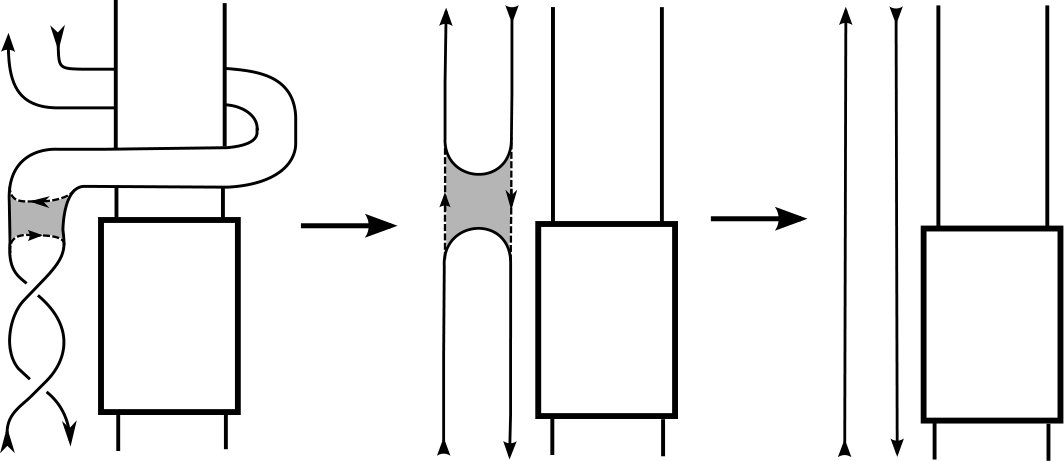 Figure 2
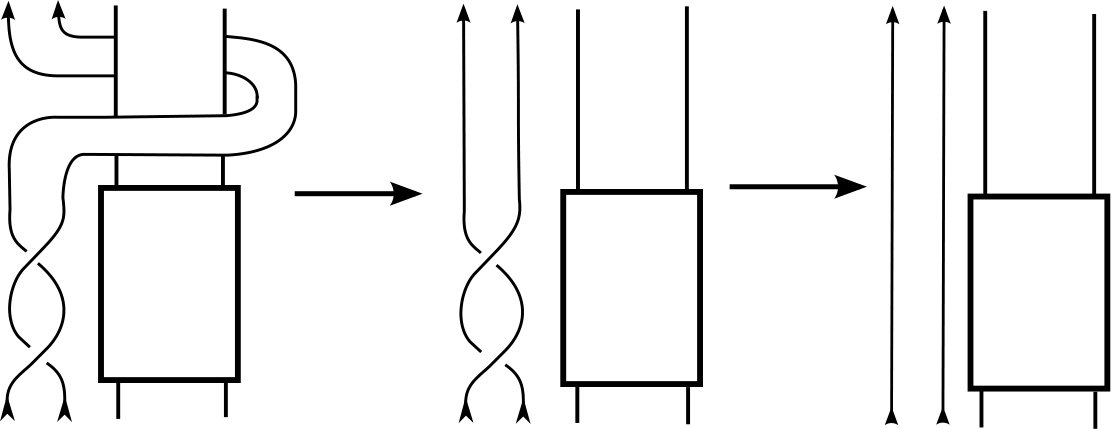 Figure 3
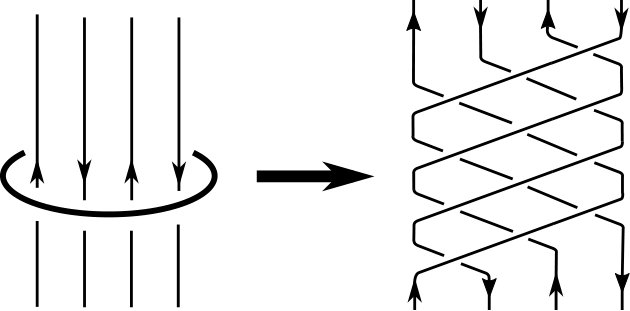 Figure 4
Peer Reviews
No public reviews on file for this paper yet. If you reviewed it on a platform where reviews are public (OpenReview, ICLR, NeurIPS, ICML), you can paste yours below so the community can read it here.
Videos
No videos yet. Explain this paper in a talk, walkthrough, or lecture? Add one.
Gaps between consecutive untwisting numbers.
Duncan McCoy
Department of Mathematics
The University of Texas At Austin
Abstract.
For one can define a generalization of the unknotting number called the th untwisting number which counts the number of null-homologous twists on at most strands required to convert the knot to the unknot. We show that for any the difference between the consecutive untwisting numbers and can be arbitrarily large. We also show that torus knots exhibit arbitrarily large gaps between and .
1. Introduction
Given a knot in , we perform a null-homologous twist by taking an unknotted curve disjoint from with and performing -surgery or -surgery on . If bounds an embedded disk intersecting transversely in points, then we call this a null-homologous twist on strands. Such a twist can always be performed locally by adding a full twist on parallel strands with appropriate orientations. An example of a null-homologous twist on four strands is shown in Figure 1.
Ince used null-homologous twisting operations to define an infinite sequence of generalizations to the unknotting number [Inc16]. For a knot the th untwisting number, denoted , is the minimum number of null-homologous twists on at most strands required to convert to the unknot. Since a null-homologous twist on two strands is equivalent to a standard crossing change, coincides with the classical unknotting number. One may also define the untwisting number by . Clearly the untwisting numbers form a decreasing sequence:
[TABLE]
The main purpose of this article is to show that the difference between consecutive pairs of untwisting numbers can be arbitrarily large.
Theorem 1**.**
For any pair of positive integers and , there is a knot such that
[TABLE]
The gaps between untwisting numbers have previously been studied by Ince, who showed that the gap between and can be arbitrarily large [Inc16]. Ince also considered the separation between higher untwisting numbers, showing for example that for any the gap between and can be arbitrarily large (cf. [Inc17, Example 6.5]). Our examples are similar to those studied by Ince, however we are able to establish stronger results through better lower bounds on . These lower bounds are provided by relating and the smooth slice genus :
[TABLE]
Here denotes smooth slice genus of . For fixed , the lower bound in (1) turns out to be optimal as the knots used to prove Theorem 1 will be knots attaining equality in (1).
Whilst (1) shows that the admit lower bounds based on the smooth slice genus, these lower bounds do not yield any information about . It turns out that one can obtain lower bounds on using the topological slice genus:
[TABLE]
This can be seen from results of Ince [Inc16], who used the work of Borodzik and Friedl [BF14, BF15] to show that . Alternatively one can establish (2) using the concept of algebraic genus [McC19].
Given that the unknotting numbers of torus knots were notoriously hard to compute, it is natural to wonder what one can say about the behaviour of untwisting numbers for torus knots. For torus knots with braid index at least four the untwisting number, is strictly smaller than the unknotting number.
Theorem 2**.**
If , then . Furthermore, for any we have
[TABLE]
Since the unknotting number satisfies , it follows that for torus knots the difference between and grows arbitrarily large as the braid index increases. For torus knots with braid index two, i.e those of the form we have . This follows from the fact that the classical knot signature provides a lower bound for and hence for . The same reasoning shows that and . However, for the remaining torus knots of braid index three understanding their untwisting numbers seems much more challenging.
2. Unbounded gaps
First we prove the following proposition, which implies (1).
Proposition 3**.**
If and are knots related related by a null-homologous twist on strands, then
[TABLE]
Proof.
We observe that a null-homologous twist on strands can be accomplished by oriented band moves. This can be proven by induction on . Consider a full twist on strands with strands oriented up and strands oriented down. Such a twist can be arranged as a full twist on strands with two more strands, one oriented up and the other down, “wrapping around” the full twist as in the left hand side of Figure 2. As illustrated in Figure 2 one can perform two oriented band moves and isotopies to produce a full twist on strands with two parallel strands alongside. Thus, proceeding inductively, we see that the full twist on strands can be converted to parallel strands by oriented band moves.
Thus if and are related by a null-homologous twist on strands, then there is a sequence of oriented band moves and isotopies that convert into . These moves allow one to construct a smoothly embedded surface of genus properly embedded in so that . Thus
[TABLE]
as required.
∎
Next we note how twisting operations transform under satellite operations.
Lemma 4**.**
Let and be knots related by a null-homologous twist on strands. then for any pattern with geometric winding number , the satellites and are related by a null-homologous twist on strands.
Proof.
Let denote the complement which comes with a distinguished meridian and in . The knot complement is obtained by gluing to so that and are glued to the meridian and null-homologous longitude of respectively. We can construct similarly by gluing to .
Since and are related by a null-homologous twist there is a null-homologous curve which can be surgered to obtain . Since is null-homologous in , surgering takes the meridian and null-homologous longitude of to the meridian and null-homologous longitude of . We can consider as a curve in . Moreover surgering will produce . Since is null-homologous in it is null-homologous in . Moreover if bounds a disk in intersecting in points and the has geometric winding number , then bounds a disk intersecting in points. Thus and are related by a null-homologous twist on strands, as required. ∎
It immediately follows from Lemma 4 that given a pattern with geometric winding number we have the following inequality:
[TABLE]
Notice that Lemma 4 also implies the following result.
Corollary 5**.**
For any knot and pattern , we have
[TABLE]
Although we won’t use Corollary 5 at any point in this paper, we include it for comparison with an analogous inequality that exists for the algebraic genus [FMPC19, McC19].
Now we construct our examples. We will use Ozsváth and Szabó’s -invariant [OS03] to obtain lower bounds on .
See 1
Proof.
Set and take to be any knot with . For example, the torus knot . Let be the -cable of . Since the -cable of the unknot is itself unknotted, it follows from (4) that
[TABLE]
Now we compute the -invariant of using the work of Hom [Hom14]. The value of depends on an auxiliary invariant which takes values in . Since , we have that . By [Hom14, Corollary 4] this implies that . Thus the relevant formula for in [Hom14, Theorem 1] shows that
[TABLE]
[TABLE]
Hence and . So by applying (1) to we have that
[TABLE]
Thus we have
[TABLE]
which is the required bound. ∎
3. Untwisting torus knots
Now we consider the untwisting numbers of torus knots. See 2
Proof.
Figure 3 shows how a null-homologous twist on four strands followed by two crossing changes can be used to convert a square of four positive crossings into a square of negative crossings. We will refer to this operation as a ‘square change’.
Suppose that we have a full twist on strands with the strands oriented in the same direction so that all the crossings are positive. We will assume first that is even. As shown in the right hand side of Figure 4 we can view this full twist as a full twist on strands with two more strands wrapping round this full twist. As shown in Figure 4, we can convert this full twist into two parallel strands and a full twist on strands by taking the two strands and passing them through the other full twist on strands using square changes and performing a crossing change. This can achieved by null-homologous twists on at most four strands. Thus the full twist on strands can be converted into parallel strands by
[TABLE]
null-homologous twists on at most four strands.
Now suppose that is odd. By performing crossing changes we can convert this to a full twist on strands with a single parallel strand alongside. The full twist on strands can then be undone as before, this shows that a full twist on strands can be converted into parallel strands by
[TABLE]
null-homologous twists on at most four strands. Thus we see that for torus knots satisfies the recursive upper bound
[TABLE]
where . For comparison the unknotting number satisfies the recursion
[TABLE]
Thus we see that
[TABLE]
Since this final line is at least one whenever , this shows that whenever .
Now we prove the upper bound (3) by induction on . Since implies that is unknotted, (3) is vacuously true. Without loss of generality suppose that and that we can write where and . Suppose inductively that . By applying (6) times we see that
[TABLE]
as required. ∎
The reference list from the paper itself. Each links out to its DOI / PubMed record.
- 1[BF 14] Maciej Borodzik and Stefan Friedl. On the algebraic unknotting number. Trans. London Math. Soc. , 1(1):57–84, 2014.
- 2[BF 15] Maciej Borodzik and Stefan Friedl. The unknotting number and classical invariants, I. Algebr. Geom. Topol. , 15(1):85–135, 2015.
- 3[FMPC 19] P. Feller, A. N. Miller, and J. Pinzon-Caicedo. A note on the topological slice genus of satellite knots. ar Xiv:1908.03760 , 2019.
- 4[Hom 14] Jennifer Hom. Bordered Heegaard Floer homology and the tau-invariant of cable knots. J. Topol. , 7(2):287–326, 2014.
- 5[Inc 16] Kenan Ince. The untwisting number of a knot. Pacific J. Math. , 283(1):139–156, 2016.
- 6[Inc 17] Kenan Ince. Untwisting information from Heegaard Floer homology. Algebr. Geom. Topol. , 17(4):2283–2306, 2017.
- 7[Mc C 19] Duncan Mc Coy. Null-homologous twisting and the algebraic genus. ar Xiv:1908.4043 , 2019.
- 8[OS 03] Peter Ozsváth and Zoltán Szabó. Knot Floer homology and the four-ball genus. Geom. Topol. , 7:615–639, 2003.