Shaping Lattice through irrelevant perturbation: Ising model
Armen Poghosyan

TL;DR
This paper identifies the leading irrelevant perturbation in the critical square lattice Ising model, providing explicit coupling expressions and matching spectrum corrections with conformal field theory, enhancing understanding of lattice-continuum relations.
Contribution
It explicitly relates the irrelevant perturbation to anisotropy and computes spectrum corrections, bridging lattice models and conformal field theory with exact agreement.
Findings
Explicit coupling constant in terms of anisotropy
Exact agreement of spectrum corrections between lattice and CFT
Relation between perturbing operators and higher integrals of motion
Abstract
The leading irrelevant perturbation, which controls the deviation of critical square lattice Ising model with periodic boundary conditions from its continuous CFT analog is identified. An explicit expression for the coupling constant in terms of the anisotropy parameter is found. We calculate the next to leading corrections to the spectrum on both lattice theory and the perturbed CFT sides for several classes of states, always getting exact agreement. We discuss also how the perturbing operators and the higher integrals of motion are related.
Click any figure to enlarge with its caption.
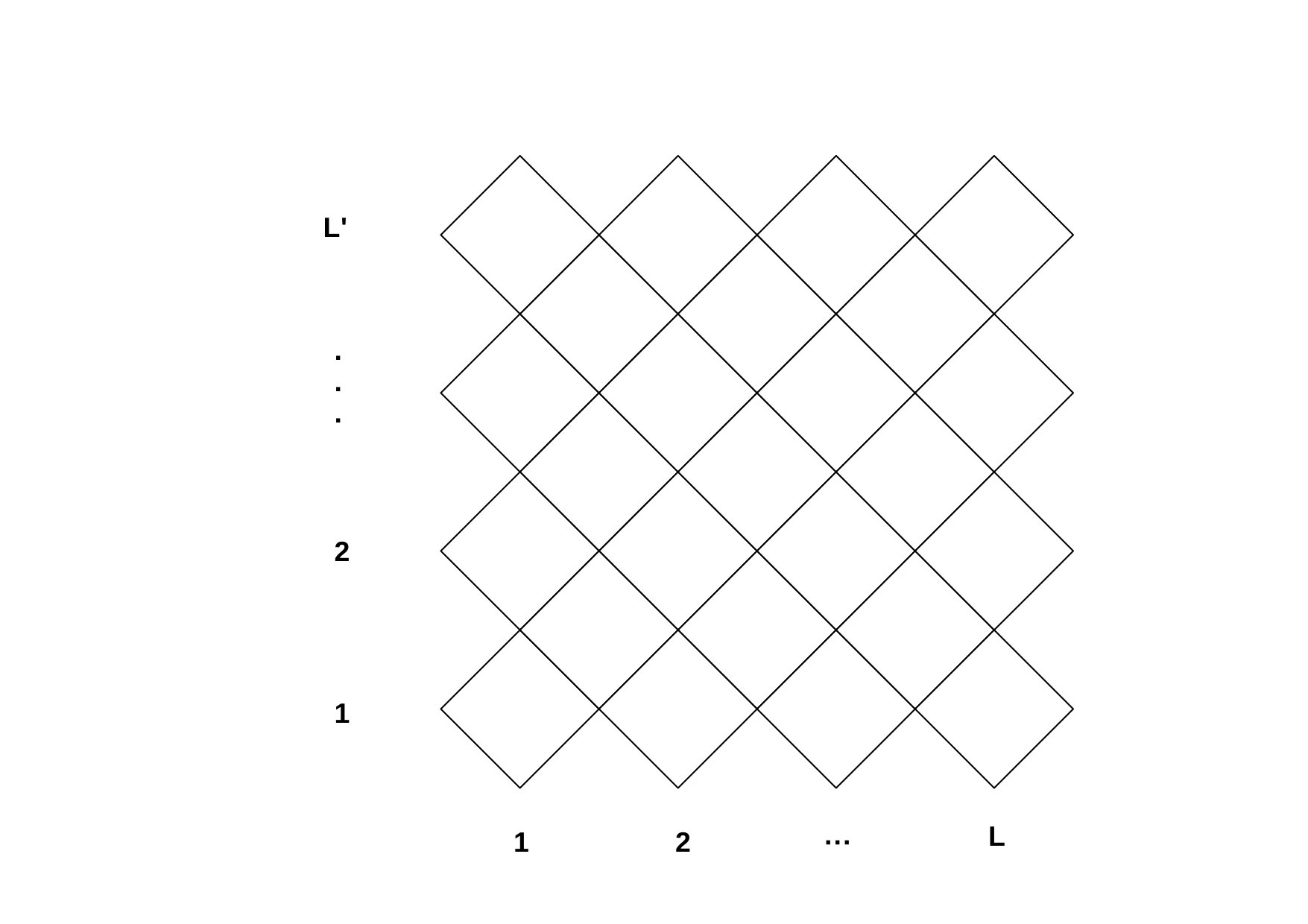 Figure 1
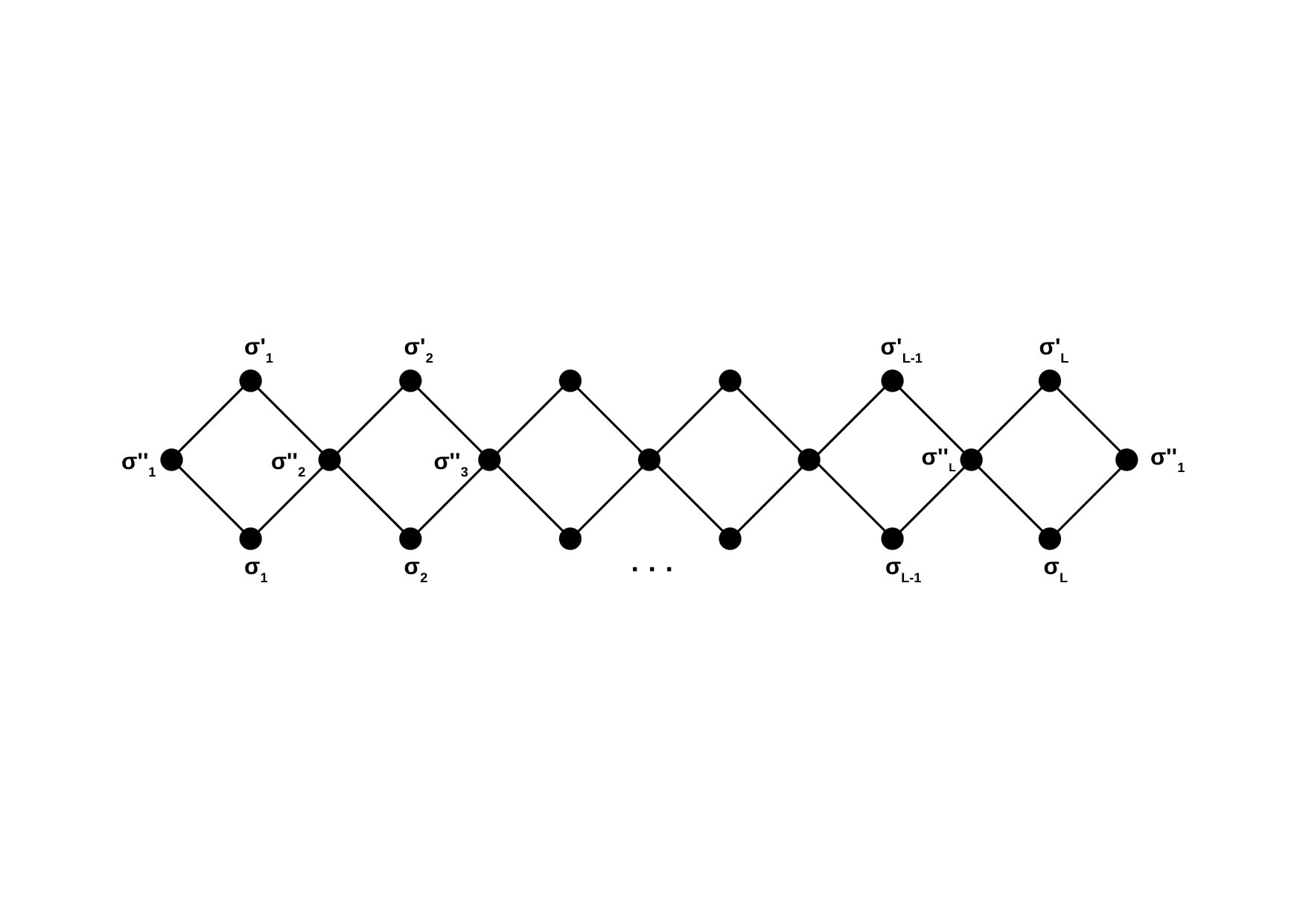 Figure 2
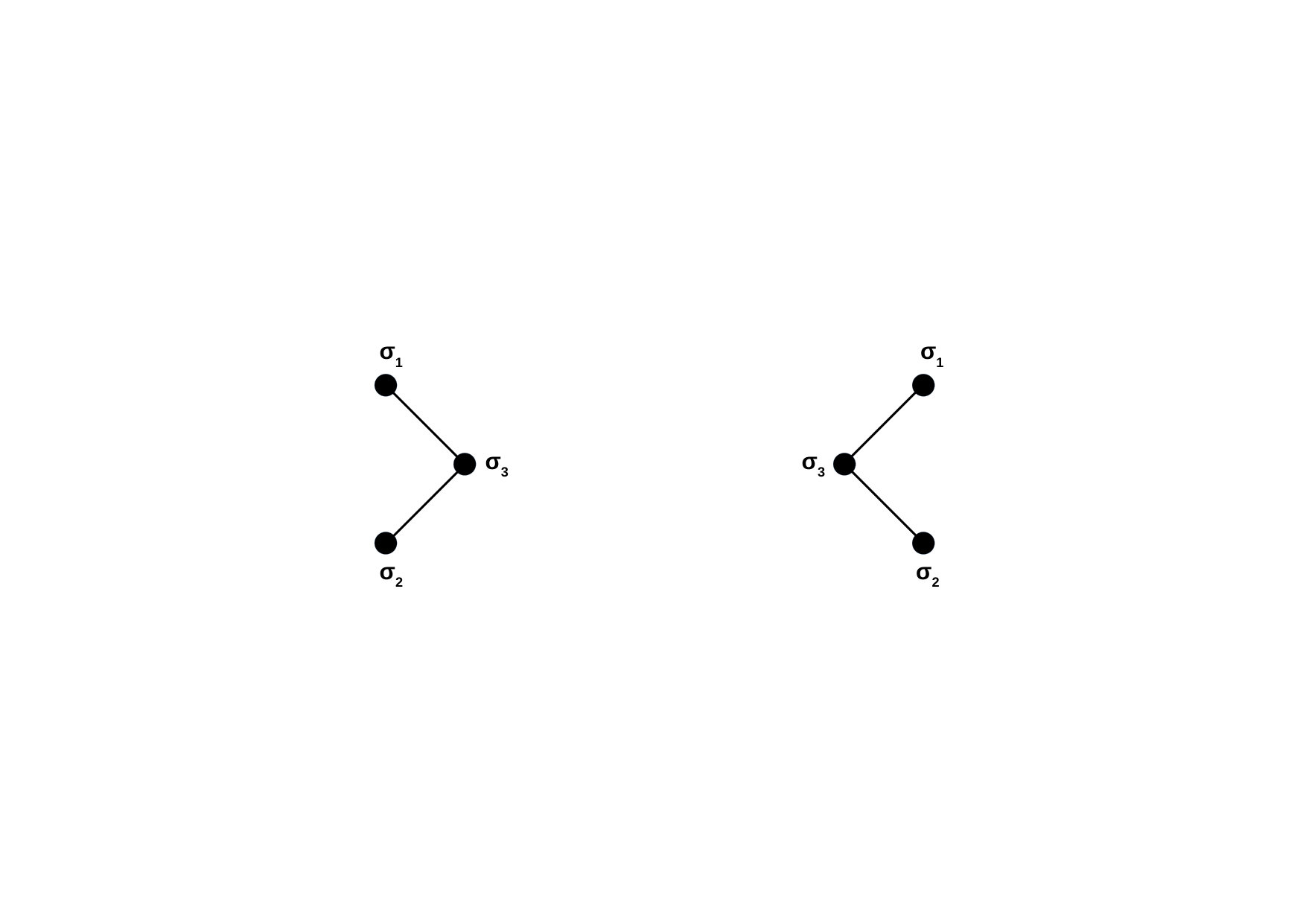 Figure 3
Peer Reviews
No public reviews on file for this paper yet. If you reviewed it on a platform where reviews are public (OpenReview, ICLR, NeurIPS, ICML), you can paste yours below so the community can read it here.
Videos
No videos yet. Explain this paper in a talk, walkthrough, or lecture? Add one.
††institutetext: Yerevan Physics Institute,
Alikhanian Br. 2, AM-0036 Yerevan, Armenia
Shaping Lattice through irrelevant perturbation: Ising model
Armen Poghosyan
Abstract
The leading irrelevant perturbation, which controls the deviation of critical square lattice Ising model with periodic boundary conditions from its continuous CFT analog is identified. An explicit expression for the coupling constant in terms of the anisotropy parameter is found. We calculate the next to leading corrections to the spectrum on both lattice theory and the perturbed CFT sides for several classes of states, always getting exact agreement. We discuss also how the perturbing operators and the higher integrals of motion are related.
Keywords:
Ising model, Partition function, Conformal field theory, Irrelevant perturbation
††preprint: YerPhI/2019/08
1 Introduction
It is well known that large scale behavior of many statistical systems near their critical points can be described by (Euclidean) Quantum Field Theories (QFT) (see e.g. domb1972phaseV6 ). In such description many microscopic details of initial theory are washed out, so that various statistical systems may lead to the same continuous theory. In this respect it is interesting to investigate intermediate scales, where some subleading corrections (besides leading finite size effects) to the QFT description still are noticeable. Then it would be possible to clarify how specific microscopic structure of the system is reflected in this corrections. From QFT point of view such corrections can be described as perturbations by irrelevant operators which are allowed to carry nonzero spins, since the rotational invariance at small distances is violated domb1987phaseV11 ; CARDY1986200 . In this respect the two dimensional Ising model Ising:1925em is an ideal object to investigate, since it is exactly integrable Onsager . Moreover, for some boundary conditions all the eigenvalues of its transfer matrix are known exactly even for finite lattices (see e.g. baxter2007exactly for toroidal boundary conditions, Brien for several other cases).
The paper is organized as follows.
In section 2 we systematically investigate the eigenvalues of periodic critical Ising transfer-matrix in large limit ( is the number of spins in a horizontal row). We show how terms exactly match with CFT prediction and compute the next corrections for certain families of eigenvalues. The corrections under discussion describe breakdown of rotational invariance due to lattice artifacts.
In section 3 we address the question, how to perturb Ising CFT in order to get precisely those corrections which we obtained investigating lattice model. We were able to identify the perturbing fields and the respective coupling constants. Namely we show that the perturbing fields are the spin current and its antiholomorphic counterpart, which were introduced in the context of integrable structure of CFT long ago. Having non-zero spin, these fields break the rotational invariance, while being irrelevant, they slightly correct the large distance behavior in a way, to mimic the lattice result.
Finally we end up with a summary of our results and discuss the possibility of generalization for full spectrum and for higher order corrections.
2 Eigenvalues of the transfer matrix
Consider square lattice Ising model. We’ll adopt the ” degree rotated” version presented in great details e.g. in Baxter’s seminal book baxter2007exactly . The lattice consists of vertical columns of faces, or equivalently, of horizontal rows of faces (see Fig.1). We will consider periodic boundary condition in both, horizontal and vertical directions, so that the -th column is identified with the first column and the -th row with the first one.
The partition function of the theory is given by
[TABLE]
where belong to the set of SW-NE, and to the NW-SE edges. In what follows, we will restrict ourselves to the case of critical Ising model. The well known criticality condition can be conveniently parameterized by a single parameter by setting
[TABLE]
with . Sometimes the parameter is referred as the anisotropy. The value corresponds to the isotropic case.
To define the transfer matrix of the model, let us denote the Boltzmann weights of two basic types of three spin configurations shown in Fig.2 as
[TABLE]
where are the Ising spins. Thus, the arrangement of spins in the argument of follows to the geometric pattern of their locations on the lattice.
These Boltzmann weights are explicitly given by
[TABLE]
where and is the anisotropy parameter. Note that to get (2.37) from (2.2), one should include an overall extra factor . Such shift in vacuum energy is convenient particularly because the transfer matrix, defined below, becomes the one-step shift operator at the values and .
After imposing periodic boundary condition in horizontal direction for the transfer-matrix we get (See Fig.3)
[TABLE]
The exact eigenvalues of this transfer-matrix can be found in baxter2007exactly . We will use a slightly modified version of the explicit expressions, presented in Brien based on more general treatment of Behrend:1995zj (see also later works Behrend1 ; Pearce2001 ; Chui ). There are two sets of eigenvalues, distinguished by the parameter and denoted by respectively. To be precise, let me warn the reader, that the quantities introduced below, actually are the square roots of transfer matrix eigenvalues. Nevertheless with a slight abuse of terminology, they will be referred simply as eigenvalues.
For the set of eigenvalues are given explicitly as Brien ( stands for the largest integer not exceeding ):
[TABLE]
where are subject to the constraint
[TABLE]
For we have another set of eigenvalues Brien :
[TABLE]
where again , but there is no constraint anymore.
Notice that altogether we get eigenvalues, which exactly matches the size of transfermatrix (2.50).
2.1 Leading Eigenvalues
The leading eigenvalues in both sectors correspond to the case when all , . The expressions for these eigenvalues can be simplified and represented as
[TABLE]
and
[TABLE]
2.2 CFT prediction
From now on instead of parameters and we’ll use the even integers
[TABLE]
which are the numbers of vertical and horizontal ”zigzagging” columns and rows of the lattice respectively (see Fig.1). Conformal field theory predicts that the logarithm of transfer matrix eigenvalues in large , limit behave as PhysRevLett.56.742 ; PhysRevLett.56.746
[TABLE]
where is the free energy per site (the number of sights in our lattice is ), , are the left and right dimensions of the conformal field which creates the corresponding eigenstate from the vacuum. The parameter , where is modulus of the torus on which our 2d CFT lives, should be identified as
[TABLE]
Finally, is the Virasoro central charge, which for our case of Ising model, assumes the value .
Notice also that besides finite size scaling, CFT predicts also the universal amplitude ratios (see e.g. Salas:1999qh and references therein).
2.3 Large expansion of leading eigenvalues
Denote
[TABLE]
and . Due to Euler-Maclaurin summation formula ( are the Bernoulli polynomials) from eq. (2.54) we get
[TABLE]
and from (2.55)
[TABLE]
The bulk free energy is given by
[TABLE]
Taking into account that the leading eigenvalue should correspond to the identity operator with conformal dimensions , consistency of the leading terms in (2.59), (2.60) with CFT prediction (2.56) immediately fixes the value of central charge and identifies the torus parameter with the expression (2.57). Besides for the dimensions of the conformal field corresponding to the eigenvalue we get , which are the correct dimensions of Ising spin field.
2.4 Partition function on a large torus and Ising fermions
For given , denote () the rhs of (2.51) for the case when with all ’s and ’s set to with a single exception, namely (). Analogously, using (2.53), we define , for the case when . In large limit the impact of flipping the sign at position are given by ratios
[TABLE]
and
[TABLE]
It is important to notice that due to factorized structure of eigenvalues (2.51) and (2.53), if there are several indices , such that the respective ’s or ’s assume the value , the logarithm of ratios of eigenvalues will be given by the same expressions (2.62) and (2.63) summed over above specified indices p.
Consider thermodynamic limit when , are sent to infinity while keeping their ratio fixed. Notice that , remain finite as seen from (2.57). Keeping the leading terms only, we can conveniently rewrite expressions (2.62), (2.63) in view of eq. (2.57) as
[TABLE]
In other words, the sign flip of ( ) in partition sum costs a multiplier () in the sector and a multiplier () in the sector . We’ll need also the contributions of the eigenvalues in partition function. Again, dropping terms, from eqs. (2.59), (2.60) we easily get
[TABLE]
As a result, a generic eigenvalue, say in sector , specified by conditions , 111, the number of parameters taking the value should not be confused with the number of rows of faces introduced earlier. In fact the latter does not appear in the paper any more. with all other ’s and ’s taking the value , will contribute a term
[TABLE]
Similarly, the contribution of a generic eigenvalue from the sector in partition function reads
[TABLE]
Here we should keep in mind that due to the constraint (2.52), the total number of minus signs, i.e. must be even. Now, by elementary considerations one can get convinced that the partition function on the torus in continuum limit can be represented as
[TABLE]
Note that the sum with factors on second line implements the constraint (2.52), since the terms with a product of odd number of minus signs get canceled.
Obviously, the form of (2.65) reflects the well known fact that the Ising model in continuous limit is the theory of free fermions. The fermionic fields are single valued in vacuum sector (manifested by the half integer modes on second line of (2.65)), while they are non-local with respect to the spin field and have integer modes as seen on third line of (2.65). Let us briefly recall few relevant facts about free fermion theory. We will simply state the results omitting details and proofs. The aim is to specify notations which will be used later on. A comprehensive review of 2d fermion CFT can be found e.g. in book DiFrancesco:639405 . The left and right moving fermion fields can be defined through mode expansions
[TABLE]
where sum is over all half integers or over all integers, depending whether it acts in vacuum sector (usually referred as Neveu-Schwartz sector) or on spin (Ramond) sector. The expansion modes satisfy the anticommutation relations
[TABLE]
In terms of fermion modes the sector is spanned on states
[TABLE]
where is the vacuum state with dimensions and the occupation numbers , assume values [math] or . The relation of (2.69) to the eigenstates of Ising transfer matrix is very simple: if an occupation number () then (). The analogous relation holds also for quantities and . As a consequence, the constraint (2.52) requires, that the total fermion number
[TABLE]
must be even. Evidently there are two alternatives here. Either both and are even or both are odd. It is easy to see that the former case corresponds to the Virasoro module created from the vacuum while the latter one to the module created from primary state (related to the energy density) .
Similarly the Ramond subspace is spanned over the states
[TABLE]
which exactly match the states of the sector in lattice side. It is not difficult to calculate the torus partition function of this free fermion theory
[TABLE]
where , are left and right Virasoro 0-modes, and , as earlier, are the torus parameter and its conjugate and is the Virasoro central charge. The trace is over the states (2.71) and (2.69) subject to the constraint (see eq. (2.70)). The result besides the non universal factor exactly matches the the partition sum (2.65).
3 Irrelevant perturbation of Ising CFT
Let us introduce coordinate on cylinder (), which is related to the coordinate on plane through exponential map . The least irrelevant perturbation of Ising CFT from the conformal family of identity operator, responsible for deviation from conformal theory, is (see Cardy:1986ie , CARDY1986200 , Zamolodchikov:1987ti , domb1987phaseV11 )
[TABLE]
where and its antiholomorphic counter part are regularized squares of the energy momentum tensor. More precisely
[TABLE]
where integration over is along a small contour surrounding anticlockwise. Using transformation rule of stress-energy tensor from plain to cylinder
[TABLE]
where the second term comes from Schwarzian derivative, one can see that in terms of conventional Virasoro modes the interaction Hamiltonian becomes
[TABLE]
Note that (3.75) is a combination of higher integrals of motion and Sasaki:1987mm ; Eguchi:1989hs ; Bazhanov:1994ft
[TABLE]
Remined also that the unperturbed Hamiltonian coincides with
[TABLE]
Since the commutator , the perturbation theory appears to be remarkably simple. In fact, the calculations presented in the remaining part of the paper, strongly suggest that eigenstates of the transfer-matrix (2.50) simultaneously diagonalize all operators , , and . It is expected that this feature is generic, and higher order calculations would involve further integrals of motion , , … as well, thus making contact between integrable structures of the lattice model and CFT (see Morin_Duchesne_2016 for discussion of the dimer model from this perspective).
Representation of the interaction Hamiltonian in form (3.75) is very convenient for calculation of various matrix elements. In particular it is straightforward (for arbitrary ) to get:
[TABLE]
where
[TABLE]
This result was found by a different technique long ago in reinicke87 . Another set of matrix elements for Ising model will be pki ; PhysRevE.96.062127 (now the central charge is specified to )
[TABLE]
where
[TABLE]
3.1 Identification of coupling constants
Comparing the leading term of (2.59) with (2.56) and taking into account that for vacuum state , we easily verify that the values of parameters , are given by eq. (2.57) and that central charge . It is convenient to represent (2.59) (included the second, next to leading term) as ( stands for complex conjugate)
[TABLE]
The term
[TABLE]
can be interpreted as a shift of (holomorphic part of) the vacuum state energy due to perturbation by . This leads to the relation
[TABLE]
Since, due to (3.77)
[TABLE]
for the coupling constant we get
[TABLE]
Analogously, the conjugate coupling
[TABLE]
Now let us consider in some details the isotropic case . In this case we have
[TABLE]
It is subtle but possible to compare this result with the coupling constant
[TABLE]
obtained in Izmailian2001 for the (not rotated) square lattice critical Ising model. To make a correct comparison one should take into account that in current paper we have chosen a natural from CFT point of view energy normalization such that the level spacing in leading order is equal to , while in Izmailian2001 it is equal to (to avoid confusion we denote the parameters , , of Izmailian2001 by , ). Besides, should be rescaled by the geometric factor (since the number of sites should be identified with ). Finally a factor arises due to rotation of lattice by . Indeed, the spin of the perturbing field is , hence we get the phase factor
[TABLE]
Carefully picking up all the factors arising from above considerations one arrives at the consistency condition
[TABLE]
which, obviously is satisfied.
In what follows, besides the vacuum state, we’ll examine infinitely many other states and will demonstrate how the values (3.83), (3.84) of the coupling constants reproduces correct energy shifts.
3.2 Energy corrections for the states
It is straightforward to deduce from (2.62), (2.59) that the large expansion of the transfer-matrix eigenvalues in sector with two sign flips and can be represented as
[TABLE]
The leading terms in above expressions are displayed in such specific way to emphasize the structure
[TABLE]
where is the dimension of respective primary field and is the excitation level. According to eq. (2.69), the states under consideration should be identified with . Using commutation relation
[TABLE]
it is easy to show that
[TABLE]
Comparing (3.76) with subleading terms of (3.85 ) we see that consistency with perturbation theory requires the equality
[TABLE]
which is easily checked to be satisfied identically due to (3.83) and (3.77).
3.3 Energy corrections for the states
In this section we will examine the analogues infinite series of states in sector. Again we will assume that , and all other . In this case we get the large expansion
[TABLE]
In this case the perturbation theory requires (see (3.78) and 2.63):
[TABLE]
which again is satisfied identically due to (3.83) and (3.79).
3.4 An example of doubly degenerate states
Now let us consider a case, when double degeneracy takes place. Namely we will consider two forth level states
[TABLE]
Though not obvious, a direct calculation, sketched below, shows that the matrix element of between these states is zero, and that the energy shifts for either of these states indeed agree with lattice prediction.
To make actual calculations, let us remind that
[TABLE]
where stands for normal ordering. In terms of modes this is equivalent to
[TABLE]
As an example let us calculate the action of on vacuum state:
[TABLE]
Similarly we get
[TABLE]
Inverting the relations (3.94) and (3.95) we obtain
[TABLE]
Thus calculation of matrix elements of the interaction Hamiltonian (3.75) boils down to simple Virasoro algebra manipulations. Here are the results of calculations:
[TABLE]
According to the rules established in subsection 2.4 the state corresponds to the transfer-matrix eigenvalue with sign flips , and corresponds to , (both states belong to the sector ). From (2.62), (2.59) we get expansions
[TABLE]
[TABLE]
The expressions (3.98), (3.99) are in perfect agreement with (3.97), since the relations
[TABLE]
in view of (3.83), are satisfied identically.
4 Summary and discussion
To summarize let us quote the main results of this paper:
- •
The leading irrelevant perturbation (3.75), which controls the deviation of critical lattice Ising model with periodic boundary conditions from its continuous CFT analog is identified. The relation (3.83) between anisotropy parameter and the coupling constant is established
- •
Next to leading corrections to the spectrum are calculated independently from lattice theory and from the perturbed CFT for several classes of states always finding exact agreement (subsections 3.2 - 3.4).
- •
It is expected that to mimic higher order corrections, one should add to unperturbed Hamiltonian terms, proportional to the higher integrals of motion in Ising CFT. In this way the integrable structure of the lattice theory gets related to the integrable structure of CFT.
Besides square lattice, 2d Ising model is exactly solvable also on a number of other lattices with different symmetries. It would be interesting to identify the corresponding perturbing fields also in these cases. Clearly, it is expected that the spin of a perturbing field should be consistent with the order of discrete rotations allowed by respective lattice symmetry.
It must be also possible to extend our analysis to the entire spectrum and higher orders in expansion, but this is left for future work.
Acknowledgments
I am grateful to my supervisor Prof. Nikolay Izmailyan and Prof. Rubik Poghossian for introducing me into this field and for stimulating discussions.
This work was partially supported by the Armenian State Committee of Science in the framework of the research project 18T-1C113.
The reference list from the paper itself. Each links out to its DOI / PubMed record.
- 1(1) J. G. E. Brezin and J.Zinn-Justin, Field Theoretical Approach to Critical Phenomena; in Phase transitions and critical phenomena, v.6, edited by C. Domb and J. L. Lebowitz . Academic Press, London,New York, 1972.
- 2(2) J. Cardy, Conformal Invariance; in Phase transitions and critical phenomena, v.11, edited by C. Domb and J. L. Lebowitz . Academic Press, London,New York, 1987.
- 3(3) J. L. Cardy, Effect of boundary conditions on the operator content of two-dimensional conformally invariant theories , Nuclear Physics B 275 (1986), no. 2 200 – 218.
- 4(4) E. Ising, Contribution to the Theory of Ferromagnetism , Z. Phys. 31 (1925) 253–258.
- 5(5) L. Onsager, Crystal statistics. i. a two-dimensional model with an order-disorder transition , Phys. Rev. 65 (Feb, 1944) 117–149.
- 6(6) R. Baxter, Exactly Solved Models in Statistical Mechanics . Dover books on physics. Dover Publications, 2007.
- 7(7) D. L. O’Brien, P. A. Pearce, and S. O. Warnaar, Finitized conformal spectrum of the ising model on the cylinder and torus , Physica A: Statistical Mechanics and its Applications 228 (1996), no. 1 63 – 77.
- 8(8) R. E. Behrend, P. A. Pearce, and D. L. O’Brien, Interaction - round - a - face models with fixed boundary conditions: The ABF fusion hierarchy , J. Statist. Phys. 84 (1996) 1, [ hep-th/9507118 ].